Independence in 2026 is no longer defined by physical perfection, but by the clever integration of movement and technology. Across the UK, millions of people face the daily reality of restricted movement, often worrying that their world will inevitably shrink. You might feel the frustration of wanting to engage with your community while fearing that physical pain or a lack of support will hold you back. It's a valid concern, yet the modern landscape offers more opportunities than ever to reclaim your "Freedom of Motion."
Learning how to stay active with limited mobility is about finding the right balance between adapted exercise and reliable equipment. We agree that movement should be empowering, not exhausting. This guide promises to provide you with practical strategies, from core-strengthening routines to the latest mobility solutions, to help you maintain your physical health and social connections. We will preview the "Independence Loop," explore outdoor-ready technology, and show you how to build a sustainable lifestyle that keeps you moving forward with confidence.
Key Takeaways
- Redefine activity as a spectrum including physical and social movement to trigger the "Independence Loop" where confidence fuels progress.
- Master a five-step home exercise routine designed to improve core stability and cardiovascular health without unnecessary physical strain.
- Explore how to stay active with limited mobility by integrating modern technology, such as a folding electric wheelchair, into your outdoor adventures.
- Overcome social isolation by addressing the "fear of falling" and navigating environmental barriers through a proactive, community-focused approach.
- Develop a sustainable lifestyle plan using an "Activity Toolkit" that pairs proper nutrition with consistent schedules for long-term health.
Redefining What it Means to Stay Active with Limited Mobility
Traditional fitness advice often focuses on high intensity, but we're shifting the focus toward a broader spectrum of movement. Staying active isn't just about aerobic capacity; it encompasses physical, social, and cognitive engagement. When you understand how to stay active with limited mobility, you realize that even small, consistent movements contribute to a better quality of life. This holistic approach ensures you don't feel excluded from the benefits of an active lifestyle just because your physical range has changed. Activity is a personal journey, not a rigid set of rules.
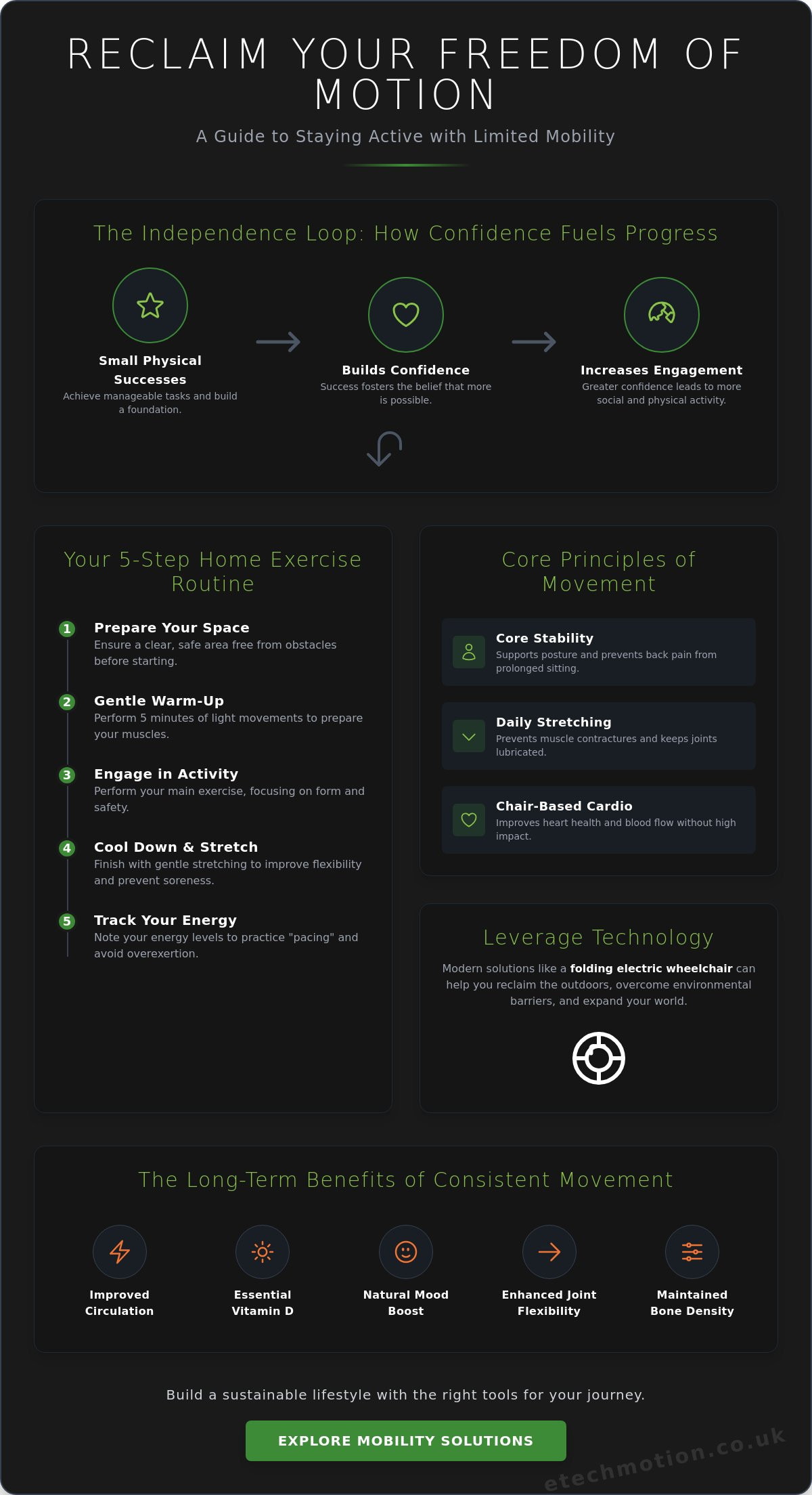
The core of this philosophy is the "Independence Loop." It's a powerful cycle where small physical successes build the confidence needed to try more complex tasks. As your confidence grows, your willingness to engage with the world increases, leading to even greater mobility. Maintaining a steady routine is vital for your psychological well-being. It provides a sense of control and purpose that combats the isolation often felt when movement becomes difficult. To keep this loop spinning, you must practice "pacing." This means balancing activity with rest to avoid the boom-and-bust cycle, where overexertion one day leads to total exhaustion the next.
The Health Benefits of Consistent Movement
Consistency is the secret to long-term health. Regular movement, even while seated or using a mobility aid, significantly improves circulation and reduces the risk of pressure sores. These small physical adjustments keep your body resilient. Beyond the physical, getting outdoors provides essential Vitamin D and triggers an endorphin release that naturally boosts your mood. Engaging in Inclusive recreation allows you to maintain bone density and joint flexibility through adapted weight-bearing activities. These benefits aren't just medical; they're the building blocks of a joyful, independent life.
Setting Realistic Goals for Your Mobility Level
Success starts with a plan. Using the SMART framework helps you set goals that are Specific, Measurable, Achievable, Relevant, and Time-bound. Instead of vague ambitions, focus on "functional independence." This means prioritizing tasks that make your daily life easier, such as being able to navigate a local shop or joining a community group. Tracking your progress is essential, but it's vital that you don't compare your journey to others. Your progress is personal. Focus on your own milestones and celebrate the freedom that comes with every new achievement. By setting goals tailored to your specific needs, you ensure that your path toward better health is both sustainable and rewarding.
Adapted Physical Exercises for Strength and Cardiovascular Health
Building physical resilience requires a structured approach that prioritizes safety and effectiveness. Before you begin any new fitness regime, it's essential to consult with an occupational therapist. They provide personalized guidance to ensure your movements align with your specific physical needs. Once you have professional clearance, you can implement a five-step home routine: prepare a clear space, perform a gentle five-minute warm-up, engage in your primary activity, cool down with stretching, and track your energy levels afterward. This methodical process is a cornerstone of Staying active with limited mobility while minimizing the risk of injury.
Core stability is often overlooked but remains vital for anyone using mobility aids. A strong core supports better posture, which prevents the chronic back pain often associated with long periods of sitting. Without this foundation, you might experience "wheelchair slouch," which can compress internal organs and reduce lung capacity. Additionally, daily stretching is a non-negotiable habit to prevent muscle contractures, where muscles become permanently shortened and stiff. Consistent range-of-motion work ensures your joints remain lubricated and functional for daily tasks. If you're looking to upgrade your setup to better support these daily routines, exploring a high-quality electric wheelchair can provide the ergonomic support needed for long-term comfort.
Chair-Based Cardiovascular Workouts
You don't need a treadmill to improve your heart health. Seated "marching" involves lifting your knees as high as comfortable while seated, which stimulates blood flow and raises your heart rate. Arm cycling, performed by moving your arms in a circular motion as if pedaling a bike, offers an excellent aerobic challenge. For muscle toning, resistance bands provide a low-impact way to build strength without the bulk of heavy machinery. If you don't have specialized equipment, household items like water bottles or soup cans serve as effective hand weights for bicep curls and overhead presses.
Flexibility and Range of Motion Movements
Maintaining flexibility is key to learning how to stay active with limited mobility over the long term. Simple neck and shoulder rolls can immediately relieve tension built up from navigating your environment. Seated spinal twists, where you gently rotate your torso while keeping your hips forward, help maintain trunk mobility and aid in digestion. For those with partial lower-limb mobility, ankle rotations and toe points are crucial. These movements help maintain circulation in the extremities and prevent stiffness. By dedicating just ten minutes a day to these movements, you protect your independence and keep your body ready for your next adventure.
Leveraging Mobility Technology to Reclaim the Outdoors
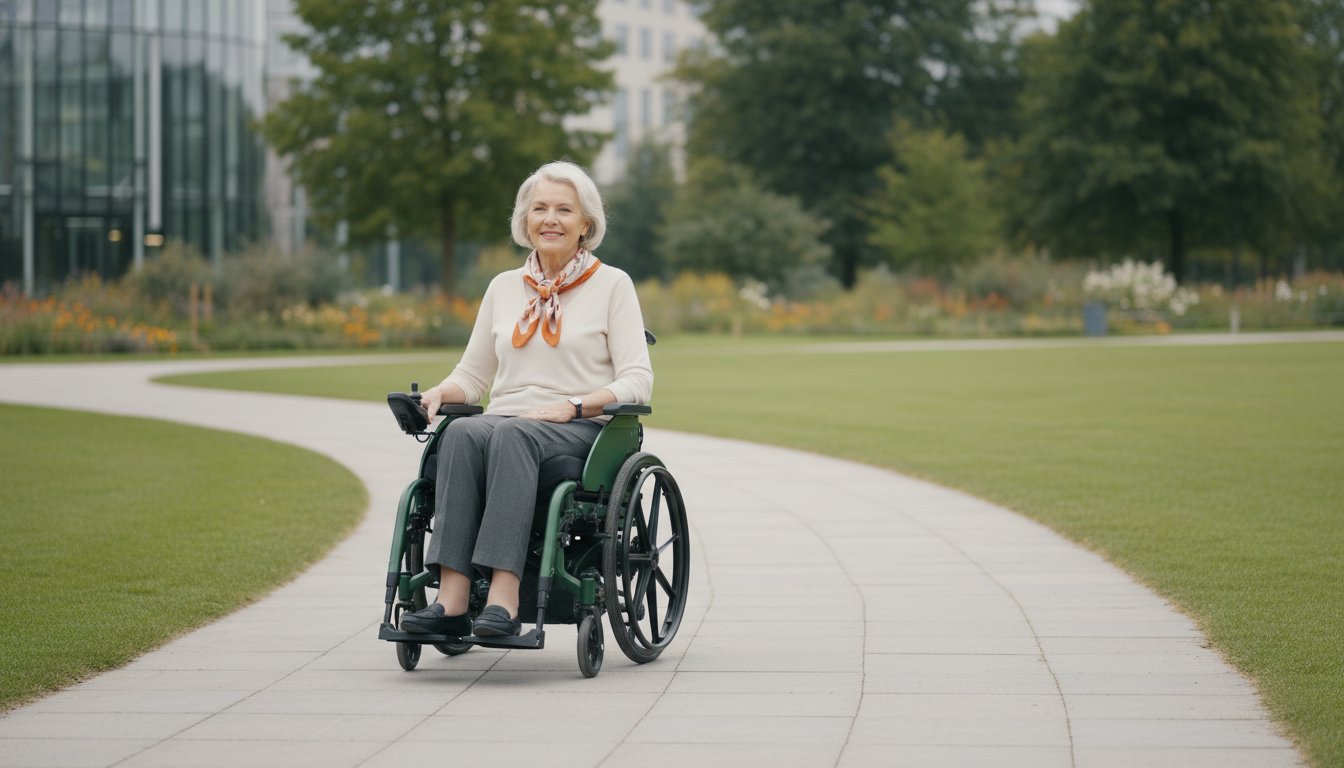
Modern technology has dismantled the outdated idea that mobility aids are a sign of defeat. Instead, they're powerful tools for liberation. One of the most effective strategies for how to stay active with limited mobility is embracing "Active Mobility." This concept involves using a power chair or scooter to reach a destination, like a nature trail or a local park, where you then perform your physical activity or social engagement. By using technology to conserve your energy for the things that matter, you can stay out longer and do more than you ever could with manual equipment alone.
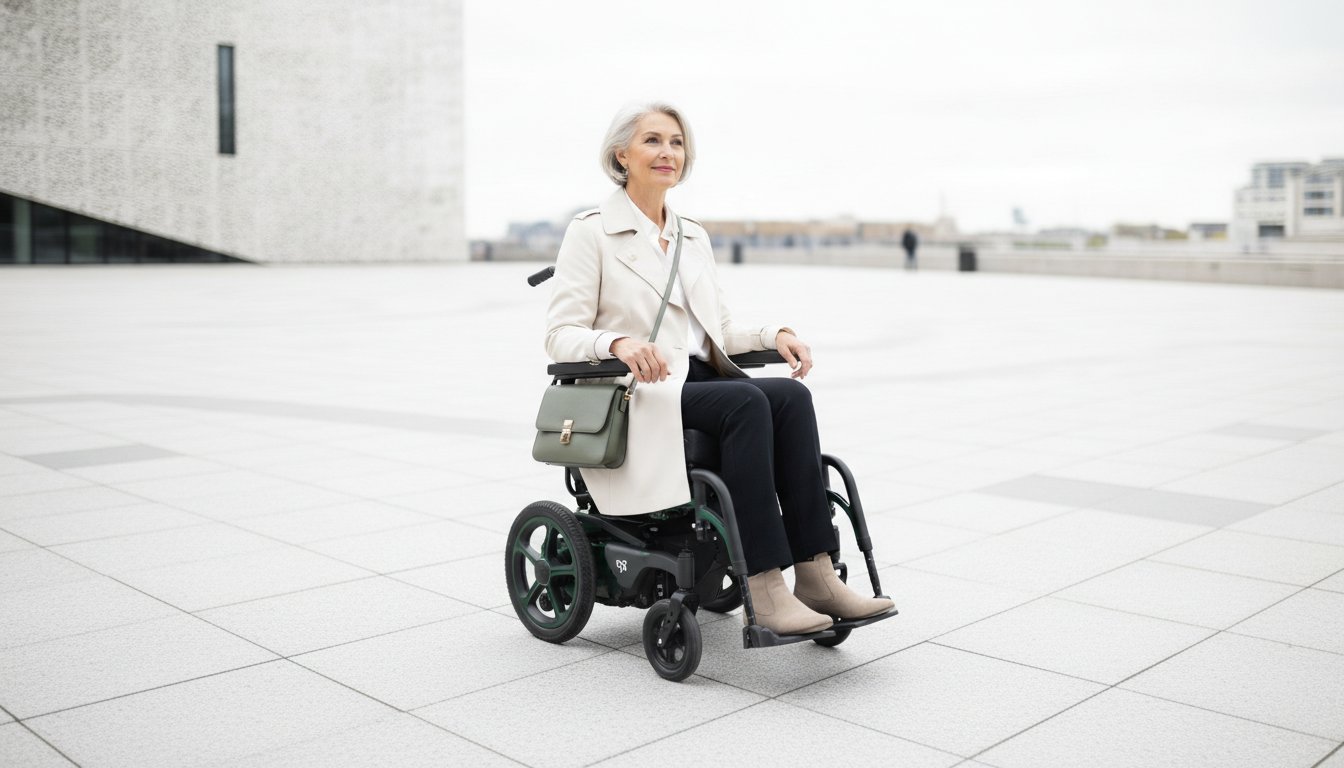
A folding electric wheelchair is a primary example of this freedom. These devices fit easily into car boots, allowing you to travel to community hubs that were previously out of reach. For active users, battery range and terrain capability are non-negotiable features. You need a machine that can handle gravel paths and slight inclines without hesitation. There's a common misconception that using a motor means you're being "inactive." In reality, the motor provides the endurance required to maintain a busy, socially connected life. It removes the physical exhaustion of the journey, leaving you with the stamina to enjoy the destination.
Choosing the Right Aid for an Active Lifestyle
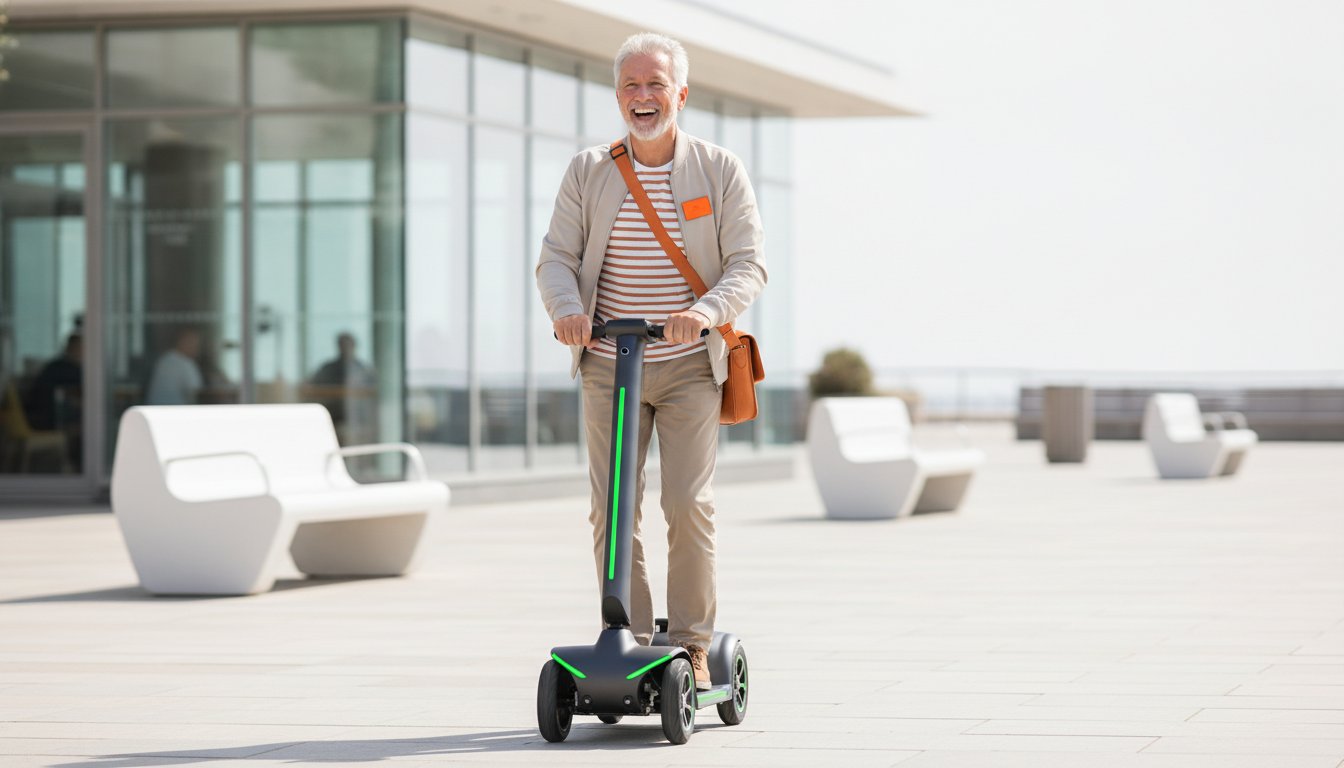
Selecting the right equipment depends on where you want to go. If your goals include exploring forest tracks or uneven coastal paths, a heavy duty electric wheelchair provides the stability and power needed for off-pavement adventures. For those who prefer longer-distance travel across town or through large shopping centres, versatile mobility scooters offer the speed and comfort required for sustained community engagement. Alternatively, mobility walker frames are excellent for supporting weight-bearing exercise during shorter trips, helping you maintain balance and bone density while you walk.
Tech-Enabled Activity Tracking
Smartwatches aren't just for runners; they're essential tools for monitoring how to stay active with limited mobility. Many modern wearables now include wheelchair-specific tracking that measures "pushes" or movement minutes rather than just steps. Setting "movement reminders" is a practical way to avoid prolonged sedentary periods, prompting you to perform the stretches or chair-based exercises we discussed earlier. Even the hardware itself has become more accessible. Modern joystick controllers can be adjusted for varying grip strengths, ensuring that precise navigation remains easy even if your dexterity changes throughout the day. This level of customization ensures that your equipment works with you, not against you.
Overcoming Mental Barriers and Social Isolation
The biggest obstacle to learning how to stay active with limited mobility isn't always physical. It's often the "fear of falling" or the anxiety of "being a burden" that keeps people indoors. These mental barriers are incredibly powerful activity stoppers. When you're worried about your safety or how others perceive you, it's natural to retreat. However, staying stationary only increases these fears over time. Breaking this cycle requires a shift in perspective and a supportive community that understands your journey.
We advocate for the Social Model of Disability, which suggests that it's often the environment, not the person, that acts as the barrier. If a park doesn't have a paved path or a building lacks a ramp, the environment is failing you. Recognizing this helps remove the self-blame that often leads to social isolation. Beyond the social benefits, physical activity is directly linked to cognitive health, especially for seniors. Regular movement increases blood flow to the brain, which helps maintain memory and mental clarity. Joining a UK-based support group or an accessible sports club provides the perfect balance of physical movement and social connection.
Connecting with the Community
The UK has a growing network of inclusive initiatives designed for all ability levels. Many "Walking for Health" groups now specifically welcome wheelchair and walker users, ensuring the routes are flat and accessible. You'll also find a rise in "Inclusive All-Ability" gyms across the country. These facilities feature specialized equipment that allows for strength training without needing to transfer from your chair. If you're looking for a sense of purpose, volunteering for local charities is a brilliant way to stay mentally and socially active while contributing your skills to a cause you care about.
The Role of Social Prescribing
Don't wait for a crisis to seek help. Talk to your GP about "social prescribing." This initiative allows healthcare professionals to refer you to local, non-medical activities like adaptive gardening or seated yoga classes. These programs are often funded by local council grants or community schemes. If you're nervous about navigating public spaces, utilize "Shopmobility" schemes found in most major UK town centres. They allow you to test your activity levels in a safe, controlled environment. To truly reclaim your social life with confidence, explore our range of reliable electric wheelchairs and scooters designed for the British outdoors.
Building a Sustainable Lifestyle for Long-Term Independence
Consistency is the final piece of the puzzle. While the right equipment and exercises are vital, long-term success depends on a structured system that supports your daily choices. Building an "Activity Toolkit" is a practical way to ensure you stay on track. This toolkit should include your primary mobility equipment, a list of accessible community contacts, and a realistic weekly schedule that accounts for both movement and recovery. By treating your activity as a scheduled part of your day, you remove the decision fatigue that often leads to sedentary habits. We see ourselves as your partner in this journey, providing the reliable hardware needed to sustain your freedom for years to come.
Sustainable movement also requires "Adaptive Nutrition." Your body needs specific fuel to support the increased activity levels we have discussed. Focusing on anti-inflammatory foods and adequate protein helps maintain the muscle mass required for transfers and operating your equipment. Listening to your body's signals is equally important. In 2026, we have better tools than ever to monitor our health, but your internal intuition remains the most accurate guide. Learning how to stay active with limited mobility means knowing when to push your limits and when to honour your body's need for rest. This balance prevents burnout and keeps your independence loop spinning indefinitely.
Creating an Accessible Home Environment
Your home should be a space that encourages spontaneous movement rather than restricting it. Small modifications, such as rearranged furniture or lowered counters, make a significant difference in your daily energy levels. It's essential to establish a routine where your electric wheelchair is always charged and positioned for easy access. For those focusing on maintaining kitchen or garden independence, utilizing high-quality walking aids for elderly users provides the stability needed to perform standing tasks safely. These tools ensure that your home remains a place of activity rather than just a place of rest.
Managing Fluctuation in Ability
Physical ability isn't always linear. To manage this, we recommend a "Green, Amber, Red" system for your daily activity. On "Green" days, when energy is high, you might take a longer trip to the park. "Amber" days might focus on the seated exercises discussed earlier. On "Red" days, where pain or fatigue is high, your goal is simply to maintain your routine through gentle stretching or social connection. Rest is a productive part of an active lifestyle, not a sign of failure. Maintaining a positive mindset during these fluctuations ensures that a single difficult day doesn't derail your long-term progress toward a more mobile future.
Embracing Your Future of Limitless Motion
Understanding how to stay active with limited mobility is about more than just physical exercise; it's about reclaiming the freedom to engage with the world on your own terms. By redefining activity as a spectrum of physical and social movement, you unlock a sustainable path toward long-term independence. Whether you're mastering chair-based workouts or using social prescribing to find inclusive local groups, every small step builds the confidence needed for a vibrant lifestyle.
We're here to ensure your hardware never limits your ambition. Our heavy-duty and folding models are specifically designed for active lifestyles, providing the durability needed for both city streets and park trails. With expert UK-based technical support and nationwide delivery on all power chairs and scooters, we provide the reliability you need to focus on your next adventure.
Reclaim your freedom and stay active with Etech Motion's specialised mobility range. Your journey toward better health and greater independence starts with a single move. We're ready to help you make it happen today.
Frequently Asked Questions
Is it possible to improve my mobility through exercise alone?
Exercise is a critical component of physical health, but it works best as part of a holistic approach. While targeted movements strengthen muscles and improve joint flexibility, you'll see the best results when combining activity with professional medical advice, proper nutrition, and the right assistive technology. Consistency helps maintain your current functional range and can build the stamina needed for more complex daily tasks.
How much physical activity do I really need if I use a wheelchair?
Health experts generally recommend aiming for at least 150 minutes of moderate aerobic activity per week, paired with strength exercises on two or more days. For wheelchair users, this doesn't have to happen all at once. Breaking your movement into ten minute sessions throughout the day is an effective way to meet these goals without causing excessive fatigue or physical strain.
Can an electric wheelchair help me stay active or will it make me lazy?
An electric wheelchair is a powerful tool that enables activity rather than discouraging it. By removing the physical exhaustion of the journey, it preserves your energy for the destination, such as an adaptive gym session or a social gathering. This technology is a cornerstone of how to stay active with limited mobility because it allows you to remain engaged with your community for longer periods.
What are the best low-impact exercises for someone with severe arthritis?
Water-based activities like swimming or hydrotherapy are ideal because the water supports your weight and removes pressure from inflamed joints. If you prefer staying dry, seated tai chi and chair yoga focus on gentle, flowing movements that improve your range of motion without the impact associated with traditional fitness routines. These methods prioritize joint safety while building essential core strength.
How do I find accessible walking or rolling paths in my local area?
You can use dedicated apps like AccessAble or check your local council's website for "accessible route" maps. Many UK national parks now provide detailed information on path gradients and surface materials. This data helps you choose trails that are suitable for a mobility scooter or folding electric wheelchair, ensuring your outdoor adventures remain safe and enjoyable.
Are there any UK grants available to help me buy an active mobility aid?
The Motability Scheme is the most well-known resource for leasing equipment, but other options exist for direct purchases. You might qualify for an Access to Work grant if the equipment helps you perform your job. Additionally, local councils often provide "Disabled Facilities Grants" or social care assessments that can help fund essential mobility aids for home and community use.
What should I do if I feel pain while trying to stay active?
Stop the activity immediately if you experience sharp or radiating pain. It's important to distinguish between the natural "burn" of muscle fatigue and the warning signs of joint or nerve strain. If discomfort persists, consult your GP or an occupational therapist. They'll help you adjust your routine to ensure you're practicing how to stay active with limited mobility safely and effectively.
How can I stay active during the winter months with limited mobility?
Winter activity often shifts indoors to accessible public spaces like shopping centres, museums, or community halls. These environments provide flat, climate-controlled surfaces perfect for getting your daily movement minutes. At home, you can focus on resistance band training or seated aerobic videos. This ensures your progress continues even when the British weather makes outdoor excursions less practical.