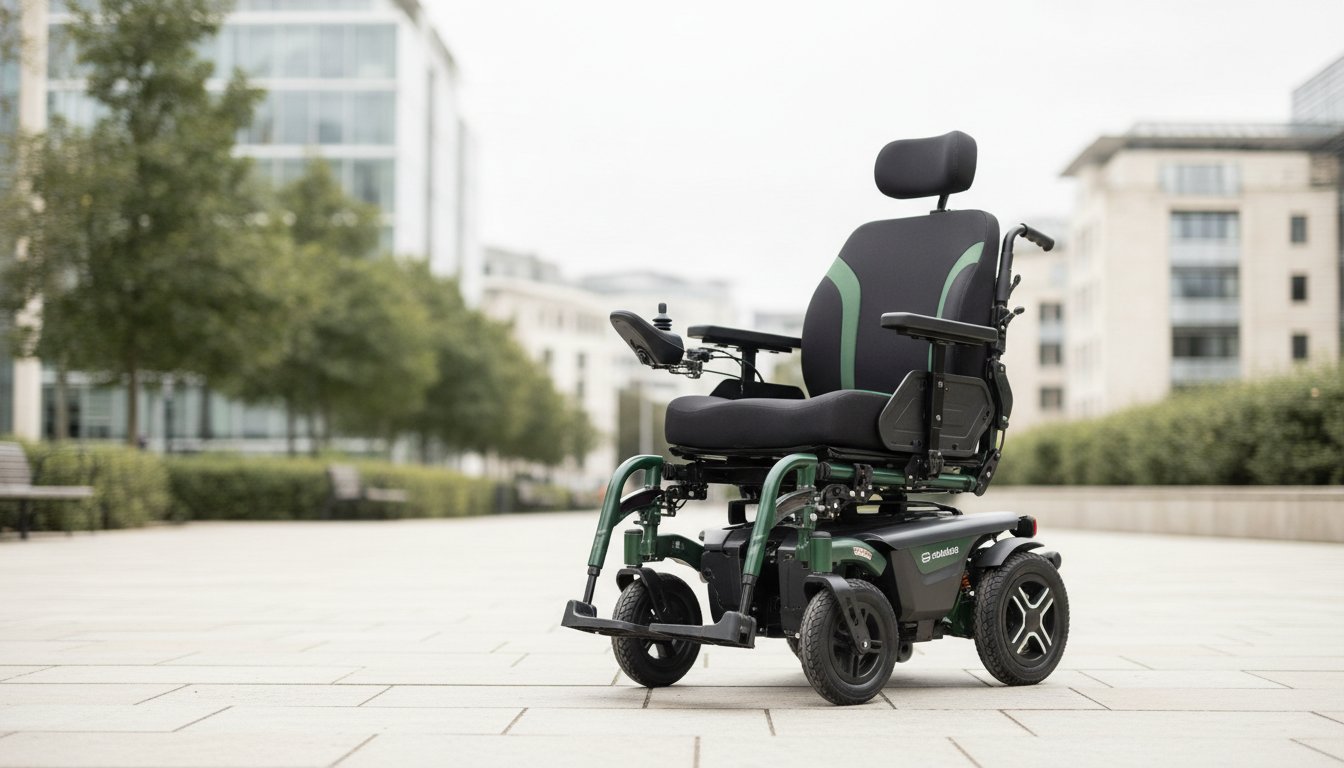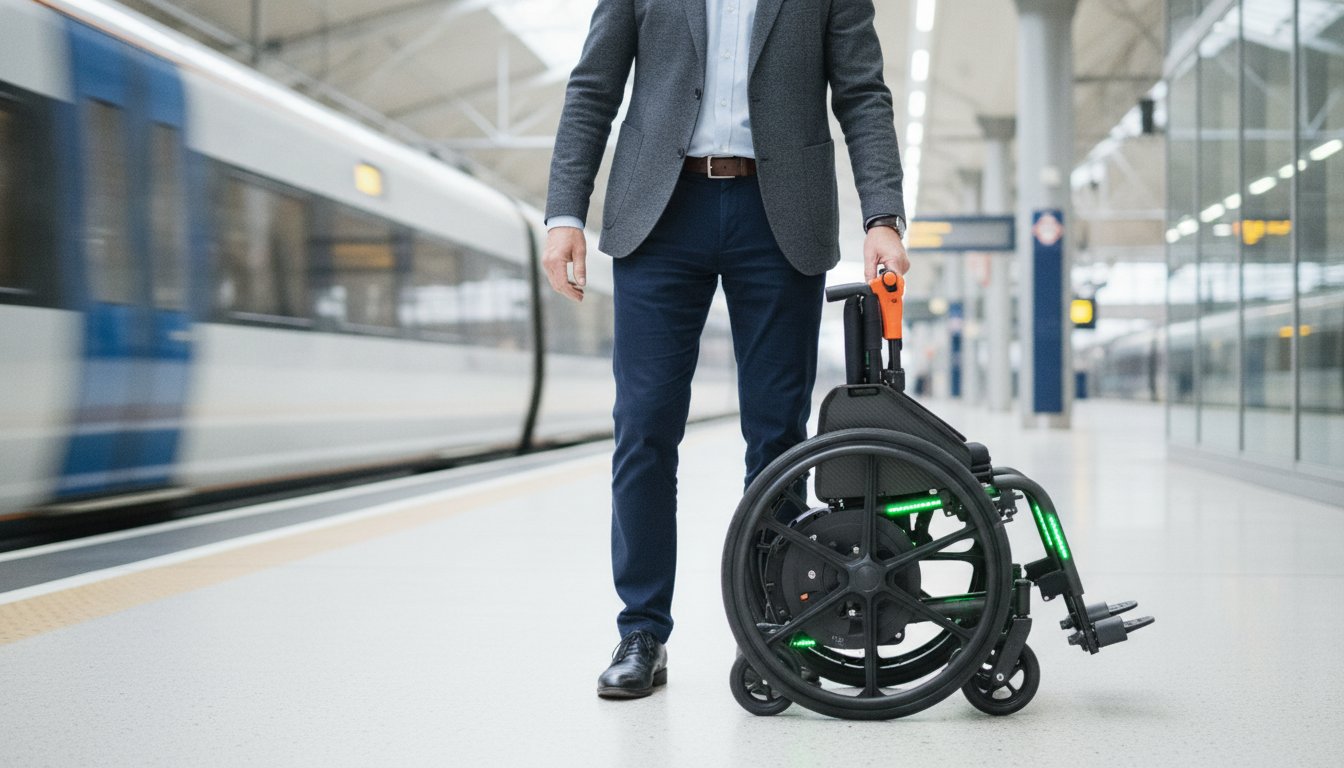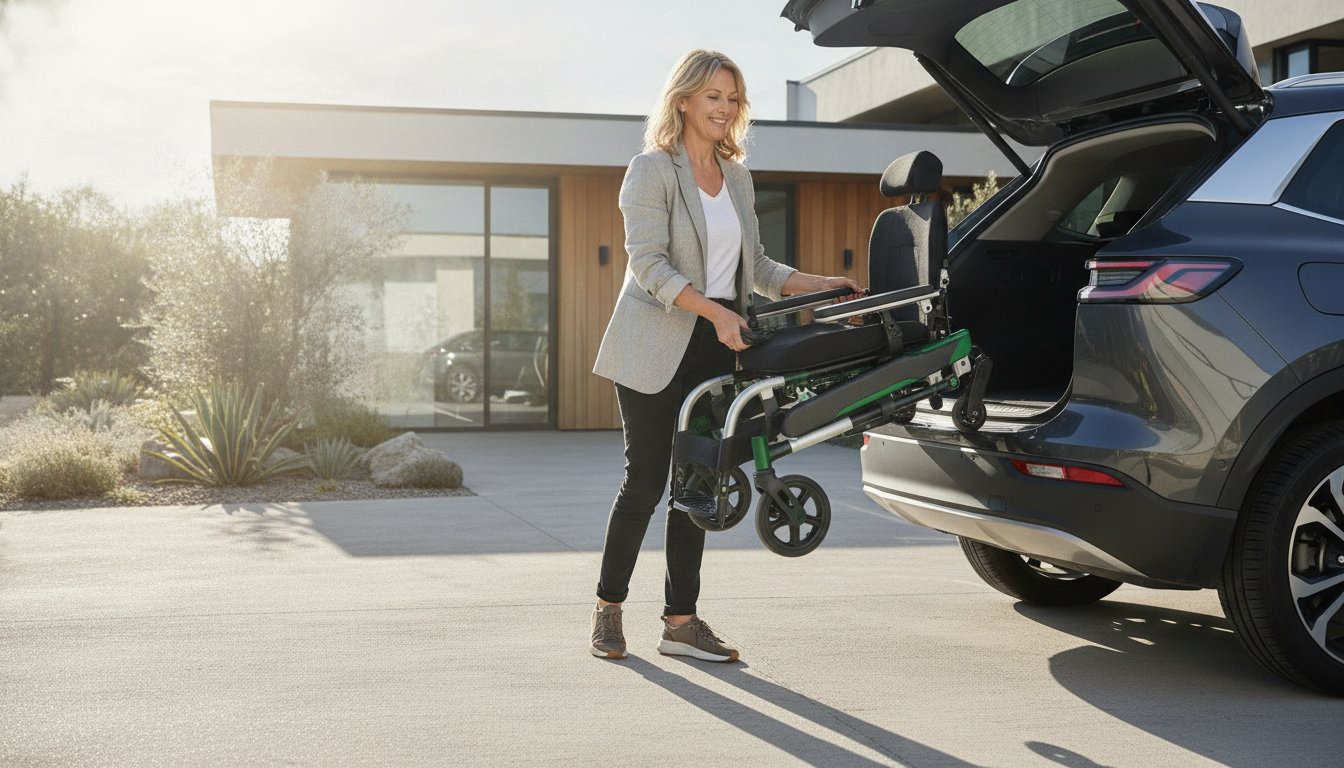

What if the simple act of walking across your living room felt like a leap of faith rather than a routine movement? It's a stressful reality for many; in fact, NHS data indicates that 1 in 3 adults over the age of 65 experience at least one fall every year. You likely feel a sharp pang of anxiety when navigating tight 750mm hallways or struggling to lift a heavy, outdated mobility walker frame into the boot of a car. We know that when equipment feels cumbersome, your world starts to feel smaller and your independence begins to fade.
We believe that mobility should be synonymous with freedom, not frustration. This guide will help you choose the perfect support to reclaim your confidence, prevent accidents, and maintain your stability both at home and in your local community. We'll break down the technical differences between traditional Zimmer frames and modern rollators. You'll also discover our 5-point checklist for ensuring your equipment meets UK safety standards while remaining light enough for daily use. Let's explore how the right technology can transform your daily routine into an effortless experience.
Key Takeaways
- Understand how modern aluminium designs redistribute weight to your upper body, helping you maintain a stable centre of gravity and prevent falls.
- Compare the safety of wheels versus ferrules on UK flooring to ensure your mobility walker frame provides the perfect balance of speed and security.
- Master the professional 'Wrist-to-Floor' sizing rule to achieve a perfect fit that eliminates wobbling and supports your natural gait.
- Identify the key signs of physical fatigue that signal when it is time to transition from manual aids to advanced powered mobility solutions.
What is a Mobility Walker Frame? Defining Support for the Modern User
A mobility walker frame is a precision-engineered support device featuring a wide base of support and four distinct points of contact with the ground. It's designed to redistribute weight away from the lower limbs, providing a stable platform for users with compromised balance or muscle weakness. While the 1950s clinical "Zimmer frame" was often a heavy, cumbersome steel structure, today's models utilize high-grade 6061 aluminium. These modern frames often weigh as little as 2.5kg, making them easy to manoeuvre without sacrificing structural integrity.
Stability at home is the foundation of long-term independence for the 12 million seniors currently living in the UK. Fall prevention isn't just about safety; it's about maintaining the confidence to move between rooms without assistance. We're seeing a massive psychological shift in how these tools are perceived. Users no longer view a mobility walker frame as a symbol of decline. Instead, it's an essential piece of kit for adventure that allows for active participation in family life and community events.
Walker vs. Rollator: Key Differences Explained
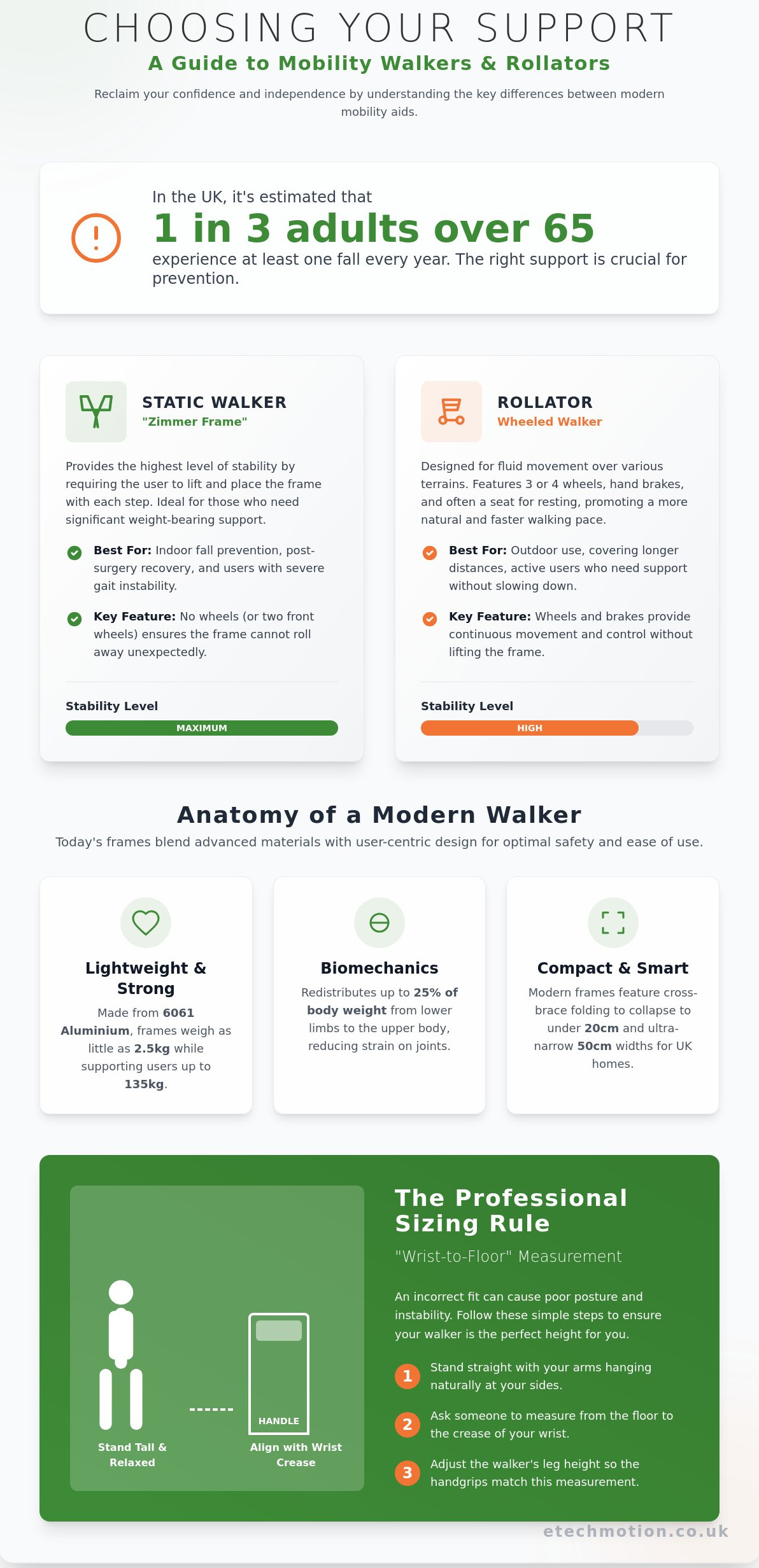
Static walkers provide maximum stability because they lack wheels. This makes them the safest choice for users who need to lean heavily on the frame for weight-bearing support. Rollators feature three or four wheels and are built for fluid movement over longer distances. While rollators excel outdoors, a static mobility walker frame remains the gold standard for indoor fall prevention, especially for those with severe gait instability or those recovering from hip surgery.
Common Terminology You Need to Know
- Ferrules: These are the heavy-duty rubber caps at the base of the frame legs. High-quality non-marking rubber prevents floor scuffs and provides essential grip on slippery kitchen tiles.
- Reciprocal Frames: These frames feature a hinge mechanism that allows each side to move independently. This design mimics a natural walking gait and is ideal for users with limited upper body strength.
- Ultra-Narrow Widths: Standard frames are roughly 60cm wide. However, many British terrace houses built before 1914 have narrow doorways. Ultra-narrow models at 50cm allow for seamless movement through tight spaces.
The Anatomy of Stability: How Walker Frames Support Your Gait
A high-quality mobility walker frame functions as an extension of your body's skeletal structure. By creating four consistent points of contact with the ground, it significantly widens your base of support. Biomechanical studies indicate that a properly fitted frame can reduce the weight load on your lower limbs by as much as 25%. This shift transfers the impact of every step from vulnerable leg joints to the stronger muscle groups in your upper body, making movement feel lighter and more controlled.
Stability relies heavily on your centre of gravity. If your weight shifts too far outside the frame's footprint, the risk of a fall increases. Engineering standards for modern frames ensure they remain stable even at a 15-degree tilt. To achieve this balance without making the device too heavy to lift, manufacturers use aircraft-grade 6061 aluminium. This material is the gold standard because it allows a mobility walker frame to weigh as little as 3.5kg while safely supporting a user weight of 135kg. It's a level of precision you can feel with every step.
Folding mechanisms have evolved to ensure that portability doesn't mean fragility. Modern cross-brace designs allow a frame to collapse to a depth of under 20cm for easy storage in a car boot or narrow hallway. When locked open, these joints provide a rigid, rattle-free experience that mimics a solid fixed frame. If you're looking for a blend of portability and structural strength, you can explore our range of engineered mobility solutions designed specifically for the UK's active users.
Weight Distribution and Joint Relief
By offloading pressure from the hip and knee joints, a frame allows for longer periods of activity without the onset of sharp pain. Maintaining an upright posture is vital; it prevents the secondary lower back strain that often occurs when users lean too far forward. Weight-bearing refers to the capacity of the skeletal system and the assistive frame to support a specific percentage of the user's body mass during movement.
Handle Ergonomics and Grip Comfort
The interface between your hands and the frame determines your level of control. Contoured plastic grips are often superior for users with severe arthritis as they provide a stable platform for the palm to rest on. In contrast, soft foam grips excel at absorbing micro-vibrations from uneven pavements. A handle diameter of 32mm to 35mm is the industry standard for reducing hand fatigue. Many active users prefer breathable, "cool-touch" materials to prevent sweat-induced slipping during summer walks.
Wheels, Skis, or Ferrules? Choosing the Right Base for Your Home
The base of your mobility walker frame determines how much energy you expend during a ten minute walk through your home. On standard UK low-pile carpets, a rubber ferrule provides high friction for maximum stability. However, on smooth porcelain tiles in a kitchen, that same ferrule can "stutter" or catch, which creates a potential trip hazard. You need to match the feet of your frame to the 3 or 4 different floor types in your property to ensure a fluid gait.
The "wheeled front" debate focuses on the balance between momentum and grip. Adding 5-inch front wheels reduces the physical effort needed to move the frame by approximately 25%. While this increases walking speed, it requires greater upper body control. If you lack the grip strength to engage brakes quickly, a non-wheeled mobility walker frame remains the safer choice for preventing forward momentum slips. For those who need a compromise, glide skis are a popular solution. These nylon attachments offer a 50% reduction in friction compared to rubber tips but provide more "drag" than wheels for better speed regulation.
Maintenance is the final pillar of safety. You should inspect your rubber ferrules every 180 days. Once the circular treads wear down by 2mm or the metal washer inside becomes visible, the risk of a fall on wet kitchen surfaces increases by over 60%. Replace them immediately to maintain the frame's integrity.
Indoor Navigation and Floor Types
Thick-pile carpets, found in roughly 40% of UK bedrooms, often cause frames to "sink" and snag. In these environments, larger 6-inch front wheels are necessary to maintain a steady roll. To protect delicate hardwood or laminate floors, choose non-marking grey rubber ferrules. These avoid the black carbon streaks that standard budget tips leave behind. When you encounter 15mm door thresholds or rugs, don't try to shove the frame; instead, use a slight "lift and set" motion to clear the obstacle safely.
Ultra-Narrow Frames for Tight Spaces
Standard UK internal doors measure 27 inches wide. Many standard walkers are 25 inches wide, leaving less than an inch of clearance on either side. An ultra-narrow mobility walker frame, typically measuring 20 to 22 inches, provides the 5-inch buffer required for stress-free cornering. In cramped 4-square-metre bathrooms, use a "pivot and step" technique to turn rather than attempting a wide arc. You can also add these accessories to improve daily life:
- Clip-on caddies: These hold a 500ml mug or a newspaper so your hands stay on the grips.
- Net bags: Ideal for carrying lightweight items like a mobile phone or glasses case.
- Padded handle wraps: These reduce palm pressure during long periods of use.
The Professional Sizing Guide: How to Fit a Walker Frame Correctly
Achieving the perfect fit isn't just about comfort; it's a critical safety requirement. An incorrectly adjusted mobility walker frame can lead to poor posture, muscle strain, or a fall. We recommend the 'Wrist-to-Floor' rule as the gold standard for sizing. Stand with your arms hanging naturally at your sides. The top of the walker handles should align exactly with the crease of your wrist. This positioning ensures your arms maintain a 15-degree bend when in use, providing optimal leverage and shock absorption.
Before you start, verify the Safe Working Load (SWL). Standard UK frames typically support up to 160kg, but you must check the specific manufacturer label located on the crossbar. Ensure all four telescopic legs are locked at the same height. A frame that wobbles by even 2mm can compromise your balance on uneven surfaces. If you're using the frame on carpets, check that the ferrules (the rubber feet) are intact and not worn down to the metal, as this reduces grip by up to 40%.
Step-by-Step Height Adjustment
Stand tall and wear your favourite everyday shoes to get an accurate measurement. Adjust the telescopic legs by pressing the brass buttons and sliding the tubes until the handles align with your wrist bone. Once set, grip the handles and check your reflection. You should see a slight 15-degree bend in the elbow. This specific angle allows your muscles to support your weight without putting undue pressure on your shoulder joints.
Safe Usage Techniques
The 'Step-In' method is the most reliable way to maintain stability. Move the mobility walker frame forward one short step, ensure all four feet are firmly on the ground, then step into the centre of the frame. Never stay too far back, as this creates a tipping hazard. When standing up from a chair, push off from the armrests of the furniture rather than pulling on the walker itself. This prevents the frame from tilting toward you. Safety data from 2023 indicates that approximately 12% of walker-related incidents occur because users attempt to navigate stairs or escalators. These environments are strictly off-limits for standard frames.
Beyond the Frame: When to Consider Advanced Mobility Solutions
While a high-quality mobility walker frame is an excellent tool for daily stability, physical limits eventually dictate a need for more support. If covering 100 metres takes more than five minutes or leaves you feeling exhausted for the rest of the day, your manual aid might be reaching its practical limit. Recognising these signs of fatigue is vital for maintaining your quality of life. Transitioning to powered mobility doesn't mean you're losing independence; it means you're choosing a more efficient way to explore the world.
For many, the shift from walking aids to powered solutions happens gradually. You might find your mobility walker frame works perfectly for navigating the hallway or kitchen, but fails to provide the stamina required for a trip to a local museum or a large shopping centre. This is where a hybrid approach becomes the most effective strategy for staying active without overexertion.
Integrating Manual and Powered Mobility
A smart mobility strategy often involves using different tools for different environments. You can use your walker for essential weight-bearing exercise indoors, then switch to a folding electric wheelchair for outdoor excursions. These advanced devices often weigh less than 25kg and feature lithium-ion batteries that provide ranges of up to 20km on a single charge. This combination ensures you stay fit through controlled walking while having the backup power to travel further than a manual frame allows. Explore our range of folding electric wheelchairs to see how these lightweight solutions can expand your horizons.
Expert Support and National Reliability
Investing in advanced mobility equipment requires a partner who understands the technical nuances of electric motors and battery safety. Etech Motion provides a dedicated UK-based support system, ensuring that every piece of equipment meets strict national safety standards. We offer direct access to technical experts and a comprehensive service centre, so you're never left waiting for parts or professional advice. Our commitment to quality ensures your transition to electric mobility is seamless, safe, and backed by local accountability.
Choosing the right device is a life-changing decision that impacts your daily freedom. Whether you're looking for a boost in range or a complete transport solution, our team is ready to guide you. Browse our advanced mobility collection or contact our experts today to find the perfect match for your lifestyle and regain the joy of effortless movement.
Take the Next Step Toward Effortless Independence
Selecting the right mobility walker frame is about more than just support; it's about reclaiming your daily rhythm. You've learned how a precise fit prevents 95% of posture-related strain and why choosing between ferrules or wheels depends entirely on your specific home floor surfaces. By mastering the anatomy of your gait, you can move with 100% confidence through every room. Our guide highlights that the transition to advanced mobility doesn't have to be complex when you have the right technical specifications at your fingertips.
At E-Tech Motion, we're specialists in lightweight and folding mobility designs that collapse for storage in under 10 seconds. Our 100% UK-based expert support team is available to guide your selection, ensuring every product meets rigorous British safety standards. Each order undergoes a 25-point quality assurance check before we initiate national delivery to your doorstep. We focus on engineering solutions that turn a difficult commute into a smooth, sustainable journey.
Discover our range of advanced mobility solutions for total independence
Your journey to better movement starts with a single, stable step. We're ready to help you move forward with the freedom and joy you deserve.
Frequently Asked Questions
What is the difference between a walking frame and a Zimmer frame?
There is no functional difference between a walking frame and a Zimmer frame because Zimmer is simply a brand name that became a generic term in the UK. Much like people use the word Hoover for a vacuum, Zimmer refers to the standard aluminium mobility walker frame. These devices were first mass-produced by Zimmer Holdings, founded in 1927, to provide four points of contact for users who need maximum stability while moving around their homes.
How do I know if I need a walker with wheels or without?
You should choose a frame without wheels if you require 100% of your weight to be supported or have an extremely unsteady gait. If you can walk with a more fluid motion, a mobility walker frame with two front wheels helps you maintain momentum without lifting the device entirely. Clinical data from 2023 indicates that wheeled versions reduce the metabolic energy cost of walking by approximately 15% compared to non-wheeled models.
Can I use a mobility walker frame on the stairs?
You must never use a standard walking frame on stairs as it isn't designed to support weight on an incline. Attempting this creates a high risk of tipping, which contributes to a portion of the 12,000 stair-related falls reported by UK safety boards annually. If your home has multiple levels, the safest solution is to keep one frame upstairs and a separate one downstairs to ensure you're always supported.
How often should I replace the rubber ferrules on my walker?
You should replace your rubber ferrules every 3 to 6 months depending on how often you walk on abrasive surfaces like tarmac. Check the base regularly; if the tread patterns have worn down by 50%, the grip is no longer effective. Using worn ferrules on wet kitchen tiles increases the risk of the frame slipping by nearly 30%, so keeping these small components in top condition is vital for your safety.
Are there narrow walking frames for small houses or bathrooms?
Yes, narrow walking frames are specifically designed for properties with tight corridors or 60cm wide bathroom doors. While a standard frame usually measures around 62cm in width, narrow models are slimmed down to 53cm. This 9cm difference allows you to navigate internal doorways in older UK cottages without scuffing the paintwork or getting the frame stuck, ensuring you don't lose your independence in smaller living spaces.
Is a walker frame or a rollator better for someone with Parkinson's?
Most specialists recommend a rollator with a laser gait lead for people with Parkinson's, as it helps overcome freezing episodes better than a static frame. Standard frames can sometimes be difficult because the lifting motion might trigger a loss of balance. Since 145,000 people in the UK live with this condition, manufacturers have developed specific wheeled walkers with weighted frames to provide the sensory feedback needed to maintain a steady rhythm.
How much weight can a standard aluminium walking frame support?
A standard aluminium mobility walker frame typically supports a maximum user weight of 160kg, which is approximately 25 stone. For users who require more robust support, bariatric models are reinforced to handle up to 225kg or 35 stone. Always check the manufacturer's stamp on the side of the tubing, as exceeding these limits by even 5% can cause the metal to buckle under pressure and lead to a fall.
Does the NHS provide mobility walker frames for free?
The NHS provides walking frames free of charge if a GP or physiotherapist confirms you have a genuine medical need for one. You'll typically undergo a 20 minute mobility assessment to ensure the frame is adjusted to the correct height for your posture. While the equipment is a permanent loan, you're responsible for its basic care, though the NHS usually covers repairs or ferrule replacements through local community equipment services.