What if the steepest incline in your neighbourhood no longer felt like a barrier to your freedom? Many riders feel a genuine sense of anxiety when their motor groans on a driveway or when braking feels uncertain on a sharp descent. Finding the best mobility scooter for hills isn't just about buying the most expensive model; it's about understanding how motor torque and battery discharge rates work together to conquer 10 to 15 degree slopes safely.
You're looking for a reliable partner that won't cut out when you need it most. We'll help you navigate the technical world of wattage and torque while explaining how the Jan 6, 2026, government consultation might change where you can ride. This guide previews high-performance machines like the 1400W TGA Breeze S4 and breaks down how you can use the 0% VAT exemption to secure a heavy-duty scooter that maintains your independence in even the hilliest UK towns with total confidence.
Key Takeaways
- Master the technical difference between degrees and percentages to accurately judge if a scooter can safely handle the specific gradients in your local area.
- Identify why high-torque motors and 50Ah batteries are the non-negotiable features of the best mobility scooter for hills, ensuring you never stall on a steep driveway.
- Evaluate the essential trade-offs between lightweight folding convenience and the raw climbing power of heavy-duty Class 3 models to suit your lifestyle.
- Learn how to use modern smartphone tools to conduct a practical assessment of your neighbourhood’s inclines and spot hidden hazards like steep cambers or slippery surfaces.
- Understand how your personal weight capacity directly impacts a vehicle's incline rating and why battery discharge rates are vital for maintaining power on long climbs.
Understanding Incline Ratings: How Steep Can a Mobility Scooter Actually Go?
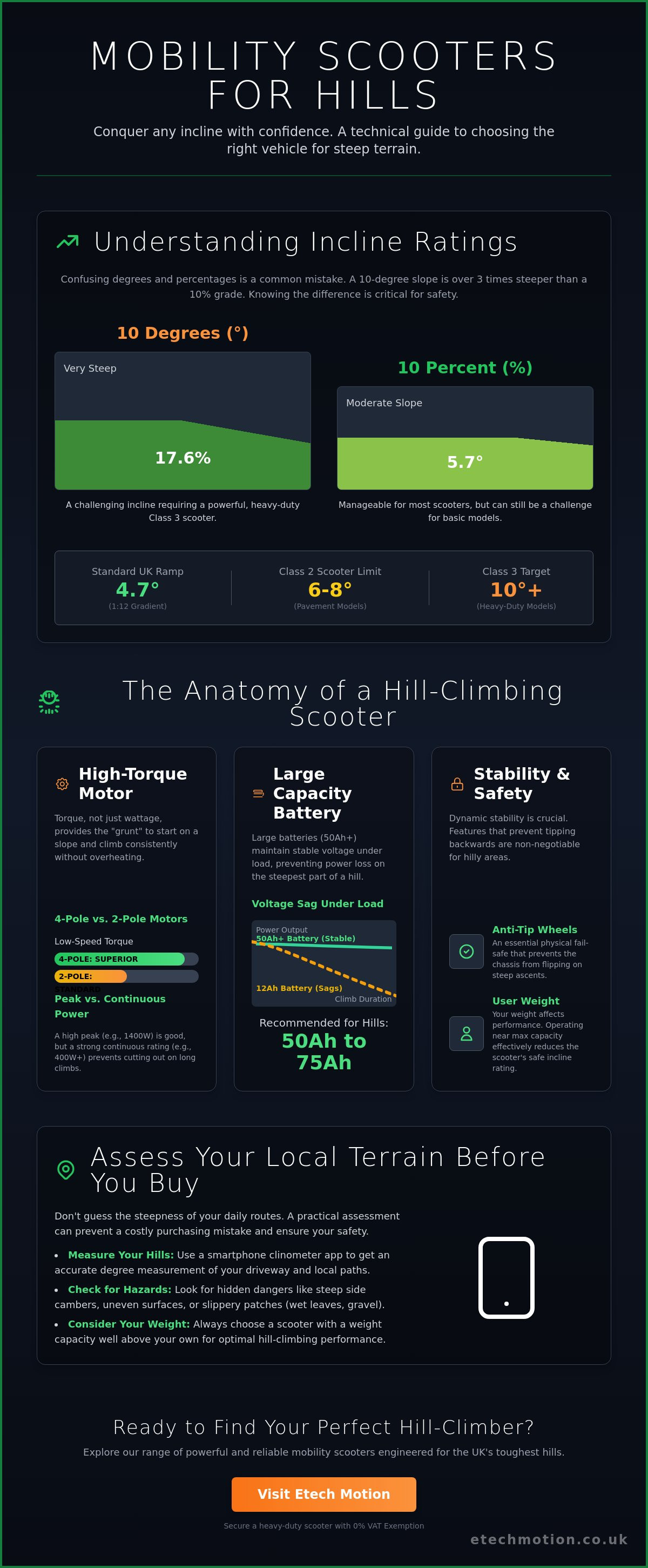
Every reputable manufacturer in the UK must provide a maximum incline rating for their vehicles by law. This isn't just a performance figure; it's a critical safety limit that defines the boundary between a smooth ride and a dangerous mechanical failure. When you're searching for the best mobility scooter for hills, this number tells you exactly where the motor can sustain power without overheating. Pushing a scooter beyond its tested limit risks internal motor burnout and, more seriously, a loss of control that could lead to the vehicle tipping backwards.
Standard UK building regulations require a 1:12 gradient for public ramps, which equals roughly 4.7 degrees. While this is manageable for almost any device, residential driveways and coastal paths often reach 10 degrees or more. Understanding what a mobility scooter is designed to handle ensures you don't accidentally take a Class 2 pavement model, typically rated for 6 degrees, onto a slope that requires a heavy-duty motor.
Degrees vs. Percentages: The Gradient Confusion
Confusing degrees with percentages is a common mistake that leads to choosing the wrong equipment. Road signs in the UK often show gradients as a percentage; for example, a 10% slope. However, a 10% gradient is only about 5.7 degrees. In contrast, a 10-degree slope is a much steeper 17.6% gradient. That's a massive difference when you're halfway up a residential hill. To convert a percentage to degrees, you can multiply the percentage by 0.57 for a quick estimate. A standard Class 2 mobility scooter is typically rated for a maximum safe gradient of 6 to 8 degrees.
Static vs. Dynamic Stability
Stability changes the moment your wheels start turning. Static stability refers to the scooter staying upright while parked on a slope. Dynamic stability is what keeps you safe while accelerating, steering, or braking. If you stop halfway up a hill and then hit the throttle, the sudden shift in torque can lift the front wheels off the ground. This is where high-quality engineering becomes vital.
Anti-tip wheels are a non-negotiable feature for anyone living in a hilly area. These small wheels at the rear act as a physical fail-safe, preventing the chassis from flipping if the centre of gravity shifts too far back. Your own weight distribution also plays a part. Leaning forward slightly while climbing helps keep the front wheels planted, ensuring the best mobility scooter for hills remains balanced during the entire ascent. Heavier users should be particularly careful, as carrying a load close to the maximum weight capacity effectively reduces the incline rating the scooter can safely achieve.
The Anatomy of a Hill Climber: 4 Must-Have Technical Features
Choosing the best mobility scooter for hills requires looking beyond the shiny exterior and into the mechanical heart of the machine. While many retailers focus solely on motor wattage, high power doesn't always translate to high performance on a 15% gradient. True hill-climbing capability depends on how that power is converted into torque and how the electrical system handles the intense heat generated during a sustained ascent.
Motor Power and Torque Explained
Most modern scooters use brushless motors, but their internal configurations vary wildly. A 4-pole motor is significantly more effective than a standard 2-pole motor because it provides more consistent "grunt" at low speeds. This is vital when you're starting from a standstill on a slope. You should also check the difference between peak power and continuous power. A motor might claim a peak of 1200W, but if its continuous rating is only 400W, it will likely overheat and cut out on a long UK residential hill. High-quality motor controllers are essential here; they act as the brain, managing current flow to prevent thermal shutdown while you're in motion.
Batteries serve as the fuel tank for your journey, and their size dictates how much energy can be discharged at once. Small 12Ah batteries are lightweight but often suffer from "voltage sag" when pushed hard. Scientific studies on battery performance and efficiency highlight that larger 50Ah or 75Ah deep-cycle batteries maintain a stable voltage for much longer. This stability ensures your scooter doesn't lose speed as you reach the steepest part of the climb. If you live in a particularly hilly neighbourhood, investing in larger capacity batteries is a safety decision as much as a convenience one.
Ground clearance is the often-overlooked hero of hill climbing. As you transition from a flat pavement to a steep ramp, the "V" shape created by the angle can cause a low-slung scooter to scrape its chassis. Aim for a minimum of 75mm to 100mm of clearance to avoid getting stuck. Our range of heavy duty mobility scooters is specifically engineered with higher ground clearance to handle these transitions effortlessly.
Advanced Braking for Steep Descents
Safety on hills isn't just about going up; it's about coming down with total control. Electromagnetic brakes are the primary safety feature. These engage automatically the moment you release the throttle, preventing the scooter from rolling away. For even better control, look for regenerative braking. This system uses the motor as a generator during descents, slowing the vehicle down while trickling a small amount of power back into the battery. It reduces wear on your mechanical brakes and gives you a much smoother, more predictable experience on sharp declines. For the steepest UK terrain, a secondary manual emergency brake provides an extra layer of security should the electrical system ever fail.
Folding vs. Heavy Duty: Which Hill-Climbing Scooter Fits Your Lifestyle?
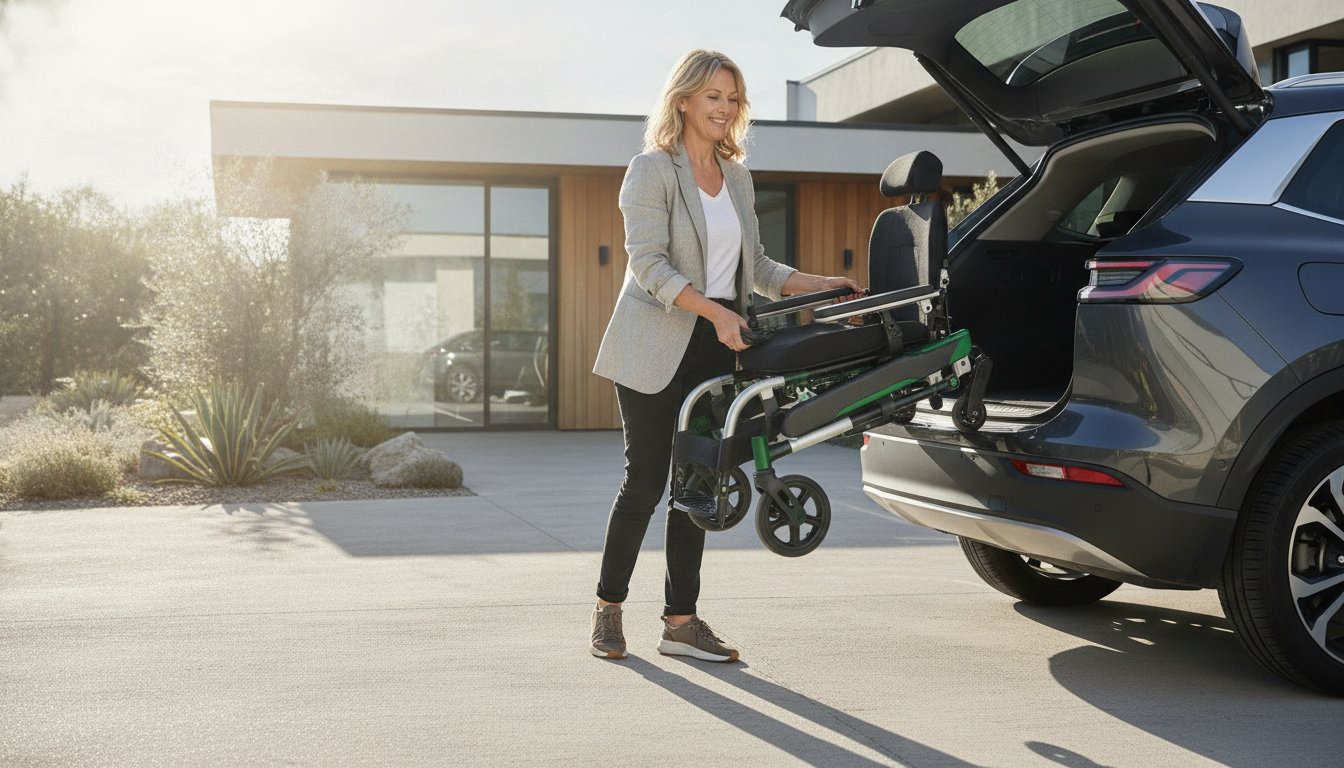
Choosing between a compact frame and raw power is the most common dilemma for UK buyers living in undulating areas. While earlier portable models often struggled with even minor slopes, modern engineering has narrowed the gap. However, the trade-off remains significant. If you need to lift your equipment into a car boot, you'll likely sacrifice some of the high-torque performance found in permanent, road-legal machines. Finding the best mobility scooter for hills requires a realistic look at how often you'll encounter steep gradients and whether portability is a non-negotiable requirement for your daily routine.
Weight capacity is the silent factor that determines your success on an incline. Every kilogram added to the chassis increases the strain on the motor and reduces the effective incline rating. If you're operating close to the manufacturer's maximum weight limit, a scooter rated for 10 degrees might only manage 6 or 7 degrees in practice. Following official safety guidelines for inclines is essential; these suggest maintaining a steady speed and avoiding sharp turns while ascending to keep all wheels firmly planted.
Traction is another vital consideration, especially on damp UK pavements covered in autumn leaves or morning frost. Larger pneumatic tyres provide a wider contact patch and better grip than the small, solid wheels found on many entry-level models. When combined with a dedicated suspension system, these tyres ensure that the best mobility scooter for hills maintains constant contact with the ground, even when the pavement is uneven or cambered.
The Rise of High-Performance Folding Scooters
Can a folding model really handle a steep driveway? Thanks to high-density lithium-ion batteries, the answer is increasingly yes. These scooters are ideal for "blue badge" travel, shopping centres, and holidays where the terrain is generally predictable. They offer enough "zip" for moderate slopes, but you'll need to be mindful of motor heat. Pushing a lightweight folding scooter up long, steep hills repeatedly can shorten the motor's lifespan if it isn't specifically designed for high-torque output.
Heavy Duty 'Road-Legal' Scooters for Maximum Inclines
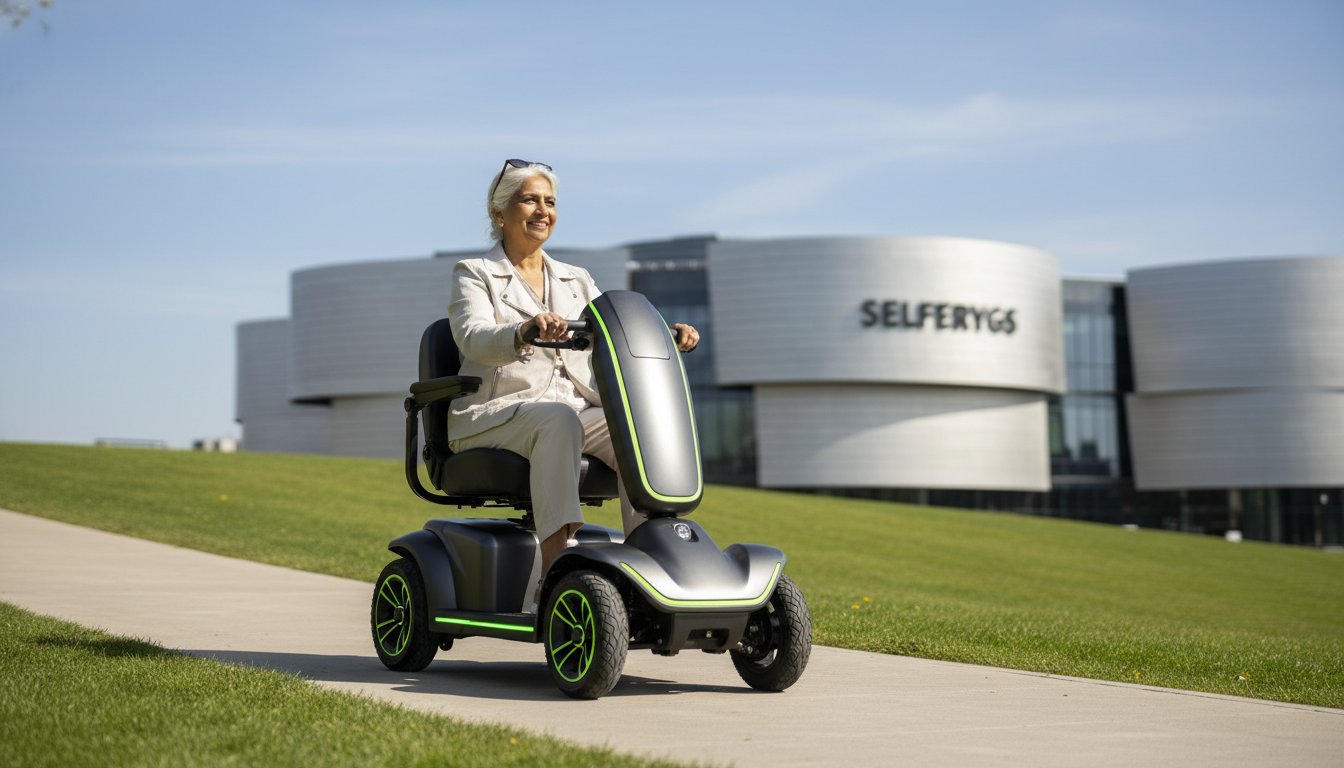
For those living in truly hilly regions like the Peak District or coastal towns, a Class 3 (8mph) scooter is usually the superior choice. These machines are built with a wider wheelbase, providing much-needed stability on slanted roads. They typically house massive 75Ah batteries that provide the consistent current required for all-day travel in hilly environments. This extra power ensures you don't just reach the top of the hill, but you do so without the anxiety of a rapidly draining battery or a stalling motor.
Practical Guide: How to Assess Your Local Hills Before Buying
Steepness is often deceptive to the naked eye. What looks like a gentle slope can actually exceed 10 degrees, especially on private driveways where UK building regulations for public footpaths don't apply. To find the best mobility scooter for hills that actually works for your specific environment, you need precise data. Most modern smartphones have built-in sensors that allow you to use "Inclinometer" or "Level" apps. Simply place your phone on the steepest part of your route to get an exact degree reading. Compare this directly to the manufacturer's rating to ensure you're within safe operating limits.
Beyond the gradient, you must identify hidden hazards that impact stability. UK pavements are rarely perfectly flat; they often have a camber, which is a sideways slope designed for water drainage. If a pavement has a 5 degree incline and a 3 degree lateral camber, your scooter has to work much harder to maintain a straight line. Look out for slippery leaf litter, loose gravel, or potholes. These can cause a wheel to lose traction precisely when you need torque the most. The UK Department for Transport’s "Inclusive Mobility" guidelines suggest that public footpaths should ideally not exceed a 5% gradient, but residential areas in the North or South West often far exceed this standard.
If you're able to test a unit before purchase, conduct a 5-minute trial on your steepest local path. Listen closely to the motor. A high-pitched whine or a rhythmic pulsing often indicates the motor is under excessive strain. Feel for vibrations through the floorpan. If the chassis feels unsettled or the steering feels light, you might need a model with a wider wheelbase or larger tyres to handle the terrain safely. Identifying these issues early prevents you from investing in a machine that's ill-suited for your neighbourhood.
Step-by-Step: Measuring Your Steepest Route
If you prefer a manual method, use a one-metre spirit level and a ruler. Place the level horizontally against the hill and measure the vertical gap between the end of the level and the ground. A 17.5cm gap over one metre indicates a 10 degree slope. Remember that a short ramp is much easier on a battery than a sustained 200-metre uphill climb. Always factor in the "return journey" as well. A steep ascent is only safe if your braking system can handle the descent without overheating or losing grip.
Safety Tips for Driving on Inclines
The golden rule for hill safety is to always approach an incline head-on. Never attempt to drive across a slope at an angle, as this dramatically increases the risk of tipping. Switch your scooter into "low range" or its slowest speed setting before you start the climb. This limits the top speed but maximises the torque available to the wheels. If you ever feel the motor losing power mid-climb, steer slowly toward the side of the path and engage the manual brake. It's better to stop and reassess than to risk a backwards roll. Ready to test these features for yourself? You can view our hill-ready collection to find a model that matches your local terrain perfectly.
Top Picks: Etech Motion Solutions for Hilly Terrain
Etech Motion understands that UK terrain isn't always kind to standard mobility devices. We've engineered our range to address the specific challenges of British neighbourhoods, where steep gradients and uneven pavements are the norm. Whether you're tackling a sharp driveway in Sheffield or navigating a coastal path in Cornwall, our equipment provides the necessary torque and stability to keep you moving. As a homegrown UK business, we provide local accountability and expert support that international retailers simply can't match, ensuring your transition to electric mobility is both aspirational and reliable.
Finding the best mobility scooter for hills means looking for a machine that balances power with practical features. Our selection process focuses on high-torque motors and intelligent battery management, ensuring you have the "grunt" needed for the ascent and the safety systems required for the way back down. We're committed to the long-term satisfaction of our community, which is why every product in our lineup undergoes rigorous quality assurance to meet the highest safety standards.
Etech Motion Folding Mobility Scooters
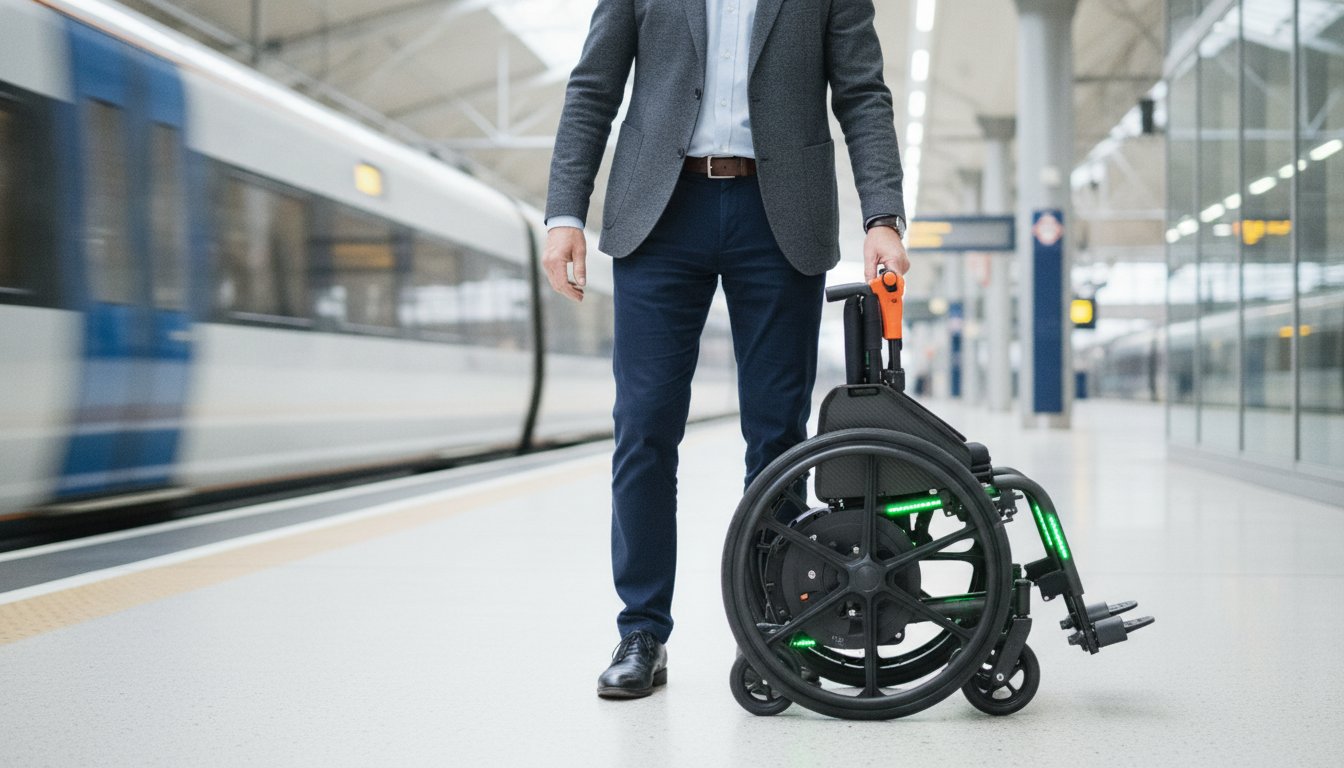
Portability shouldn't mean a lack of power. Our folding models, such as the Etech Motion MS-270, are designed for the active traveller who needs a reliable hill climber that fits comfortably in a car boot. The MS-270 features a 270W motor and a lightweight frame, making it a perfect companion for shopping centres or holidays. These units utilise advanced lithium-ion batteries that offer a consistent discharge rate, preventing the "sluggish" feeling common in older lead-acid designs when the path starts to climb. You can Explore our range of folding mobility scooters to find a model that pairs a user-friendly folding mechanism with robust, modern motor technology.
Heavy Duty Power for Maximum Independence
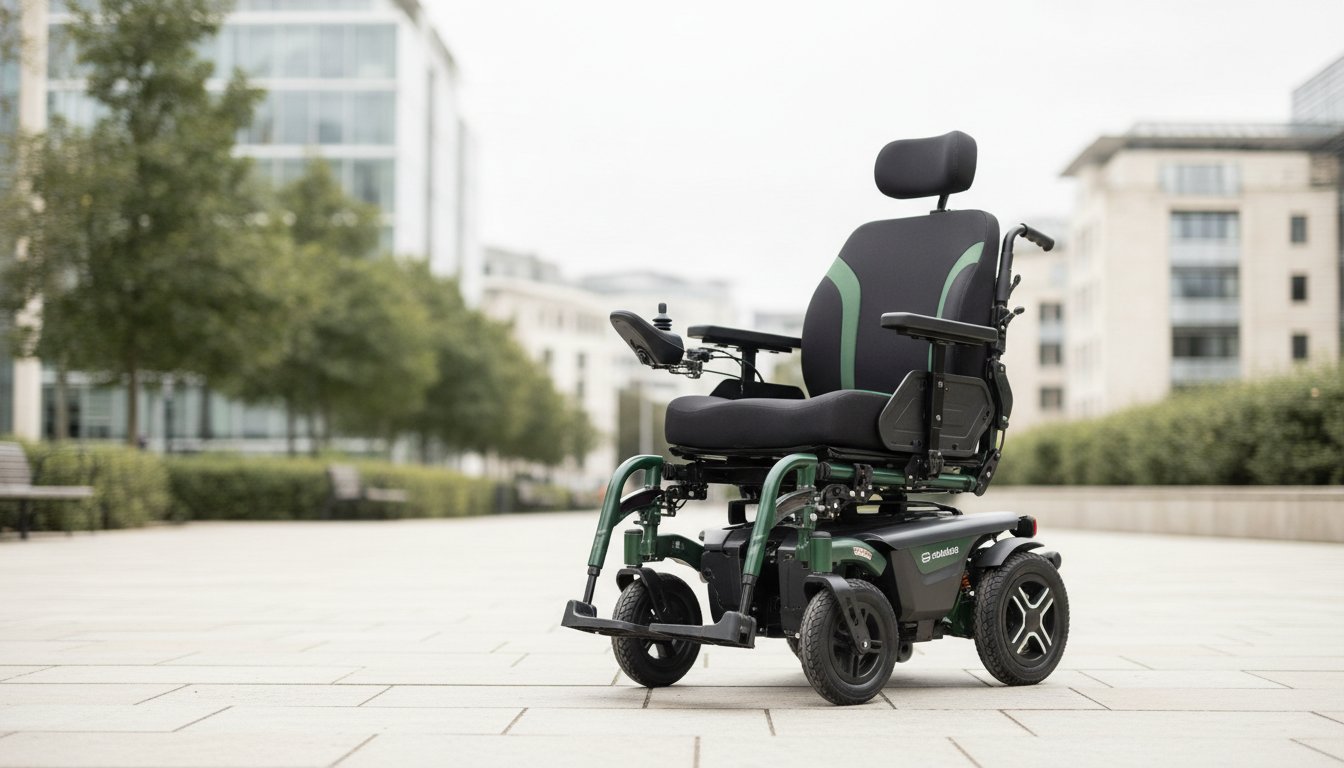
For users requiring maximum stability on 10 to 12 degree gradients, our heavy duty electric wheelchairs and scooters are the industry standard for independence. These machines feature wider wheelbases and high-torque brushless motors that make light work of rugged terrain and steep inclines. Unlike lightweight models, these heavy-duty solutions are built to handle sustained climbs without the risk of thermal shutdown, providing peace of mind for those living in truly hilly regions. We provide a full warranty and technical support from our UK headquarters, ensuring your equipment remains in peak condition for years to come.
If you're unsure which model is the best mobility scooter for hills in your specific neighbourhood, our specialists are ready to provide a thorough assessment. We can help you understand how technical specs like wattage and torque relate to your daily challenges. You can Contact our expert team for a personalised recommendation based on your weight, local terrain, and lifestyle needs. Choosing Etech Motion means more than just a purchase; it's an investment in a smarter, electric-powered future where your movement is never limited by the landscape.
Take Control of Your Local Terrain Today
Conquering the steep streets of your neighbourhood is no longer a matter of guesswork. By mastering the technical nuances of incline ratings and prioritising high-torque motor performance, you've gained the knowledge to choose a vehicle that won't falter when the path gets steep. Remember that accurate measurements of your steepest routes and a clear understanding of your own weight requirements are the foundation of a safe, reliable journey. Whether you choose a compact folding model for travel or a heavy-duty powerhouse for daily independence, the right equipment ensures that hills become part of your adventure rather than a barrier to your freedom.
Etech Motion is here to support every step of your journey toward effortless electric mobility. We combine high-performance brushless motor technology with the reliability of a homegrown UK business. Our team provides expert support and offers nationwide delivery across the United Kingdom to get you moving quickly. Finding the best mobility scooter for hills is about more than just a purchase; it's about reclaiming your confidence on every descent and climb. Find your perfect hill-climbing mobility partner at Etech Motion and start exploring your local area without limits.
Frequently Asked Questions
Can a mobility scooter go up a 20% gradient hill?
Most standard mobility scooters cannot safely navigate a 20% gradient, which equates to roughly 11.3 degrees. While high-performance models like the TGA Breeze S4 are rated for approximately 12 degrees, average Class 2 pavement scooters typically max out at 6 to 8 degrees. Attempting a 20% slope on an underpowered machine risks immediate motor burnout or a dangerous loss of stability. Always verify your specific model's certified incline rating before attempting steep residential climbs.
Will my mobility scooter roll backwards on a steep hill?
No, your vehicle should not roll backwards if it is equipped with an electromagnetic braking system. These brakes engage automatically the moment you release the throttle, locking the wheels firmly in place even on significant inclines. This fail-safe prevents roll-back during a pause or an unexpected power loss. The best mobility scooter for hills will also feature anti-tip wheels at the rear to provide a physical barrier against tipping during a hill start.
Does user weight affect how well a scooter climbs hills?
Yes, user weight is a primary factor in determining hill-climbing success and motor longevity. Every additional 10kg of load increases the current draw from the battery and places more strain on the brushless motor. This effectively lowers the maximum gradient the scooter can master. If you are close to the manufacturer's maximum weight limit, a scooter rated for 10 degrees may only manage 7 degrees in practice. We recommend choosing a model with a capacity 20% higher than your weight.
Is it better to have a 3-wheel or 4-wheel scooter for hilly areas?
A 4-wheel scooter is the superior choice for hilly terrain because it offers much better lateral stability. UK roads and pavements often feature a camber, which is a sideways slope for water drainage. A 4-wheel configuration provides a wider, more stable footprint that resists tipping when you are forced to navigate these slanted surfaces. While 3-wheelers offer a tighter turning circle for indoor use, they lack the "planted" feel required for safe outdoor hill climbing.
How do I know if my motor is overheating on a long climb?
Signs of an overheating motor include a sudden drop in speed, a rhythmic pulsing sensation, or a faint burning smell. Most modern motor controllers include thermal protection sensors that will automatically slow or shut down the vehicle to prevent permanent internal damage. If you hear the motor making a high-pitched whine or feel the floorpan becoming warm, stop in a safe area for at least 15 minutes. This allows the electrical components to cool before you continue your journey.
Can I use a folding mobility scooter in a hilly seaside town?
You can use a folding model in a hilly town, but you must choose one specifically engineered with a high-torque motor and lithium-ion batteries. While entry-level folding models are built for flat shopping centres, the Etech Motion MS-270 is designed to handle moderate gradients. However, for coastal towns with sustained 10-degree inclines, a heavy-duty Class 3 scooter is more reliable. These larger machines have the cooling capacity and battery reserves to handle daily seaside climbs without overstressing the system.
Does a hilly route drain the battery significantly faster?
Yes, navigating a hilly route can increase battery consumption by 40% to 60% compared to travelling on flat ground. The motor requires a much higher current to overcome gravity, which depletes the amp-hour capacity of your battery rapidly. To ensure you don't get stranded, the best mobility scooter for hills should be paired with a battery of at least 50Ah. This provides the necessary "buffer" to complete your return journey after several steep ascents in your neighbourhood.
Are there specific tyres I should use for better grip on sloped pavements?
Pneumatic, air-filled tyres with a deep tread pattern are essential for maintaining traction on damp or uneven slopes. These tyres provide a larger contact patch than solid tyres, allowing the rubber to "bite" into the pavement. This is particularly important on 10% gradients covered in slippery leaf litter or morning frost. Ensure your tyres are always inflated to the manufacturer's recommended PSI to maximise grip and prevent the wheels from spinning fruitlessly when you apply the throttle on a climb.