What if the very feature designed to keep you moving is actually the source of your daily discomfort? As we move through 2026, many riders ask are solid tyres better for mobility scooters to avoid the nightmare of a flat tyre while away from home. You want to feel confident that your equipment won't let you down, yet the vibration from solid rubber on uneven UK pavements can quickly turn an enjoyable outing into a painful chore.
We understand that your independence relies on equipment that just works. With the global electric mobility tyre market reaching $2.5 billion in 2025, manufacturers are innovating faster than ever to solve the trade-off between reliability and ride quality. This article promises to clarify which tyre type fits your specific lifestyle, whether you're navigating a Class 3 scooter on the road or a Class 2 model at the local shopping centre.
You'll discover how the new Motability Scheme "fair use" limits starting July 1, 2026, impact your maintenance choices. We also look at safety data showing pneumatic tyres can reduce slip risks by 30% in wet conditions. From the latest honeycomb hybrids to technical performance, here is everything you need to secure a maintenance-free, comfortable future.
Key Takeaways
- Learn the fundamental engineering differences between air-filled pneumatic tyres and puncture-proof solid rubber to see which aligns with your daily routine.
- Discover how "road buzz" impacts joint health and why your choice of tyre is critical if you manage conditions like arthritis or spinal issues.
- Evaluate the long-term financial impact of inner tube replacements to decide are solid tyres better for mobility scooters when aiming for a maintenance-free experience.
- Find out how terrain—from smooth shopping centres to muddy gravel paths—dictates your traction requirements and safety on the road.
- Follow our simple two-step assessment to match your physical comfort needs and typical environment with the perfect set of wheels.
Understanding Mobility Scooter Tyres: Solid vs. Pneumatic
Your choice of wheels dictates how you interact with your environment. It influences your comfort, your safety, and even the lifespan of your vehicle's components. Solid tyres are a maintenance-free alternative to traditional air-filled mobility scooter wheels. While air has been the standard for decades, the rise of puncture-proof technology has many users asking, are solid tyres better for mobility scooters in a modern urban setting?
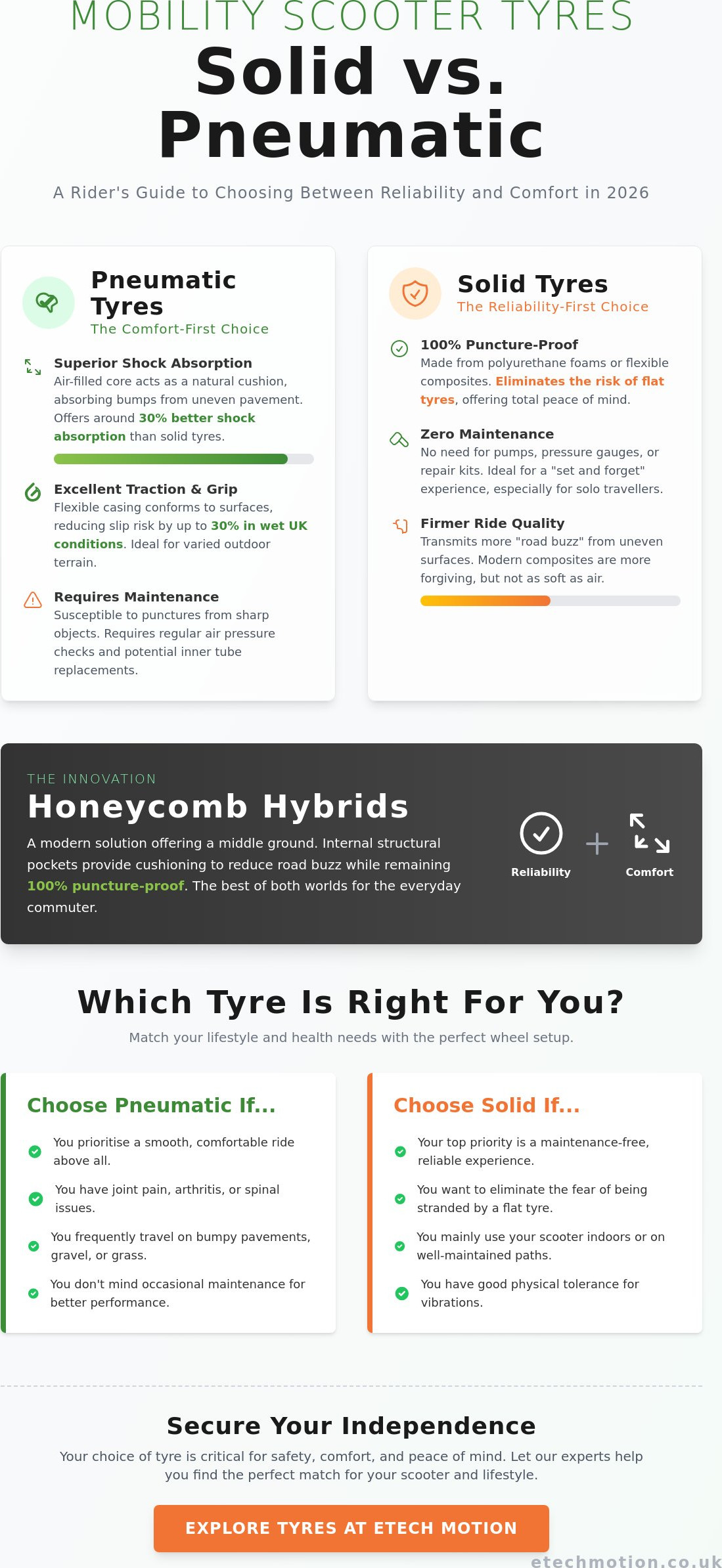
By 2026, the industry has moved beyond a simple binary choice. Hybrid "honeycomb" tyres now offer a middle ground for the everyday commuter. These designs use internal structural pockets to provide cushioning that traditional solid rubber lacks. This innovation aims to reduce the "road buzz" that often plagues solid-tyre users while maintaining a 100% puncture-proof profile. It represents a significant leap forward for those who want the best of both worlds.
Tyre choice also impacts your scooter's efficiency. Solid tyres typically have lower rolling resistance on smooth surfaces, which can marginally improve your lithium-ion battery range. Conversely, the lack of shock absorption means your motor and transaxle absorb more impact from bumps. Over time, this extra vibration can lead to mechanical fatigue if you frequently travel on rough terrain. Choosing the right fit is about balancing these technical trade-offs with your personal lifestyle.
What are Pneumatic Mobility Tyres?
Pneumatic tyres consist of a durable outer casing and an inflatable inner tube. This design allows you to customise your ride by adjusting the PSI (pounds per square inch). A lower pressure provides a softer, more forgiving ride on bumpy paths, while a higher pressure increases speed and efficiency. In the UK, where rain and damp pavements are common, pneumatic tyres remain the gold standard for safety. Their ability to "deform" slightly over the terrain provides superior grip and traction compared to harder materials. When selecting a mobility scooter for outdoor adventures, this grip is often the deciding factor.
The Evolution of Solid and Puncture-Proof Tyres
Modern solid tyres have evolved significantly from the rigid, heavy rubber of the past. Today, manufacturers use advanced polyurethane foams and flexible composites that offer better flexibility. These tyres eliminate the need for pumps, pressure gauges, or repair kits. For solo travellers, this "no-flat" guarantee provides immense peace of mind. You won't find yourself stranded by a shard of glass or a stray thorn. This reliability makes them the preferred choice for those who value a maintenance-free lifestyle and primarily travel on well-maintained pavements or inside shopping centres. They're built for those who prioritse progress over tinkering.
Ride Quality and Comfort: The Shock Absorption Gap
Comfort isn't just a luxury; for many, it's a medical necessity. When evaluating are solid tyres better for mobility scooters, you must consider how your body reacts to "road buzz." This high-frequency vibration occurs when solid rubber meets uneven pavement, transmitting every crack and pebble directly through the tiller and seat. While pneumatic tyres offer roughly 30% better shock absorption by compressing under weight, modern solid tyres have improved significantly. The misconception that all puncture-proof wheels are "bone-shakingly hard" is outdated. Modern polyurethane blends provide a much more forgiving ride than the rigid plastic wheels of the past.
Tyre dimensions play a massive role in this equation. A wider tyre with a larger diameter, such as a 14-inch wheel found on heavy-duty models, will naturally bridge gaps in the pavement more effectively than a small 8-inch wheel. This increased surface area helps distribute weight and dampens the impact of small obstacles. If you're unsure about which specific configuration suits your daily route, consulting a comprehensive guide to mobility scooter tires can help you understand the physics of ride quality before you commit to a purchase.
Impact on Physical Health and Joint Pain
For users managing arthritis, osteoporosis, or spinal issues, pneumatic tyres act as a critical secondary suspension system. The air inside the tyre compresses instantly upon impact, protecting your joints from sharp jolts. Long journeys on solid tyres can lead to increased physical fatigue because your muscles must work harder to stabilise your body against constant micro-vibrations. We recommend prioritising comfort over puncture resistance if you spend more than two hours a day on your scooter or if you frequently navigate bumpy Victorian-era paving. If you want to explore models designed for maximum ride quality, you can view our latest comfort-focused scooters to see how frame design assists the wheels.
The Role of Scooter Suspension
High-end suspension systems can make solid tyres a much more viable option for the average user. A scooter equipped with dedicated front and rear coil-over shocks can offset the firmness of solid rubber, giving you the benefit of zero punctures without the traditional discomfort. This is why many lightweight folding scooters default to solid tyres; it saves the weight of a pump and heavy inner tubes while relying on the chassis to handle the bumps. When matching your tyre type to the chassis, remember that a Class 3 road-legal scooter with full suspension handles solid tyres far better than a basic boot scooter with a rigid frame. It's about the synergy between the rubber and the metal.
Maintenance and Durability: The True Cost of Punctures
Reliability is the cornerstone of independence. When you're three miles from home, the last thing you want to think about is a sharp shard of glass or a stray thorn. This fear of being stranded often leads users to ask, are solid tyres better for mobility scooters when it comes to long-term maintenance? On UK pavements, debris is a constant reality. While pneumatic tyres offer a smooth ride, they're vulnerable to the environment. Solid tyres remove this risk entirely, acting as a form of reliability insurance for the daily commuter.
The wear patterns between the two types are quite distinct. Solid tyres are manufactured from dense polyurethane or rubber compounds that typically outlast pneumatic alternatives by a ratio of 2:1. While an air-filled tyre might show significant tread wear or casing degradation after 18 months of heavy use, a solid tyre often retains its profile for three years or more. This longevity reduces the frequency of replacements, though it's vital to monitor the grip levels as the material eventually hardens with age.
The Logistics of Tyre Replacement
Maintenance isn't just about how often a part breaks; it's about how easily it's fixed. Pneumatic tyres are relatively straightforward for a DIY enthusiast to manage. You can often change an inner tube with standard tyre levers and a basic wrench. In contrast, fitting a solid tyre onto a rim is a high-pressure task. It usually requires specialised industrial tools or a hydraulic press to stretch the material over the wheel hub. At Etech Motion, our UK-based support team provides the expert guidance you need to handle these technical hurdles, ensuring your equipment remains safe and roadworthy without the stress of complex repairs.
3-Year Total Cost of Ownership (TCO)
While the upfront price for solid wheels is higher, the long-term math often favours the puncture-proof route. Consider the hidden costs of pneumatic ownership:
- Replacement inner tubes and valve caps.
- Portable pumps or CO2 inflators.
- Emergency call-out fees for roadside repairs, which can exceed £50 per visit.
Starting July 1, 2026, the Motability Scheme is introducing "fair use" limits, capping damage-related tyre replacements at four per three-year lease. This change highlights the growing need for durable choices. While solid tyres cost more initially, they typically save over £100 in repair fees and replacement parts over a three-year period. For many, the absence of downtime is worth the investment alone.
The environment where you spend 90% of your time is the ultimate filter for your tyre choice. While previous chapters focused on mechanical durability and physical comfort, terrain compatibility is about safety and control. When asking are solid tyres better for mobility scooters, you must evaluate the surfaces under your wheels. A tyre that feels perfect on a polished supermarket floor can become a liability on a rain-slicked, cambered pavement or a muddy park path. Your typical route dictates whether you need the bite of air-filled rubber or the rigid consistency of solid polyurethane.
UK weather plays a significant role in this decision. Data from safety reports, such as those by the NHTSA, indicate that pneumatic mobility scooter tyres can reduce the risk of slips in wet conditions by up to 30% compared to solid alternatives. This is because air-filled rubber remains more pliable in the cold and can "bite" into the surface better. In contrast, solid tyres can become quite hard in frosty conditions, leading to a loss of traction on smooth, frozen surfaces. If you plan to use your scooter year-round in all weather, this grip factor becomes a primary safety concern.
For those who primarily navigate the high street or local shopping centres, solid tyres are the undisputed kings. They offer a level of precision that pneumatic tyres sometimes lack. Because there's no "give" in the sidewall, your steering response is more immediate. This allows for a tighter, more predictable turning circle in crowded environments. If you need a vehicle that can handle both the pavement and the retail floor, explore our range of terrain-ready mobility scooters to find your ideal match.
Outdoor Adventures: Gravel, Grass, and Cobbles
Pneumatic tyres are designed to 'conform' to the ground. When you hit a pebble or a patch of gravel, an air-filled tyre deforms around the obstacle, maintaining a larger contact patch with the earth. This provides essential stability that solid tyres struggle to replicate. On grassy or muddy terrain, solid tyres often spin in place, creating a 'traction trap' that can leave you stuck. For 2026, the trend for off-road use has shifted toward "fat tyres," which provide superior traction and stability on varied outdoor terrain, making them the superior choice for park visits and rural paths.
Indoor and Urban Navigation
Inside the home or retail space, the priorities shift to cleanliness and agility. High-quality solid tyres are manufactured from non-marking polyurethane, ensuring you don't leave unsightly black streaks on carpets, lino, or tiles. They also eliminate the risk of picking up a puncture from a dropped staple or a small piece of debris in a warehouse environment. For the urban commuter who sticks to well-maintained pavements and indoor spaces, the reliability of a solid wheel far outweighs the off-road benefits of air. This makes them the go-to option for those who value a tidy home and a predictable commute.
How to Choose the Right Tyres for Your Mobility Needs
Selecting the perfect wheel setup requires a balance between your physical requirements and your daily environment. There's no universal answer that fits every rider. Instead, the final verdict on are solid tyres better for mobility scooters depends on how you weigh the need for total reliability against the desire for a cushioned ride. To make an informed decision, follow this structured five-step assessment based on your specific lifestyle.
- Step 1: Travel Environment. Review your primary routes. If you spend the majority of your time on polished supermarket floors or smooth pavements, solid tyres offer the precision you need. If your journey involves gravel paths or rural terrain, the grip of pneumatic tyres is essential for safety.
- Step 2: Physical Comfort. Assess your joint health. Users with chronic back pain or severe arthritis should prioritise the air-cushioning effect of pneumatic tyres. This acts as a secondary suspension layer to protect your spine from sharp jolts.
- Step 3: Maintenance Capacity. Consider your ability to manage upkeep. If you live alone or prefer a "fit and forget" solution, solid tyres eliminate the stress of checking PSI levels or carrying a pump.
- Step 4: Chassis Suspension. Examine your scooter's build. A high-end model with dedicated coil suspension can successfully offset the firmness of solid rubber. Conversely, a rigid frame requires air-filled tyres to provide any semblance of comfort.
- Step 5: Long-Term Budget. Factor in the predictability of costs. While pneumatic tyres are cheaper upfront, the potential for emergency repair fees adds up. Choosing solid tyres allows for a more stable long-term budget with fewer unexpected outgoings.
The Verdict: When to Choose Solid Tyres
Solid tyres are the definitive choice for urban commuters and those who value total reliability above all else. They're particularly vital for folding and travel scooters designed for frequent transport in car boots. These models often lack complex suspension, yet the puncture-proof nature of solid rubber ensures you're never stranded during a day trip or holiday. If you want a hassle-free experience, you can explore our range of folding mobility scooters featuring the latest non-marking solid tyre technology.
The Verdict: When to Stick with Pneumatic
Pneumatic tyres remain the gold standard for users in rural areas or those who require maximum shock absorption for medical reasons. They provide the necessary traction for off-road adventures and damp conditions. You can mitigate the risk of punctures by using a high-quality tyre sealant, often called "slime," which automatically plugs small holes from thorns or glass. At Etech Motion, we're committed to supporting the UK mobility community with expert advice and sustainable transport solutions. Whether you choose the rugged grip of air or the maintenance-free peace of solid rubber, your freedom of movement remains our primary mission.
Secure Your Independence with the Perfect Wheel Setup
Your journey toward a smarter, more reliable commute begins with a single choice. Throughout our analysis, we've seen that the answer to are solid tyres better for mobility scooters depends entirely on your specific physical needs and the paths you travel. If you value a maintenance-free lifestyle and primarily navigate urban high streets, the puncture-proof nature of modern solid rubber is an excellent investment. However, for those requiring maximum joint protection or rural traction, pneumatic tyres remain a vital tool for comfort.
Choosing the right equipment shouldn't feel overwhelming. Our team provides UK-based expert support to help you navigate these technical specifications with ease. We offer nationwide delivery on all mobility equipment, ensuring your new ride arrives safely at your door. Whether you're looking for modern, lightweight folding designs for travel or heavy-duty road-legal models, we have the expertise to keep you moving forward.
Take the next step in your electric mobility journey today. Browse our expert-selected range of mobility scooters and wheelchairs and rediscover the joy of effortless, sustainable adventure. The future of your independence is bright, and we're here to ensure every mile is as smooth as possible.
Frequently Asked Questions
Can I swap pneumatic tyres for solid tyres on my existing scooter?
Yes, you can often convert your scooter, but the ease of the task depends on your rim design. If you're asking are solid tyres better for mobility scooters for your current model, check if you have "split rims" that unbolt for easy access. One-piece rims usually require a hydraulic press to stretch the solid material over the hub, which means you'll likely need professional assistance from a UK-based technician.
Do solid tyres make the mobility scooter heavier?
Solid tyres are heavier than air-filled ones because they consist of dense polyurethane or solid rubber rather than a hollow tube. Switching to solid tyres can add between 1kg and 2.5kg per wheel to your vehicle's total weight. This is a critical factor for users with folding or travel scooters, as the extra weight can make lifting the chassis into a car boot noticeably more difficult.
How often should I check the pressure on pneumatic mobility tyres?
You should check your tyre pressure at least once every four weeks to ensure peak performance. Maintaining the correct PSI prevents your motor from working harder than necessary and protects your lithium-ion battery. Under-inflated tyres can reduce your travel range by up to 10% and significantly increase the risk of "pinch punctures" when you're navigating over kerbs or uneven ground.
Are solid tyres more slippery in the rain than air-filled ones?
Solid tyres generally offer less traction on wet surfaces because they don't "conform" to the pavement as effectively as pneumatic rubber. Safety reports indicate that pneumatic tyres can reduce slip risks by 30% in damp conditions. If you're deciding are solid tyres better for mobility scooters for year-round UK use, remember that the softer grip of air-filled tyres provides a safer experience on rain-slicked pavements.
What is the average lifespan of a solid mobility scooter tyre?
A high-quality solid tyre typically lasts between three and five years, which is roughly double the lifespan of a pneumatic casing. While the tread may remain visible for a long time, the polyurethane material can harden as it ages. You should inspect your tyres every twelve months for signs of cracking or flat spots that could compromise your safety or comfort during long outings.
Is there such a thing as a 'hybrid' mobility scooter tyre?
Honeycomb tyres are the leading hybrid innovation for 2026, offering a middle ground between air and solid rubber. These tyres feature internal air pockets that provide better shock absorption than traditional solid wheels while remaining 100% puncture-proof. They're an excellent solution for riders who want to eliminate the risk of being stranded without sacrificing their physical comfort on bumpy Victorian pavements.
Do solid tyres affect the battery range of my electric scooter?
Solid tyres can marginally improve your range on perfectly smooth indoor floors because they have lower rolling resistance. However, on outdoor surfaces, the extra weight and lack of vibration dampening can force the motor to work harder. The overall impact on your battery life is usually negligible, though you might notice a slight decrease in power when you're tackling steep hills with heavier solid wheels.
What should I do if I get a puncture in a pneumatic tyre while out?
Your first step should be to use a portable electric pump if the leak is slow, which may provide enough air to reach a safe location. To prevent this scenario, many users apply a liquid sealant like "slime" inside their tubes, which automatically plugs holes up to 3mm wide. If you don't have sealant and the tyre is completely flat, you'll need to contact a recovery service or a local repair specialist.