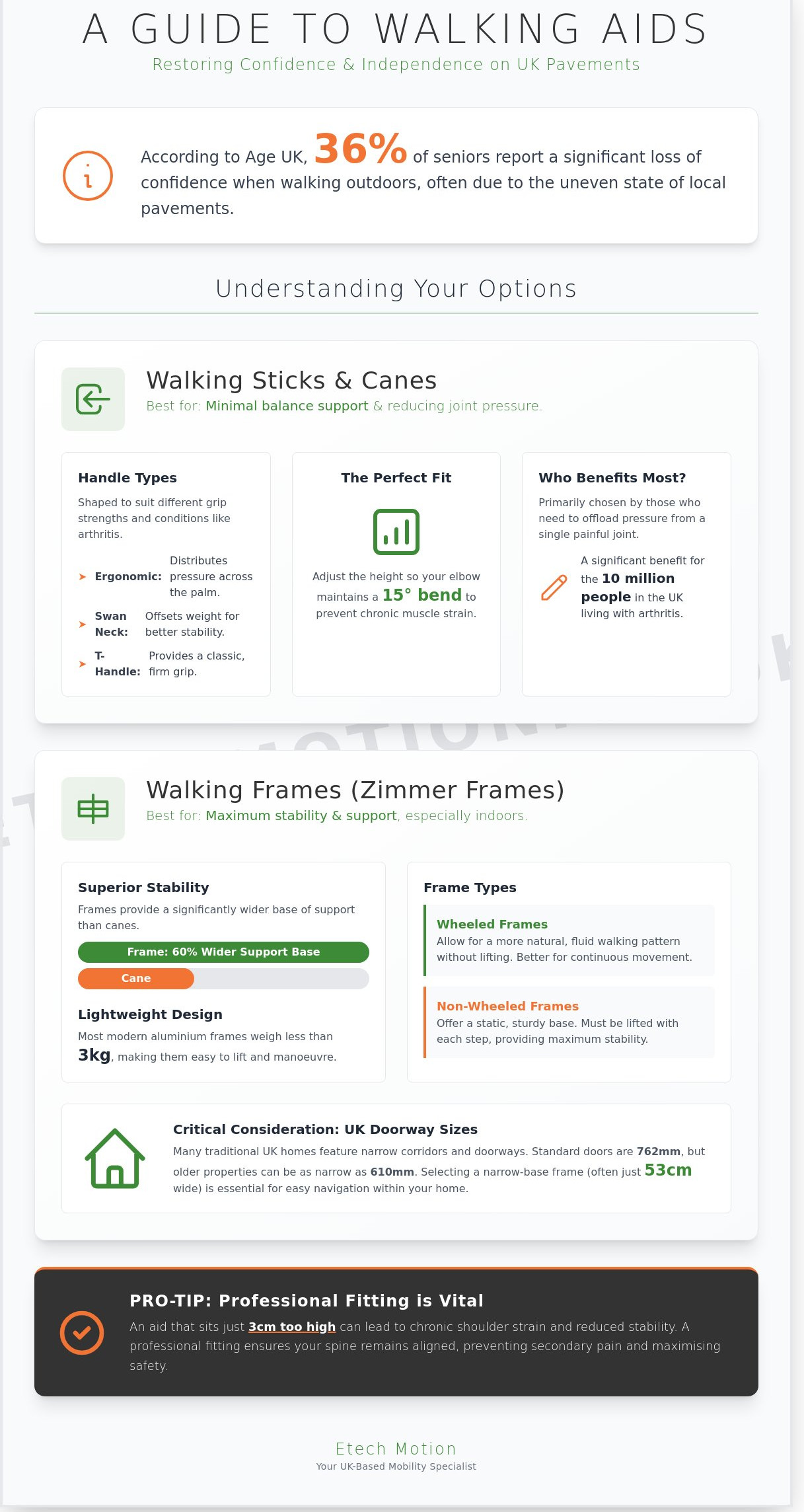
According to recent data from Age UK, 36% of seniors report feeling a significant loss of confidence when walking outdoors due to the uneven state of local pavements. It's a common frustration to feel like your world is shrinking just because your current equipment doesn't offer the stability you need. You deserve to feel secure, whether you're popping to the local shops or meeting friends for coffee. Choosing the right walking aids for elderly users is the most effective way to reclaim that sense of freedom without compromising on safety or style.
You likely agree that staying active is non-negotiable for a healthy lifestyle, yet the fear of a trip or fall can be a heavy burden to carry. We'll show you exactly how to select a mobility partner that restores your confidence and significantly reduces joint pain during every outing. This guide provides a clear comparison of the latest rollators and walkers available in 2026, ensuring you find a high-quality, British-supported solution that fits your active life perfectly.
Key Takeaways
- Learn how the right walking aids for elderly can restore your independence and confidence when navigating your local UK community.
- Discover how to assess your environment and physical strength to select an aid that handles uneven British pavements and kerbs with ease.
- Master the "Step-In" technique and neutral spine posture to ensure your mobility aid provides maximum stability without causing back pain.
- Identify your personal "fatigue threshold" to determine when to transition from manual aids to lightweight electric solutions for longer journeys.
- Gain practical advice for navigating busy shopping centres like the Bullring safely while maintaining your momentum and balance.
Understanding the Different Types of Walking Aids for Seniors
Walking aids for elderly residents are much more than simple physical supports; they're essential tools for maintaining a self-sufficient lifestyle across Birmingham. These devices function by broadening your base of support and redistributing weight away from weakened or painful joints. According to 2023 mobility reports, approximately 6.5 million people in the UK rely on some form of assistance to stay active. This isn't just about physical movement. Reclaiming the ability to visit a local cafe or navigate the Bullring shopping centre provides a vital psychological boost. It combats the social isolation that affects roughly 1.4 million older adults in Britain today.
Selecting the right equipment involves Understanding the Different Types of Walking Aids available to suit your specific physical requirements. The spectrum of choice is vast, moving from basic wooden sticks to high-tech rollators with integrated braking systems. Making a hasty choice without professional guidance often leads to long-term postural issues. Data from physiotherapy clinics suggests that 30% of mobility aid users experience secondary pain in their shoulders or wrists because their equipment is the wrong height or weight. A correctly fitted aid ensures your spine remains aligned and your centre of gravity stays stable, preventing the trips and falls that lead to hospital admissions.
Walking Sticks and Canes
Sticks are the primary choice for individuals who need minimal balance support or want to offload pressure from a single painful joint. Modern designs offer various handle types to suit different grip strengths. Ergonomic handles are specifically shaped to distribute pressure across the palm, which is a significant benefit for the 10 million people in the UK living with arthritis. Swan neck sticks offset the user's weight directly over the shaft for enhanced stability, while T-handles provide a classic, firm grip. It's vital to adjust the height so your elbow maintains a 15-degree bend; anything else risks chronic muscle strain.
Walking Frames and Zimmer Frames
When you require maximum stability, especially within the home, walking frames are the most reliable option. Non-wheeled versions offer a static, sturdy base but require the user to lift the frame with each step. In contrast, wheeled versions allow for a more natural, fluid walking pattern. Because many traditional Birmingham homes feature narrow corridors, frame width is a critical specification. Standard UK internal doorways are typically 762mm wide, yet many older properties have gaps as narrow as 610mm. Selecting a narrow-base frame, often measuring just 53cm in width, ensures you can move through your home without getting stuck or damaging the doorframes.
- Stability: Frames provide a 60% wider support base than standard canes.
- Weight: Most modern aluminium frames weigh less than 3kg, making them easy to manoeuvre.
- Safety: Non-slip rubber ferrules are essential for grip on kitchen lino or bathroom tiles.
Choosing the right aid isn't just a clinical decision; it's an investment in your future freedom. By matching the technical specifications of the device to your personal environment and physical needs, you ensure that "moving forward" remains a reality rather than a challenge. Our UK-based team understands these nuances, ensuring every piece of equipment meets the rigorous safety standards you expect from a homegrown specialist.
How to Choose the Right Mobility Aid for Your Needs
Selecting the correct equipment requires a clinical assessment of your daily routine and physical capabilities. If you spend 85% of your time navigating narrow hallways in a traditional Birmingham terrace, your requirements differ significantly from someone walking daily through the paved paths of Cannon Hill Park. You must evaluate your weight-bearing capacity before making a choice. Can your wrists and shoulders support 15% of your body weight? If balance is your primary concern rather than upper body strength, a wheeled frame provides the continuous contact you need to feel secure. This process of How to Choose the Right Mobility Aid involves matching the device to your specific physical limitations. A professional fitting is vital; a frame that sits just 3cm too high can lead to chronic shoulder strain and reduced stability.
Storage and transit are equally critical factors for maintaining an active lifestyle. If you frequently use local bus services or travel by car, you need to measure your storage space. A device that doesn't fit into a standard car boot or feels too heavy to lift becomes a barrier rather than a tool for freedom. Consider these primary points during your evaluation:
- Environment: Will you use the aid mostly on flat indoor carpets or uneven outdoor pavements?
- Strength: Do you have the grip strength to operate cable brakes effectively?
- Endurance: Do you require a built-in seat to rest every 10 minutes during a walk?
- Dimensions: Is the aid narrow enough to pass through your internal door frames, which are often 76cm wide in UK homes?
Rollators: The Modern Outdoor Solution
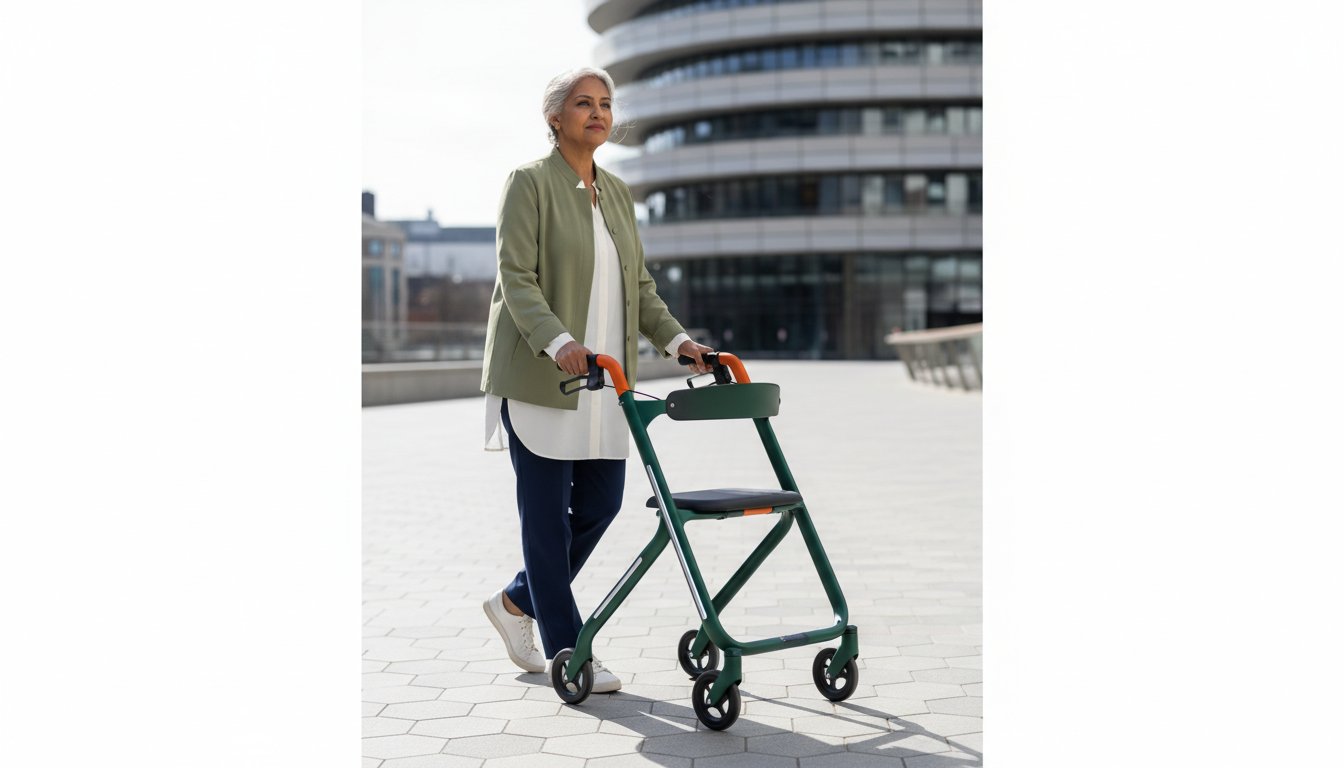
Rollators have become the preferred walking aids for elderly residents in Birmingham who want to maintain their social calendars. These devices feature four wheels and a robust frame, allowing for a fluid, natural gait without the need to lift the aid. For maximum safety, look for models equipped with 20cm puncture-proof tyres that can handle the cracked paving often found in urban areas. While a three-wheeled rollator offers a tighter 75cm turning circle for navigating busy shops in the Bullring, a four-wheeled model provides 100% ground contact for superior stability. Most modern rollators include lockable loop brakes, a shopping basket for up to 5kg of groceries, and a padded seat for those moments when you need a quick break.
Assessing Portability and Weight
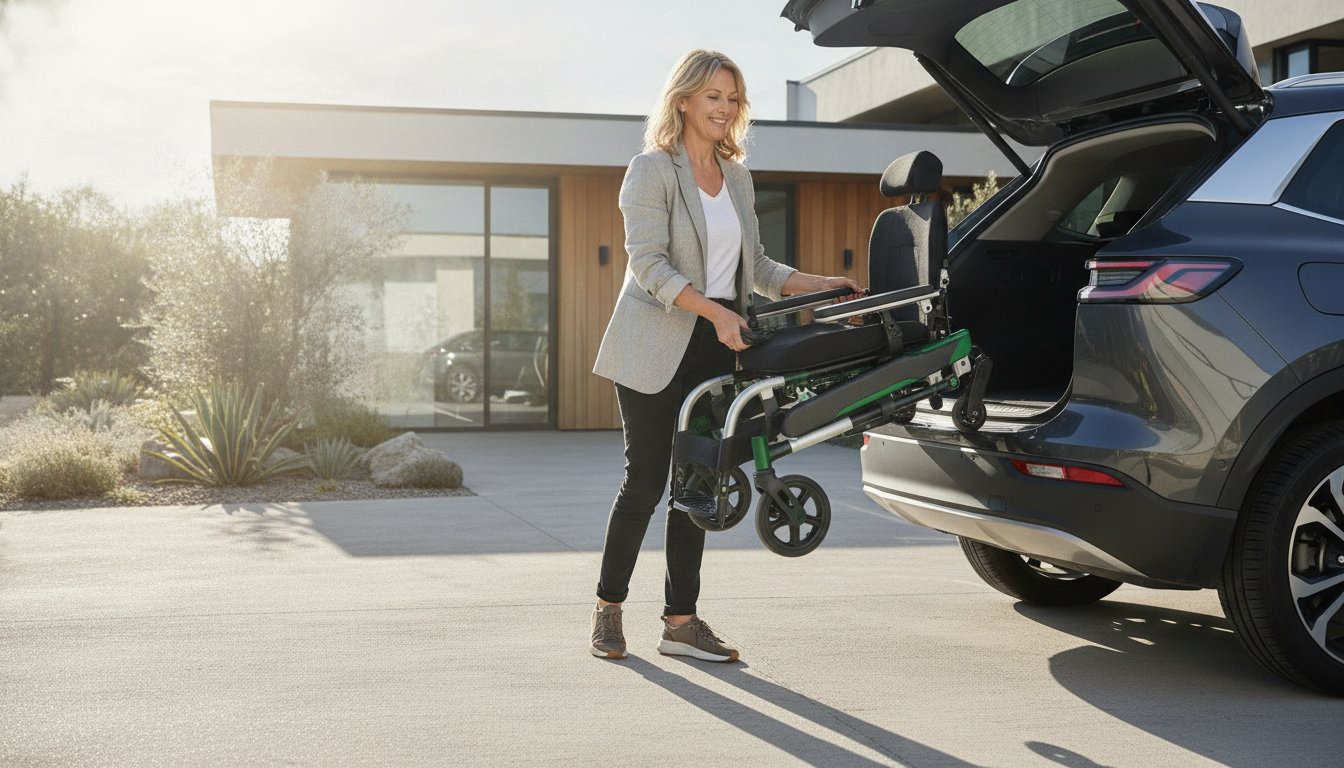
Modern engineering has significantly reduced the physical burden of transporting mobility equipment. Lightweight aluminium frames typically weigh between 6kg and 8kg, which 92% of users find manageable for lifting into a vehicle. If weight is a major concern, carbon fibre models offer the same structural integrity while stripping away another 2kg of mass. You should always test the folding mechanism; a one-handed "pull-to-fold" system is far more efficient than complex multi-step collapses. When folded, a high-quality aid should occupy a width of 25cm or less. Our team at Etech Motion provides expert support for UK customers to ensure you find a lightweight solution that doesn't compromise on safety or durability. Choosing a model with a simple locking clip prevents the frame from springing open during transit, protecting both the user and the vehicle's paintwork.
Navigating UK Streets: Safety and Stability on Different Terrains
Birmingham's urban landscape blends Victorian charm with modern architecture, yet this creates a unique set of challenges for those using mobility equipment. Uneven paving slabs in the Jewellery Quarter or high kerbs in older residential areas require specific techniques to navigate safely. Stability depends on the condition of your equipment. High-quality walking aids for elderly users rely heavily on "ferrules," which are the heavy-duty rubber tips at the base of the frame. These components provide the friction necessary to prevent slips on wet pavement. Given that Birmingham sees an average of 151 rainy days per year according to Met Office climate data, ensuring your ferrules have deep tread is a non-negotiable safety step. You should check these tips every 30 days for signs of smoothing or uneven wear.
Crowded environments like the Bullring or Grand Central demand a different strategy. When you're in a busy shopping centre, keep your walker close to your body. This maintains a tight turning circle and prevents the frame from becoming a trip hazard for other pedestrians. If you feel overwhelmed by the pace of the crowd, move to the "slow lane" near shop fronts where foot traffic is typically lighter. Modern walkers often feature integrated seats; don't hesitate to use yours if you need a two-minute break to regain your bearings in high-sensory environments.
Winter mobility requires extra preparation to handle the shorter days and icy patches. Between November and February, sunset in the West Midlands can occur as early as 3:50 PM. Visibility is a major safety factor during these hours. You don't need to compromise on style; simply adding discreet 3M reflective stickers or a clip-on LED light to your walker's frame ensures you're visible to motorists from at least 150 metres away. Choosing the right model involves balancing weight and durability. You can consult a comprehensive guide to mobility aids to see how different frames handle these various outdoor environments and weather conditions.
Pavement Etiquette and Safety
Navigating the West Midlands transport network is significantly easier when you master a few basic techniques. When boarding a National Express West Midlands bus, always wait for the driver to deploy the kneeling bus function or the ramp. Position yourself so you're facing forward or backward, never sideways, while the vehicle is in motion. If you're tackling steep inclines, such as those found on Newhall Hill, lean slightly forward to shift your centre of gravity. This provides better leverage and prevents the walker from tipping backward. Always engage your brakes fully before attempting to sit or stand.
Choosing the Right Wheels for the Terrain
The 80 hectares of greenery in Cannon Hill Park are beautiful, but gravel paths and grass require specific hardware. Standard 6-inch wheels often struggle with loose surfaces. Opting for larger 8-inch wheels provides a much smoother experience on "off-road" paths. You should also consider the tyre material. Solid tyres are puncture-proof and ideal for the glass-free pavements of the city centre. However, pneumatic (air-filled) tyres offer superior shock absorption on the cobbles of Digbeth. If you frequently walk on cambered pavements that slope toward the road, look for a walker with swivel wheel locks. These help the walking aids for elderly residents stay on a straight track without constant steering corrections.
Practical Tips for Using and Maintaining Your Walking Aid
Mastering your equipment is just as vital as choosing the right model for your lifestyle. Many users initially struggle with the "Step-In" technique, which is the foundation of safe mobility. Instead of pushing the walker far ahead and chasing after it, you must walk within the frame. This positioning ensures your centre of gravity stays supported by the four points of contact. Maintaining a neutral spine is the next priority. Looking down at your feet often leads to a hunched posture; this increases back strain by approximately 25% compared to standing tall. Keep your chin up and eyes focused roughly two metres ahead to stay balanced and aware of your surroundings.
Correct Posture and Gait
Don't let the walker outpace you. Pushing the frame too far forward creates a leaning silhouette that reduces stability and increases the risk of the front wheels "catching" on uneven pavement. You should coordinate your breathing with your walking rhythm to reduce physical exertion. Inhale as you prepare your step and exhale as you move into the frame. Correct gait for a senior using a 4-wheel rollator involves maintaining a steady, rhythmic pace where the feet land consistently between the rear wheels while the torso remains upright and supported. This fluid motion prevents premature fatigue and maximises the efficiency of walking aids for elderly users during longer trips into Birmingham city centre.
Long-term Maintenance
Safety depends on the mechanical integrity of your device. Conduct a "rattle test" every 30 days. If you hear metallic clicking or feel vibration in the handles, it's likely that bolts have loosened through regular use on bumpy surfaces. Ferrules, the rubber tips on non-wheeled walkers, require replacement when the tread depth falls below 2mm. Regularly inspecting walking aids for elderly residents ensures that safety features like locking brakes remain reliable. If you notice hairline cracks in the aluminium or if the frame feels "spongy" under your weight, the material has reached structural fatigue and the aid must be replaced immediately. Professional servicing every 12 months is recommended for advanced rollators to calibrate brake tension and lubricate folding joints.
Routine checks should include a daily brake test. Apply the levers firmly; the wheels must lock instantly without sliding. If the brake cables feel slack, they require immediate adjustment to prevent accidents on slopes. Hygiene is another factor that users often overlook. Handles and grips can harbour bacteria, so sanitise these surfaces with a non-abrasive, 70% isopropyl alcohol solution at least twice a week. This practice keeps the grip surfaces tactile and prevents the degradation of the foam or rubber materials. Avoid overloading the front basket beyond its 5kg to 10kg limit, as excessive weight can warp the frame and make steering unpredictable.
Our team provides the technical expertise needed to keep you moving safely. Explore our range of high-quality mobility solutions to find a durable partner for your daily adventures.
Beyond the Walker: When to Consider Electric Mobility Solutions
Standard manual walking aids for elderly users provide excellent support for short distances around the home or garden. However, many residents in Birmingham eventually reach a fatigue threshold where physical exertion limits their daily potential. If a 15-minute walk to the local chemist now requires an hour of recovery, it's often a signal that your mobility strategy needs an upgrade. Transitioning to a powered solution doesn't mean giving up your independence; it's a strategic choice to preserve your energy for the activities you actually enjoy.
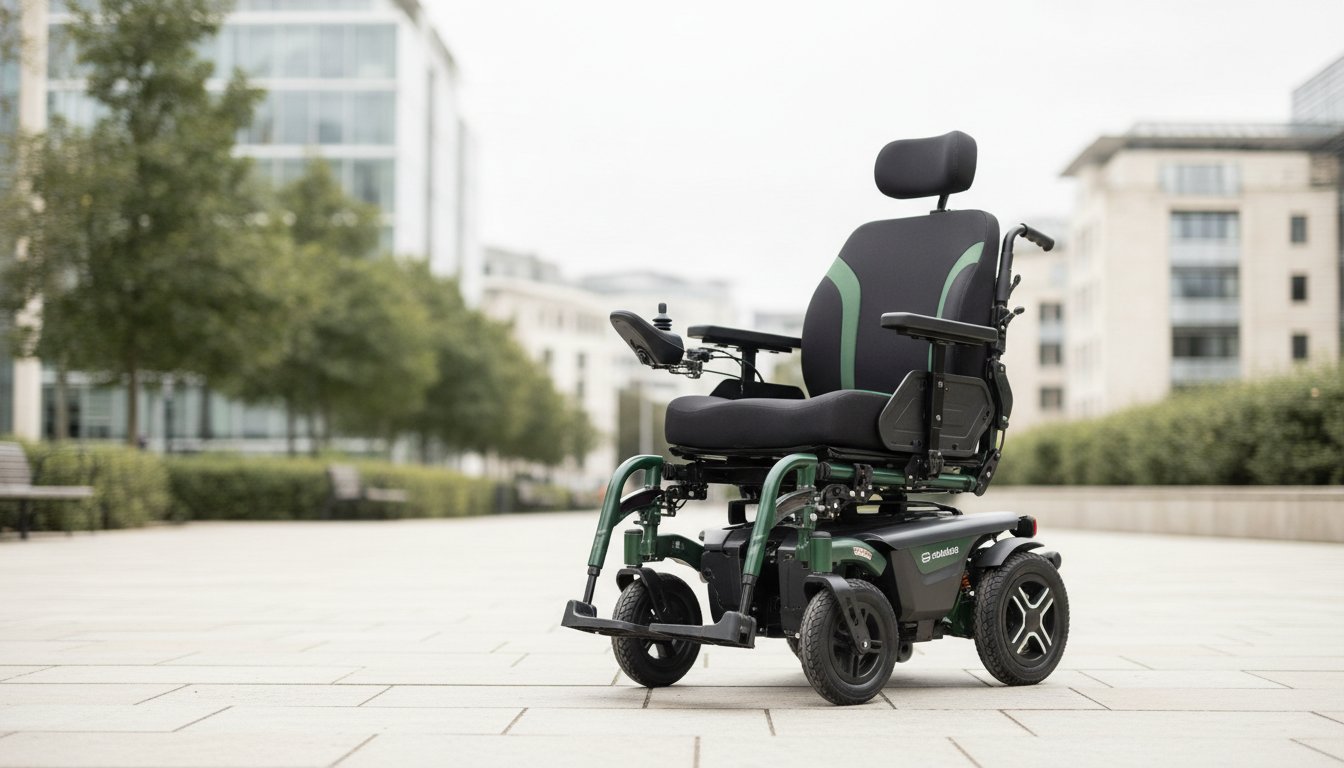
Reaching this threshold often happens when the fear of becoming "stranded" or too tired to return home starts to dictate your social life. Lightweight electric wheelchairs bridge this gap perfectly. They offer a range of up to 15 miles on a single charge, allowing you to visit the Birmingham Botanical Gardens or navigate the Bullring without worrying about muscle strain. By reducing the physical demand on your joints, you can maintain a higher level of activity throughout the day rather than being exhausted by a single morning errand.
Electric Wheelchairs vs. Mobility Scooters
Choosing between a powerchair and a scooter depends largely on your environment. Electric wheelchairs are the superior choice for hybrid indoor and outdoor use in Birmingham due to their agility. Most modern powerchairs, such as a folding electric wheelchair, feature a tight turning circle of approximately 80cm to 90cm. In contrast, three or four-wheel scooters often require 120cm or more to pivot, making them difficult to use inside smaller shops or narrow hallways. While scooters offer higher top speeds for road use, a powerchair’s ability to navigate a crowded Birmingham bus or a compact café makes it the more versatile companion for urban living.
- Turning Radius: Powerchairs offer 360-degree turns in place; scooters require wide arcs.
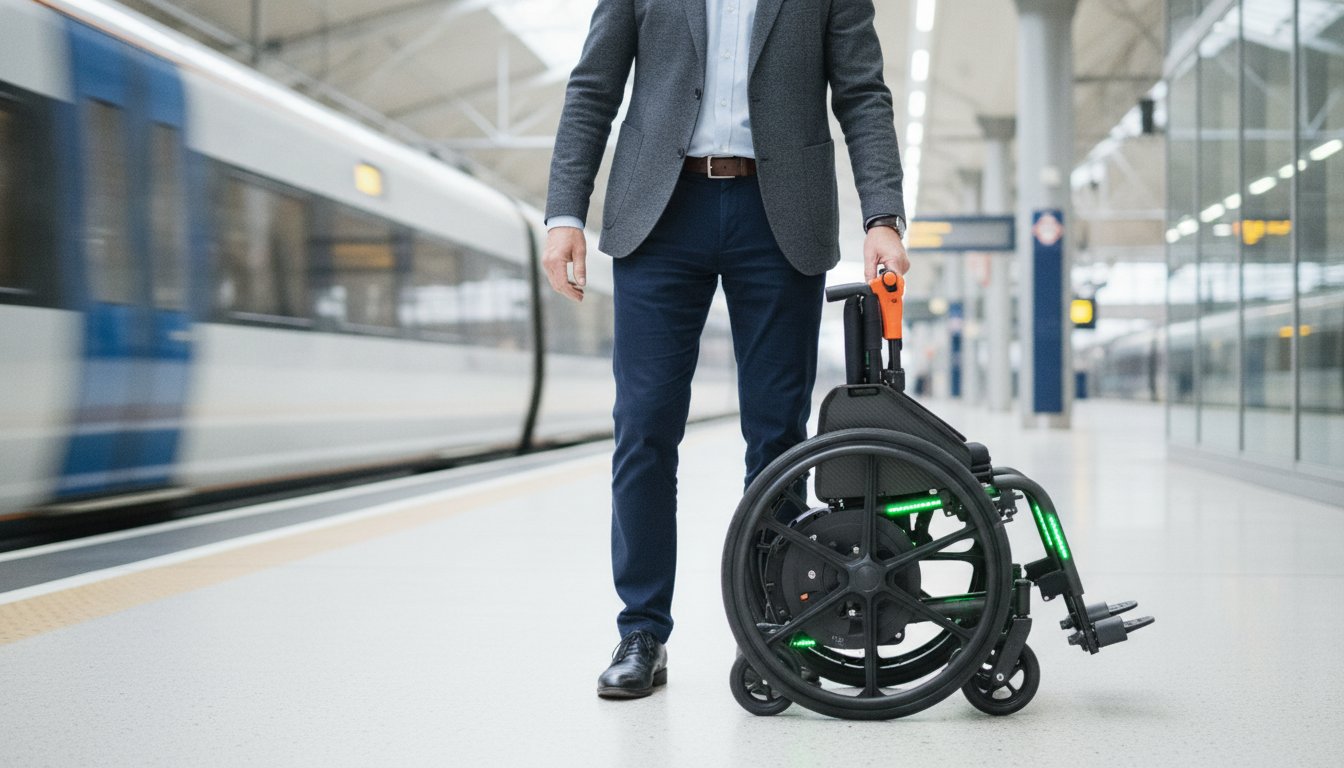
- Portability: Folding electric models fit easily into a standard car boot without heavy lifting gear.
- Speed: Both typically operate at a safe 4mph pavement speed, though scooters can sometimes reach 8mph on roads.
The Freedom of Modern Electric Mobility
Modern electric mobility is about the joy of effortless motion. You shouldn't feel restricted to your immediate neighbourhood just because manual walking aids for elderly users have distance limitations. Etech Motion specialises in this transition, providing the technical expertise needed to move from a basic frame to a high-performance electric vehicle. Our Birmingham-based centre ensures you aren't just buying a product from a faceless website; you're gaining access to UK-based expert support and a dedicated service team that understands the local terrain.
Our commitment to quality assurance means every motor, lithium-ion battery, and control system meets rigorous safety standards before it reaches your door. We believe that sustainable, green transport should be accessible to everyone, regardless of age or physical ability. If you're ready to expand your horizons and reclaim the freedom to explore Birmingham on your own terms, we're here to guide you through every specification and safety feature. Explore our range of electric mobility solutions to complement your walking aid and discover how a brushless motor can transform your daily routine into an adventure.
Embrace a Future of Unrestricted Movement
Choosing the right walking aids for elderly relatives or yourself is a vital step toward maintaining an active, independent lifestyle throughout 2026. Stability on UK pavements requires a tool that matches your specific physical needs, whether that's a height-adjustable rollator or a transition to electric power. Modern equipment now prioritises portability, with many of our specialist folding models weighing as little as 15kg for easy transport. Proper maintenance and a clear understanding of terrain safety ensure your investment provides reliable service for years.
As Birmingham-based mobility experts, we pride ourselves on delivering authoritative UK quality assurance and technical precision. Our team specialises in lightweight, folding electric solutions designed to navigate both narrow indoor spaces and bustling city centres. We're here to help you move forward with confidence and joy. Discover the full range of advanced mobility solutions at Etech Motion and experience the difference that expert British engineering makes to your daily routine. It's time to rediscover the world on your own terms.
Frequently Asked Questions
Does the NHS provide walking aids for free?
Yes, the NHS provides walking aids for elderly patients free of charge on a long-term loan basis following a professional mobility assessment. You usually start this process by visiting your GP or a hospital physiotherapist who evaluates your specific requirements. According to 2023 NHS guidelines, you might need to pay a small refundable deposit in certain local authorities, but the equipment itself remains free to ensure your safety and independence.
How do I know if my walking stick is the right height?
You'll know your walking stick is the correct height when the handle aligns with the crease of your wrist while you're standing upright with your arms at your sides. It's important to wear your regular walking shoes during this measurement to ensure the height is accurate. If the stick is too high, it'll force your shoulder upward; if it's too low, you'll stoop. A 15-degree bend in your elbow provides the most ergonomic support.
What is the difference between a walker and a rollator?
A walker is a lightweight frame that you lift or slide, whereas a rollator features three or four wheels and hand-operated brakes. Rollators often include a built-in seat and a basket for carrying shopping, making them ideal for outdoor use in Birmingham. Standard walkers provide more stability for those with balance issues, but they require a slower, more deliberate gait compared to the fluid movement of a rollator.
Can I take my walking aid on a bus or train in the UK?
You can absolutely take your walking aid on any UK bus or train under the Equality Act 2010. National Rail and local Birmingham operators like National Express West Midlands provide dedicated spaces for mobility equipment on their fleets. Most modern buses feature low-floor entry to make boarding effortless. If you use a folding rollator, it's often easier to stow in luggage racks during busy peak-hour commutes.
Are three-wheeled walkers less stable than four-wheeled ones?
Three-wheeled walkers are generally less stable than four-wheeled models because they have a narrower base and a higher centre of gravity. While the three-wheel design offers a tighter turning circle for navigating narrow hallways or small shops, four-wheeled rollators provide a much sturdier platform for weight-bearing. If you require a seat for regular rest breaks, a four-wheeled model is the safer and more reliable choice for outdoor adventures.
How often should I replace the rubber ferrules on my walking aid?
You should inspect your rubber ferrules every month and replace them approximately every 6 months to maintain maximum grip. Once the tread depth drops below 1mm or the rubber begins to perish, the risk of slipping on wet pavements increases by over 40%. These small components are the only point of contact with the ground, so keeping them in top condition is vital for your daily safety.
Can a walking aid help with back pain while walking?
High-quality walking aids for elderly users can significantly reduce back pain by redistributing weight away from the spine and improving your upright posture. By providing extra points of contact, these tools take the pressure off your lower lumbar region during movement. This support helps you walk further without the fatigue often caused by compensating for joint pain or poor balance during your daily exercise.
Is it better to buy a walking aid privately or wait for an assessment?
Buying a walking aid privately gives you immediate access to a wider range of modern, lightweight designs without waiting for an NHS assessment. While the NHS route is free, current waiting times for a non-urgent physiotherapy appointment can exceed 12 weeks in some UK regions. Investing privately allows you to choose specific features, like carbon fibre frames or integrated shopping bags, that match your lifestyle and aesthetic preferences perfectly.