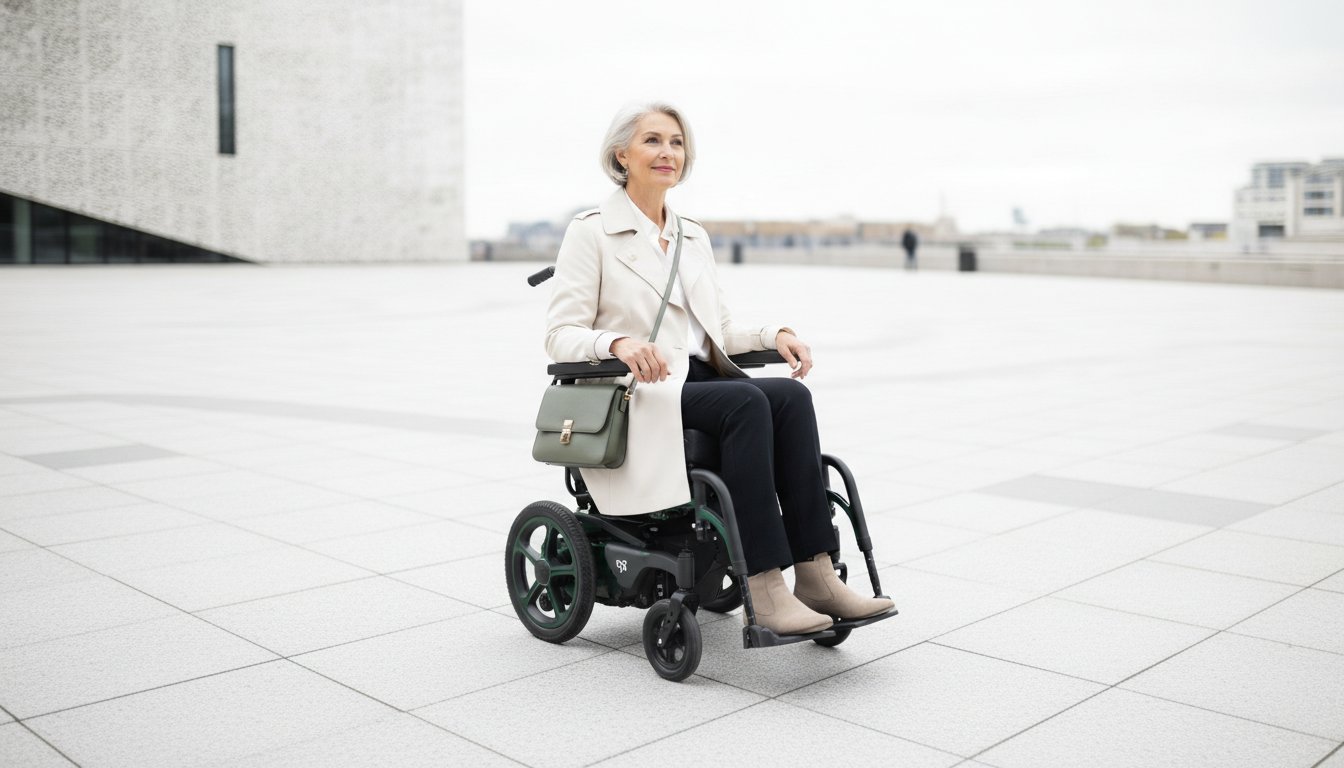

What if an electric wheelchair isn't a sign of slowing down, but actually the secret to reclaiming your parent's social life? It's difficult to watch a loved one struggle with daily tasks or avoid outings because they're afraid of falling. You might feel a sense of guilt about suggesting a "loss of independence," but the truth is often the opposite. Recognising the objective signs your parent needs an electric wheelchair is the first step toward helping them move with confidence again.
We understand that managing the transition from manual aids to power systems feels complex, especially while the UK government modernises laws on mobility devices to better reflect modern technology. This guide will show you how to identify when a manual chair or walker is no longer enough. You'll learn how a folding electric wheelchair or a lightweight electric wheelchair can eliminate physical strain and prevent social isolation. We'll provide a clear plan to help you choose the right model, ensuring your parent benefits from 20% VAT relief while regaining the freedom they deserve.
Key Takeaways
- Understand the "independence paradox" and how clinging to manual walking can actually shrink your parent's world rather than protect it.
- Identify the specific physical and behavioural signs your parent needs an electric wheelchair, such as breathlessness after short distances or frequent near-miss falls.
- Discover why a manual chair often creates more barriers for seniors and how to choose between the indoor agility of a power chair and the outdoor speed of a mobility scooter.
- Learn how to handle the mobility conversation with empathy, using "I" statements to focus on your concern for their safety rather than their perceived limitations.
- Explore how modern technology like the folding electric wheelchair has eliminated traditional bulk, making transport in a standard car boot simple and efficient.
The Independence Paradox: Why a Power Wheelchair Enhances Freedom
Many seniors view a walking frame or a stick as a badge of resilience, yet "fighting" to stay on two feet often leads to a shrinking social circle. This is the independence paradox. By exhausting every ounce of energy simply to move from the bedroom to the car, your parent may inadvertently sacrifice their ability to actually enjoy the world once they arrive. Spotting the early signs your parent needs an electric wheelchair often starts with observing their "energy budget" rather than just their balance. When the physical act of walking becomes a barrier to living, the tool meant to assist them is actually holding them back.
We must distinguish between basic mobility and functional mobility. Basic mobility is the ability to get from point A to point B. Functional mobility is the capacity to perform that movement and still have the stamina to engage in meaningful activity. A modern motorized wheelchair is no longer a heavy, clinical device, it's a sophisticated tool for active living. Today's technology focuses on sleek designs and intuitive controls that remove the "hospital" stigma. These devices allow users to reclaim their role as active participants in family outings rather than exhausted spectators.
The Emotional Hurdle of the Transition
The most significant barrier isn't usually mechanical, it's emotional. Many parents fear that transitioning to a power chair signifies the "beginning of the end" or a final surrender to age. You can help by reframing the device as a liberator. It isn't a cage that confines them, it's a vehicle that unlocks the local high street, the park, and the community centre. Functional independence is the ability to choose your destination without physical dread.
Energy Conservation vs. Physical Decline
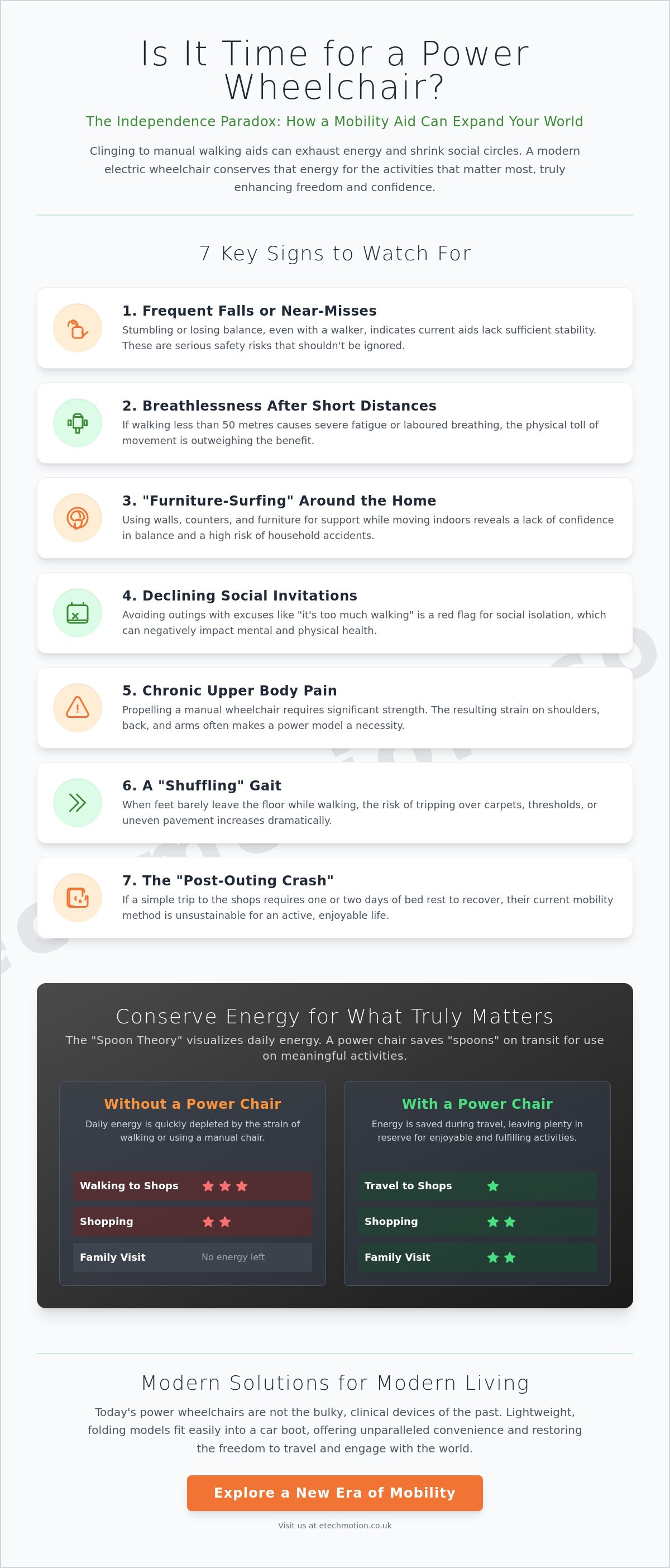
Understanding the "spoon theory" is vital for supporting aging parents. This concept suggests that everyone starts the day with a limited number of "spoons" representing units of energy. If walking through a supermarket consumes every spoon your parent has, they'll return home to a cycle of exhaustion that requires hours, or even days, of bed rest. Understanding these signs your parent needs an electric wheelchair helps reframe the conversation around energy conservation. By using a motorised chair for the "transit" portions of their day, they save their spoons for the things that matter, like playing with grandchildren or pursuing a hobby. They arrive at their destination feeling fresh and mentally sharp, rather than fatigued and frustrated.
7 Warning Signs Your Parent Needs an Electric Wheelchair
Identifying the right moment to transition to power mobility isn't always about a single, dramatic event. More often, it's a series of subtle shifts in how your parent navigates their environment. If you've started noticing that their world is becoming smaller, it's time to look closer at their daily habits. Recognising these signs your parent needs an electric wheelchair early can prevent serious injury and stop the cycle of social isolation before it takes root.
- Frequent falls or "near-misses": Even if they use a walking frame, stumbling or losing balance suggests their current aid isn't providing enough stability.
- Breathlessness after short distances: If walking less than 50 metres causes severe fatigue or gasping for air, the physical toll of movement is outweighing the benefit.
- Furniture-surfing: Reaching for backs of chairs, kitchen counters, or walls to move around the house indicates a lack of confidence in their own balance.
- Social withdrawal: Declining lunch dates or trips to the garden centre because "it's too much walking" is a major red flag for depression and isolation.
- Chronic upper body pain: Seniors often struggle with manual wheelchairs, leading to strained shoulders and back pain.
- The "shuffling gait": A change in stride where feet barely leave the floor significantly increases trip hazards on carpets or uneven pavements.
- The post-outing crash: When a simple trip to the shops requires two days of bed rest to recover, their current mobility method is unsustainable.
Physical Indicators and Safety Risks
Safety is the primary driver for most families. A shuffling gait isn't just a sign of age, it's a precursor to a hip fracture. Many seniors also experience "near-miss" falls that they don't report because they don't want to worry you. However, these incidents cause deep-seated anxiety that further limits their movement. For those already using manual chairs, the repetitive motion can cause secondary injuries like rotator cuff tears. Consulting NHS guidelines on mobility aids can help you understand the clinical criteria for assistance, but observing these daily struggles at home is often more telling. Exploring a modern folding electric wheelchair can often resolve these safety concerns while keeping the home environment clutter-free.
Behavioural and Lifestyle Changes
The psychological impact of limited mobility is profound. When a parent stops visiting the local high street, they lose more than just groceries; they lose their sense of community. A power chair removes the anxiety of "keeping up" with family members during walks, allowing them to focus on the conversation rather than their feet. By shifting to a motorised solution, you replace the dread of physical exertion with the joy of effortless movement, ensuring they remain the active, engaged individual you know.
Evaluating Mobility Aids: Power Chair vs. Manual vs. Scooter
Selecting the right mobility tool is a strategic decision that depends entirely on your parent's daily environment and physical capabilities. While many families start their journey by looking at walking aids for elderly, there often comes a point where these devices no longer provide the necessary safety or stamina. If you've started noticing the physical signs your parent needs an electric wheelchair, the next step is understanding why certain aids excel where others fail. The goal is to provide a solution that bridges the gap between staying at home and staying active in the community.
The Limitations of Manual Propulsion
Manual wheelchairs are often the first port of call, yet they present significant drawbacks for independent seniors. The effort required to self-propel places immense strain on aging shoulder joints, often leading to secondary injuries like bursitis or muscle tears. When a parent can't propel themselves, they become reliant on an "attendant-propelled" model. This immediately reduces their agency. They can't choose to move to the kitchen for a glass of water or head into the garden on a whim without someone else's help. A power chair restores that immediate, personal control.
Electric Wheelchairs vs. Mobility Scooters
Choosing between mobility scooters and power chairs often comes down to where the device will be used most. Scooters use a "tiller" steering system, which requires a certain amount of upper body strength and a wide turning arc. They're fantastic for long outdoor trips on pavements. However, electric wheelchairs use a joystick, allowing for precise, 360-degree turns. This makes them far superior for dining out, navigating supermarket aisles, and moving through social gatherings where space is at a premium.
Assessing the turning circle is non-negotiable for UK living. In many traditional British homes, doorways and hallways are relatively narrow. A mid-wheel drive system is a game-changer here because it allows the chair to spin on its own axis. This technical design ensures your parent can navigate from a hallway into a living room without the frustration of getting stuck or scuffing the skirting boards. By identifying the signs your parent needs an electric wheelchair early, you can choose a model that fits their specific home layout. Modern power chairs offer a hybrid "indoor-outdoor" capability, providing the stability needed for local paths while remaining agile enough to use in the lounge or at the dinner table.
How to Discuss Mobility Transitions with Your Aging Parent
Timing is everything when raising the topic of power mobility. Initiating this conversation immediately after a fall or during a stressful medical appointment often triggers a defensive response. Instead, choose a calm moment when you are both relaxed. Discussing the signs your parent needs an electric wheelchair should feel like a collaborative strategy for future adventures, rather than a critique of their current physical state. By focusing on the activities they miss, you position the technology as a solution to their frustrations.
Caregiver fatigue is a real factor that often goes unaddressed in these discussions. If you are the one physically supporting them during walks or pushing a heavy manual chair, your own health is at risk too. A transition to power mobility isn't just about their independence; it's about making your shared time more enjoyable and less of a physical chore. Introducing a "trial run" can lower the emotional stakes. Suggesting they try a chair for a single afternoon at a local park removes the pressure of a permanent commitment and allows them to feel the benefits first-hand.
Starting the Conversation with Empathy
Focus on what they can say "yes" to again. Instead of highlighting that they can no longer walk to the shops, highlight that a power chair means a "yes" to visiting the garden centre or a "yes" to joining the family for a coastal walk. Validate their feelings of frustration regarding their changing body. You might use a script like this: "I’ve noticed you’ve been turning down trips to the park lately, and I really miss our Sunday outings. I'm worried that the distance is becoming too tiring for you. What if we looked at a power chair just for those big days out, so we can keep doing the things we love together?"
Professional Assessment and Home Readiness
Involving a third party often removes the emotional friction between parent and child. You can request an Occupational Therapist (OT) assessment through the NHS or hire a private OT to evaluate their needs. These professionals are experts at matching a user's capability to the right device. They will also help you check UK home compatibility, which is crucial given our often narrow hallways and high door thresholds. While a mobility walker frame provides excellent support for short distances, an OT can confirm when it's time for a more robust solution.
Preparing the home is the final step in a smooth transition. You'll need to consider door widths, potential threshold ramps, and a convenient charging point near where the chair will be stored. If you're ready to explore how modern designs fit into your daily routine, you can view our range of electric wheelchairs to find a model that matches your parent's lifestyle and home layout.
Choosing the Right Modern Solution for UK Living
Once you've identified the signs your parent needs an electric wheelchair, the focus shifts to selecting a device that fits their specific lifestyle. Modern mobility technology has moved far beyond the heavy, cumbersome frames of the past. Today's solutions are designed for caregivers who need to balance their parent's independence with the practicalities of car transport and narrow UK pavements. Whether your parent wants to continue gardening or join the family for a holiday abroad, there's a specialised model to facilitate those goals.
Safety features are the foundation of any reliable mobility upgrade. Look for models equipped with electromagnetic brakes, which engage automatically the moment the user releases the joystick. This provides essential security on slopes or when navigating kerbs. Anti-tip wheels are another vital inclusion, preventing the chair from leaning too far back during transitions. For parents who maintain a more rugged outdoor lifestyle, a Heavy Duty Electric Wheelchair offers the suspension and motor power required for uneven terrain without compromising on user comfort.
The Freedom of Folding Technology
Bulk is no longer a barrier to independence. The rise of the folding electric wheelchair has transformed how families travel. These chairs collapse in seconds, often into a compact shape that fits easily into a standard car boot. This is a massive advantage for UK family outings where space is at a premium. Additionally, many of these models feature lithium-ion batteries that are airline-approved. This means a transition to power mobility doesn't have to mean the end of overseas holidays; it actually makes navigating airports and foreign cities significantly easier.
Etech Motion: Your Partner in the Mobility Revolution
At Etech Motion, we bridge the gap between clinical necessity and lifestyle desire. We don't just sell products; we provide the tools for a more active and sustainable future. Choosing an electric wheelchair is a significant life event, and we support you with UK-based expertise and nationwide delivery. Our team understands the intricate mechanics of the industry, ensuring every device meets rigorous safety standards while remaining easy to use for the everyday user.
If you're ready to help your parent reclaim their freedom and stop the cycle of isolation, we're here to guide you. Our range includes everything from ultra-lightweight frames for easy travel to robust models for all-day outdoor use. It's time to replace the struggle of limited movement with the excitement of modern, motorised freedom. Browse our range of specialist electric wheelchairs today and take the first step toward a more mobile, joyful lifestyle for your family.
Reclaiming the Joy of Movement Together
Transitioning to power mobility is a strategic move that replaces physical exhaustion with a renewed sense of adventure. By focusing on energy conservation and choosing the right technology, you help your parent move from being a spectator to an active participant in family life. Recognising the objective signs your parent needs an electric wheelchair is the first step toward stopping social isolation and preventing the risk of dangerous falls.
Modern solutions have eliminated the old barriers of weight and bulk. Whether you need a compact model for car travel or a robust frame for outdoor exploration, the right choice ensures your parent stays connected to their community. At Etech Motion, we provide an expertly selected range of folding and lightweight models designed specifically for UK living. Our specialist UK-based support team is here to guide you through the process; we also offer nationwide delivery across the United Kingdom for total peace of mind.
Explore our expertly curated range of folding and heavy-duty electric wheelchairs to find the perfect fit for your parent's needs. It's time to embrace the freedom and joy that modern mobility brings to daily life.
Frequently Asked Questions
How do I know if my parent is safe to operate a power wheelchair?
Safety depends on your parent's reaction times, spatial awareness, and ability to operate a joystick control. We recommend an Occupational Therapist assessment to evaluate their cognitive and physical capacity for navigating pavements safely. If they can follow simple instructions and have adequate vision, they can usually master the intuitive controls of a modern power chair quickly. Practising in a quiet, flat area helps build their confidence before they head into busier environments.
Can an electric wheelchair be used inside a standard UK house?
Yes, many modern models are designed specifically for the tighter layouts of traditional British homes. A Folding Electric Wheelchair or a mid-wheel drive model typically offers a compact turning circle that allows for easy navigation through narrow hallways and doorways. You should measure your internal door widths before purchasing; most standard power chairs are well within the 0.85 metre limit currently under review in UK mobility consultations.
Will the NHS provide an electric wheelchair for my parent?
The NHS provides electric wheelchairs through local wheelchair services, but eligibility is based on a strict clinical assessment of their indoor mobility needs. They generally only provide power chairs to individuals who cannot walk at all within their own home. It is important to note that the NHS rarely funds mobility scooters, so families often choose to purchase a Lightweight Electric Wheelchair privately to ensure their parent gains immediate independence.
Is an electric wheelchair better than a mobility scooter for an elderly person?
Electric wheelchairs are often superior for social seniors because they allow the user to pull up to a dining table or navigate a shop with precision. If you've identified the signs your parent needs an electric wheelchair, they likely require a device that works both indoors and out. While scooters are excellent for long-distance pavement travel, they lack the agility and 360-degree turning capabilities that make power chairs so versatile for daily life.
How much does a good quality electric wheelchair cost in the UK?
The cost of a power chair depends on technical specifications like frame material, battery range, and folding mechanisms. Investing in a model with lithium-ion batteries and a lightweight frame generally represents better value because it's easier to transport and maintain. Users with a permanent disability or chronic illness are also eligible for 20% VAT relief on their purchase, which significantly reduces the total investment required for a high-quality mobility solution.
What happens if the battery runs out while my parent is out alone?
Most modern power chairs feature a freewheel or manual mode lever located near the motors. This allows a passerby or family member to push the chair manually if the battery is depleted. To prevent this, we recommend a simple routine of charging the chair overnight. Many of our models also feature clear battery indicators on the joystick, so your parent can easily monitor their remaining range while they are out.
Do you need a license or insurance to use a power chair on UK pavements?
You don't need a driving license to operate a Class 2 or Class 3 mobility device on UK pavements. Class 2 devices are limited to 4 mph, while Class 3 devices can reach 8 mph on roads and require the user to be at least 14 years old. While insurance isn't a legal requirement for pavement use, it's highly recommended to protect your parent against accidental damage or third-party claims during their outings.
How do we transport an electric wheelchair in a standard car?
Transporting a modern chair is straightforward if you choose a Folding Electric Wheelchair. These models collapse into a compact shape in seconds, making them small enough to fit into the boot of most standard hatchbacks or saloons. This eliminates the need for expensive vehicle adaptations or heavy ramps, allowing you to take your parent on day trips or holidays with minimal physical effort or logistical planning.