
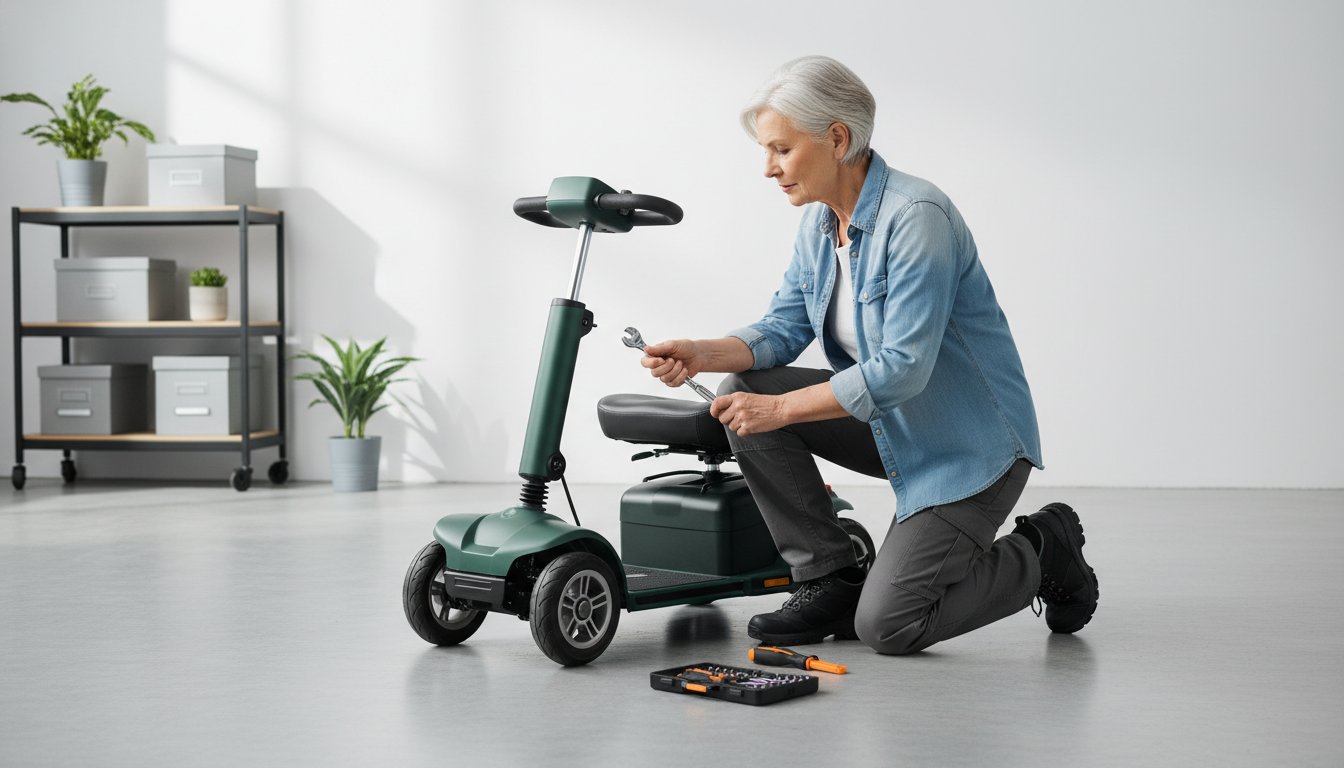
By 2026, personal use accounts for 88.12% of the global mobility market, yet many users still feel anxious about the technical complexities of their equipment. It's frustrating when your sense of freedom is replaced by the worry of a flashing light or a battery that won't hold its charge. Mastering common mobility scooter problems and fixes is the most effective way to regain your confidence and ensure you're never left stranded. You deserve to understand your device as well as the experts do, ensuring every journey is as smooth as possible.
We believe that mobility scooter reliability is a product of systematic diagnostics and proactive care, not just reactive repair. This guide provides the knowledge you need to identify faults and perform simple UK-standard repairs without the stress of high professional costs. You'll gain a clear overview of diagnostic beep codes, battery health, and tire maintenance. We also define exactly when it's time to call for professional intervention, keeping your safety and your scooter's longevity at the heart of our sustainable transport mission.
Key Takeaways
- Learn how to use your manufacturer's manual to interpret diagnostic beep codes, turning technical confusion into a clear plan of action.
- Master the most common mobility scooter problems and fixes, from simple battery resets to identifying motor brush wear before it leads to a breakdown.
- Understand the performance differences between lead-acid and lithium-ion power systems to better manage your scooter's daily range and overall longevity.
- Identify the unique maintenance requirements for folding electric mobility scooters, including how to inspect frames and joints for signs of wear.
- Establish a proactive care routine with a dedicated maintenance logbook and daily cleaning to protect your equipment from the damp UK climate.
Troubleshooting Your Mobility Scooter: Identifying the Signs of Trouble
A systematic diagnostic approach transforms a moment of panic into a manageable task. When your device stops behaving as expected, your first instinct might be frustration. However, understanding your equipment provides a significant psychological boost; it replaces the fear of being stranded with the confidence of a knowledgeable operator. Every mobility scooter is a sophisticated piece of engineering, but most issues follow predictable patterns that you can identify with patience and the right information.
Your user manual is the single most important tool in your kit. It contains the specific DNA of your model, including the exact meanings of signals from the controller. While many common mobility scooter problems and fixes are within the reach of a proactive user, safety remains the priority. If you encounter exposed wiring, a burning smell, or smoke, stop immediately. DIY efforts should focus on non-invasive checks; leave internal motor repairs or complex electronics to qualified technicians to ensure your long-term safety.
Understanding Diagnostic Flash Codes and Beeps
Modern controllers communicate through a series of light flashes on the console or audible beeps. Don't ignore these signals; they are your scooter's way of speaking to you. To interpret them correctly, count the number of flashes in a single sequence before a pause. For instance, five beeps often indicate a brake fault, while two might suggest a battery connection issue. Record these patterns carefully before turning the power off. Differentiating between a minor low-battery warning and a critical system failure ensures you don't overreact to simple maintenance needs or ignore a dangerous fault that requires expert attention.
The Pre-Journey Inspection Checklist
Prevention is always more efficient than repair. Before you head out, perform a quick visual sweep to catch common mobility scooter problems and fixes before they escalate into a breakdown. This routine only takes a minute but provides immense peace of mind during your daily travels.
- Check for loose wiring around the tiller and battery terminals to ensure a consistent power flow.
- Look for debris, like twigs or plastic, caught in the wheels or transaxle that could cause friction.
- Test the electromagnetic brake by gently trying to push the scooter while it is turned off; it shouldn't move if the brake is engaged.
- Verify the freewheel lever is clicked firmly into the "Drive" position, as a partially engaged lever often causes jerky movement or a total power cut.
Battery and Electrical Faults: The Most Common Culprits
Your battery health serves as the foundation of your mobility independence. While modern power systems are more resilient than ever, electrical issues remain the primary cause of service calls. Understanding the nuances of common mobility scooter problems and fixes allows you to distinguish between a simple maintenance task and a component failure. By 2026, the industry has seen a significant shift toward lithium-ion technology, which offers faster charging and lighter weights compared to traditional sealed lead-acid (SLA) batteries. However, both types require specific care to avoid capacity drop-offs.
The UK climate presents unique challenges for electrical longevity. Damp air and cold winter temperatures can accelerate terminal corrosion and temporarily reduce battery range. If your scooter feels sluggish or loses power on inclines, you might be dealing with a "dead cell." This differs from a charging error, where the battery is healthy but the power isn't reaching it due to a faulty cable or blown fuse. Consistent monitoring ensures your mobility scooter remains a reliable partner for your daily adventures.
Solving Charging Issues and Capacity Drop-offs
It is common for a charger to display a "full" green light even when the battery is nearly empty. This often happens because the charger detects a surface charge but cannot penetrate the internal resistance of an aged battery. To maintain peak performance, follow the 2026 "8-hour rule": charge your scooter after every significant trip, ideally for at least eight hours, to ensure the cells are properly balanced. If you spot white, powdery crust on the battery terminals, you can clean it safely using a paste of bicarbonate of soda and a small amount of water. This simple household fix restores a clean electrical connection and prevents power flickers.
Ignition Switch and Key Troubleshooting
A sticky ignition switch is a frequent frustration that doesn't always require a replacement. Dust and grit from outdoor use can jam the mechanism over time. Avoid using heavy oils or WD-40, as these attract more grime; instead, use a puff of dry graphite powder to lubricate the barrel. If a key breaks off inside, don't attempt to glue it back together. Use a pair of needle-nose pliers for extraction or consult a locksmith. Frequently, what looks like a broken ignition is actually a loose connection behind the tiller console. Gently checking the wiring loom under the plastic shroud can often resolve an intermittent "no-start" condition without a professional repair bill.
Drive System and Mechanical Problems: Motors and Tyres
The drive system is the mechanical heart of your equipment, translating electrical energy into reliable movement. While modern motors are designed for longevity, they aren't immune to wear. Understanding common mobility scooter problems and fixes related to the drivetrain can prevent a minor glitch from becoming a costly replacement. One frequent issue is the development of motor "flat spots," where the scooter fails to start in certain positions but runs fine once moving. This often indicates worn carbon brushes, which are small, replaceable components that maintain electrical contact within the motor. If these brushes wear down to less than 5mm, power delivery becomes intermittent and jerky.
Smooth power delivery also relies heavily on the transaxle. This component acts as the bridge between the motor and the wheels, managing the torque required for different terrains. If you notice a clicking sound during turns, the transaxle may require lubrication or inspection for gear wear. Additionally, don't overlook the potentiometer, or speed dial, on your tiller. Over time, dust or moisture can interfere with its internal resistance, leading to sudden surges or "dead zones" where the scooter doesn't respond to the throttle. A quick clean or a drop of specialized contact cleaner often restores consistent velocity.
Addressing Motor Noises and Performance Lags
Listening to your motor provides vital clues about its health. A high-pitched whining sound typically suggests the motor is under excessive load, perhaps from a steep incline or an engaged brake. Conversely, a rhythmic grinding noise often points to failing bearings or grit trapped in the drive gears. If your scooter cuts out entirely after a strenuous uphill climb, it’s likely the circuit breaker has tripped to prevent overheating. Simply wait a few minutes for the motor to cool and press the reset button, usually located near the battery box, to resume your journey. Checking motor brushes annually is a proactive way to ensure your mobility scooter remains efficient and quiet.
Tyre Maintenance and Steering Alignment
Tyre pressure is arguably the most overlooked maintenance task, yet it directly impacts your range and stability. For those using pneumatic tyres, even a small drop in pressure increases rolling resistance, forcing the motor to work harder and draining the battery faster. Solid tyres don't require air, but they should be inspected for "flat spots" caused by long periods of storage. If your scooter pulls to one side, you may need a DIY steering alignment. This usually involves loosening the nuts on the steering column, centering the wheels, and retightening the assembly. When replacing inner tubes on split-rim wheels, always ensure the tyre is fully deflated before unbolting the rim to avoid a sudden release of pressure.

Folding Mechanisms and Lightweight Scooter Specific Issues
Modern folding mobility scooters offer unparalleled freedom for those who travel frequently or have limited storage space. However, the moving parts required for folding create unique wear points that standard fixed-frame models don't encounter. Addressing common mobility scooter problems and fixes in this category involves monitoring the integrity of hinges, latches, and electronic actuators. Because these frames are often constructed from lightweight aluminium to ensure portability, they are more susceptible to stress fractures if handled roughly or overloaded beyond their rated weight capacity.
User safety depends heavily on the security of locking pins and latches. A pin that isn't fully seated can cause the tiller or seat to collapse during use, which is why a visual and tactile check before every journey is vital. If you notice any "play" or wobbling in the frame that wasn't there before, it’s a sign that a joint has loosened or a bushing has worn down. If you're ready to upgrade to a more robust, modern electric folding mobility scooter, our range is designed with reinforced pivot points to minimize these structural frustrations.
Maintaining Hinges and Pivot Points
Folding joints are magnets for grit and road salt, which can act like sandpaper on moving parts. To keep your mechanism smooth, use a dry-film lubricant like PTFE or silicone spray rather than traditional grease. Grease attracts dirt and creates a grinding paste that accelerates wear. When you find a loose latch, tighten it carefully; over-torquing bolts in aluminium frames can strip the threads or cause the metal to crack. Regularly clearing debris from the folding track ensures the frame closes perfectly every time without putting unnecessary strain on the locking mechanism.
Electronic Folding System Glitches
Automatic folding systems add a layer of convenience but can occasionally experience electronic hiccups. If your remote control fails to trigger the fold, check the remote's battery first or try the secondary button often found on the scooter's chassis. Most automatic models include a manual override lever or bolt; familiarize yourself with its location before you need it. If the scooter stops mid-fold, it’s frequently due to sensor misalignment. Sensors tell the controller when the frame is fully open or closed. If a sensor is bumped out of place, the system may cut power as a safety precaution, requiring a simple realignment to restore function.
A Proactive Maintenance Strategy for Long-Term Reliability
Proactive care transforms the way you interact with your equipment, shifting the focus from stressful repairs to consistent performance. Instead of waiting for a fault to occur, a systematic routine keeps you moving with confidence. We recommend creating a "Maintenance Logbook" to track your scooter's health. By recording battery charging cycles, tyre pressure adjustments, and any unusual noises, you create a valuable history that helps you spot trends before they become failures. This record is also a powerful tool if you ever decide to sell your device, as it proves a history of diligent care.
The "Daily Wipe-Down" is a simple but vital habit in the damp UK climate. Moisture remains the silent enemy of sensitive electronics and metal components. Taking two minutes to wipe the tiller, seat, and console after a rainy trip prevents water ingress and surface rust. This level of regular care extends the life of your equipment significantly, whether you operate a scooter or an electric wheelchair. Consistency here reduces the frequency of common mobility scooter problems and fixes that arise from environmental wear and tear.
The Monthly Deep-Clean and Bolt-Tightening
Dedicate one hour each month to a thorough inspection of your scooter's physical integrity. Use a damp cloth and mild detergent to clean plastic shrouds; never use high-pressure hoses, as these force water into the motor and transaxle. It is essential to check the underside for road salt or mud accumulation, particularly during the winter months when corrosion risks are highest. Take a moment to test all lights and indicators for visibility. Vibrations from uneven pavements can naturally loosen fixings over time, so gently tightening visible bolts on the armrests and tiller ensures the frame stays rigid and safe.
Choosing a Professional Service Provider
While DIY maintenance covers the basics, some common mobility scooter problems and fixes require the precision of a professional engineer. When selecting a service provider in the UK, look for specialists who emphasize safety standards and local accountability. Avoid the temptation of "cheap" non-branded replacement parts. These often lack the durability of original components and can lead to more expensive failures or even void your warranty. A professional annual service includes load-testing the batteries and checking the motor controller's efficiency with specialized tools. Recognizing when a repair exceeds your technical reach is a sign of a responsible owner, ensuring your journey toward a cleaner, more efficient future remains uninterrupted.
Take Control of Your Mobility Independence
Mastering common mobility scooter problems and fixes isn't just about saving on professional repair costs; it's about reclaiming your total freedom and peace of mind. By implementing a systematic diagnostic approach and a proactive maintenance routine, you ensure that your device remains a dependable partner for every journey. You now have the technical tools to interpret complex fault codes, manage battery health in the UK climate, and maintain the intricate structural integrity of modern folding mechanisms.
When you're ready to upgrade, you deserve equipment that matches your expertise and lifestyle. Explore our range of reliable, easy-to-maintain mobility scooters at Etech Motion to find your perfect match. We stand by our community with a specialist UK-based support team, cutting-edge folding technology for effortless transport, and nationwide delivery on all mobility equipment to get you moving faster. Our commitment to quality ensures that your transition to new, sustainable transport technologies is both simple and aspirational.
Your independence is the ultimate goal. With the right knowledge and high-quality engineering, you can navigate your world with complete confidence and joy. We're here to help you move forward toward a smarter, technologically-driven future.
Frequently Asked Questions
Why is my mobility scooter beeping and not moving?
Beeping usually indicates a fault code from the controller. The most frequent reason for this is that the freewheel lever is disengaged, meaning the motor is disconnected from the wheels. Check that the lever is in the "drive" position and restart the power. If the beeping persists, count the flashes or beeps and consult your manual to identify specific common mobility scooter problems and fixes related to your model.
How do I reset my mobility scooter after it cuts out?
You can reset your scooter by pressing the circuit breaker button, which is typically located near the battery pack or under the seat. This button pops out when the system is overloaded to prevent electrical damage. If it tripped during a steep climb, give the motor a few minutes to cool down before pushing the button back in. If it trips repeatedly on flat ground, you may have an internal motor fault.
Can I use WD-40 on my mobility scooter joints?
You should avoid using standard WD-40 on your folding joints or moving parts. Standard WD-40 is a degreaser that attracts dust and grit, which creates a grinding paste that wears down your components. Instead, use a dry-film lubricant like PTFE or silicone spray. These products provide essential lubrication without the sticky residue, keeping your folding mechanisms smooth and functional in the unpredictable UK weather.
Why does my mobility scooter lose power when going uphill?
Power loss on inclines often points to a battery that can no longer provide the necessary voltage under load. As batteries age, they develop higher internal resistance, which causes the voltage to "sag" when the motor demands more energy for a hill. If your batteries are over two years old, this is one of the most common mobility scooter problems and fixes addressed by a simple battery replacement.
How often should I charge my mobility scooter batteries if I am not using it?
You should charge your batteries at least once every month if the scooter is in storage. Batteries naturally lose their charge over time through a process called self-discharge. If the voltage drops too low, the battery may suffer permanent damage and fail to take a charge again. A full 8-hour maintenance charge once a month ensures the cells remain healthy and ready for your next journey.
Is it safe to drive my mobility scooter in the rain?
While most scooters can handle a light drizzle, they aren't waterproof. Heavy rain can penetrate the tiller console or the motor, causing short circuits or corrosion. If you must travel in wet weather, use a waterproof tiller cover and a seat cape. Always perform a thorough wipe-down after your trip to remove moisture from the frame and electrical ports, preventing long-term water damage.
What should I do if my mobility scooter freewheel lever is stuck?
If the freewheel lever is stuck, gently rock the scooter back and forth while attempting to move the lever. This movement helps to align the gears in the transaxle and releases any mechanical tension that might be locking the lever in place. Never force the lever with excessive pressure, as this can damage the internal linkage. If it remains stuck, the transaxle may require professional lubrication or repair.
How long do mobility scooter motors usually last?
A well-maintained mobility scooter motor can last between five and ten years. The lifespan depends heavily on your usage patterns and how often you perform basic maintenance, such as checking the carbon brushes. Motors that frequently pull heavy loads or climb steep hills may wear out faster. Keeping the drive system clean and ensuring the transaxle is properly lubricated are the best ways to maximize your motor's longevity.