
What if the only thing standing between you and your next career milestone wasn't your talent, but the physical difficulty of moving through your workspace? For many UK professionals, securing the right Access to Work scheme mobility equipment is the essential bridge that turns career aspirations into daily reality. You probably feel that government bureaucracy is intentionally complex, and the fear of being landed with a massive bill for a specialized electric wheelchair can be paralyzing. It's a common frustration, but it shouldn't stop you from accessing the tools you need to excel.
This guide promises to show you exactly how to secure funding for high-performance equipment that supports your independence and matches your professional lifestyle. We will break down the latest 2026 eligibility criteria, explain how the £69,260 annual grant cap works, and provide a clear roadmap for choosing the perfect electric wheelchair or mobility scooter for your specific career needs. From understanding employer contributions to navigating the 109-day average processing time, we've simplified the journey so you can focus on your work.
Key Takeaways
- Learn how the scheme provides grants for specialized equipment that goes beyond the standard 'reasonable adjustments' your employer is legally required to provide.
- Check your eligibility based on the 2026 criteria, covering both physical and mental health conditions for those in paid employment or self-employment.
- Discover how to match your mobility solution to your specific career environment, whether you need a folding electric wheelchair for travel or a heavy duty model for industrial sites.
- Follow a step-by-step roadmap for the application journey, from gathering employment evidence to navigating the official GOV.UK assessment process.
- Find out how to secure high-performance Access to Work scheme mobility equipment that enhances your professional independence without creating financial strain.
Understanding the Access to Work Scheme for Mobility Equipment
Access to Work isn't just a safety net; it's a strategic investment in your professional growth. This publicly funded programme, managed by the Department for Work and Pensions (DWP), helps disabled professionals across England, Scotland, and Wales overcome physical barriers that might otherwise limit their potential. While the Equality Act requires employers to make "reasonable adjustments," the Access to Work scheme mobility equipment grant provides the specialized, high-cost support that goes far beyond a standard desk or ramp. It ensures that your talent, not your mobility, remains the focus of your career.
It's vital to understand that this funding is designed to level the playing field. It covers the "on-top" costs of doing your job that a non-disabled colleague wouldn't face. Whether you're an employee, self-employed, or starting a new business, this grant ensures your career isn't sidelined by physical challenges. Crucially, this is a grant, not a loan. It doesn't need to be paid back, and it won't impact your other personal benefits like Personal Independence Payment (PIP).
Practical Support with Your Work
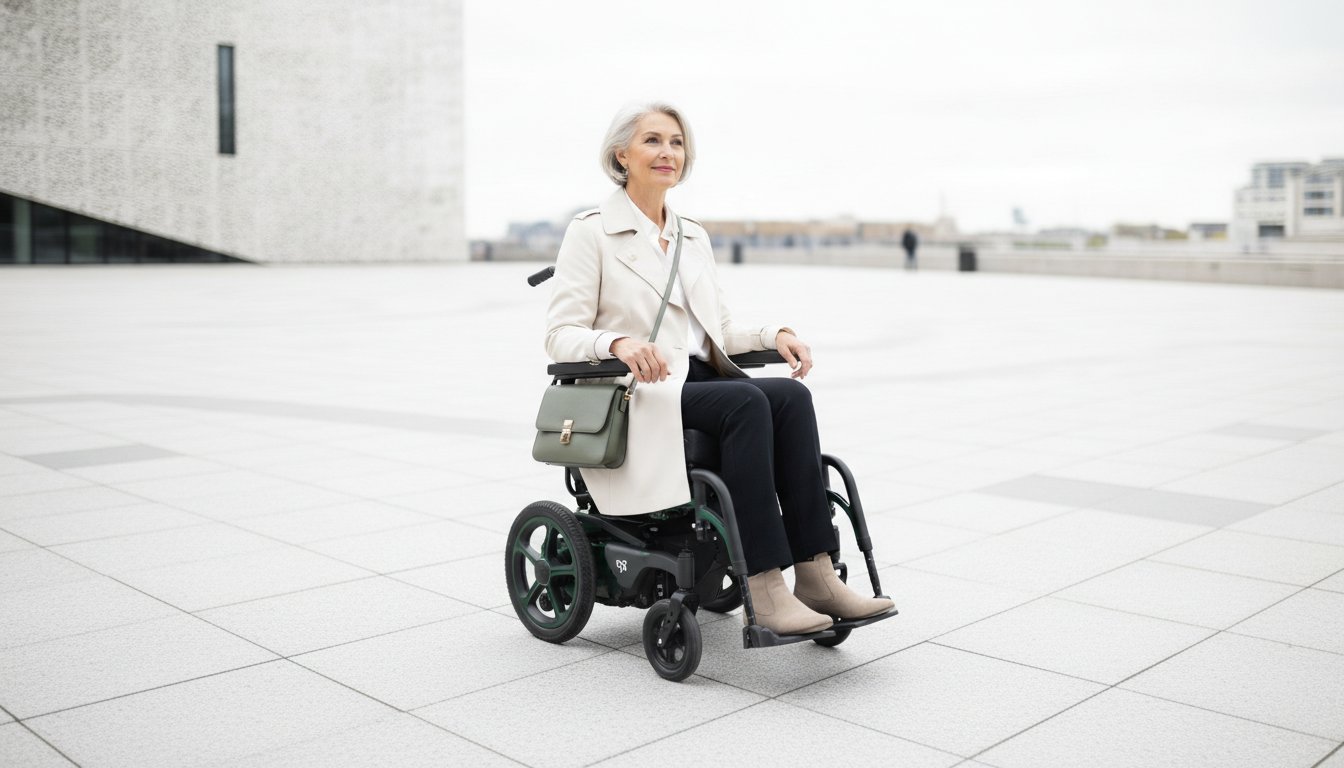
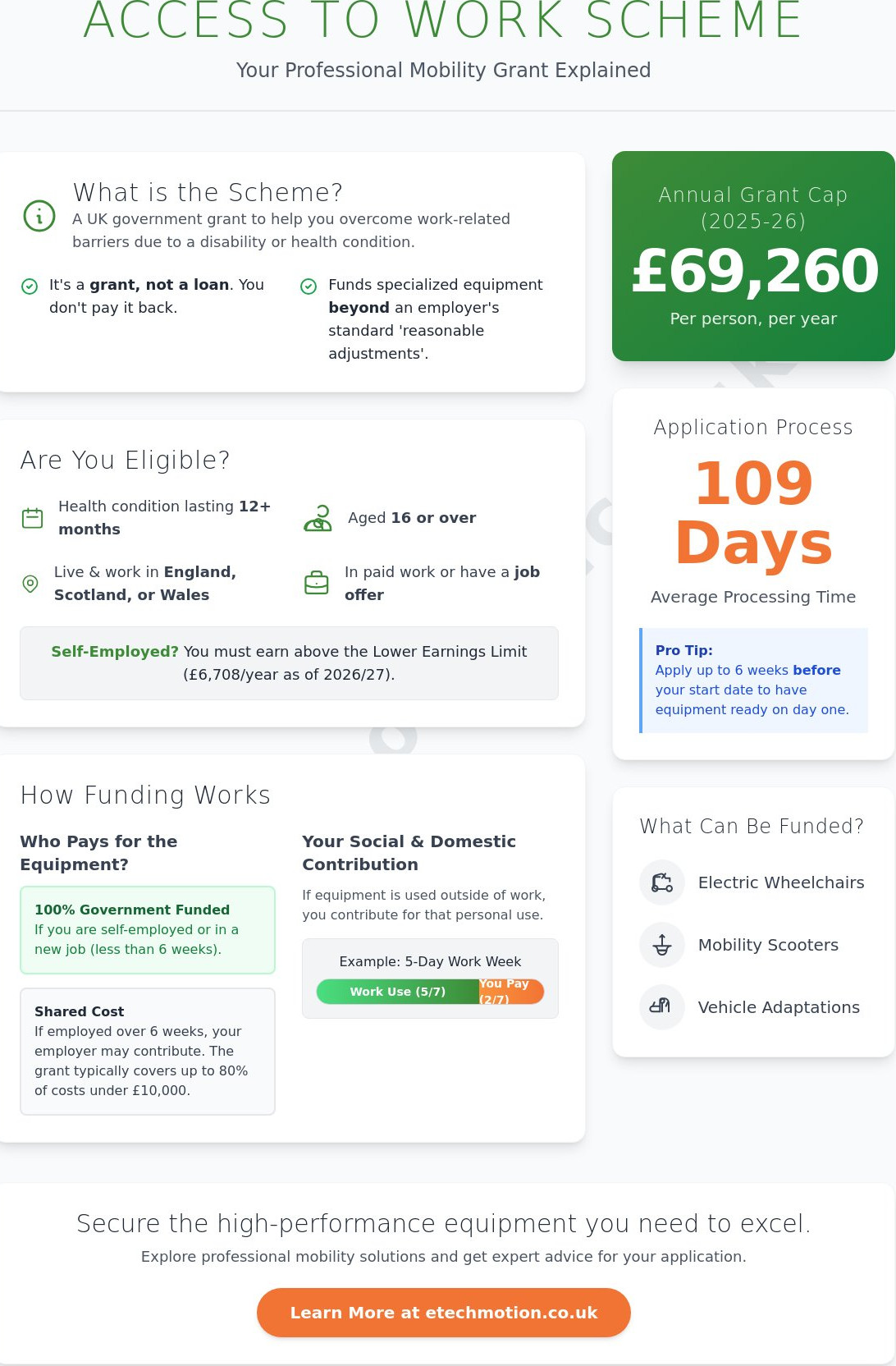
The scheme provides deep support for assistive technology and specialized mobility vehicles. For many, this means securing funding for a professional-grade Electric Wheelchair or a Mobility Scooter. These tools aren't just about movement; they're about maintaining the energy and independence required to excel in a demanding role. The grant can also cover significant vehicle adaptations, ensuring your commute is as efficient as your workday. With the 2025-26 annual grant cap set at £69,260, there's substantial scope to fund high-performance equipment that truly fits your professional lifestyle.
If you've been in your current position for more than six weeks, your employer might share the cost. For approved expenses under £10,000, the scheme typically refunds up to 80% of the cost, with the employer covering the rest. However, if you're self-employed or applying within the first six weeks of a new job, the government usually covers 100% of the approved costs. This makes the early stages of a career transition the perfect time to submit your application.
The Social and Domestic Contribution (SDC) Explained
A common point of confusion is how the DWP handles equipment used both at work and at home. This is known as the Social and Domestic Contribution (SDC). Because your Access to Work scheme mobility equipment provides value outside of your 9-to-5, the government may ask you to pay a portion of the price. They calculate this by looking at how many days a week you work. For example, if you work five days a week, you might be asked to pay 2/7ths of the total cost, as the equipment is yours to use on weekends. It's a fair trade for gaining access to top-tier technology that improves your quality of life across the board. If this personal contribution feels out of reach, you can often seek help from disability charities or use local trusts to bridge the gap.
Eligibility Criteria: Who Can Apply for Mobility Grants?
The beauty of this programme lies in its broad reach. It doesn't matter if you're a seasoned executive or just starting your first internship; the doors are open. To qualify, you must have a physical or mental health condition that is expected to last for at least 12 months. This long-term focus ensures the support provided creates a lasting impact on your career trajectory. There's no upper age limit, provided you're over 16 and currently in or about to start work.
Securing Access to Work scheme mobility equipment is possible for almost any paid role. This includes full-time and part-time employees, apprentices, and those on work experience or internships. Even if you're just at the "job offer" stage, you can start the process. In fact, applying up to six weeks before your start date is a smart move to ensure your equipment is ready for day one. This proactive approach prevents delays and lets you hit the ground running in your new position.
Employment Status and the Scheme
Whether you're a freelancer or a business owner, the scheme treats self-employment with the same level of importance as traditional roles. However, there's a specific threshold to keep in mind. For the 2026/2027 period, self-employed applicants must earn above the Lower Earnings Limit of £559 per month or £6,708 per year. This requirement confirms that the business is a viable professional venture. If you're unsure about your specific status, the Official Access to Work guidance provides a comprehensive breakdown of qualifying roles. If you're ready to see what's available, exploring a high-performance Electric Wheelchair can help you visualize how your workspace might transform.
Defining Disability in the Workplace
The scheme aligns with the Equality Act 2010, focusing on how your condition impacts your ability to perform work-related tasks. You don't necessarily need a formal diagnosis in every case, but you must demonstrate a clear need for support. A workplace assessor will often visit your site or conduct a virtual review to validate your requirements. They aren't looking for a medical history; they're looking for productivity gaps. Your goal is to show how a specific piece of equipment, like a lightweight powerchair or a scooter, directly improves your professional output. This assessment is a collaborative process designed to ensure the solution fits your specific office, studio, or industrial environment perfectly.
Selecting the Best Mobility Equipment for Your Work Environment
Selecting the right hardware is a critical step in your application. The DWP doesn't just hand out generic models; they look for equipment that solves a specific professional hurdle. When choosing your Access to Work scheme mobility equipment, start by auditing your daily movements. Are you navigating thick office carpets, or are you traversing uneven ground on a construction site? A tight turning circle is a non-negotiable for those in cramped meeting rooms, while a high weight capacity might lead you toward a Heavy Duty Electric Wheelchair built for durability.
Battery life is another vital metric. If your shift involves extensive site visits or back-to-back meetings across a large campus, you'll need a power system that won't quit by midday. You should also consider the storage requirements of your workplace. If space is at a premium, a compact model is essential to ensure your presence doesn't create a hazard for colleagues. Consult the Official Access to Work guidance to see how specific technical requirements impact your funding request.
During your assessment, you'll need to justify why a specific model is necessary. It isn't enough to want a certain chair; you must explain how its technical specs, like a 15-mile range or a 60cm width, allow you to perform your duties. This is where technical depth becomes your best friend. Being able to cite the exact turning radius or the weight of a Lightweight Electric Wheelchair shows the assessor you've done your homework. It transforms your request from a 'preference' into a 'requirement' for professional success.
Folding Electric Wheelchairs for Commuters
For the modern professional, the commute is often the most challenging part of the day. A folding electric wheelchair bridges the gap between home and the office with incredible ease. These lightweight models are designed for agility. They fit into the boot of a standard taxi or a dedicated space on a train, making multi-modal travel possible. In smaller offices, these chairs can be tucked away under a desk when not in use, keeping your workspace clear and professional. This flexibility ensures that your mobility solution supports your lifestyle rather than dictating it.
Mobility Scooters for Large-Scale Sites
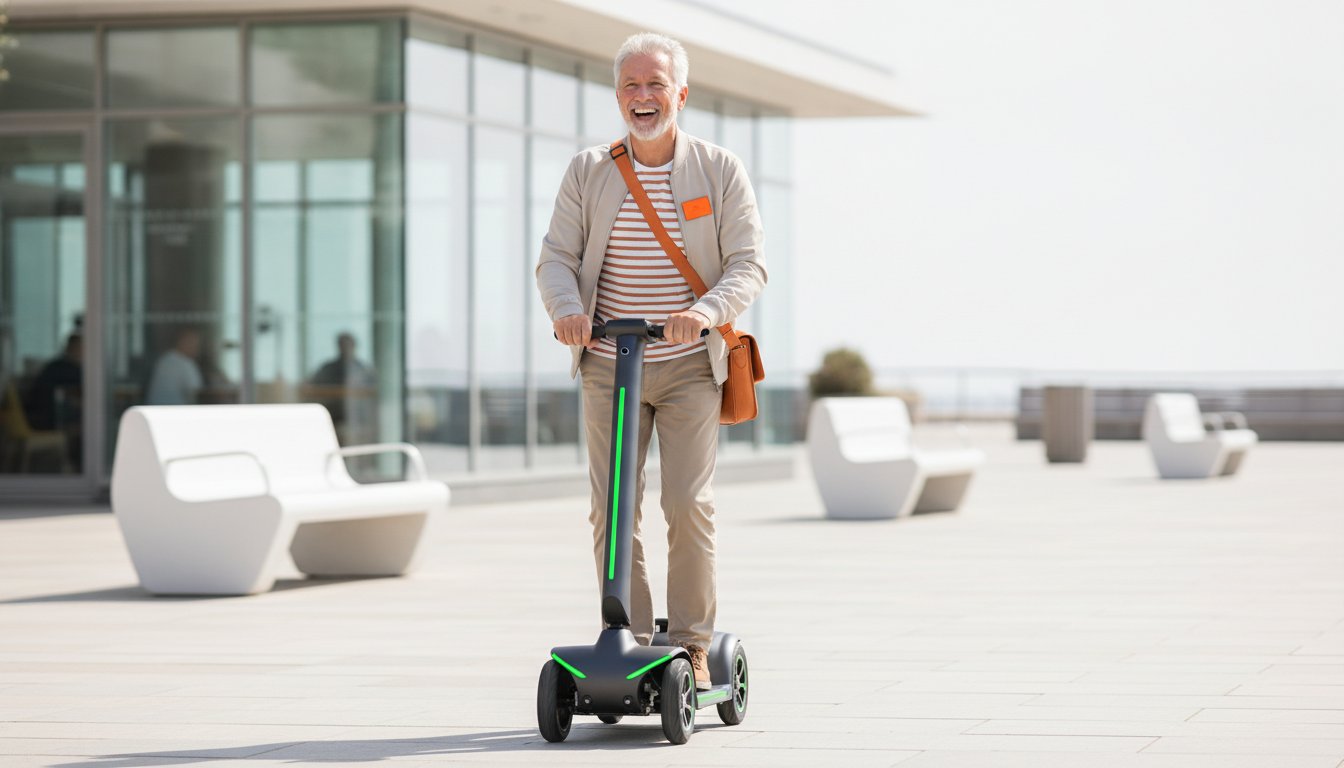
When your 'office' is a sprawling warehouse, a busy hospital, or an outdoor industrial site, an electric folding mobility scooter is often the superior choice. These machines prioritize range and stability, allowing you to move across vast distances quickly. Speed is balanced with safety features, ensuring you can navigate public-facing roles with confidence. Whether you're a site manager or a healthcare professional, a scooter provides the endurance needed for long shifts, ensuring you remain as productive in the eighth hour as you were in the first.
The Application Journey: From Assessment to Funding
Securing your grant is a marathon, not a sprint. With average processing times reaching 109 working days in late 2025, starting as early as possible is your best strategy. If you've just accepted a role, you can apply up to six weeks before your start date. This proactive approach ensures the administrative wheels are turning before you even step into the office. The process is logical, but it requires you to be an active participant in defining your needs.
The journey follows five distinct stages designed to match you with the right support:
- Stage 1: Verify your eligibility and gather your employment evidence, such as your contract or unique taxpayer reference (UTR).
- Stage 2: Submit your formal application through the official GOV.UK portal.
- Stage 3: Participate in a workplace assessment, which is now often conducted virtually to speed up the process.
- Stage 4: Receive and sign your award letter, which confirms the specific funding amount and the equipment approved.
- Stage 5: Purchase your Access to Work scheme mobility equipment and submit the invoices to the DWP for reimbursement.
Preparing for Your Workplace Assessment
Your assessment is the moment to advocate for your professional independence. It's helpful to research specific electric wheelchair UK models before the call. This allows you to speak with authority about why a particular chair, such as a Heavy Duty Electric Wheelchair, is necessary for your specific environment. Focus on the physical barriers you face daily. If your office has thick carpets or long corridors, explain how these impact your fatigue and productivity. The assessor's job is to validate your claim, so providing technical specs like battery range or turning radius makes their decision much easier.
Managing the Funding and Claims Process
Most grants operate on a 'buy first, claim later' basis. This means you or your employer will typically pay for the Access to Work scheme mobility equipment upfront and then claim the money back from the DWP. If an SDC applies to your purchase, you'll pay your portion directly to the supplier while the grant covers the rest. Speed up your reimbursement by ensuring your invoices are clear, VAT-compliant, and match the award letter exactly. If you're ready to start gathering quotes for your application, you can browse our professional mobility range to find the right technical specifications for your workplace.
Maximising Your Grant with Etech Motion’s Professional Mobility Range
Securing your funding is a significant victory, but the real transformation happens when you select the hardware that will power your career. Etech Motion specialises in high-performance mobility solutions designed specifically for active professionals who refuse to let physical limitations dictate their workplace success. We don't just sell products; we provide the technical expertise required to ensure your Access to Work scheme mobility equipment is a perfect match for your professional environment. Our range includes advanced folding, lightweight, and heavy-duty options that meet the rigorous demands of modern employment.
We understand that the DWP assessment process requires precision. That's why we offer expert support in providing the detailed, technical quotes necessary for your application. From specifying the exact turning radius for a tight office layout to explaining the necessity of a specific battery capacity, we help you build a compelling case for the equipment you need. Once your grant is approved, our nationwide delivery and professional setup service ensure you're ready to work from day one. Every piece of equipment is fully configured to your ergonomic requirements before it reaches your desk.
Why Choose Our Specialized Power Chairs?
Reliability is the cornerstone of professional mobility. Our selection features modern lithium-ion battery technology, providing the consistent power and fast charging cycles required for long shifts and extensive travel. For those working in more demanding or industrial settings, our heavy duty electric wheelchair models offer the structural durability and enhanced suspension needed for varied terrains. We also provide extensive customisation options. Whether you need specific seating adjustments for all-day comfort or specialized control systems, we ensure your chair feels like a natural extension of your professional self.
Partnering with Etech Motion for Your Application
We act as your technical partner throughout the application journey. Our team is deeply familiar with UK safety standards and quality assurance protocols; this provides the peace of mind that comes from local accountability. We assist with the technical specifications your DWP assessor needs, reducing the back-and-forth that often slows down funding approval. Beyond the initial purchase, we offer ongoing maintenance support to ensure your professional mobility remains seamless. It's about more than just a transaction; it's about a long-term commitment to your career independence and your daily freedom of movement.
Take Command of Your Professional Future
Your career potential shouldn't be limited by physical barriers or complex bureaucracy. We've explored how the 2026 guidelines support everyone from new apprentices to established business owners, provided you choose high-performance gear that matches your specific work terrain. By understanding the application journey and the nuances of social and domestic contributions, you can navigate the DWP process with total confidence. Securing the right Access to Work scheme mobility equipment is a transformative step that ensures your focus remains on your professional achievements rather than your transport logistics.
Etech Motion is here to act as your expert partner in this journey. As a specialist UK retailer, we offer nationwide delivery and provide the detailed technical quotes you need to satisfy DWP assessors and speed up your approval. Our range of power chairs and scooters is built for the rigours of the modern workplace. Browse our professional mobility range and request a quote for your application today. Your path to greater independence and a more efficient workday starts here. We're ready to help you move forward with joy and purpose.
Frequently Asked Questions
How much is the Access to Work grant for mobility equipment?
The maximum annual grant for the 2025-26 period is £69,260. This funding is usually approved for a three-year cycle, providing a substantial budget for high-performance hardware. While this is the upper limit, the actual amount you receive depends on the specific technical requirements of your role and the equipment identified during your workplace assessment.
Can I get an electric wheelchair if I am self-employed?
Yes, self-employed professionals can secure an electric wheelchair through the scheme. You must earn above the Lower Earnings Limit, which is £559 per month or £6,708 per year for the 2026/2027 period. One major benefit for the self-employed is that the government typically covers 100% of the approved equipment costs, as there's no separate employer to share the financial burden.
What is the 'Social and Domestic Contribution' and do I have to pay it?
The Social and Domestic Contribution (SDC) is a personal payment you make for equipment used both at work and at home. You'll likely have to pay this because the hardware provides significant value during your personal time. The DWP calculates this figure by looking at your working patterns, ensuring the government grant specifically targets the professional portion of the equipment's use.
How long does an Access to Work application take in 2026?
The average processing time for an application is currently 109 working days. This duration reflects the record-breaking number of applications the scheme has received over the last two years. Because of these delays, it's vital to submit your request as soon as you have a job offer or a confirmed start date to ensure your equipment is ready when you are.
Does my employer have to pay for my mobility scooter?
Your employer may need to contribute if you've been in your job for more than six weeks. For approved costs under £10,000, the scheme typically refunds up to 80% of the total, with the employer paying the remaining 20%. However, if you're a new starter or self-employed, the scheme usually covers the full cost of the equipment to help you establish your career independence.
Can I keep my equipment if I change jobs or leave my employer?
Ownership of Access to Work scheme mobility equipment usually rests with whoever made the purchase, which is often your employer. Despite this, many businesses allow employees to take specialized equipment with them to a new role since it's tailored to a specific individual's needs. You should clarify these ownership terms with your manager and the DWP at the start of the process.
What happens if the equipment I need costs more than the grant limit?
If your total support package exceeds the £69,260 annual cap, the remaining balance must be funded through other means. This might involve a larger contribution from your employer or personal funds. For most professionals, this limit is more than enough to cover even the most advanced Access to Work scheme mobility equipment, including heavy-duty powerchairs and custom adaptations.
Do I need a medical assessment to qualify for mobility hardware?
You don't necessarily need a formal medical diagnosis or a clinical assessment to qualify for funding. The scheme focuses on the practical impact your condition has on your daily work tasks rather than a strictly medical viewpoint. A workplace assessor will talk to you about the physical barriers you face and recommend the hardware that will best improve your professional productivity and comfort.