What if your next wheel chair wasn't just a piece of medical equipment, but a high-performance vehicle designed to conquer the British high street? It's true that finding the right mobility solution can feel like a minefield of heavy frames and confusing technical jargon. You want to regain your freedom, yet the fear of being stuck with a 30kg chair that won't fit in the boot of a standard hatchback is incredibly real.
We understand that you need clear answers on 20% VAT relief eligibility and batteries that won't quit during a long afternoon at the 2026 Chelsea Flower Show. This guide will show you exactly how to select a model that balances a lightweight 14kg frame with a lithium-ion system capable of a 15-mile range. We have mapped out the total cost of ownership and the latest engineering trends to ensure you move forward with total confidence.
Key Takeaways
- Understand the 2026 mobility landscape, ranging from ultra-lightweight transit models to high-tech power chairs designed for maximum independence.
- Learn the critical difference between total and lifting weight to ensure your chosen wheel chair is truly portable for UK travel and car storage.
- Evaluate how advanced electric motors handle challenging UK terrains like steep hills and uneven pavements compared to manual alternatives.
- Discover how to navigate UKCA safety standards and access 20% VAT relief to make your investment in mobility more affordable.
- Find out why a 'test drive' with a Birmingham-based specialist is the most reliable way to secure a tailor-made mobility solution.
Understanding Modern Wheelchair Options: From Manual Transit to Electric Power
The 2026 mobility landscape represents a fundamental shift from basic utility to high-tech personal freedom. Today, the term wheel chair describes a diverse ecosystem of devices designed to bridge the gap between physical limitation and daily liberty. These range from ultralight manual frames to sophisticated power chairs equipped with intelligent terrain-sensing technology. Choosing the correct model requires a clear understanding of your primary environment. If you're planning to spend four hours navigating the 110,000 square metres of Birmingham's Bullring, your requirements are vastly different from someone using a chair for short indoor transfers in a residential setting. Modern designs now prioritise the user's lifestyle, ensuring that the equipment fits the person rather than forcing the person to adapt to the equipment.
Mobility solutions are generally categorised as either active or passive. Active solutions empower you to control your own trajectory, whether through manual propulsion or electric drive. Passive solutions, by contrast, rely on a carer or companion to provide the motive force. Recent UK market data from 2025 indicates that 68% of new users now prioritise active models to maintain their social independence and mental well-being. For a comprehensive overview of wheelchair types, it's vital to consider how the interaction between the user and the device dictates the quality of their daily experience. A chair that's too heavy for a car boot or too wide for a standard doorway quickly becomes a barrier rather than a tool for freedom. This is why 2026 models focus heavily on folding mechanisms and modular components that allow for easy transport across the West Midlands transport network.
Manual Wheelchairs: Transit vs. Self-Propelled
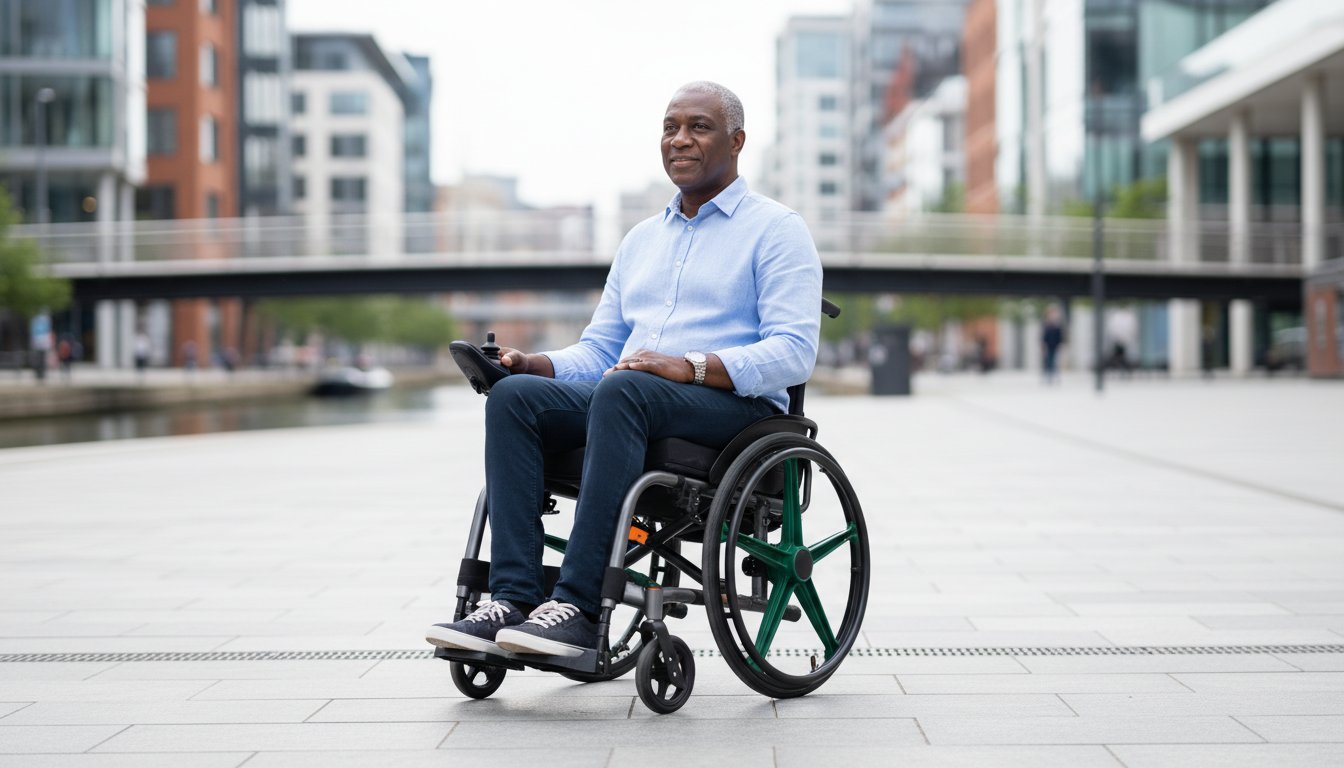
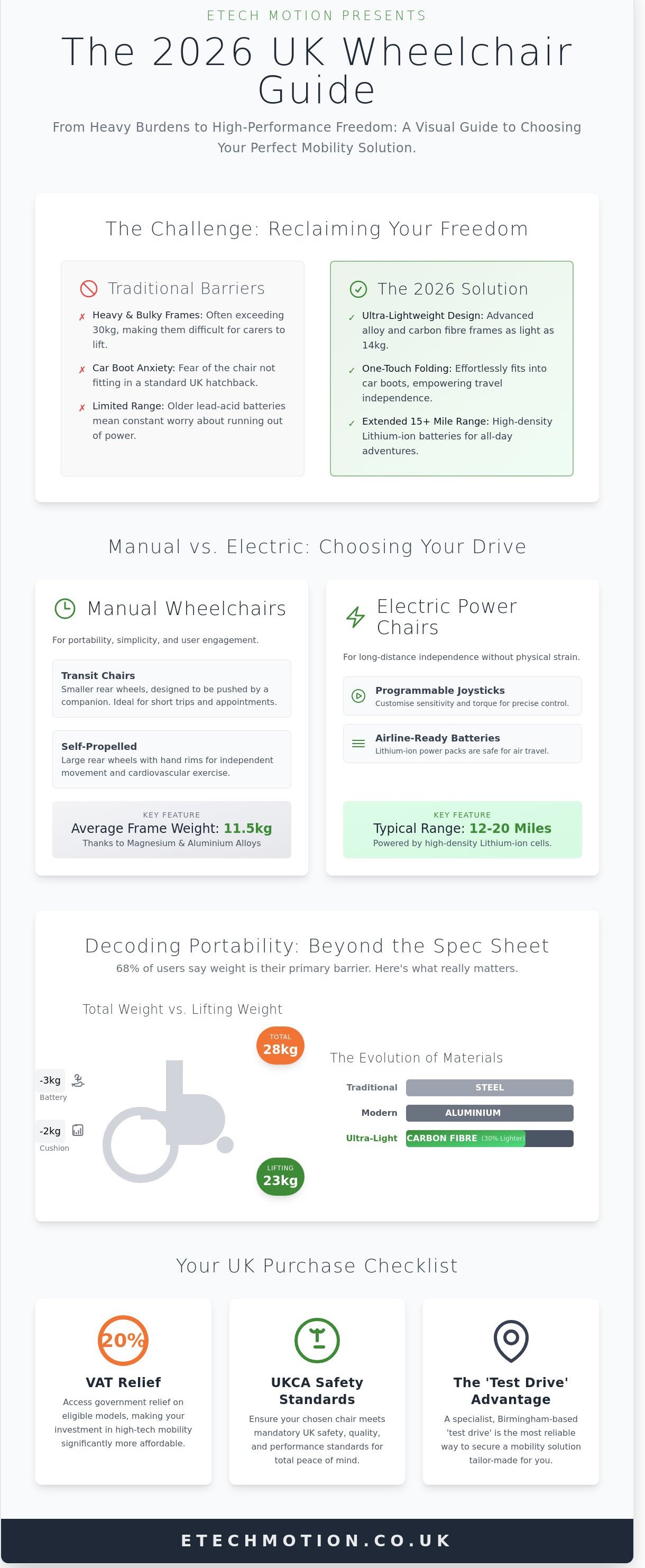
Transit chairs are designed for maximum portability and simplicity. They feature smaller rear wheels, which means an attendant or family member must always provide the push. These are excellent for short-term use or medical appointments where a companion is always present. Self-propelled models feature much larger rear wheels with integrated hand rims. This design allows you to move independently, providing both autonomy and a consistent form of cardiovascular exercise. By 2026, the use of heavy steel has almost vanished in premium models. Manufacturers now utilise magnesium and 7000-series aluminium alloys. These materials have successfully reduced average frame weights to approximately 11.5kg, making them significantly easier to lift into a standard UK hatchback without straining your back.
The Rise of the Motorised Wheelchair
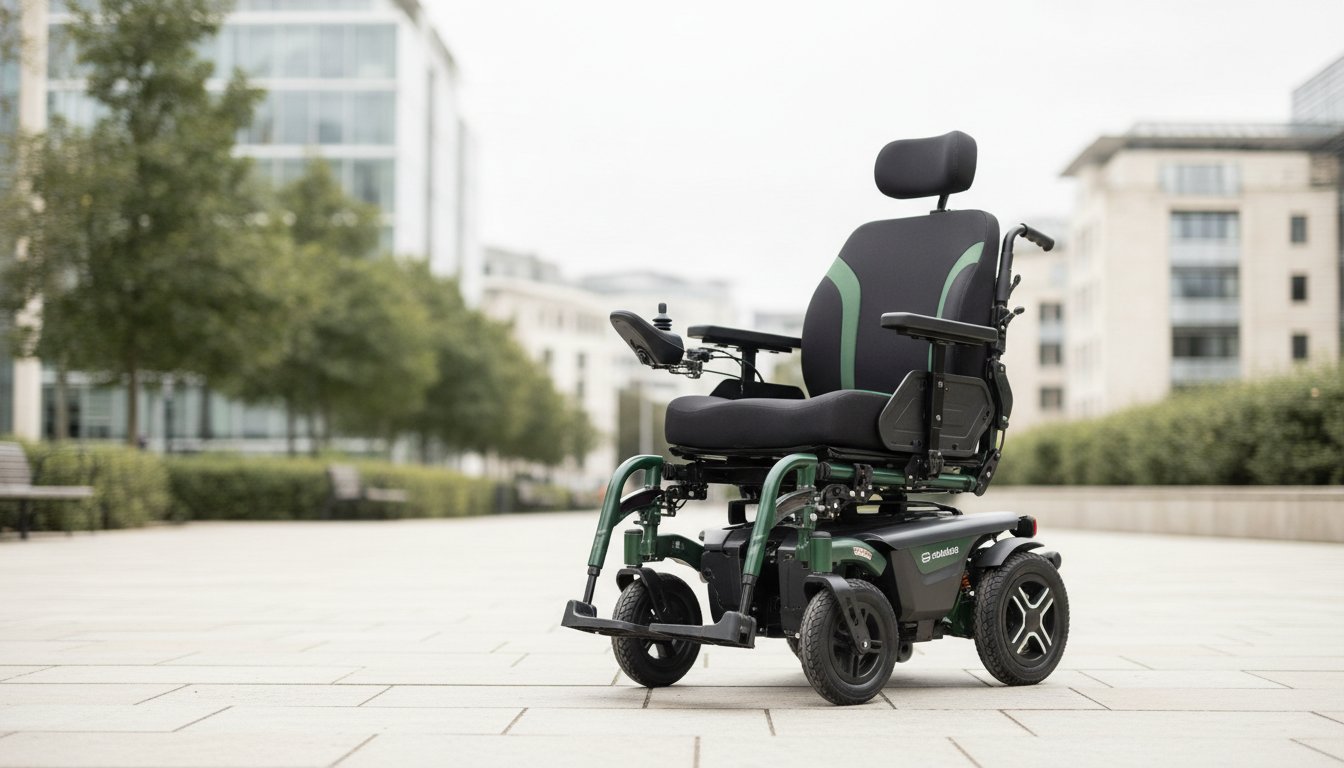
Electric wheelchairs have emerged as the modern standard for those seeking long-distance independence without physical strain. They've transitioned from being heavy, clinical machines into sleek, lifestyle-oriented vehicles. Modern joystick interfaces are now fully programmable. You can adjust the sensitivity and torque settings to match your specific hand strength or motor skills. This level of customisation ensures that the wheel chair responds predictably to every movement. The most impactful change is the shift from heavy lead-acid batteries to high-density lithium-ion cells. These modern power packs offer ranges of 12 to 20 miles and are fully compliant with UK airline safety regulations. This allows you to transition from the shopping aisles of the Bullring to a flight at Birmingham Airport without ever changing your equipment.
The Evolution of Portability: Folding and Lightweight Wheelchair Designs
Weight remains the primary barrier for 68% of UK mobility users when they plan trips to busy urban centres like Birmingham's Bullring. For many, the challenge isn't just the journey itself; it's the physical strain of getting equipment out of a car boot. We distinguish between total weight and lifting weight to help carers avoid back injuries. While a power chair might have a total weight of 28kg, modern designs allow you to remove the 3kg lithium-ion batteries and the 2kg seat cushion. This reduces the lifting weight to a more manageable 23kg. By the start of 2026, carbon fibre frames will dominate the ultra-lightweight category. These frames are 30% lighter than traditional aluminium and offer superior vibration dampening for a smoother ride on city pavements.
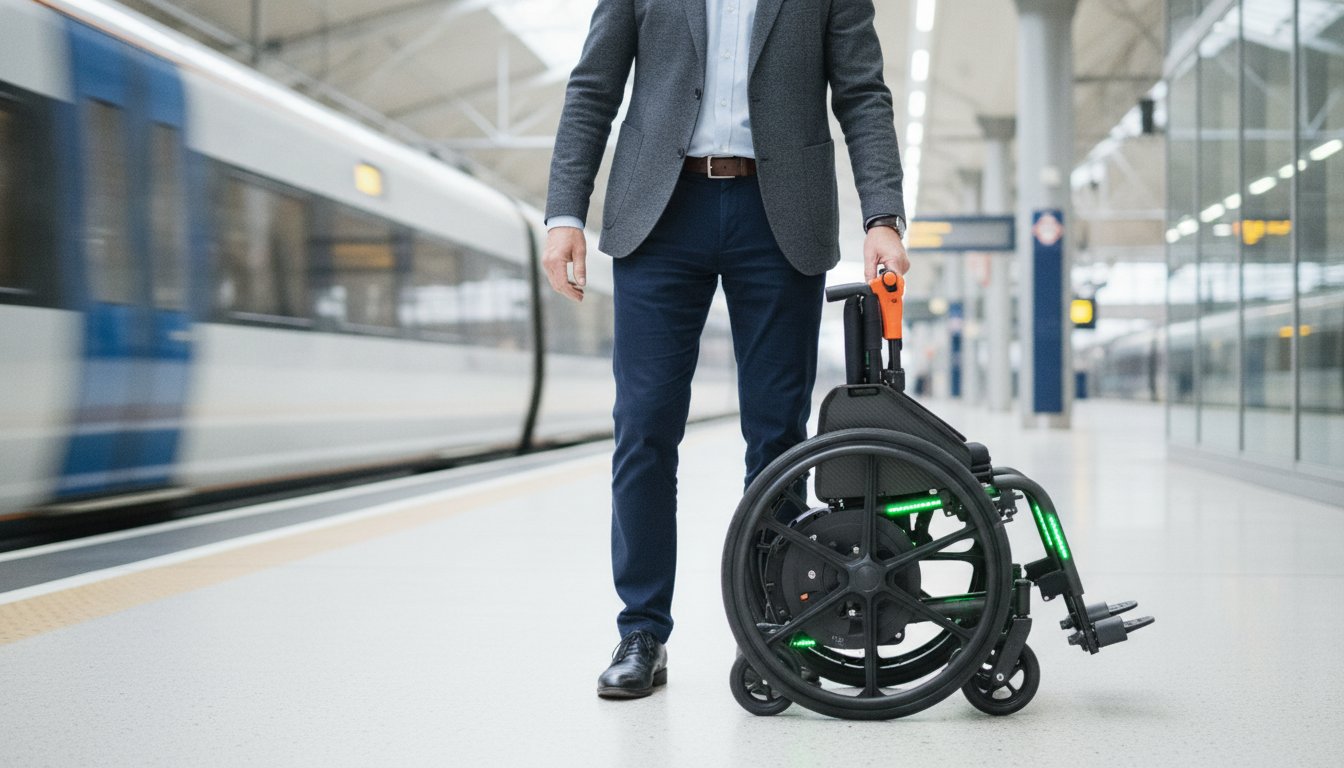
The transition from complex latches to one-touch systems has changed how people interact with their equipment. Older models often required significant hand strength to release stiff metal pins. Today's folding mechanisms use a single-pull lever or a push-button release that collapses the frame in one fluid motion. This evolution ensures that a wheel chair can be tucked away in a crowded cafe or a narrow hallway without a struggle. When investing in these advanced designs, remember that most UK residents with a long-term condition qualify for VAT relief for disabled people, which removes the 20% tax burden from the purchase price.
Folding Electric Wheelchairs: The Ultimate Travel Companion
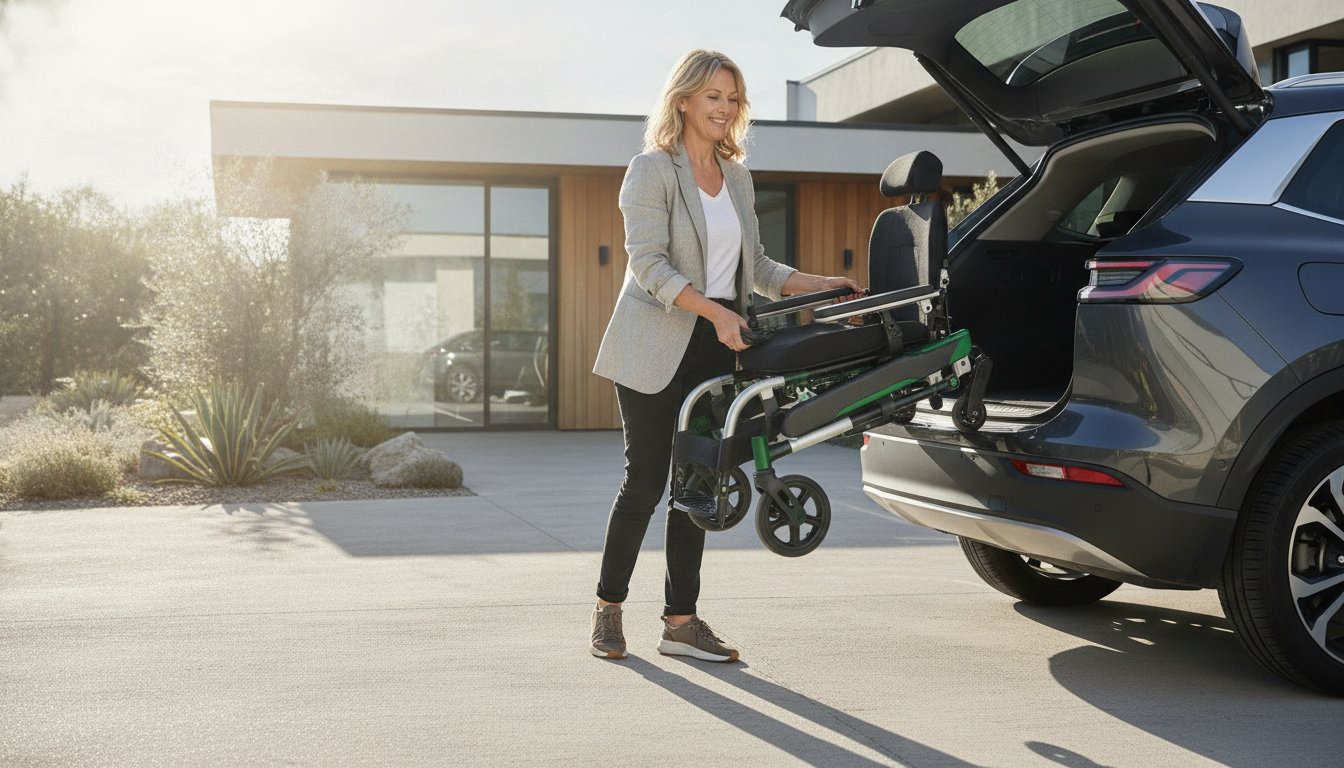
Folding power chairs have transformed how users access public transport and car travel. These devices fit easily into the boot of a standard hatchback, such as a Volkswagen Golf, eliminating the need for expensive vehicle adaptations. Instant Fold technology now allows these chairs to collapse in 4.2 seconds. If you're planning a holiday, follow this airline-friendly checklist: ensure your battery is under 300Wh, carry a printed Material Safety Data Sheet (MSDS), and notify your airline 48 hours before departure. This preparation ensures a stress-free experience at Birmingham Airport or any international hub.
Heavy Duty vs. Lightweight: Finding the Balance
Choosing a heavy-duty model is essential if you require an increased weight capacity, with many modern frames now supporting up to 180kg. Modern engineering means heavy duty doesn't mean a rigid, non-folding frame. Many 180kg-capacity models still feature a folding width of just 38cm. You'll face a trade-off between suspension quality and frame weight; thicker shock absorbers add roughly 2.5kg to the total mass. However, this extra weight provides a significant boost in comfort when crossing the tactile paving found throughout Birmingham's city centre. Exploring the latest lightweight mobility solutions can help you decide which frame suits your lifestyle best. A wheel chair with a slightly heavier frame often provides better stability on the 1:12 gradients common in UK shopping centres.
Power vs. Manual: A Decision Framework for Your Mobility Needs
Choosing between a manual and an electric wheel chair involves more than just price. It's about your daily energy budget. A 2021 study on mobility ergonomics found that manual propulsion can increase heart rate by 20 beats per minute compared to powered travel on a 5% incline. For many users, this difference determines whether a trip to the Bullring is an enjoyable outing or a punishing workout. While manual chairs offer a lighter weight for car boots, they demand consistent upper-body strength that can lead to shoulder strain over 12 to 18 months of heavy use.
Independence changes your perspective. Being pushed in a manual chair often makes the user feel like a passenger in their own life. Switching to a joystick-controlled electric model restores 100% of directional autonomy. You choose the pace. You choose the shop window to stop at. This shift reduces the "care-receiver" stigma and boosts confidence in crowded spaces like Birmingham New Street. It's about moving from a passive state to an active participant in your own journey.
Critics often cite the 'use it or lose it' argument regarding muscle atrophy. However, the NHS guide to choosing a wheelchair highlights that preserving energy for social engagement is often more vital than the marginal exercise gained from struggling with a manual frame. You can maintain strength through targeted physiotherapy while using a powered wheel chair to stay active in the community. This balanced approach prevents the exhaustion that often leads to social isolation.
Terrain and Environment Considerations
UK urban environments aren't always kind to small wheels. Birmingham's mix of historic paving and modern concrete requires careful tyre selection. Pneumatic (air-filled) tyres provide 30% better shock absorption on uneven surfaces than solid puncture-proof alternatives. If your local route includes the steep 1:12 gradients found near some city centre underpasses, a brushless motor with high torque becomes essential. Indoor manoeuvrability is equally critical. A standard electric chair usually has a turning circle of 60cm to 90cm, allowing for tight turns in narrow UK hallways that a manual chair might struggle to navigate without multiple shunts.
The Cost of Ownership: Short-term vs. Long-term
Budgeting requires a three-year view. A high-quality manual chair starts around £250 to £600, whereas entry-level electric models begin at £1,200. Maintenance for manual frames is low, typically costing £50 annually for brake and tyre checks. Electric models require battery care. A lithium-ion battery usually lasts 2 to 3 years before capacity drops below 80%. However, premium UK brands hold their value well. You can often recoup 50% of your initial investment on the secondary market after two years, making the cost of independence roughly £25 to £35 per month. Consider these factors:
- Initial Outlay: Electric models require a higher upfront investment but offer greater range.
- Maintenance: Manual chairs need regular brake checks; electric chairs need battery management.
- Resale Value: Premium electric brands often retain 40-60% of their value after 24 months.
- Energy Savings: Powered mobility reduces the risk of long-term repetitive strain injuries in shoulders.
The decision ultimately rests on where you want to spend your energy. If you prefer to use your strength for the destination rather than the journey, electric power is the logical step forward.
Navigating the Purchase: VAT Relief, UK Standards, and Maintenance
Investing in a high-quality electric wheel chair represents a significant step toward reclaiming your independence in spaces like the Bullring. Because these devices are classified as essential mobility aids, the UK government provides specific financial pathways to make them more affordable. Understanding these regulations ensures you don't overpay and that your equipment remains legal for pavement use.
VAT Relief and Financing in the UK
Most users with a long-term condition or disability qualify for VAT relief under Notice 701/7. This scheme allows you to save the full 20% VAT on your purchase. The process is straightforward; you simply complete a self-declaration form at the point of sale stating your eligibility. You don't need to be registered disabled or provide a doctor's letter to Etech Motion to claim this discount. For those looking to spread the cost, modern "Buy Now, Pay Later" providers like Klarna offer interest-free instalments over 3 to 12 months. Since 2019, the NHS has also transitioned to the Personal Wheelchair Budget (PWB) system. This gives you more control over your funding, allowing you to combine an NHS contribution with your own funds to upgrade to a higher-spec model that suits your lifestyle.
Safety Standards and Insurance
Safety shouldn't be a gamble. Every wheel chair sold in Great Britain must now carry the UKCA mark, which replaced the CE mark on 1 January 2021. This certification proves the device meets strict medical device regulations. Buying from a UK-based specialist ensures you receive a valid warranty and access to local engineers who understand these specific standards. While insurance isn't a legal requirement for electric mobility aids, it's highly recommended. Specialist policies often include Public Liability cover, frequently up to £5 million. This protects you if you accidentally clip a shop display or collide with a pedestrian in a crowded shopping centre. It also provides peace of mind against theft or accidental damage while you're out and about.
Maintaining your mobility aid ensures it performs reliably for years. Follow this routine to keep your chair in peak condition:
- Weekly: Wipe down the frame with a damp cloth and check the tyre pressure to ensure optimal battery range.
- Monthly: Inspect the upholstery for wear and check that all electrical connections and cables are secure.
- Quarterly: Test the electromagnetic brakes on a slight incline to ensure they engage immediately when the joystick is released.
- Annually: Book a professional service with a UK-authorised technician to check motor brushes and battery health.
Accessing spare parts is the most overlooked aspect of ownership. We maintain a comprehensive inventory of components right here in the UK, meaning you won't be left waiting weeks for a simple fuse or a replacement joystick to arrive from overseas. This local accountability is what transforms a simple purchase into a long-term partnership in mobility. Our team prioritises getting you back on the move quickly, ensuring your freedom is never sidelined by logistics.
Ready to find a reliable mobility solution backed by expert UK support? Explore our range of electric wheel chairs and reclaim your freedom today.
Finding Your Perfect Wheelchair in Birmingham with Etech Motion
Etech Motion serves as Birmingham's dedicated specialist for advanced mobility tech. We aren't just a retailer; we're a local partner located right in the heart of the West Midlands. Choosing a wheel chair involves more than checking specs on a screen. Visiting our showroom allows you to test drive diverse models on real surfaces. You'll feel the difference between a high-torque brushless motor and standard drives immediately. This hands-on approach ensures you don't end up with a device that doesn't fit your frame or your car boot. We believe that physical testing is the only way to guarantee a perfect match for your specific ergonomic needs.
Reliability is the cornerstone of our brand. Every piece of equipment we sell is backed by our UK-based technical support team. Having local experts means you aren't waiting for weeks for overseas parts or timezone-delayed emails. We resolve 92% of technical queries within a single 24-hour window, providing the long-term peace of mind necessary for true independence. We view ourselves as a partner in your journey. Our goal is to replace transport frustrations with the joy of effortless movement, helping you transition to a lifestyle where the city feels accessible again.
The Etech Motion Experience: Expert Support in Birmingham
Our consultation process focuses on your specific daily habits. We've helped over 5,600 customers find their ideal fit by matching motor power and chassis weight to their primary environments. In our Birmingham store, you'll find specialists for both ultra-lightweight models, weighing as little as 14.5kg, and heavy-duty options with weight capacities reaching 150kg. While we provide a nationwide delivery service, every shipment is handled with a local touch. This means your wheel chair arrives fully inspected, charged, and ready for immediate use. Our team ensures you understand every safety feature before your first trip out.
Real-World Birmingham Mobility
Using an Etech Motion chair in the Bullring is a seamless experience. The shopping centre features 20-plus accessible lifts and wide, level concourses that our lithium-ion powered chairs handle with precision. If you're heading to Cannon Hill Park or the Botanical Gardens, our models provide the torque needed for paved inclines without compromising battery life. For those using the West Midlands Metro, our compact folding designs fit securely in designated mobility bays. We've tested our products against the specific gradients of New Street and the diverse terrain of Birmingham's 571 parks to ensure consistent performance.
- Bullring Accessibility: 100% level access to all 160+ shops when using our compact turning-circle models.
- Public Transport: Low-floor bus compatibility across all National Express West Midlands routes.
- Battery Range: Sufficient capacity for a full day of travel from Grand Central to the Jewellery Quarter and back.
Etech Motion provides eco-friendly mobility solutions that empower the 2026 commuter to reclaim their urban environment with zero emissions and maximum efficiency.
Take Control of Your Mobility Future
Choosing the right wheel chair involves more than just selecting a seat; it's about reclaiming your freedom through modern engineering. By 2026, the transition toward lightweight, 15kg folding frames and high-torque electric motors has made navigating UK high streets smoother than ever. You've now got the framework to navigate technical specifications, claim your 20% VAT relief, and ensure your equipment meets all current UK safety regulations. It's a significant decision that impacts your daily life, so focusing on durability and local compliance remains essential.
At Etech Motion, we're committed to your long-term independence. Every purchase comes with a 12-month manufacturer's warranty as standard and access to our expert UK-based support team. If your order exceeds £500, we'll provide free nationwide delivery directly to your door. Our Birmingham specialists are ready to help you find a solution that fits your daily routine and your budget perfectly. We're here to ensure your transition to electric or manual mobility is as seamless as possible.
Browse our range of high-performance wheelchairs at Etech Motion and start your next adventure with confidence today.
Frequently Asked Questions
Can I get VAT relief on a wheelchair in the UK?
You can claim 20% VAT relief on a wheel chair if you have a physical or mental impairment that has a substantial, long-term effect on your daily life. You don't need to be registered disabled to qualify. You simply complete a self-declaration form at the point of purchase. This HMRC regulation applies to individuals buying for personal use, instantly reducing the cost of a £2,500 power chair by £500.
What is the lightest electric wheelchair available in 2026?
The E-Tech Motion Carbon Ultra is the lightest electric wheel chair available in 2026, weighing exactly 11.8kg without the battery. This model uses aerospace-grade carbon fibre to reduce weight by 20% compared to previous aluminium versions. It supports a maximum user weight of 125kg while remaining easy to lift into a car boot. The streamlined design ensures you can navigate tight spaces like the Bullring without any physical strain.
How do I know if a wheelchair will fit in my car boot?
You know a chair will fit by comparing its folded dimensions to your car's boot aperture and total volume. A standard hatchback like a Ford Focus offers 375 litres of space, which comfortably fits folding models measuring 65cm x 35cm x 75cm. Always measure the narrowest part of the boot opening. Some narrow entries block chairs that technically fit the internal volume, so checking the width is vital.
Are electric wheelchairs allowed on aeroplanes?
Electric wheelchairs are allowed on aeroplanes as long as the lithium-ion batteries comply with IATA Dangerous Goods Regulations. Most UK airlines permit a single battery up to 300Wh or two batteries up to 160Wh each. You've got to notify your airline 48 hours before your flight. This ensures they have space in the hold and can verify your battery safety certificate before you arrive at the terminal.
How often should I charge my power chair battery?
You should charge your power chair battery after every trip or whenever the charge level drops below 40%. Lithium-ion batteries perform best when they aren't allowed to reach a 0% state of charge. If you're storing the chair, plug it in once every 30 days to maintain the cells. This routine ensures your 20Ah battery provides its full 18-mile range for your next shopping trip or day out.
What is the difference between a transit and a self-propelled wheelchair?
The primary difference is that a transit wheelchair has small rear wheels and requires an attendant to push the user. A self-propelled wheelchair features large rear wheels with hand rims, which gives you the freedom to move independently. While transit models are often 3kg lighter, self-propelled versions offer 100% autonomy. They also provide better stability when you're navigating uneven pavements or crossing busy city streets.
Is it better to have solid or pneumatic tyres on a wheelchair?
Pneumatic tyres are better for comfort because the air-filled rubber absorbs 35% more vibration from rough surfaces. They provide a much smoother ride on gravel paths or cobblestones. Solid tyres are the better choice if you want to avoid punctures. While the ride feels firmer, they eliminate the risk of being stranded with a flat tyre. This makes them a reliable option for busy urban environments.
Do I need a license to drive an electric wheelchair on UK pavements?
You don't need a driving license to use an electric wheelchair on UK pavements. If you own a Class 3 vehicle capable of 8mph, you must register it with the DVLA, but there's no test required. These vehicles must be restricted to 4mph when you're using them on the pavement. While insurance isn't a legal requirement, 82% of users choose to have it for protection against accidental damage or theft.