

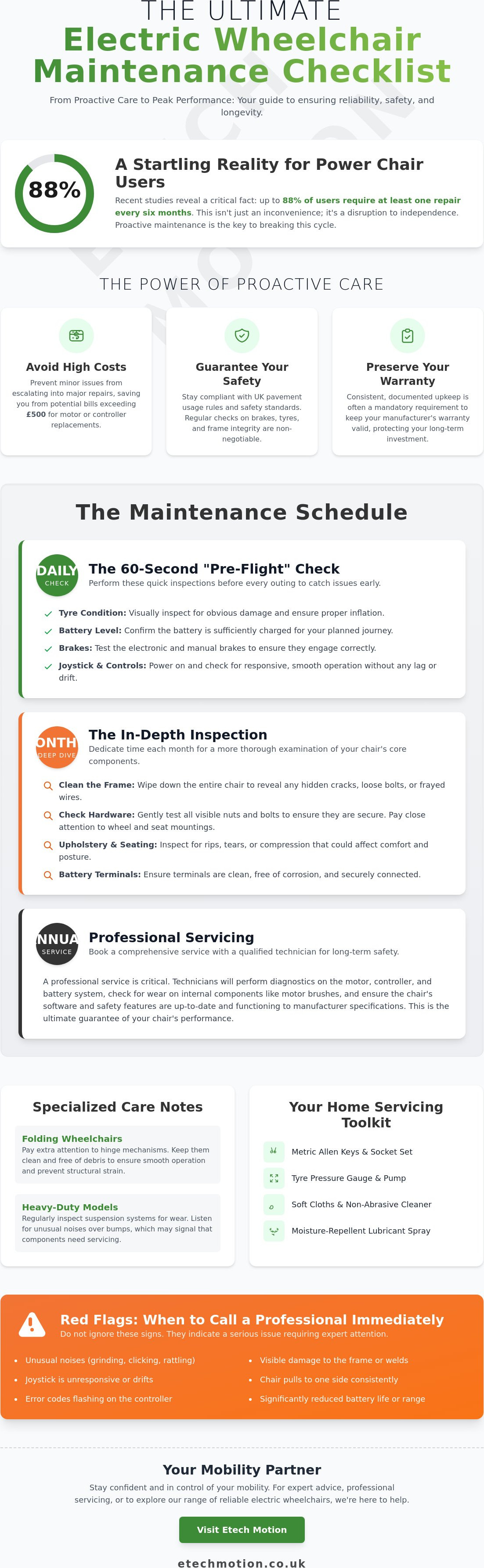
Did you know that recent studies show up to 88% of power chair users require at least one repair every six months? It's a startling figure that highlights just how much we rely on our mobility technology to navigate the world. Whether you use a folding electric wheelchair for travel or a heavy duty electric wheelchair for daily errands, staying mobile means staying ahead of mechanical wear. Our expert-led electric wheelchair maintenance checklist helps you move from reactive repairs to proactive care, ensuring your chair remains a reliable partner in your daily adventures.
We understand the anxiety of a flashing battery light or an unexpected stall while you're out enjoying the day. It's frustrating to feel like your independence is at the mercy of a complex machine, especially since the Medicare Part B deductible has reached $283 in 2026. We've created this guide to give you total confidence in your equipment's safety and performance. You'll learn how to maximize your battery's lifespan and identify minor issues before they become major hurdles. We'll walk you through a clear, jargon-free schedule that covers daily checks and monthly deep-dives, keeping your modern mobility solution running at peak efficiency.
Key Takeaways
- Learn to perform a 60-second "Pre-Flight" check to catch minor electrical or mechanical issues before they disrupt your daily routine.
- Discover why metric tools are the gold standard for modern mobility equipment and which essential items belong in your home servicing toolkit.
- Master our expert-led electric wheelchair maintenance checklist to prolong battery life and ensure your chair handles outdoor terrain with absolute confidence.
- Understand the unique care requirements for folding electric wheelchair hinges and heavy-duty suspension systems to maintain peak structural integrity.
- Identify the critical "Red Flags" that signal it is time for a professional annual service to guarantee your long-term safety and chair performance.
The Critical Role of Proactive Power Chair Maintenance
Your power chair is more than a piece of medical equipment; it's the foundation of your daily independence. For many users in the UK, a sudden mechanical failure isn't just an inconvenience. It's a complete halt to social lives, work commitments, and essential errands. Adopting a consistent electric wheelchair maintenance checklist ensures that your mobility remains uninterrupted. By catching small issues early, you protect the freedom that modern technology provides.
The financial logic for proactive care is undeniable. While a simple bolt tightening or tyre pressure adjustment takes minutes, ignoring these signs can lead to repair bills exceeding £500 for motor or controller replacements. In 2026, UK safety standards for powered mobility have become more stringent, focusing on the mechanical integrity of Class 2 and Class 3 vehicles. Neglecting your brake response or tyre tread depth doesn't just risk a breakdown; it compromises your safety on public pavements and can even lead to liability issues if an accident occurs.
Beyond the Battery: The Holistic View
Many users focus solely on charging, but a truly reliable chair requires a holistic approach. The frame, upholstery, and electronic connectors are just as vital as the motor itself. When you follow a structured electric wheelchair maintenance checklist, you gain the psychological benefit of knowing your equipment won't let you down. Identifying the first signs of wear, such as a slight drift in the joystick or a new rattling sound in the frame, allows you to address problems before they escalate into total system failures. This vigilance preserves the structural integrity of your investment for years to come.
Maintenance as a Safety Ritual
Regular checks are essential for staying compliant with UK pavement usage rules, which demand that mobility devices remain in a roadworthy condition. Beyond legalities, consistent upkeep is often a requirement for keeping your manufacturer warranty valid. We believe in empowering users and caregivers through technical familiarity. Understanding how your chair functions supports the global movement for the right to repair, giving you more control over your own mobility. This safety ritual transforms you from a passive user into an expert partner in your chair's longevity. Whether you operate a folding electric wheelchair or a heavy duty electric wheelchair, a little attention today prevents a massive headache tomorrow.
Essential Tools and Safety Prep for Home Servicing
Before you begin working through your electric wheelchair maintenance checklist, you must assemble the right equipment. Most modern UK power chairs are built with precision-engineered components that require specific handling. Using the wrong size spanner or a generic screwdriver can lead to stripped bolts and costly replacements. Proper preparation doesn't just make the job easier; it ensures you don't accidentally void your warranty while trying to be helpful.
Safety is your absolute priority. Always power down the joystick and, if possible, disconnect the battery before you start poking around the motor or electrical connectors. We also advocate for the "Clean First" rule. A layer of road grit or dried mud can easily hide a hairline fracture in the frame or a frayed wire. A quick wipe-down with a damp cloth and a non-abrasive cleaner allows you to see the true condition of your machine. If you're currently researching a new electric wheelchair, remember that starting these habits on day one is the best way to protect your investment.
The Basic Mobility Toolkit
Your toolkit doesn't need to be massive, but it must be specific. Since the vast majority of UK models use metric fasteners, a high-quality set of metric Allen keys and a socket set are essential. For those who want to reach a professional standard, a small torque wrench is invaluable for ensuring bolts are tightened to the manufacturer's exact specifications. You should also keep a reliable tyre pressure gauge and a portable high-PSI pump on hand; even a small drop in pressure can strain your motors. For general upkeep, this Maintenance Guide for Users of Manual and Power Wheelchairs suggests keeping soft cloths and moisture-repellent sprays nearby to protect moving parts from the unpredictable British weather.
Creating a Safe Inspection Environment
Never attempt a mechanical check on a slope or in a dimly lit garage. Level ground is non-negotiable to prevent the chair from rolling or tipping while you work. Good lighting is equally important for spotting small leaks or worn insulation on cables. If you need to check for wheel wobble or motor noise, ask a friend or caregiver to act as a helper. They can safely steady the chair while you inspect the underside. Finally, start a maintenance logbook. Documenting the date of every check, tyre pressure reading, and battery performance helps you spot long-term patterns. This record is incredibly helpful if you ever need to describe a specific issue to a technician during your annual service.
The Ultimate Electric Wheelchair Maintenance Checklist
Consistency is the secret to a chair that lasts for a decade rather than a few years. Now that your toolkit is prepared, you can implement a tiered routine that fits into your lifestyle without feeling like a chore. This electric wheelchair maintenance checklist breaks down technical upkeep into manageable daily, weekly, and monthly habits. By staying ahead of the curve, you ensure your mobility remains as energetic and reliable as the day you first took delivery.
Research indicates that approximately 29% of power wheelchair users experience electrical system failures. Another 27% report issues with control systems. These aren't just statistics; they represent moments where independence was temporarily lost. Most of these failures are preventable through basic observation. For a deeply detailed technical breakdown of these components, you can reference the CDC's Wheelchair Maintenance Checklist, which provides an excellent foundation for long-term equipment health.
Daily and Weekly Checkpoints
Start every morning with a 60-second "Pre-Flight" check. Turn the power on and observe the joystick. It should return to the centre position immediately without any drift or lag. If you notice the chair creeping forward or responding slowly, it's a signal that the controller needs calibration. On a weekly basis, give your tyres a thorough inspection. Look for embedded glass, sharp thorns, or uneven wear patterns that might suggest a tracking issue. Use a damp cloth to wipe down the frame. This simple act prevents road grit and salt from migrating into the moving parts of your lightweight electric wheelchair or folding mechanism.
Monthly and Quarterly Technical Tasks
Once a month, perform a "bolt-to-bolt" audit. Vibrations from uneven UK pavements can slowly loosen even the most secure fasteners. Check every visible bolt and tighten any that feel less than snug. Inspect your upholstery for small tears or frayed edges. Damaged seating isn't just an aesthetic issue; it can cause skin irritation or pressure points if the support is compromised. Every quarter, focus on the electrical terminals. Look for signs of corrosion or loose wiring harnesses. For those using a heavy duty electric wheelchair, ensure your lights and indicators are clean and fully functional for safe UK road and pavement use.
The "Listen and Feel" Test
Your chair often tells you it's struggling before a part actually breaks. Listen for unusual motor whines, grinding, or rhythmic clicking sounds. These are often the first signs of a failing bearing or a motor brush that requires professional attention. Pay attention to how the chair feels. If you sense a new vibration through the seat, it likely points to a misaligned wheel or a flat spot on a solid tyre. Finally, test the freewheel lever. It should engage and disengage with a crisp, audible click. If it feels mushy or stuck, don't ignore it. A faulty freewheel lever can leave you stranded in neutral when you least expect it.
Specialised Care for Folding and Heavy-Duty Models
While a general electric wheelchair maintenance checklist provides a solid foundation, specialized models require a more nuanced approach to remain roadworthy. A lightweight frame designed for portability faces different mechanical stresses than a high-torque motor built for off-road terrain. Understanding these specific engineering requirements allows you to maintain the integrity of your chair, whether you're navigating a busy airport or a rugged park trail. By tailoring your care routine to your specific model, you preserve the joy and freedom that modern mobility technology offers.
Folding Mechanisms and Portability
The pivot points and locking pins are the heart of any Folding Electric Wheelchair. These components are under constant pressure during the transition from storage to use. We recommend lubricating these joints every few months using a dry silicone spray. Unlike traditional oils, dry lubricants won't attract the dust and grime that can eventually seize a hinge. Always listen for a clear, crisp "click" when unfolding your chair. If the automatic locking mechanism feels sluggish or fails to engage fully, it's a critical safety issue that needs immediate attention. For a deeper look at managing these versatile machines, see The Ultimate Guide to Folding Electric Wheelchairs.
Heavy-Duty and Off-Road Considerations
If you operate a Heavy Duty Electric Wheelchair, your maintenance focus shifts toward structural reinforcement and motor thermal management. These chairs are engineered for higher weight capacities and more demanding surfaces, which can lead to stress fractures in high-use areas of the frame over time. Use a bright torch once a month to inspect the weld points for any signs of hairline cracking. Because these motors work harder, they are also more prone to debris ingress. Clear any mud or grass from the motor housing after every outdoor excursion to prevent overheating. You can find more detailed advice in The Ultimate Guide to Heavy Duty Electric Wheelchairs.
Modern Battery Management
Battery hygiene is the single most important factor in maximizing the lifespan of your power system. Most 2026 models utilize advanced lithium-ion technology, which thrives on the "Never Drop to Zero" rule. Aim to keep your charge between 20% and 80% for daily use to extend the total number of charging cycles. In the UK, winter temperatures can significantly impact your range, as cold weather slows the chemical reactions within the cells. Always store your chair or battery in a dry, room-temperature environment to prevent capacity loss. As part of your electric wheelchair maintenance checklist, wipe the terminal connections with a dry cloth to prevent arcing and ensure a clean flow of power. If you're looking to upgrade to a model with the latest power technology, explore our full range of electric wheelchairs today.
Weatherproofing is a necessity for the UK climate. While most modern electronics are splash-resistant, the damp British air can still cause long-term oxidation. After a rainy outing, don't just park the chair. Use a soft towel to dry the joystick controller and any exposed wiring harnesses. This simple habit prevents moisture from seeping into sensitive components, ensuring your chair remains reliable through every season.
When to Seek Professional Servicing and Support
While your weekly electric wheelchair maintenance checklist keeps day-to-day operations smooth, professional intervention is necessary to maintain long-term safety and warranty compliance. Think of home care as your daily health routine and professional servicing as your annual medical check-up. This balanced approach ensures that your mobility remains a reliable constant in your life. In the UK, keeping a record of professional maintenance isn't just about safety; it's a vital trust signal that significantly boosts the resale value of your equipment when it's time to upgrade.
The Annual Professional Audit
A specialist technician accesses parts of your chair that are intentionally sealed for safety. During an annual audit, they use diagnostic software to read controller fault codes, identifying electronic hiccups before they cause a total shutdown. They also perform internal motor inspections and replenish gearbox lubrication, tasks that are beyond the scope of a standard home electric wheelchair maintenance checklist. A comprehensive battery health discharge test is also performed. This gives you an accurate percentage of your remaining capacity compared to its original factory state, allowing you to plan for a replacement before you're ever left stranded.
Identifying Critical Failure Signs
Even with perfect upkeep, mechanical systems can fail. You must recognize the "Red Flags" that demand an immediate halt to use. If you notice a smell of burning or hot plastic near the battery or motor, power down the chair immediately. Sudden loss of power or erratic joystick behaviour suggests a deeper electronic failure that requires professional recalibration. Most importantly, if you spot visible cracks in the main load-bearing aluminium frame, do not attempt to ride. These structural issues require expert assessment to ensure the chair remains safe for outdoor use and complies with UK safety standards.
The Etech Motion Support Advantage
We are committed to providing nationwide UK support to keep our community moving. Our expert technical team is always available to offer advice and supply genuine parts for your equipment. Prioritizing authentic components is the only way to guarantee that your chair meets the original safety and performance standards. Whether you're using a lightweight electric wheelchair or a heavy duty electric wheelchair, we act as your specialist partner in the sustainable transport revolution. We understand the intricate mechanics of the industry and explain them in a way that relates to your daily life.
Ready to upgrade your mobility experience? Explore our full range of Electric Wheelchairs and accessories to find the perfect match for your lifestyle. Our forward-thinking designs and commitment to quality assurance ensure that your transition to new technology is both accessible and aspirational. Don't let maintenance worries hold you back; with the right support, the road ahead is wide open.
Empower Your Journey with Proactive Care
Mastering your electric wheelchair maintenance checklist is the most effective way to protect your independence and your investment. By transitioning from reactive repairs to a proactive safety ritual, you ensure that your equipment remains a reliable partner for years to come. We've explored how simple daily observations, combined with specialized care for folding and heavy-duty models, can prevent the frustration of unexpected breakdowns. Remember that professional annual audits remain the gold standard for verifying battery health and electronic integrity.
At Etech Motion, we pride ourselves on being your expert partner in the sustainable transport revolution. Our 2026 safety compliant equipment is backed by dedicated UK-based technical support, providing you with the parts and advice you need to stay moving. Whether you require a specialized folding chair or a robust heavy-duty model, our focus on quality assurance keeps your daily routine uninterrupted. Browse our reliable range of Electric Wheelchairs today to find a mobility solution built for longevity. We're here to ensure your transition to modern technology is smooth, safe, and exciting.
Frequently Asked Questions
How often should I charge my electric wheelchair battery?
Charge your battery after every day of use, even if it isn't fully depleted. Modern lithium-ion systems benefit from regular top-ups rather than deep discharges. If you don't use your chair daily, you should still charge it at least once a week to maintain the battery's chemical health. Consistent charging is a fundamental part of any electric wheelchair maintenance checklist to prevent capacity loss over time.
Can I use a pressure washer to clean my power chair?
You must never use a pressure washer to clean your chair. High-pressure water can easily penetrate the protective seals around the motor and joystick, causing irreversible electrical damage. Instead, use a damp cloth and a mild, non-abrasive detergent to wipe down the frame. For stubborn grit in the wheels, a soft brush is much safer and prevents moisture from reaching sensitive internal components.
What should I do if my wheelchair starts making a clicking noise?
Stop and inspect your wheels and motor area immediately if you hear rhythmic clicking. This sound often signals that a pebble is trapped in the tyre tread or that a bearing is beginning to fail. Check that your freewheel lever is fully engaged, as a partially engaged lever can also cause noise. If the sound persists after cleaning the wheels, it's time to contact a professional technician for a deeper mechanical assessment.
How do I know if my tyres need replacing?
Replace your tyres when the tread becomes smooth or if you notice visible cracks in the sidewalls. For pneumatic tyres, frequent punctures are a clear sign that the rubber has thinned too much. If you use solid tyres, look for flat spots or "chunking" where pieces of the material have broken away. Maintaining good tyre condition ensures your electric wheelchair maintenance checklist keeps you safe on slippery or uneven UK pavements.
Is it safe to use my electric wheelchair in the rain?
It's safe to navigate light rain, but you should avoid heavy downpours and standing water whenever possible. Most joysticks are vulnerable to moisture, so we recommend using a transparent waterproof cover for the controls. If your chair does get wet, dry it thoroughly with a soft towel as soon as you get home. Focus particularly on the charging port and battery terminals to prevent oxidation and long-term corrosion.
How long do electric wheelchair batteries typically last?
Most batteries last between 12 and 24 months, though high-quality lithium-ion cells can sometimes last longer with perfect care. Your range will naturally decrease as the battery ages. If you notice your chair struggling on hills or requiring more frequent charges for short trips, the battery is likely reaching the end of its functional life. Regular professional discharge testing can provide a precise measurement of your battery's remaining health.
Can I perform my own motor repairs at home?
No, you should never attempt to open or repair the motor yourself. These are precision-engineered, sealed units that require specialized tools and diagnostic equipment for servicing. Attempting a home repair on the drivetrain or controller will void your manufacturer warranty and could create serious safety risks. Stick to the external tasks on your maintenance schedule and leave the internal mechanical work to qualified experts.
What is the most common cause of power chair breakdowns?
Battery neglect is the leading cause of breakdowns, accounting for a significant portion of service calls. Electrical system failures and loose wiring connections are also frequent culprits, often caused by the vibrations of daily travel. Many of these issues start as minor glitches that go unnoticed. Staying diligent with your routine inspections is the best way to catch these small problems before they lead to a total mechanical failure.