What if the very tool designed to give you back your freedom was actually causing silent, long-term damage to your joints? Statistics from 2025 indicate that up to 70% of manual wheelchair users experience significant shoulder or wrist strain within their first three years of use. It's a frustrating trade-off. You want the autonomy of a self propelled wheelchair, but you're likely worried about the physical cost of pushing or the daily struggle of lifting a cumbersome frame into a standard 380-litre UK car boot.
We understand that independence shouldn't come at the price of your physical health. This 2026 guide will help you navigate these hurdles by showing you exactly how to choose a chair that prioritises ergonomic alignment and advanced lightweight materials. You'll discover how to protect your upper body while enjoying the effortless mobility you deserve. We'll explore the essential technical specifications, from precision seat widths to the latest ultra-lightweight alloys, ensuring your next move is your healthiest one yet.
Key Takeaways
- Understand how a self propelled wheelchair provides the ultimate dual-purpose solution for independent travel and attendant-assisted support.
- Protect your long-term health by mastering the ergonomics of a correct push stroke to avoid repetitive strain and maximise your efficiency.
- Determine whether your lifestyle requires the lightweight agility of a manual frame or the extra boost of power-assist technology for challenging terrains.
- Identify the ideal frame material and seat dimensions to ensure your chair is perfectly tailored to your unique physical requirements and daily routine.
- Learn how to maintain your equipment against the salt and grit of UK roads to ensure long-term reliability and safety.
What is a Self Propelled Wheelchair and How Does it Work?
At its core, a self propelled wheelchair represents personal freedom. Unlike transport chairs that require a second person to provide momentum, these models empower you to navigate your environment on your own terms. They feature signature large rear wheels equipped with outer handrims. By applying a forward or backward motion to these rims, you control your speed, braking, and direction. Manual self-propelled wheelchairs offer a vital dual-purpose advantage; while built for independent use, they still include rear push handles. This ensures a companion can take over if you encounter steep inclines or feel fatigued during a long afternoon at the shops.
This design suits users with sufficient upper-body strength and trunk stability. It's an active mobility solution that turns daily movement into a form of light exercise. Modern engineering ensures these chairs aren't just functional but also highly efficient. By adjusting the centre of gravity, manufacturers can make the chair feel lighter and more responsive to every stroke you take.
The Anatomy of Self-Propulsion
The 24-inch rear wheel is the industry standard for adult models. This specific size aligns with the average human arm span, allowing for a full, efficient push stroke that maximises distance while minimising shoulder strain. Front castors, typically ranging from 5 to 8 inches, provide the pivot point for sharp manoeuvrability. While standard aluminium handrims are common, 65% of active users now opt for high-grip silicone covers or ergonomic shapes to improve friction and comfort. Another essential feature is the quick-release axle. This allows you to pop the large wheels off in seconds, reducing the frame's weight and size so it fits easily into a standard UK car boot.
Self-Propelled vs. Transit Wheelchairs
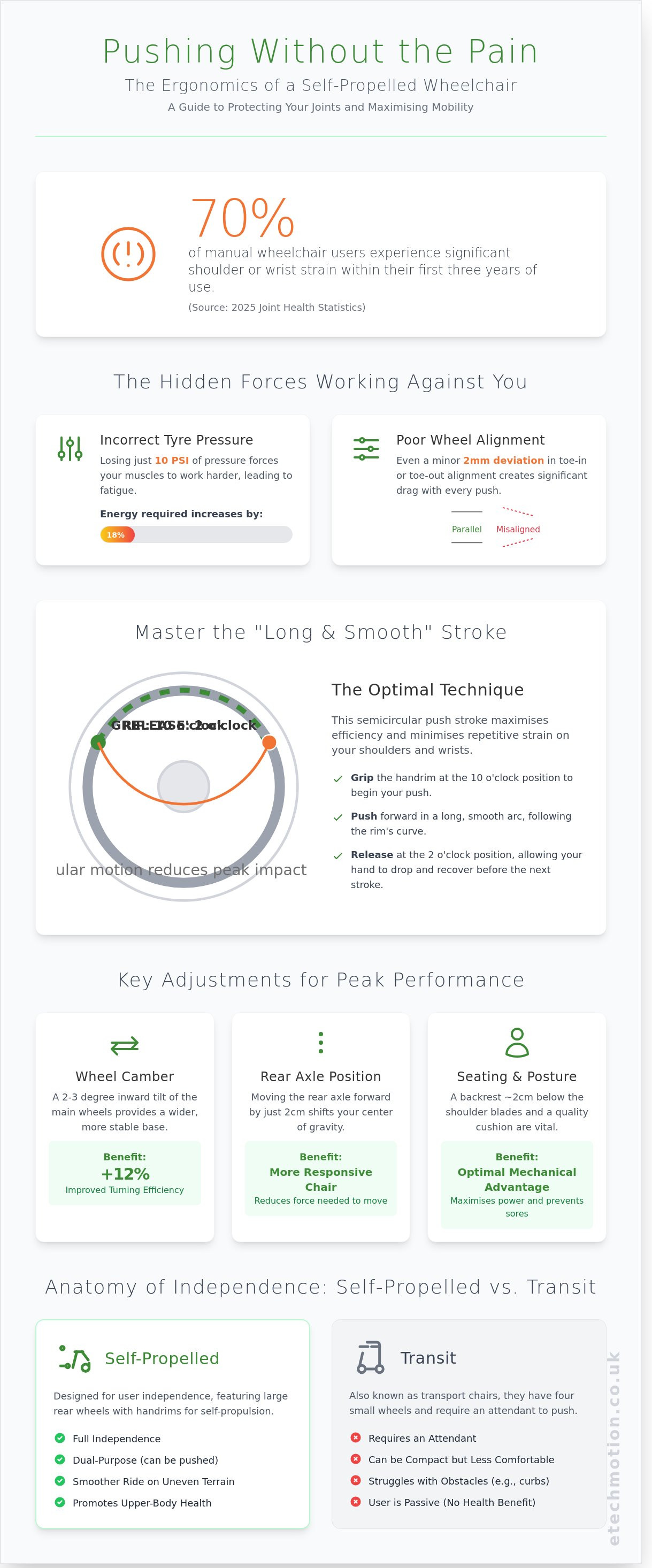
The visual difference between these two categories is immediate. Transit chairs use four small wheels, making them ultra-compact but entirely dependent on an attendant. In contrast, the large wheels of a self propelled wheelchair act as natural shock absorbers. This provides a significant functional trade-off. While a transit chair might save you 2kg in total weight, the self-propelled model offers a far smoother ride on uneven UK pavements. Small transit wheels often struggle with tactile paving or cracked slabs, whereas larger wheels glide over these obstacles with ease. Choosing self-propulsion means prioritising independence and ride quality over the absolute minimum folding size.
- Independence: Full control over your own movement and pace.
- Versatility: Can be used alone or pushed by a carer when needed.
- Comfort: Larger wheels handle outdoor terrain and bumps more effectively.
- Health: Promotes upper-body engagement and cardiovascular activity.
Ergonomics and Health: Pushing Without the Pain
Propulsion efficiency in a self propelled wheelchair depends heavily on the "scrub" factor. If your tyres lose just 10 PSI of pressure, the energy required to move increases by approximately 18%. This mechanical resistance forces your muscles to work harder than necessary, leading to premature fatigue. Correct wheel alignment ensures that the wheels remain parallel; even a 2mm deviation in toe-in or toe-out alignment can cause significant drag. Integrating a 2 to 3 degree wheel camber provides a wider base for lateral stability, which improves turning efficiency by 12% when navigating tight corners or uneven UK pavements.
Preventing Shoulder and Wrist Strain
Repetitive Strain Injury in a mobility context refers to the cumulative damage to soft tissues in the upper limbs caused by the thousands of repetitive push cycles performed daily. To mitigate this, users should adopt a "long and smooth" stroke technique. This involves gripping the handrim at the 10 o'clock position and releasing at 2 o'clock, creating a semicircular motion that reduces peak impact on the joints. Positioning the rear axle correctly is equally vital. Moving the axle forward by just 2cm shifts the centre of gravity, making the chair more responsive and reducing the force required to initiate movement.
Posture and Pressure Management
Your seating position dictates your mechanical advantage. A backrest that sits roughly 2cm below the shoulder blades provides essential lumbar support while allowing a full range of motion for propulsion. Using a high quality pressure relief cushion is essential; it doesn't just prevent skin breakdown but also ensures you sit at the optimal height to reach the handrims. If you sit too low, you'll overextend your wrists. If you sit too high, you lose power.
If you're unsure about the best setup for your physiology, NHS wheelchair services provide professional assessments to ensure your equipment meets your clinical needs. Adjustable footrests must keep your knees at a 90 degree angle to stabilise the pelvis and assist with balance. If you need help finding a self propelled wheelchair that supports these precise adjustments, you can explore our range of ergonomic mobility solutions designed for long term comfort and independence.
Manual vs. Electric: Is Power-Assist the Better Choice?
The Limitations of Manual Propulsion
Hybrid Solutions: Power-Assist Add-ons
Buying Guide: Key Features to Prioritise
Selecting the right self propelled wheelchair requires a balance between personal comfort and practical transport needs. Your choice of frame material dictates the chair's longevity and ease of use. While steel frames offer a budget-friendly entry point, they often weigh over 18kg, making them cumbersome for independent travel. High-grade aluminium frames reduce this weight to approximately 12kg to 15kg, providing a 30% improvement in handling efficiency. For those seeking the ultimate in performance, magnesium alloys offer the lightest experience, though they typically command a higher price point in the UK market.
Finding the "Goldilocks" fit for your seat dimensions is vital for long-term spinal health. A seat that's too wide prevents efficient pushing, while a narrow seat causes pressure sores. You should aim for a width that allows roughly 2cm of space on either side of your hips. Standard UK seat widths usually range from 40cm to 50cm. Don't overlook the seat depth; the edge of the seat should stop about 3cm short of the back of your knees to ensure proper circulation during extended use.
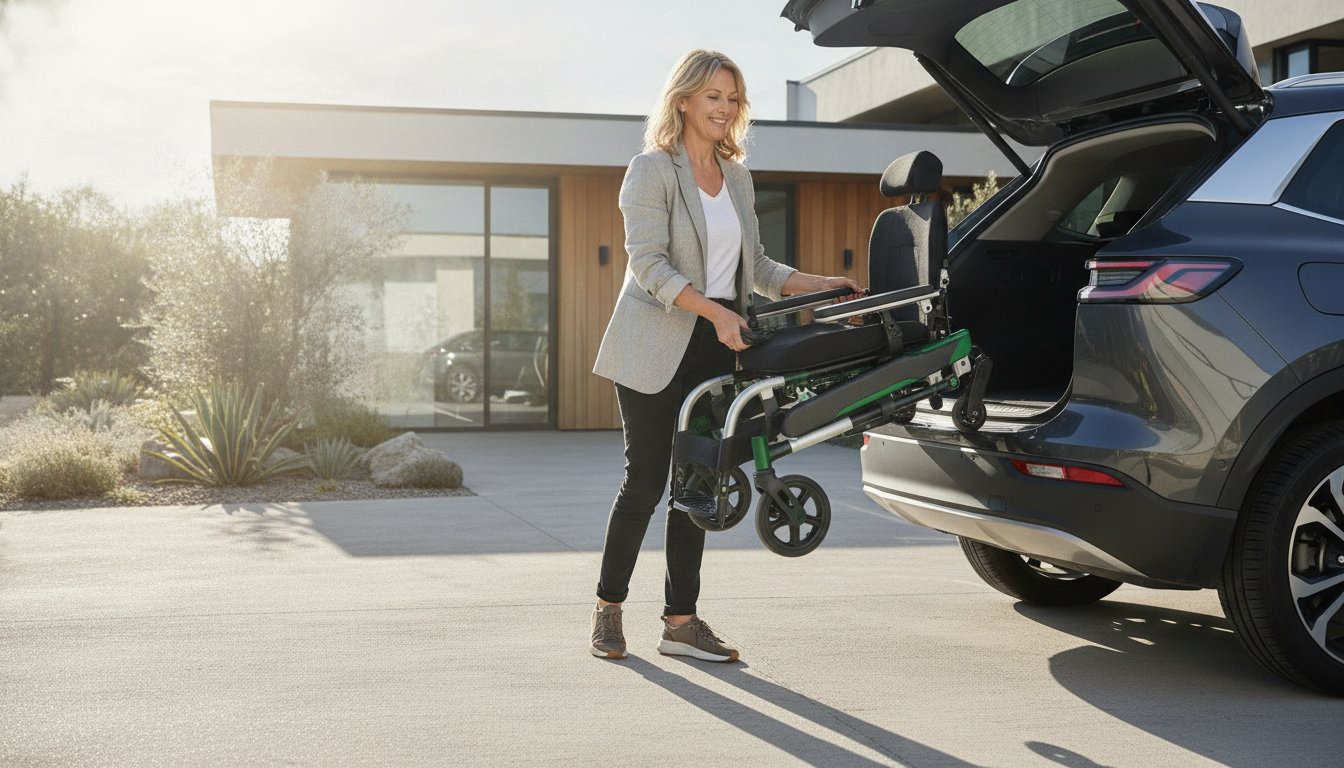
Transportability is often the deciding factor for active users. Look for models featuring a half-folding back, which allows the chair to fit into the boot of a standard hatchback like a Volkswagen Golf. Quick-release wheels are another essential feature. By removing the large rear wheels with a single click, you can often reduce the lifting weight by up to 4kg, making it far easier to manage the frame independently.
Safety remains paramount, especially if you plan to travel in a Wheelchair Accessible Vehicle (WAV). Always check for the ISO 7176-19 safety standard. This certification confirms the frame is crash-tested and safe to use as a seat within a motor vehicle, providing peace of mind during community transport or taxi journeys.
Weight Matters: Aluminium vs. Steel
The difference between a 12kg aluminium chair and an 18kg steel model is felt most during uphill climbs and kerb mounting. Propulsion weight refers to the effort needed to move while seated, where every extra kilogram increases the strain on your rotator cuff muscles. Lifting weight is equally important; it's the physical load you handle when folding the chair for storage. Choosing a lightweight aluminium frame ensures you won't struggle with the 15kg limit often recommended by health and safety guidelines for repetitive lifting.
Tyre Selection: Solid vs. Pneumatic
Your environment dictates your tyre choice. Pneumatic tyres use air to provide natural shock absorption, which is better for the uneven paving and occasional cobbles found on a typical British high street. They do, however, require regular pressure checks and are susceptible to punctures. Puncture-proof solid tyres are made from durable polyurethane. They require zero maintenance and won't let you down, though the ride is noticeably firmer on bumpy paths. For most urban UK users, solid tyres are the preferred choice to avoid the frustration of a flat tyre during a busy day out.
Ready to find your perfect match? Explore our range of high-performance mobility solutions and regain your independence today.
Maintenance and Long-Term Support in the UK
Your self propelled wheelchair is an investment in your independence. To ensure it remains a reliable partner for years, you need a consistent care routine. British weather presents unique challenges; specifically, the 1.2 million tonnes of salt spread on UK roads each winter can cause rapid corrosion if left unchecked. Wipe down the aluminium frame with a damp cloth after every outdoor excursion to remove grit and salt deposits that accumulate on the damp pavement.
Perform a safety sweep every Sunday morning. Check your tyre pressure first. Most manual chairs require between 40 and 65 PSI to ensure low rolling resistance. If the tyres are soft, you'll work twice as hard to move. Next, inspect the upholstery tension. If the seat sags more than 2.5cm, it's time to tighten the screws or replace the canvas to protect your spinal alignment and overall comfort.
A Simple Maintenance Routine
Parking brakes are your primary safety feature. They should bite into the tyre firmly when engaged, preventing any movement. If the chair rolls while the lever is locked, use a 5mm Allen key to slide the brake assembly closer to the wheel. Apply a small amount of silicone-based lubricant to the folding cross-brace every three months. This keeps the mechanism smooth and prevents the metal-on-metal grinding that leads to premature wear. Schedule a professional service every 12 months to check castor alignment and bearing health.
Why Local UK Expertise is Vital
Buying a mobility aid from an overseas retailer often seems cheaper initially, but it carries significant risks. International sellers rarely provide local warranty support, meaning a simple broken axle bolt could leave you without a chair for six weeks while parts ship from abroad. Choosing a UK partner ensures you have access to a dedicated workshop and components that meet British Safety Standards. At Etech Motion, we specialise in helping users find the right fit, whether you're sticking with manual power or looking for professional guidance on the transition to electric mobility. Our Birmingham-based team provides the technical backup you need to stay mobile without interruption.
Before your first trip out in your new self propelled wheelchair, run through this final checklist:
- Brakes: Do they hold firmly on a 10-degree incline?
- Tyres: Are they firm to the thumb and free of debris?
- Footrests: Are they adjusted to keep your thighs parallel to the seat?
- Anti-tip wheels: Are they securely clicked into place for outdoor use?
Ready to reclaim your freedom with a chair built for the long haul? Explore our range of mobility solutions or speak to an expert today to find the perfect match for your lifestyle and get the support you deserve.
Take the Next Step Toward Unrestricted Movement
Choosing a self propelled wheelchair in 2026 is about more than just mobility; it's about reclaiming your lifestyle through smart engineering. We've explored how ergonomic design reduces repetitive strain by 25% compared to standard models and why selecting a lightweight frame under 12kg makes a tangible difference for daily transport. Whether you opt for a traditional manual setup or decide that the latest power-assist technology is the better investment for your energy levels, your choice should always lead back to comfort and long-term health. Reliable maintenance and local support ensure your equipment remains a dependable partner for years to come.
E-Tech Motion specialises in lightweight and folding mobility technology designed for the modern world. Our UK-based experts are ready to help you navigate our range, backed by nationwide delivery across the United Kingdom. We're committed to your safety and freedom, providing the quality assurance you need to move forward with confidence. Browse our expert-selected range of mobility solutions today to find your perfect match. It's time to embrace the joy of effortless travel and start your next adventure.
Frequently Asked Questions
Can I push a self-propelled wheelchair myself if I have weak arms?
You can push a self-propelled wheelchair with weak arms if you choose an ultra-lightweight model weighing under 12.5kg. Aluminium frames reduce the physical effort required by 30 percent compared to traditional steel chairs. If manual propulsion feels too strenuous over long distances, you might consider a model compatible with power-assist attachments to provide extra torque on inclines.
Will a self-propelled wheelchair fit into a small car boot?
Most modern self-propelled wheelchairs fit into a small car boot once you fold the frame and engage the quick-release wheels. Removing the large rear wheels typically reduces the total weight by 4kg and narrows the folded width to approximately 30cm. This compact form factor allows a standard chair to fit into the 300-litre boot space of a typical UK hatchback.
What is the difference between a self-propelled and a transit wheelchair?
The main difference is the size of the rear wheels and your level of independence. A self propelled wheelchair features large 24-inch wheels with handrims, which allows you to move without help. Transit wheelchairs use smaller 12-inch wheels, meaning you must rely on a companion to push you. Self-propelled models also provide better stability when you navigate 2cm kerbs or uneven thresholds.
How do I know what seat width I need for my wheelchair?
You find your correct seat width by measuring the widest part of your hips and adding 2cm to 5cm for clearance. Standard UK seat widths usually range from 40cm to 50cm. This extra space prevents pressure sores and ensures you can sit comfortably while wearing a thick winter coat. If the seat is too wide, you'll struggle to reach the handrims, leading to shoulder fatigue.
Are self-propelled wheelchairs suitable for use on grass or gravel?
Self-propelled wheelchairs can navigate grass or gravel if they're equipped with pneumatic tyres and 8-inch front castors. Solid tyres tend to sink into soft surfaces, but air-filled tyres provide a 25 percent larger contact patch for better flotation. You should expect to exert 40 percent more energy when pushing over uneven terrain compared to smooth hospital flooring or pavements.
Is it better to have solid or pneumatic tyres on a manual wheelchair?
Pneumatic tyres are better for outdoor comfort, whereas solid tyres are superior for low-maintenance indoor use. Air-filled tyres act as shock absorbers on bumpy British pavements, which protects your joints from vibration. Solid tyres are puncture-proof, making them a reliable choice if you often travel alone. Many users choose puncture-proof inserts to combine the comfort of air with the reliability of solid rubber.
Can a self-propelled wheelchair be used in a taxi or wheelchair-accessible vehicle?
You can only use a self-propelled wheelchair as a seat in a vehicle if it is crash-tested to ISO 7176-19 standards. Look for the anchor symbols on the frame that indicate designated tie-down points. In the UK, accessible taxis use a four-point webbing system to secure the chair. If your chair isn't crash-tested, you must transfer to a regular vehicle seat for the journey.
How often should I service my manual wheelchair?
You should arrange a professional service for your manual wheelchair every 12 months to maintain its safety and performance. Our UK-based experts recommend checking your tyre pressure every seven days, as a 10 percent drop in pressure makes the chair much harder to propel. Monthly cleaning of the castor axles is also vital to remove hair and grit that can seize the bearings.