
What if the secret to doubling your travel distance wasn't a brand new machine, but a simple shift in how you manage your power? Many owners live with a constant, nagging anxiety about the battery gauge dropping into the red while they're away from home. It's frustrating to feel tethered to the charger or to face the high cost of replacing cells every year because of preventable wear. Mastering mobility scooter battery care is the most effective way to reclaim your freedom and ensure your transport is ready whenever you are.
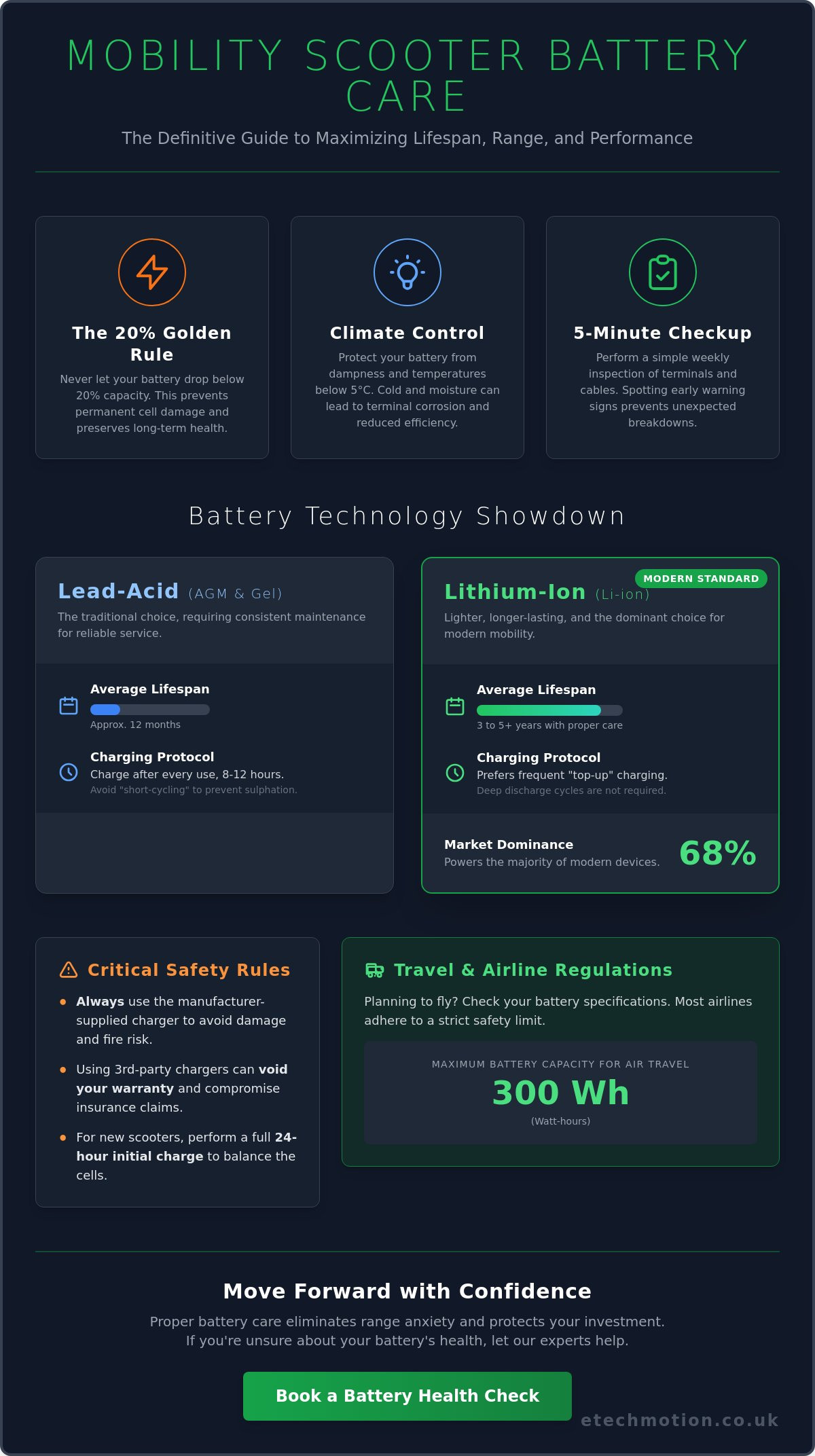
Our definitive 2026 guide gives you the exact protocols needed to extend your range and protect your investment. You'll learn why lithium-ion batteries now command nearly 68% of the market and how to navigate the latest 300Wh airline safety regulations for stress-free travel. We'll walk through clear daily routines and technical charging secrets that can stretch a battery's lifespan from the standard 12 months seen in basic lead-acid cells to over five years of dependable service. It's time to move forward with total confidence in your equipment's performance.
Key Takeaways
- Learn why the "Golden Rule" of charging and maintaining a 20% minimum capacity is essential for preventing permanent cell damage.
- Discover how to protect your power source from the UK's damp climate and temperatures below 5°C to avoid terminal corrosion.
- Implement a simple five-minute weekly inspection to master mobility scooter battery care and spot warning signs before they lead to a breakdown.
- Understand how proactive management can triple your battery's lifespan, moving from a standard 12-month replacement cycle to over three years of reliable use.
- Explore the weight-saving and range benefits of upgrading to high-capacity lithium systems for modern folding electric wheelchairs.
Why Mobility Scooter Battery Care is the Heart of Your Independence
Independence isn't just about owning a vehicle; it's about knowing that vehicle will get you where you need to go without fail. Your battery is the silent engine of that freedom. True mobility scooter battery care is far more than just remembering to plug in your device at night. It is the proactive management of charge cycles, storage conditions, and chemical health. By shifting your mindset from reactive charging to strategic maintenance, you don't just protect a component; you protect your ability to participate in the world.
The financial argument for better care is undeniable. A neglected battery often requires replacement within just 12 months, creating a recurring and unnecessary expense. With the right protocols, that same battery can reliably power your journeys for three years or longer. As we move through 2026, the shift toward advanced rechargeable battery technologies means that modern units are more efficient than ever, yet they require specific handling to reach their full potential. Mastering these nuances eliminates range anxiety and the fear of a mid-journey power failure.
The Cost of Neglect: Premature Failure and Range Anxiety
When you consistently undercharge lead-acid batteries, a process called sulphation occurs. This is where lead sulphate crystals build up on the battery plates, permanently reducing the unit's ability to hold a charge. You'll notice this as capacity fade, where your scooter's maximum travel distance shrinks month by month. Beyond the personal frustration, frequent battery disposal has a heavy environmental footprint. Extending the life of your power cells is a simple but powerful way to contribute to a more sustainable transport future while keeping your daily routine intact.
Safety Standards and Insurance Compliance
Safety remains a non-negotiable priority for every user. In the UK, using non-standard or cheap third-party chargers can immediately void your manufacturer warranty. These unapproved devices often lack the sophisticated shut-off mechanisms required to prevent overheating, which is a significant fire safety risk. Maintaining a consistent charging routine isn't just good for the battery; it's excellent for your records. If you ever need to make an insurance claim, documented proof of proper maintenance can be a vital trust signal that supports your case and ensures you remain mobile without delay.
Master the Charge: Best Practices for Lithium and Lead-Acid Batteries
Mastering the charging process is the single most effective way to improve mobility scooter battery care. The 'Golden Rule' is simple: only use the charger specifically supplied with your vehicle. This ensures the voltage output perfectly matches the battery's requirements, preventing over-voltage damage or overheating. For those who have just invested in new mobility scooters, start with a 24-hour initial charge. This long first cycle balances the individual cells and ensures the battery reaches its full chemical potential from day one.
Forget the old advice about 'battery memory'. This concept, which suggested you should fully drain a battery before recharging, is a myth when applied to modern chemistries. In fact, doing so is often destructive. You should never let your capacity drop below 20%. This limit, known as the Depth of Discharge, prevents the internal plates from warping or the chemical balance from shifting into a state of permanent damage. If you're unsure about your current battery's health, it's always worth consulting a specialist to check your scooter's power system before your next long trip.
Charging AGM and Gel (Lead-Acid) Batteries
If your scooter runs on AGM or Gel units, adopt the 'charge after every use' rule. It doesn't matter if you only went to the corner shop; plug it in. These batteries require a slow chemical recovery. Expect a full charge to take between 8 and 12 hours. Avoid 'short-cycling', which is the habit of unplugging the charger before the light turns green. Repeatedly doing this prevents the battery from completing its desulphation phase, leading to a rapid loss in range over just a few months.
The Lithium-Ion Protocol: A Modern Approach
Lithium batteries operate differently. They actually prefer 'top-up' charging rather than deep, heavy cycles. While they are incredibly efficient, understanding lithium-ion battery risks is crucial for safety. These units rely on a Battery Management System (BMS) to regulate heat and prevent overcharging. For the best daily health, aim to keep your lithium battery between 50% and 80% charge when possible. This 'sweet spot' reduces stress on the cells and can significantly extend the unit's total cycle life, making your transition to sustainable transport even more cost-effective.
Protecting Your Power: Environmental and Storage Factors
The UK's unpredictable weather plays a massive role in mobility scooter battery care. When temperatures dip below 5°C, the chemical reactions inside your battery slow down significantly. This isn't just a technical detail; it translates to a temporary capacity loss of up to 30%. If you're relying on your scooter for a full day out in January, that loss matters. Charging in a cold garage or shed only compounds the issue. Ideally, you should bring the battery pack inside to a warmer environment for at least two hours before connecting the charger.
Beyond temperature, the UK's humidity creates a 'micro-climate' in outdoor storage areas. Damp sheds are breeding grounds for terminal corrosion. When moisture settles on the metal terminals, it triggers oxidation, which increases electrical resistance. This forces the battery to work harder to deliver the same power, leading to unnecessary heat and premature wear. A light coating of petroleum jelly on the terminals after cleaning acts as a vital barrier against this atmospheric moisture, ensuring a clean flow of energy.
If you're planning to leave your vehicle for more than two weeks, follow this storage checklist to prevent permanent damage:
- Charge levels: Ensure lithium batteries are at roughly 60% and lead-acid units are at 100% before storage.
- Disconnect: Physically unplug the battery from the scooter to stop "parasitic" power drain from the dashboard or lights.
- Location: Choose a dry, frost-free spot, ideally between 10°C and 15°C.
- Top-ups: Set a monthly reminder to perform a maintenance charge, preventing the voltage from dropping to a point of no return.
Winter Care: Preventing the Cold-Weather Slump
Charging a frozen battery is both dangerous and ineffective. Always let the unit reach room temperature before plugging it in. If indoor charging isn't an option, use a plug-in timer to ensure the charging cycle happens during the day rather than during the freezing overnight hours. This small adjustment keeps the internal chemistry stable and ensures a much more complete charge. A maintenance charge once a month is non-negotiable for any vehicle kept in a garage over the winter period.
The Impact of Weight and Terrain on Battery Health
It's vital to consider the physical demands placed on your power system. For instance, heavy duty electric wheelchairs are designed for robust performance, but their increased weight and high-torque motors put unique stress on battery cells. To mitigate this, check your tyre pressure weekly. Low pressure increases rolling resistance, forcing the battery to drain faster on every journey. Adopting smooth, steady acceleration rather than jerky starts will preserve your daily range and keep the internal components cooler during operation.
Proactive Maintenance: Extending Lifespan and Spotting Warning Signs
Consistency is the foundation of reliability. While previous sections focused on charging chemistry and storage, effective mobility scooter battery care also requires a hands-on approach to physical maintenance. It's a small investment of time. By dedicating just five minutes every week to a visual inspection, you can catch minor issues before they escalate into expensive repairs. Start by checking the battery housing for any hairline cracks or signs of moisture ingress, especially if you've been travelling in typical UK rain.
Be mindful of 'phantom drainage' during your weekly check. Many modern scooters come equipped with accessories like high-intensity LED lights, USB charging ports, or anti-theft alarms. Even when the ignition is off, some of these components can slowly bleed power from the cells. If you notice your battery levels dropping unexpectedly while the vehicle is parked, ensure all accessories are physically disconnected or switched off. This simple habit preserves the chemical energy for your actual journeys rather than wasting it on standby functions.
While user maintenance is vital, it doesn't replace the need for professional expertise. An annual service by a qualified technician is essential for long-term health. Professionals use specialised load testers to measure the actual capacity of each cell, a task that's impossible to perform with a standard dashboard gauge. They can identify internal imbalances early, often saving a battery pack that would otherwise fail prematurely. If you're concerned about your current performance, it's time to book a professional battery health check to ensure your equipment remains roadworthy.
Cleaning and Protecting Battery Terminals
Oxidation is the enemy of efficiency. Over time, a white or powdery substance can build up on the metal terminals, which creates resistance and forces the battery to work harder. Use a clean, dry cloth to wipe away any debris. Never use water or household liquid cleaners near electrical ports, as this creates a significant risk of short-circuiting. For the best protection, apply a specialised terminal protector spray or a thin layer of petroleum jelly. This creates an airtight seal that prevents the UK's damp air from reaching the metal, ensuring a perfect connection every time you turn the key.
Signs Your Battery is Reaching End-of-Life
Even with the best care, all batteries eventually degrade. The most common symptom is the 'sudden drop' during operation. You might start a journey with a full gauge, only to see the power needle plunge into the red the moment you hit a slight incline. This indicates that the internal resistance has become too high to support a heavy load. Another warning sign is a significantly prolonged charging time or a battery case that feels excessively hot to the touch. If you notice any bulging or deformation in the battery's shape, stop using it immediately and seek professional assistance, as this can indicate a serious internal fault.
Performance Upgrades: Selecting the Right Battery for Your Lifestyle
Once you've mastered the basics of mobility scooter battery care, you might find that your standard factory-fitted cells no longer match your evolving lifestyle. Choosing a replacement battery is an opportunity to enhance your vehicle's performance rather than just maintaining it. The most critical metric to understand is the Ampere-hour (Ah) rating. Think of Ah as the size of your fuel tank. A higher Ah rating directly correlates to a longer travel range, allowing you to venture further from home without the constant need to monitor your power gauge.
For users of a folding electric wheelchair, the move to lithium-ion technology is transformative. Traditional lead-acid batteries are heavy and cumbersome, often making a folding frame difficult to lift into a car boot. Lithium alternatives provide the same power output at a fraction of the weight. This weight reduction doesn't just make transport easier; it also reduces the physical strain on the wheelchair's motor and frame, potentially extending the mechanical life of your entire device.
Upgrading vs. Like-for-Like Replacement
Deciding between a cheap lead-acid replacement and a premium lithium upgrade requires looking at the long-term return on investment. While lead-acid units have a lower upfront cost, their shorter lifespan means you'll likely buy three sets for every one lithium pack. Modern lithium upgrades also feature integrated Battery Management Systems (BMS). This smart technology monitors every individual cell, protecting against over-discharge and thermal issues. Always consult a specialist before upgrading to ensure your scooter's controller and motor are compatible with the higher discharge rates of advanced chemistries.
The Etech Motion Commitment to Quality Power
Etech Motion stands as a leading UK specialist in high-performance mobility solutions. We don't just provide batteries; we provide the power that drives your daily independence. Every vehicle in our range uses premium-grade cells designed for the rigorous demands of UK terrain and weather conditions. Our commitment extends beyond the point of sale, offering dedicated UK-based technical support for all your troubleshooting needs. We invite you to explore our full range of national mobility solutions to find the perfect balance of portability, power, and reliability for your next adventure.
Empower Your Future Journeys
Mastering mobility scooter battery care is about more than just maintenance; it's about securing your independence for years to come. By adhering to the 20% discharge rule and protecting your power cells from the UK's damp micro-climates, you ensure your scooter remains a reliable partner in your daily routine. These small, consistent steps prevent premature failure and keep your travel range at its peak performance.
When it's time for a replacement or a performance upgrade, choosing a partner with deep technical expertise makes all the difference. We are specialists in long-range lithium technology and provide the nationwide delivery and support you need to stay mobile. Our UK-based team is always ready to assist with expert troubleshooting and advice to keep you moving forward.
Browse our range of high-performance mobility scooters to discover how modern power systems can redefine your sense of freedom. Take charge of your mobility today and look forward to every new adventure with total confidence.
Frequently Asked Questions
Should I charge my mobility scooter every night?
Yes, you should charge your scooter every night if you've used it that day. Lead-acid batteries benefit from being kept at a full state of charge to prevent sulphation. Even if you only took a short trip, plugging it in overnight ensures the battery remains healthy and ready for your next journey. Consistent charging is a fundamental part of mobility scooter battery care that prevents premature capacity loss.
Can I leave my mobility scooter on charge all the time?
No, you shouldn't leave your scooter on charge indefinitely unless your charger has a specific 'maintenance' or 'float' mode. Most standard chargers can eventually 'cook' the battery if left connected for weeks, leading to internal damage or overheating. Once the indicator light turns green, it's best to unplug the device. If you're storing the vehicle for months, a single 12-hour charge once a month is much safer for the cells.
How long do mobility scooter batteries typically last in the UK?
Standard sealed lead-acid or gel batteries usually last between 12 and 24 months with regular use. Lithium-ion batteries offer a significantly better lifespan; they often provide reliable service for three to five years. These durations depend heavily on your maintenance routine and the typical UK weather conditions. Users who follow strict charging protocols often see their batteries outlast the manufacturer's average estimates by a considerable margin.
Why is my mobility scooter battery losing charge so quickly in winter?
Batteries lose capacity in winter because cold temperatures slow down the internal chemical reactions required to produce electricity. When the thermometer drops below 5°C, you can expect a temporary capacity reduction of up to 30%. This isn't a permanent fault; it's a physical limitation of the battery chemistry. Bringing the battery indoors to reach room temperature before you start a charging cycle can help mitigate this seasonal slump.
Is it better to store a mobility scooter battery full or empty?
The ideal storage level depends entirely on the battery's chemistry. Lead-acid batteries must always be stored 100% full to avoid permanent plate damage. Conversely, lithium-ion batteries prefer being stored at roughly 50% to 70% capacity. Storing a lithium battery completely empty can cause it to fall into a 'deep sleep' mode that prevents it from ever charging again. Always check your specific manufacturer's handbook before long-term storage.
Can I use a car battery charger for my mobility scooter?
Never use a car battery charger for your mobility vehicle. Car chargers typically output a much higher amperage than mobility batteries can safely handle, which can lead to overheating or even a fire. Mobility chargers use a specific three-stage charging curve designed to protect delicate internal components. Using the wrong equipment will almost certainly void your warranty and could cause permanent damage to your scooter's electronic controller.
Do I need to 'run down' my lithium battery before charging it?
No, you should never intentionally run down a lithium battery. Modern lithium-ion cells don't suffer from 'memory effect', so they don't need to be fully discharged. In fact, deep discharges are harmful. It's much better to perform frequent 'top-up' charges throughout the day. Keeping the battery level between 20% and 80% is the 'sweet spot' for lithium health; it maximises the total number of charge cycles the battery can provide.
How much does it cost to replace a mobility scooter battery in 2026?
Typical market prices in June 2026 vary based on the battery's capacity and chemistry. Industry data shows that standard lead-acid batteries range from approximately £52 for 12Ah units to £195 for high-capacity 50Ah models. Lithium-ion replacements involve a higher upfront cost, with 24V 50Ah units often priced around £248. While lithium is more expensive initially, its longer lifespan generally results in a lower total cost of ownership over several years of use.