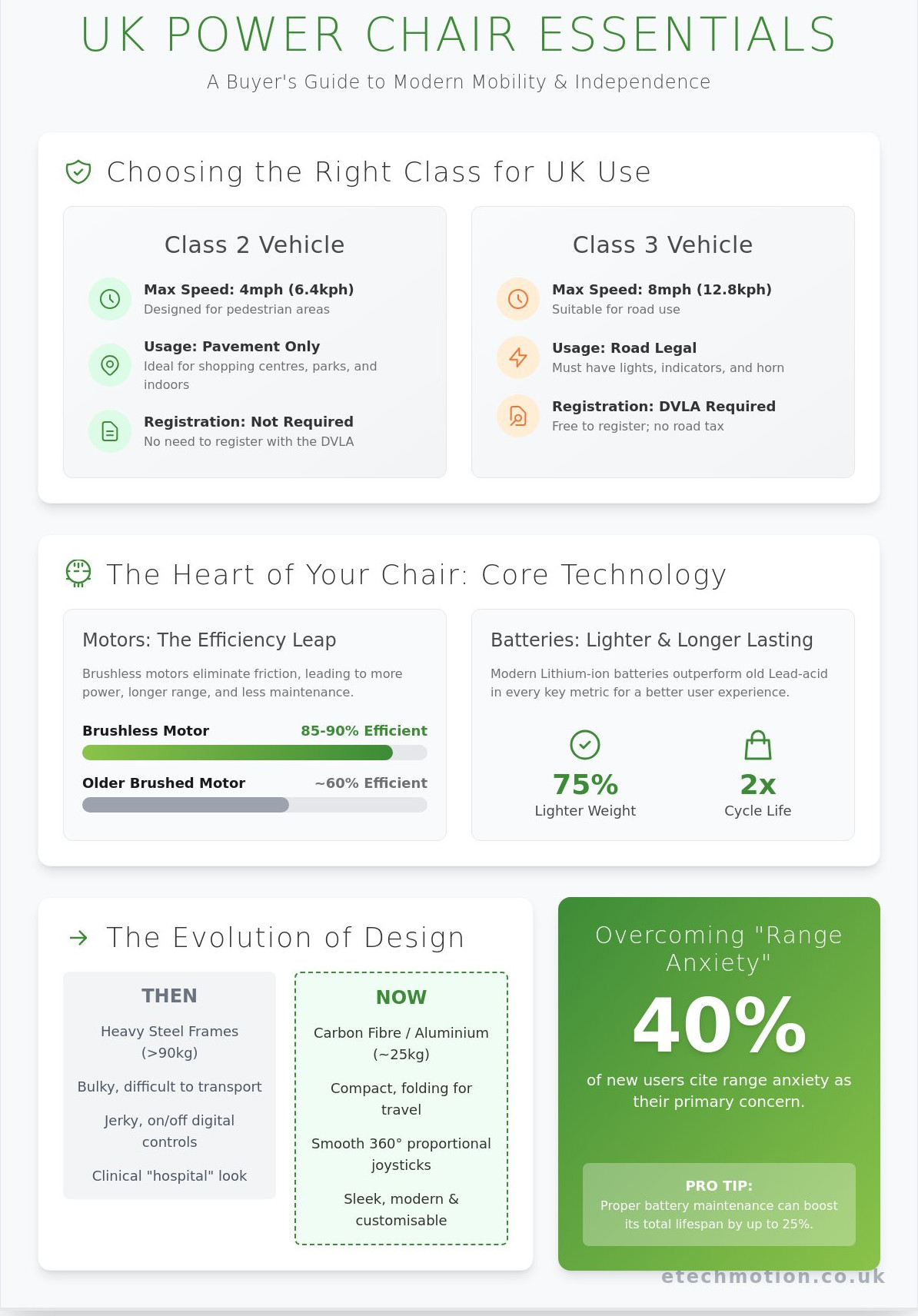
Last Saturday, you might have skipped the trip to the local garden centre because you weren't sure if your battery would hold up or if the frame would fit in your Ford Fiesta's boot. It's a common hurdle; research suggests that nearly 40% of new users cite "range anxiety" as their primary concern when first using a power chair electric wheelchair. You deserve to feel confident every time you leave the house, rather than worrying about technical jargon like brushless motors or lithium-ion safety standards.
We've designed this comprehensive UK guide to help you reclaim your independence and master your mobility with ease. You'll discover how to choose the perfect folding model that simplifies travel and learn the exact maintenance steps to maximise your battery lifespan by up to 25%. We'll walk you through the essential specs, UK-specific regulations, and practical tips to ensure your journey is always smooth and sustainable.
Key Takeaways
- Learn why shifting from a clinical mindset to a lifestyle-focused approach is the first step in reclaiming your independence and mobility.
- Understand the critical role of brushless motors and lithium-ion batteries in ensuring your power chair electric wheelchair remains reliable and efficient.
- Master essential maintenance techniques to protect your investment against the unique challenges of the British weather, from rain to road salt.
- Gain practical confidence for navigating UK streets with expert guidance on safe kerb mounting and smooth handling in urban environments.
- Discover how UK-based expert support and rigorous quality standards bridge the gap between technical innovation and your long-term personal freedom.
Understanding the Power Chair: More Than Just a Motorised Wheelchair
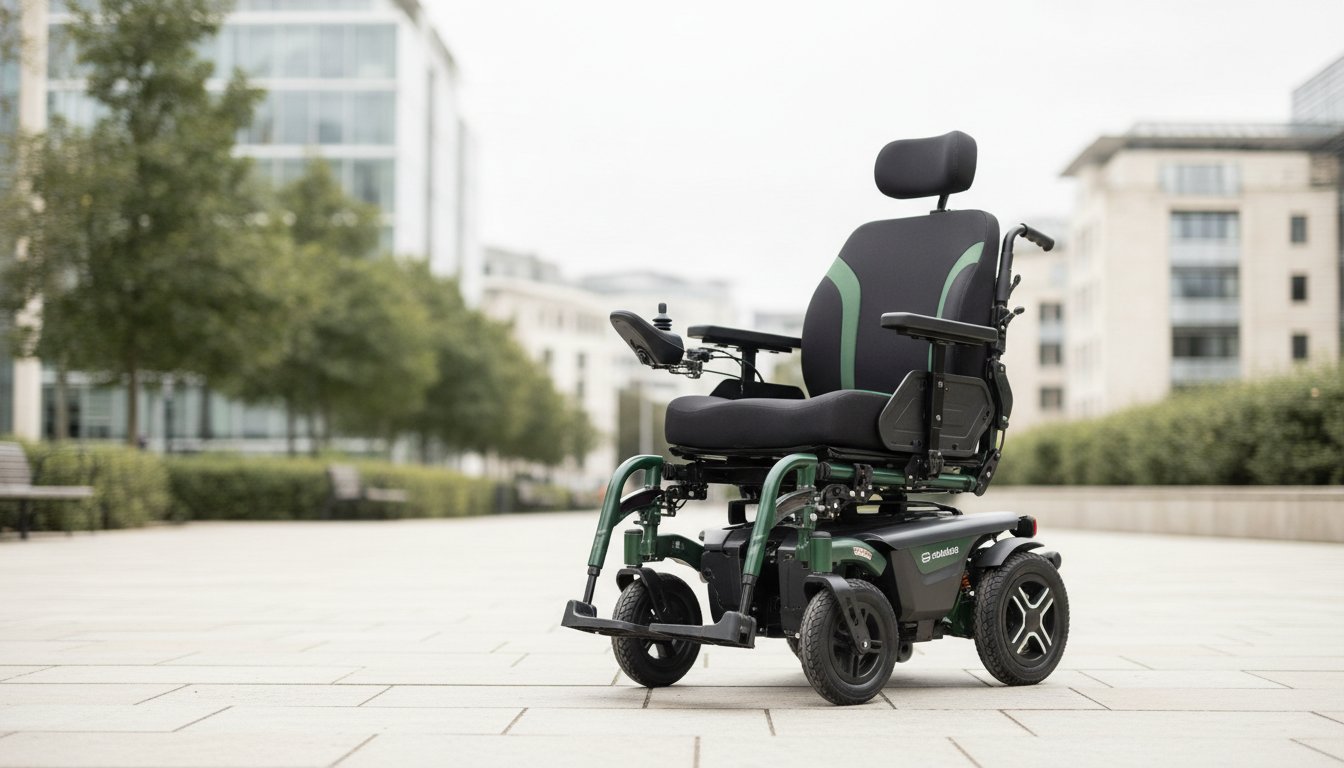
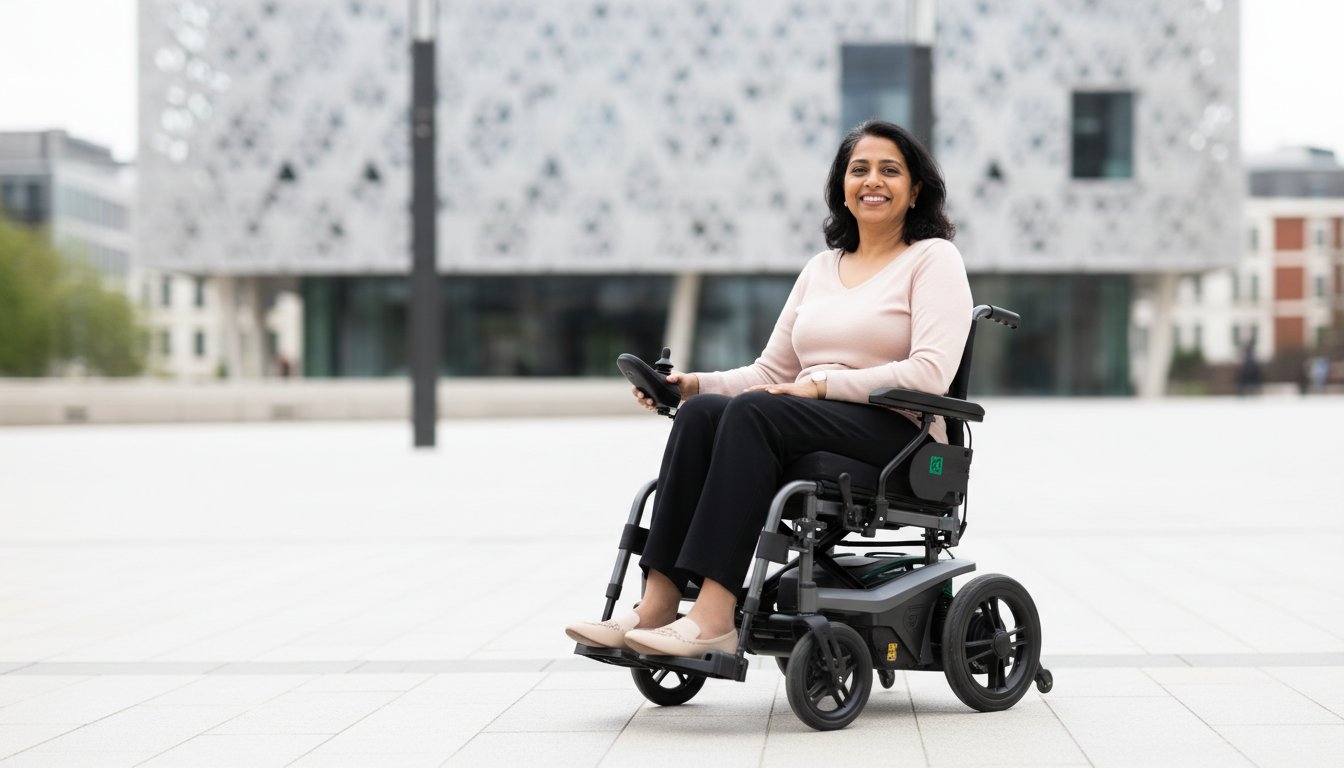
A modern power chair is a precision-engineered mobility vehicle built for the demands of 21st-century life. While people used to rely on the term "motorised wheelchair," this clinical label is rapidly being replaced by the more dynamic "power chair." This isn't just a change in vocabulary. It marks a shift from viewing mobility aids as medical necessities to seeing them as lifestyle-enabling technology. For users across the UK, owning a power chair electric wheelchair means more than just moving from point A to B; it's about reclaiming independence with a device that feels like an extension of the self.
Active mobility is the core philosophy behind today's designs. Instead of the user struggling to fit the limitations of the machine, the chair now adapts to the user's specific environment and physical requirements. Whether you're navigating busy medical facilities, bustling shopping centres, or local parks, these vehicles provide a level of responsiveness that was impossible a decade ago. It's about a seamless integration into your daily routine, ensuring that your equipment never dictates your destination.
The Evolution of Mobility Tech
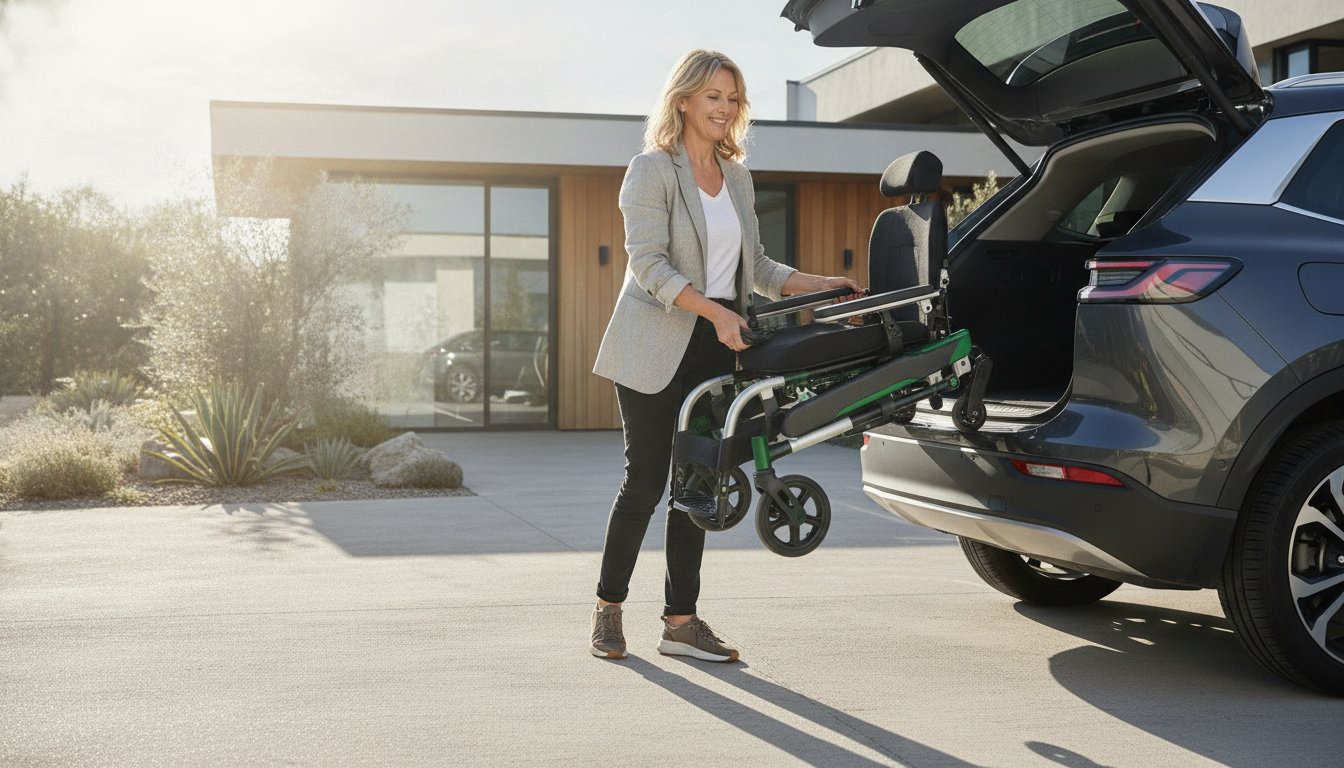
The transition from heavy, cumbersome steel frames to modern materials has transformed the user experience. Traditional models often weighed over 90kg, making them incredibly difficult to transport without a dedicated van. In contrast, 2024 models frequently utilise carbon fibre and aircraft-grade aluminium alloys, reducing the weight to as little as 25kg in some folding variants. This reduction in mass doesn't compromise strength; it enhances battery range and agility. Control systems have also evolved significantly. Modern proportional joysticks allow for 360-degree precision, ensuring that the power chair electric wheelchair moves smoothly without the jerky transitions found in older digital "on/off" switches. The aesthetic has also moved away from the "hospital look," with sleek lines and customisable colours that users are proud to display.
Class 2 vs Class 3: What You Need to Know
Selecting the right category is essential for staying legal on UK streets. The distinction depends on where you plan to drive and how fast you need to go. You don't want to find yourself on a busy road in a vehicle meant only for the pavement. The UK government sets clear boundaries for these two categories:
- Class 2: These chairs have a maximum speed of 4mph (6.4kph). They're designed for pavement use only and don't require registration with the DVLA. They're ideal for indoor environments, tight supermarket aisles, and local shopping trips.
- Class 3: These are road-legal vehicles with a top speed of 8mph (12.8kph). They must be equipped with lights, indicators, and a horn. You're required to register these with the DVLA, though you don't need a driving licence or to pay vehicle excise duty.
For many users, a Class 2 chair provides the agility needed for public transport and pedestrian areas. However, if your daily routine involves crossing major junctions or travelling longer distances between suburbs, the 8mph capability and safety features of a Class 3 model offer a distinct advantage in travel time and visibility.
The Anatomy of an Electric Wheelchair: Motors, Batteries, and Controls
Owning a power chair electric wheelchair in a city like Birmingham means your equipment needs to handle everything from the smooth floors of the Bullring to the steeper inclines found in residential areas like Edgbaston. Performance rests on three pillars: the motor, the battery, and the controller. When these components work in harmony, you experience seamless mobility; when they aren't maintained, your freedom is restricted.
Brushless Motors: Why Efficiency Matters
Modern mobility has seen a shift toward brushless technology. These motors operate without physical brushes contacting the rotor, which eliminates the friction that typically generates heat and noise. This lack of internal resistance makes them roughly 85% to 90% efficient compared to the 60% seen in older brushed models. A brushless motor is a permanent magnet system that reduces maintenance by removing wearing parts. For UK users, this translates to higher torque-to-weight ratios, providing the necessary punch to climb a 6-degree gradient without straining the system.
Lithium-Ion Battery Management
The battery is your fuel tank. Most high-end wheelchairs now utilise Lithium-ion (Li-ion) cells rather than traditional Lead-acid. The primary benefit is energy density. A Li-ion battery often weighs 75% less than its Lead-acid counterpart while offering up to double the cycle life, reaching 1,000 full charges before capacity drops. If you plan to travel from Birmingham Airport, these batteries are often IATA-compliant for air travel, provided they are under 300Wh for the main unit. Unlike older technologies, modern lithium cells have no "memory effect," so you don't need to fully discharge them before plugging in. If you're looking to upgrade your current setup, you can view our expert-tested range of power solutions designed for UK standards.
Drive Wheel Configurations
The position of the drive wheels dictates how your power chair electric wheelchair handles specific environments:
- Front-wheel drive: These are the masters of kerbs and uneven terrain. They pull the chair over obstacles up to 50mm high with ease.
- Mid-wheel drive: This setup offers the tightest turning circle, often as low as 500mm. It's the ideal choice for navigating narrow hallways in traditional UK terraced homes.
- Rear-wheel drive: These provide the most stability at higher speeds, typically 4mph or 6mph. They track straightest on outdoor paths and long commutes.
The joystick controller acts as the brain, translating your hand movements into complex electrical signals. It manages torque delivery so you don't jerk forward and controls the electromagnetic braking system that engages the moment you release the stick. Regular cleaning of the controller's rubber gaiter prevents moisture from reaching the sensitive circuit boards inside, ensuring the electronics remain responsive for years to come.
How to Maintain Your Power Chair for Long-Term Reliability
Adopting a "Prevention First" mindset is the most effective way to ensure your power chair electric wheelchair remains a reliable partner for your daily adventures. Birmingham’s hilly terrain and unpredictable weather put extra strain on every mechanical component. Neglecting basic care can lead to emergency repair bills exceeding £450, whereas a consistent routine keeps your mobility costs predictable and your freedom intact.
The Daily and Weekly Checklist
Routine inspections catch small issues before they escalate into dangerous failures. Follow this hierarchy to keep your chair in peak condition:
- Step 1: Inspect tyres for wear. If you use pneumatic tyres, maintain the manufacturer’s recommended pressure, typically between 35 and 45 PSI. Correct pressure improves battery efficiency by approximately 15% and prevents uneven tread wear.
- Step 2: Check the joystick gaiter. Look for small tears or cracks in the rubber seal. A tiny 2mm split can allow West Midlands rain to seep into the sensitive electronics, which often leads to a total controller failure.
- Step 3: Wipe down the frame. Use a damp cloth to remove grit and road salt. Birmingham gritters are active whenever temperatures drop below 1°C, and that salt can corrode your metal components in under 21 days if it isn't wiped away.
Battery Care and Charging Etiquette
Your lithium battery is a high-performance component that requires specific handling to maintain its 24-month expected lifespan. You should never let the charge level drop to 0%. Aim to plug in when you hit the 20% mark to avoid stressing the cells. After returning from a long journey, wait 30 minutes before charging. This cool-down period allows internal temperatures to stabilise, which protects the battery's chemistry from heat degradation.
UK winters present a unique challenge for energy storage. If the temperature in your storage area drops below 5°C, your battery capacity can temporarily decrease by 30%. Always store your power chair electric wheelchair or its removable battery pack in a dry, heated room to prevent permanent capacity loss during the coldest months.
Troubleshooting Common Issues
Modern controllers use "flash codes" to communicate specific faults. If your joystick LEDs blink in a repeating sequence, consult your manual; for instance, five flashes often indicate a magnetic brake issue. Before calling for help, check that your freewheel levers are fully engaged. A chair that won't move is often simply in manual mode rather than having a motor fault.
If these basic checks don't solve the problem, stop your DIY efforts immediately. Attempting to repair complex wiring can void your warranty and create safety risks. Contact a specialist UK technician who understands local safety standards and has access to genuine replacement parts to ensure your chair remains safe for the road.
Navigating Daily Life: How to Use Your Electric Wheelchair in the UK
Mastering your power chair electric wheelchair involves more than just flicking a switch. It requires a solid understanding of the UK's unique urban landscape. From the historic, narrow streets of Birmingham to modern shopping centres like the Bullring, your environment dictates your driving style. Success depends on anticipating obstacles before they hinder your progress.
Mastering Pavements and Kerbs
UK pavements are rarely perfectly flat. Many older walkways feature a significant camber, a slope designed to drain rainwater into the gutter. This incline can cause your chair to drift towards the road. To stay on track, apply a gentle, consistent counter-steer. When you encounter a dropped kerb, always use the 90-degree approach. Aligning your front castors perpendicular to the slope ensures both wheels climb simultaneously, preventing the chair from tipping or losing traction. If visibility is low at busy junctions, wait at least 50cm back from the edge until the "green man" appears, ensuring drivers can see your profile clearly.
Public Transport and Travel
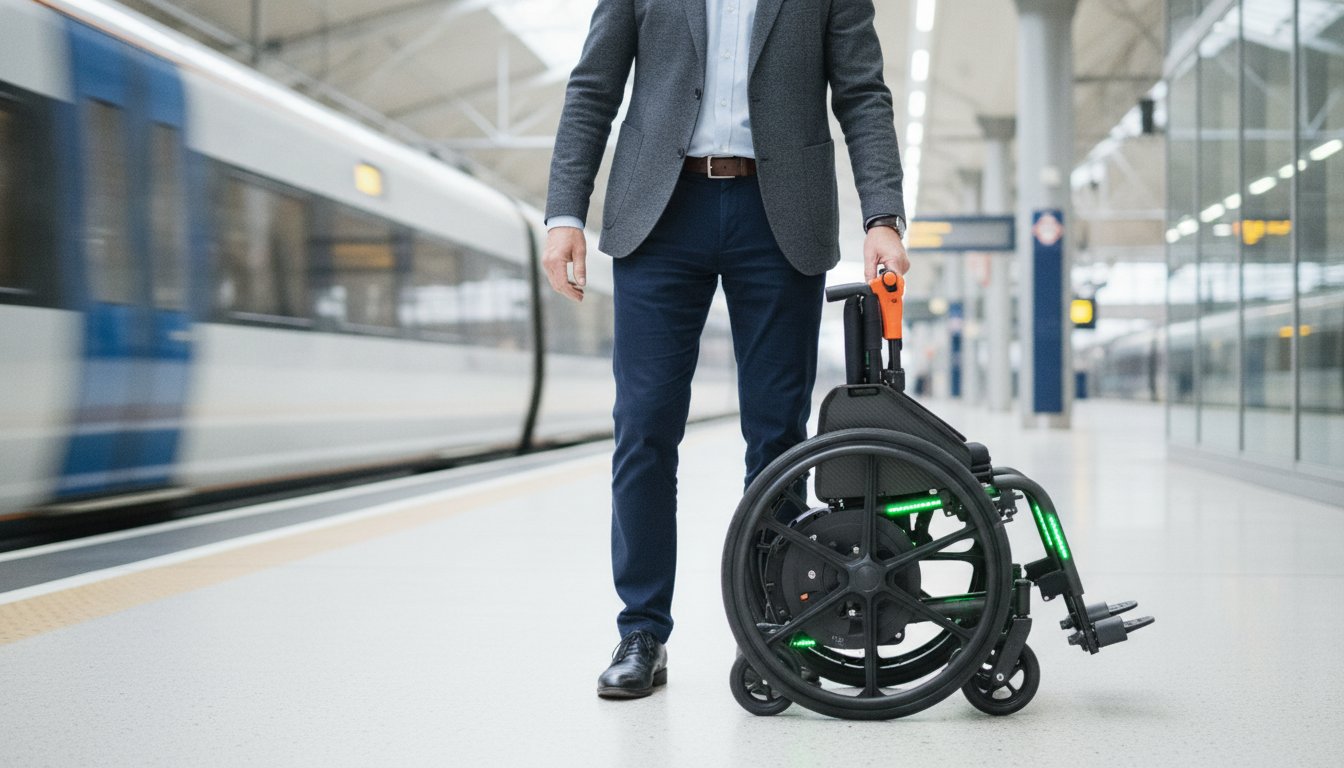
Public transport accessibility has improved significantly since the Public Service Vehicles Accessibility Regulations (PSVAR) 2000. Currently, 99% of buses in England are low-floor and equipped with ramps. However, your chair must meet the "Reference Wheelchair" standard, which specifies a maximum width of 700mm and a length of 1200mm, to guarantee ramp compatibility. For rail travel, the Disabled Persons Railcard is essential, offering a 33% discount on fares for you and a companion. If you're travelling by car, carers should remove the battery pack and joystick before lifting the frame. This simple step often reduces the lifting weight by 5kg to 8kg, making the process safer for everyone involved.
Indoor Manoeuvrability
Standard UK internal doorways are often just 762mm wide, leaving roughly 30mm of clearance on either side of a typical chair. Precision is vital here. Switch your controller to "slow mode" or speed setting 1 to dampen the joystick sensitivity. This prevents jerky movements that could scuff your skirting boards. Digital tools like Wheelmap or the "Accessible Places" layer on Google Maps are invaluable for planning routes through accessible buildings. When setting up your home, position your charging station in a ventilated area with at least 60cm of clear space. This allows you to dock and exit without complex multi-point turns.
Ready to upgrade your mobility experience with a model designed for British streets? Explore our range of electric wheelchairs today for expert UK-based support and local delivery.
Why Etech Motion Leads the UK in Advanced Mobility Solutions
Etech Motion serves as the vital link between technical innovation and genuine user freedom. We don't just sell hardware; we provide the means for people to reclaim their independence. Our curated selection of mobility devices is built on a foundation of rigorous quality assurance. Every power chair electric wheelchair we supply undergoes a comprehensive 25-point pre-delivery inspection to ensure it meets strict UK safety standards. This commitment to excellence has helped us support thousands of users across the country since our founding, positioning us as a trusted leader in the green transport revolution.
Our approach is rooted in sustainability. By focusing exclusively on electric-powered solutions, we help reduce the local carbon footprint in cities like Birmingham. We believe that modern mobility should be clean, efficient, and accessible. Whether you require a heavy-duty model with a 150kg weight capacity or a lightweight folding frame weighing just 25kg, our products are designed to survive the rigours of daily British life. Our team selects each model based on its ability to offer a smooth, brushless motor performance and long-lasting lithium-ion battery life.
Expert UK Support and Warranty
Choosing a mobility partner is about more than just the initial purchase. It's about long-term reliability. As a UK-registered business, we provide a level of accountability that international-only sellers cannot match. Our customers benefit from a dedicated technical team that understands the specific challenges of local terrain. We maintain a robust inventory of over 500 unique spare parts, ensuring that maintenance or repairs don't result in weeks of downtime.
Our "Motion and Progress" philosophy drives everything we do. We offer a comprehensive 12-month warranty on our core range, giving you total peace of mind. If you encounter a technical hurdle, our expert advisors are available via phone or email to provide clear, actionable guidance. We don't believe in leaving customers stranded; we aim to keep you moving forward without delay.
Finding Your Perfect Match
Selecting the right power chair electric wheelchair depends on your unique daily routine. If you frequently visit the Bullring or navigate busy high streets, a compact model with a tight turning circle is essential. For those who enjoy trips to Cannon Hill Park, a model with enhanced suspension and puncture-proof tyres might be the priority. We encourage a lifestyle-first approach. Think about where you want to go, and we'll provide the technology to get you there.
Ready to transform your daily travel and regain your mobility? Explore our range of advanced electric wheelchairs and power chairs today and experience the Etech Motion difference.
Take Control of Your Mobility Today
Choosing the right power chair electric wheelchair transforms your daily routine from a challenge into an adventure. By focusing on the synergy between advanced brushless motors and lithium-ion technology, you secure a ride that's both powerful and efficient. Maintaining these components ensures your chair remains reliable for years, especially when you follow a consistent schedule for battery care and safety checks. Our specialists focus on two primary categories: ultra-lightweight folding models for easy transport and heavy-duty designs for maximum durability.
Etech Motion provides 100% UK-based expert support and fast nationwide delivery to ensure you're never left without assistance. We pride ourselves on delivering precision-engineered solutions that meet strict safety standards, giving you total peace of mind on every journey. Whether you need a compact frame for navigating tight indoor spaces or a robust motor for outdoor paths, our range offers the versatility required for modern British life.
Discover Your Freedom with Etech Motion’s Power Chair Range
It's time to experience the joy of effortless movement with a partner who's committed to your long-term independence.
Frequently Asked Questions
Do I need a licence to drive an electric wheelchair in the UK?
You don't need a driving licence to operate a power chair electric wheelchair in the UK. However, the law requires you to be 14 years old or over to drive a Class 3 vehicle on the road. You must follow the Highway Code at all times. This ensures your safety and the safety of pedestrians while navigating Birmingham's busy city centres and pavements.
Can I take my folding electric wheelchair on an aeroplane?
Yes, you can take your folding electric wheelchair on an aeroplane, provided the lithium-ion battery meets IATA safety regulations. Most airlines require batteries to be under 300Wh for travel. You should notify your carrier at least 48 hours before your flight from Birmingham Airport to ensure they can accommodate the specific dimensions of your mobility device in the hold.
How often should I charge my power chair battery?
You should charge your battery every night if you use your wheelchair daily. For optimal health, don't let the charge drop below 20% capacity. If you don't use your power chair electric wheelchair regularly, a full charge once a week keeps the lithium-ion cells active. This routine prevents the voltage from dipping too low, which can permanently damage the battery's storage capacity.
Is an electric wheelchair better than a mobility scooter?
An electric wheelchair is often better for users who require superior indoor manoeuvrability and a tighter turning circle of around 50cm to 70cm. While mobility scooters excel on longer outdoor paths, power chairs provide precise control in small shops or home environments. Your choice depends on whether you need the 360 degree joystick navigation that a power chair offers compared to a scooter's tiller steering.
Can I use my power chair in the rain?
You can use your power chair in light rain, but you must protect the joystick and control panel with a waterproof cover. Most electric wheelchairs carry an IPX4 rating, meaning they handle splashes but aren't waterproof. Avoid deep puddles over 2cm to prevent water from entering the brushless motors. If your chair gets wet, dry it thoroughly with a soft cloth to prevent corrosion.
How much weight can a heavy-duty electric wheelchair carry?
A heavy-duty electric wheelchair typically supports a maximum user weight between 25 and 32 stone, which is approximately 160kg to 205kg. These reinforced models feature wider seats and high-torque motors to maintain a steady speed of 4mph on inclines. Always check the manufacturer's specific weight limit to ensure the suspension and braking systems function safely for your body type.
Do I need to register my electric wheelchair with the DVLA?
You only need to register your electric wheelchair with the DVLA if it's a Class 3 vehicle capable of 8mph. Class 2 wheelchairs, which have a 4mph speed limit and are designed for pavement use, don't require registration or road tax. For Class 3 models, you'll receive a nil-value tax disc to display. This process is free and helps the DVLA track road-legal mobility vehicles.
What is the average lifespan of a lithium-ion wheelchair battery?
The average lifespan of a lithium-ion wheelchair battery is between 2 and 3 years, or roughly 300 to 500 full charge cycles. You'll notice a decrease in range once the battery reaches this age. To maximise this lifespan, store your chair in a dry environment at temperatures between 10 and 25 degrees Celsius. Extreme cold can reduce your range by up to 30% during winter months.