
Imagine you are halfway through a crisp morning glide through your local park when your joystick suddenly stops responding. That moment of stillness isn't just a technical glitch; it's a direct threat to your independence. We understand that the fear of being stranded or facing an unexpected bill for a manufacturing fault can cast a shadow over the freedom your equipment provides. You want to focus on the joy of movement, not the stress of deciphering complex service contracts or worrying about the cost of out-of-warranty work.
This guide simplifies everything you need to know about electric wheelchair warranty and repairs in 2026. Whether you are using an NHS Personal Wheelchair Budget to customise your ride or you have invested in a private folding electric wheelchair, you deserve total confidence in your equipment's reliability. We will show you how to distinguish between standard wear and tear and genuine mechanical faults while providing a clear process for professional servicing. You will learn how to protect your investment and ensure your mobility scooter or powerchair remains in peak condition for its expected five-year lifespan.
Key Takeaways
- Learn how the standard UK 12-month manufacturer cycle protects your motors, frame, and control systems from factory defects.
- Understand the vital distinction between daily wear and tear and manufacturing faults to navigate electric wheelchair warranty and repairs with confidence.
- Master the art of decoding joystick flash sequences and beep codes to troubleshoot common issues instantly from your seat.
- Discover how to use video and photo documentation to speed up your technical diagnosis and get back on the move faster.
- Adopt expert-backed battery care and storage habits that keep your mobility equipment in peak condition for years to come.
Understanding Electric Wheelchair Warranties in 2026
A standard UK manufacturer warranty is more than just a piece of paper; it's a promise of reliability for your daily mobility. For anyone investing in a new motorized wheelchair in 2026, the baseline protection is typically a 12-month coverage cycle. This contract covers the cost of parts and labour if a component fails due to a manufacturing defect. Because technology moves fast, modern warranties now often include automatic electronic registration at the point of sale. This removes the old-fashioned hassle of mailing back paper forms or keeping track of physical certificates. Choosing a provider with UK-based support is essential. It ensures that when you need electric wheelchair warranty and repairs, technical diagnostics happen quickly and replacement parts don't have to cross oceans before they reach your doorstep.
The Three Pillars: Warranty, Insurance, and Servicing
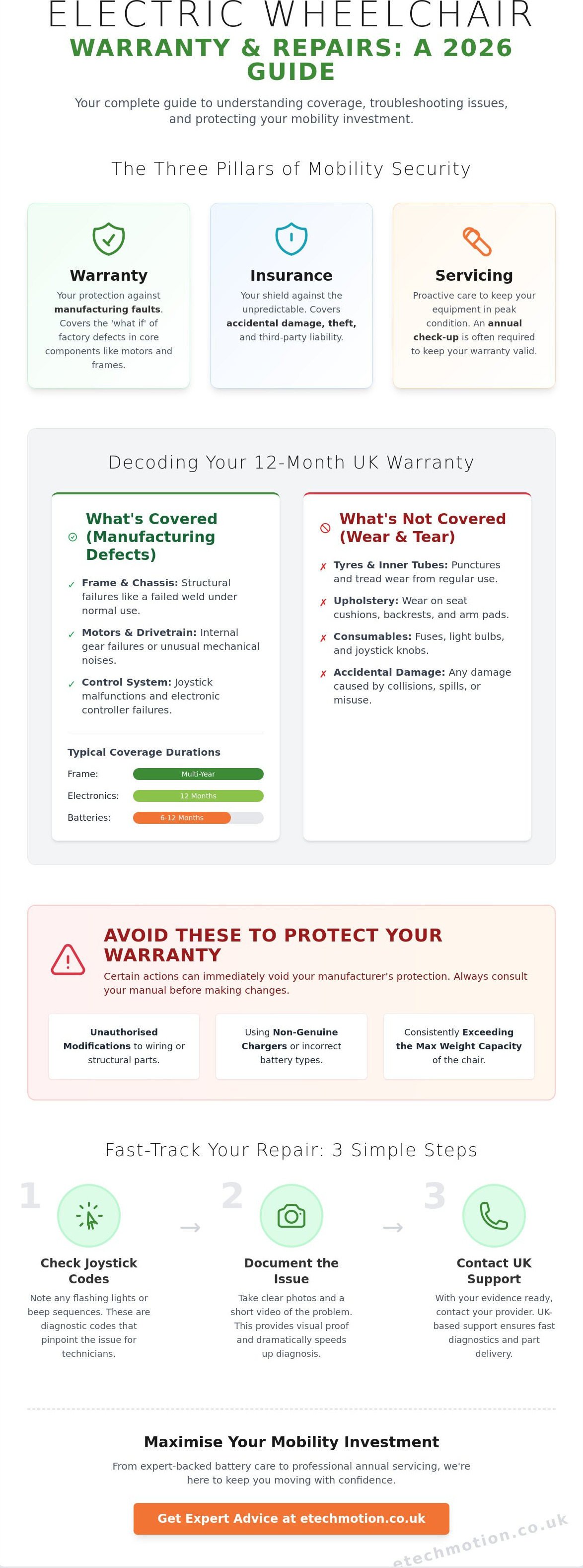
True mobility security relies on three distinct but connected elements. A warranty covers the "what if" of factory faults, like a controller failing or a motor developing a mechanical whine. Insurance, however, is your shield against the unpredictable. It covers accidental damage, theft, or third-party liability. Regular professional servicing acts as the glue that holds these together. Most manufacturers require an annual check-up to keep the warranty valid. This proactive approach prevents small issues from becoming expensive failures, keeping you moving without interruption. When these three pillars work in harmony, you can enjoy your lightweight electric wheelchair or mobility scooter with total peace of mind.
Consumer Rights and Mobility Equipment in the UK
Your protection isn't just limited to what is written in a manufacturer's handbook. The Consumer Rights Act provides a legal safety net, requiring all mobility aids to be of satisfactory quality and fit for purpose. In 2026, these standards are higher than ever for electronic components and battery longevity. If a high-end folding electric wheelchair fails prematurely, these rights provide a clear path for recourse. By purchasing through a specialist UK retailer, you ensure your equipment meets strict local safety regulations and that your consumer rights are easily enforceable. This regional accountability is the backbone of a stress-free ownership experience. It ensures that electric wheelchair warranty and repairs are handled by experts who understand both the technology and the local legal standards designed to protect you.
What is Covered (And What Isn't): The Fine Print
Warranties are often seen as complex, but they are essentially a map of your equipment's most critical systems. Understanding the specifics of your coverage prevents frustration when you need assistance. While the Consumer Rights Act 2015 ensures your equipment is of satisfactory quality, the manufacturer's warranty defines the exact boundaries of technical support. Most 2026 policies focus on the high-value internal systems. This includes the brushless motors, the main chassis frame, and the complex control systems that make modern mobility possible. However, electric wheelchair warranty and repairs don't cover every single component for the same duration. For instance, while a frame might have a multi-year guarantee, the lithium batteries usually carry a shorter 6 to 12-month term due to their chemical nature and charging cycles.
It's vital to remember that a warranty is a protection against manufacturing faults, not a maintenance-free pass. Certain actions will void your protection immediately. These include making unauthorised modifications to the wiring, using non-genuine chargers, or exceeding the maximum weight capacity. If you're currently researching a high-performance Folding Electric Wheelchair, always check the specific battery term in the manual to ensure it aligns with your lifestyle needs.
Commonly Covered Mechanical and Electrical Faults
Modern powerchairs are marvels of engineering, but electronics can occasionally glitch. Your warranty typically covers motor malfunctions, such as internal gear failure or unusual noise patterns that aren't caused by hitting an obstacle. Electronic controller failures and joystick responsiveness issues also fall under this protection. If a weld on the structural frame fails under normal operating conditions, this is considered a manufacturing defect. These core components are the "brain and bone" of your device, and 2026 standards demand they remain robust through regular use.
Standard Warranty Exclusions to Remember
The most common source of confusion involves "wear and tear" items. These are consumables designed to degrade over time through friction and use. You should expect to pay for the following out of pocket:
- Tyres and Inner Tubes: Punctures or tread wear from daily travel.
- Brake Pads: Standard friction-based wear from stopping.
- Upholstery: Fading, tearing, or stitching issues caused by regular sitting or weather exposure.
Damage resulting from misuse is also excluded. If your lightweight electric wheelchair is left out in heavy rain or submerged in water, the resulting electrical short-circuit won't be covered. Overloading the motor by climbing gradients steeper than the manufacturer's rating is another common reason for a denied claim. Keeping your electric wheelchair warranty and repairs simple involves following the provided weight and weather guidelines strictly.
Troubleshooting & Common Electric Wheelchair Repair Scenarios
When your powerchair stops moving, your first instinct might be frustration. However, many issues don't require a full mechanical overhaul or a long wait for a technician. Modern controllers, such as those found on a high-quality folding electric wheelchair, use a specific language of 'flash codes' or beep sequences to tell you exactly what is wrong. For instance, a series of five flashes on the joystick often indicates a magnetic brake fault, while two flashes might point to a simple motor disconnection. Understanding these signals is the first step in managing electric wheelchair warranty and repairs efficiently. It allows you to provide precise information to a support team, which speeds up the diagnostic process significantly.
You must also learn to distinguish between a battery that has simply reached the end of its life and a charging system failure. If your charger light never transitions to green after a full twelve-hour cycle, the fault likely lies with the charging unit or the connection port. Conversely, if the chair powers up but the battery gauge drops rapidly under load, the cells themselves probably need replacing. Safety remains the priority. You should stop using the chair immediately if you detect burning smells, hear grinding noises from the motor housing, or feel excessive heat coming from the battery tray. Forcing a damaged system to operate can turn a minor sensor replacement into a major structural repair.
The 'Quick Fix' Checklist Before Calling Support
Before you request professional help, run through this rapid diagnostic list. First, ensure the freewheel levers are firmly in the 'drive' position. It's a common mistake for these to be accidentally knocked into neutral, which prevents the motors from engaging even when the power is on. Next, inspect every battery connection to ensure they are seated firmly and free from dust or debris. Finally, try a full system reset. Power the chair down completely, wait for at least thirty seconds, and then restart it. This simple power cycle often clears minor electronic glitches in modern mobility systems without the need for tools.
Identifying Serious Faults Requiring Professional Repair
Professional intervention is non-negotiable for certain symptoms that affect the core safety of your device. If your chair consistently pulls to one side on a flat surface, you may have a motor imbalance or a tyre pressure issue that requires calibration. Intermittent power loss is equally dangerous, as it can leave you stranded in a vulnerable position. For those using a lightweight electric wheelchair or a heavy duty electric wheelchair, check the locking pins and hinges every week. Any significant play or visible cracks in the frame are critical safety risks. These structural issues fall under the electric wheelchair warranty and repairs process and must be handled by a qualified technician to maintain your equipment's integrity.
The Step-by-Step Guide to Requesting a Repair
When you identify a fault that requires professional attention, the speed of your resolution depends heavily on the quality of your initial report. The modern approach to electric wheelchair warranty and repairs prioritises digital diagnostics to save you time. By providing clear evidence upfront, you allow engineers to pinpoint the issue before the chair even reaches the workshop. This proactive collaboration ensures that the right parts are ready and waiting, which significantly reduces the period you spend without your mobility aid. It's a streamlined process designed to get you back to your routine with minimal disruption.
Preparing Your Warranty Claim for Success
Start by gathering your essential data. You'll need your original order number and the serial number, which is typically found on a silver sticker on the main frame or near the battery housing. Don't just say the chair is "broken." Describe the symptoms with precision. Does the joystick feel loose? Does the motor click only when you are turning left? High-definition photos and short video clips of the issue in action are invaluable. They act as the engineer's eyes, allowing for a remote assessment that can often distinguish between a simple user-fix and a complex mechanical failure. This documentation creates a digital paper trail that keeps everyone accountable and informed.
Logistics: Collection, Repair, and Return
Once a workshop repair is authorised, the logistics phase begins. For those using folding electric wheelchairs, keeping the original box and internal foam inserts is highly recommended. This packaging is specifically engineered to protect the delicate electronic controllers and lithium batteries during national transit. Most UK providers will arrange a courier collection directly from your doorstep. Once in the workshop, your chair undergoes a thorough diagnostic check, followed by the replacement of faulty components using genuine parts. The process concludes with a rigorous quality control test. This final check verifies that every safety standard is met before the chair is returned to you. If you're ready to upgrade to a model backed by this level of professional support, browse our latest electric wheelchairs and mobility scooters to find your perfect match.
Typical lead times for national repairs can vary, but clear communication is the standard in 2026. You should expect regular updates as your chair moves from diagnostics to the testing phase. This transparency ensures you aren't left in the dark about your equipment's status. By the time your chair arrives back at your home, it will have been tested under load to ensure the repair is permanent and the system is stable. This methodical approach is what makes the electric wheelchair warranty and repairs system so reliable for the modern user.
Long-Term Care: Maximising Your Mobility Investment
Maintaining your mobility aid is the most effective way to protect your independence and your wallet. While understanding electric wheelchair warranty and repairs is essential for emergencies, a proactive care routine prevents most technical failures before they start. Think of your chair as a high-performance vehicle. It requires regular attention to ensure every mechanical component and electronic sensor operates at peak efficiency. By dedicating just fifteen minutes a week to basic upkeep, you extend the life of your equipment and maintain the smooth, silent ride you expect from a premium device. This consistent care keeps you moving and ensures your warranty remains valid through proper equipment stewardship.
Preventative Maintenance Checklist
A simple routine keeps your chair in showroom condition and prevents grit from damaging sensitive areas. Start by wiping down the frame with a damp cloth to remove salt, mud, or dust that can lead to corrosion. Pay close attention to the moving parts. If you use a folding model, ensure the hinges are free from debris that could jam the mechanism. Check your tyre pressure once a month. Under-inflated tyres force the motors to work harder, which drains your battery faster and places unnecessary strain on the drivetrain. Finally, give the main bolts a quick check to ensure everything remains tight and secure after miles of travel over various terrains. These small steps stop minor vibrations from turning into major mechanical faults.
Battery Care for Longevity
The lithium-ion battery is the heart of your electric wheelchair, and its lifespan depends on how you treat it. One of the most important rules is to never let the charge drop to 0%. Deeply discharging the cells can cause permanent chemical damage, reducing the total range you can achieve on a single charge. If you don't plan to use your chair for a few weeks, store the battery in a cool, dry place with about 50% to 70% charge. Avoid extreme temperatures, as both frost and intense heat accelerate degradation. You'll know your battery is reaching its end when it takes longer to charge or struggles to maintain power during uphill climbs. Recognising these signs early allows you to plan for a replacement before you are left without power.
The Value of Expert Support
Even with the best home care, professional intervention is vital for complex systems. We recommend an annual service, particularly for heavy duty electric wheelchairs that regularly tackle challenging outdoor environments. This deep-level inspection covers internal wiring, motor brush wear, and electronic calibration that isn't possible at home. At Etech Motion, our commitment to your freedom doesn't end when your initial 12-month coverage expires. We provide ongoing technical guidance and access to genuine replacement parts to keep your electric wheelchair warranty and repairs journey simple and transparent. Our goal is to ensure your transition to modern mobility remains a source of joy and reliability for years to come.
Secure Your Independence for the Road Ahead
Your mobility is too precious to leave to chance. By mastering the basics of electric wheelchair warranty and repairs, you've taken the first step toward a more confident and stress-free ownership experience. You now understand that a combination of proactive maintenance, digital diagnostics, and knowing your legal rights ensures your equipment remains a reliable partner in your daily life. This knowledge transforms maintenance from a source of anxiety into a simple part of your routine.
We are committed to keeping you moving with equipment built for the long haul. Every device we sell comes backed by a 12-month comprehensive manufacturer warranty and the dedicated support of our expert UK-based technical team. If you ever face a challenge, our fast national collection and repair service ensures you aren't sidelined for long. Whether you're navigating city streets or exploring the countryside, you can focus on the journey while we handle the technical details.
Browse our range of reliable electric wheelchairs with full UK warranty support and experience the freedom of modern mobility today. Your next adventure is waiting.
Frequently Asked Questions
How long does a standard electric wheelchair warranty last in the UK?
Most new models come with a 12-month manufacturer warranty. This covers parts and labour for faults arising from normal use and factory defects. While the structural frame might sometimes carry a longer guarantee, the standard protection cycle for electronic components and motors is one year. You should always check your specific documentation, as some premium models might offer extended periods for the chassis or drivetrain.
Does my warranty cover the battery if it stops holding a charge?
Battery coverage is often separate from the main chassis warranty. Most lithium-ion batteries carry a 6 to 12-month guarantee against manufacturing faults. However, this doesn't cover natural capacity loss over time or damage caused by leaving the battery at 0% for long periods. If the battery fails due to a chemical defect within the first year, it's typically replaced under the electric wheelchair warranty and repairs policy.
What should I do if my electric wheelchair breaks down while I'm out?
Your first priority is moving to a safe location away from traffic. If the electronics fail, use the freewheel levers to disengage the motors so someone can push you manually. We recommend taking out specialist insurance that includes roadside recovery, as manufacturer warranties don't typically cover emergency towing or transport. Keep your insurance provider's contact details on your phone for immediate assistance during a breakdown in your daily routine.
Can I repair my own electric wheelchair without voiding the warranty?
You should avoid performing any internal repairs or electronic modifications yourself. Unauthorised work on the motor, controller, or wiring system will immediately void your manufacturer's protection. You can perform basic maintenance like cleaning the frame or checking tyre pressure, but any technical fault must be handled by a qualified technician. This ensures the safety and integrity of the device remain intact and compliant with safety standards.
Are tyres and brake pads covered under a manufacturer's warranty?
Tyres, inner tubes, and brake pads are classified as consumable items and aren't covered by standard warranties. These components naturally degrade through daily friction and use, much like tyres on a car. You're responsible for the cost of replacing these items as part of your regular upkeep. Only a clear manufacturing defect, such as a structural failure in a brand-new tyre, would be considered for a warranty claim.
How often should I have my powerchair professionally serviced?
You should book a professional service at least once every twelve months. This annual check-up is often a requirement to keep your electric wheelchair warranty and repairs coverage valid. A technician will inspect the motor brushes, electronic connections, and structural integrity that you can't easily see at home. Regular servicing is the best way to ensure your five-year equipment lifespan is achieved without major, avoidable breakdowns.
What happens if my wheelchair is damaged during shipping for a repair?
Protection during transit depends on how the chair was packaged and the courier's insurance policy. This is why we strongly advise keeping the original box and foam inserts for your folding electric wheelchair. If the chair is damaged because it wasn't packed according to the manufacturer's guidelines, you might be liable for the repair costs. Always take photos of the chair before the courier collects it to document its condition.
Will I get a loaner wheelchair while mine is being repaired?
Standard manufacturer warranties don't typically include the provision of a loaner wheelchair. If you rely on your chair for daily mobility, you should check if your private insurance policy includes loss of use coverage or a temporary replacement. Alternatively, some local charities or NHS services might provide a short-term manual chair while your primary powerchair is in the workshop for technical diagnostics and repairs.