Is the most expensive mobility aid always the best choice for your freedom? You might assume a high-end model solves every problem, but the reality is that your personal "Mobility Environment" dictates your success more than the price tag. It's frustrating when the simple desire to visit a park or the local shops feels blocked by confusing technical jargon like Class 2 versus Class 3 or worries about whether a frame will actually fit in your car boot. You want to regain your independence without becoming a mechanic or a logistics expert.
This guide settles the electric wheelchair vs mobility scooter for seniors debate by focusing on how you actually live. We promise to help you find a solution that offers both long-term comfort and ease of transport. We will break down the crucial differences in maneuverability, battery range, and storage so you can confidently choose the technology that moves you forward into 2026 with absolute clarity.
Key Takeaways
- Identify whether your daily routine requires the tight indoor turning circle of a power chair or the pavement-ready stability of a handlebar-steered scooter.
- Compare the physical demands of an electric wheelchair vs mobility scooter for seniors, specifically focusing on your hand dexterity and upper body strength.
- Learn how modern lightweight alloys and folding designs allow your mobility aid to fit easily into a car boot for seamless transport.
- Evaluate your seating and postural requirements to ensure your chosen device supports your independence during longer trips to the shops or park.
- Discover how to assess your specific "Mobility Environment" to choose a solution that balances indoor agility with reliable outdoor performance.
Electric Wheelchair or Mobility Scooter: Understanding the Core Purpose
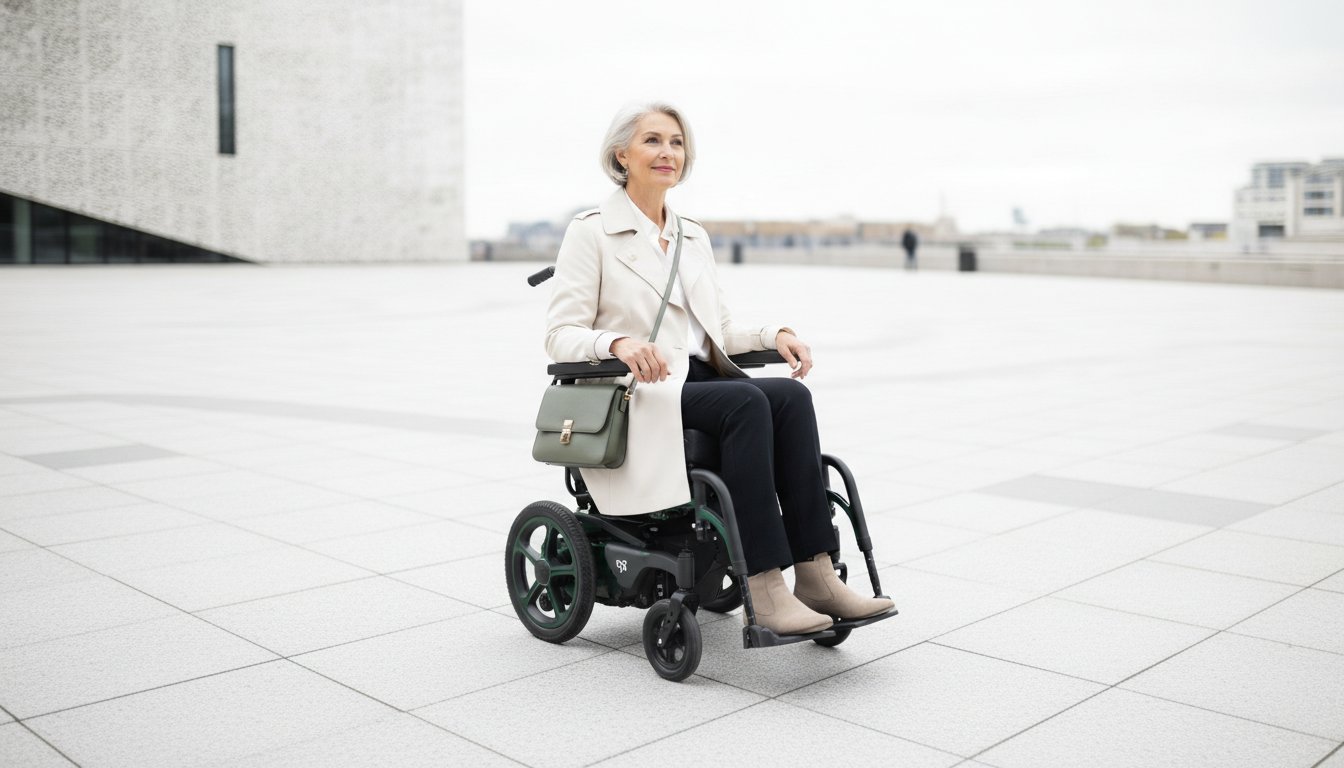
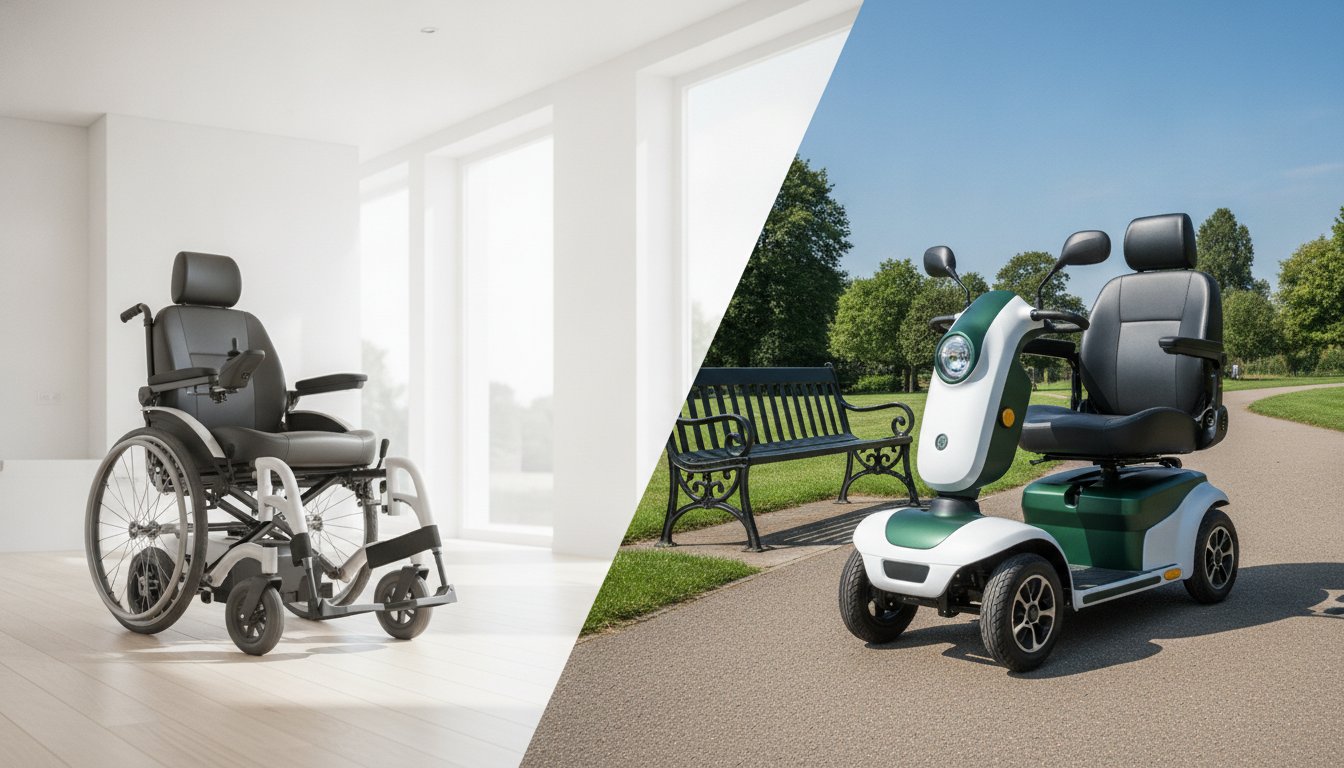
Choosing between an electric wheelchair vs mobility scooter for seniors often starts with a single question: where will you spend most of your time? While both devices restore freedom, they serve fundamentally different environments. An electric wheelchair is essentially a compact, high-tech chair designed for 360-degree manoeuvrability. It's built to navigate the tight corners of a standard UK home. In contrast, a mobility scooter is a handlebar-steered vehicle optimized for pavement travel and longer outdoor journeys.
The "Indoor-Outdoor" divide is the most critical factor for UK users. British homes often feature narrow hallways and small kitchens where a scooter simply cannot turn. Many people mistakenly believe power chairs are only for those with "serious" physical limitations. In 2026, modern power chairs are lifestyle tools chosen for their precision and comfort, not just medical necessity. They allow you to move naturally through your own home without rearranging the furniture. Understanding this distinction ensures you don't end up with a device that stays parked in the hallway because it's too bulky to use.
The Electric Wheelchair: Precision and Indoor Freedom
The standout feature of a modern electric wheelchair is its zero-turn radius. This means the chair can rotate on its own axis, making it perfect for navigating narrow corridors or tucking under a dining table. Control is handled via an intuitive joystick that requires very little finger pressure. It's an excellent choice if you have limited grip strength or arthritis in your hands. Because these chairs are designed for all-day use, the seating ergonomics often provide superior posture support. They are built to keep you comfortable from breakfast until bedtime.
The Mobility Scooter: Stability and Outdoor Range
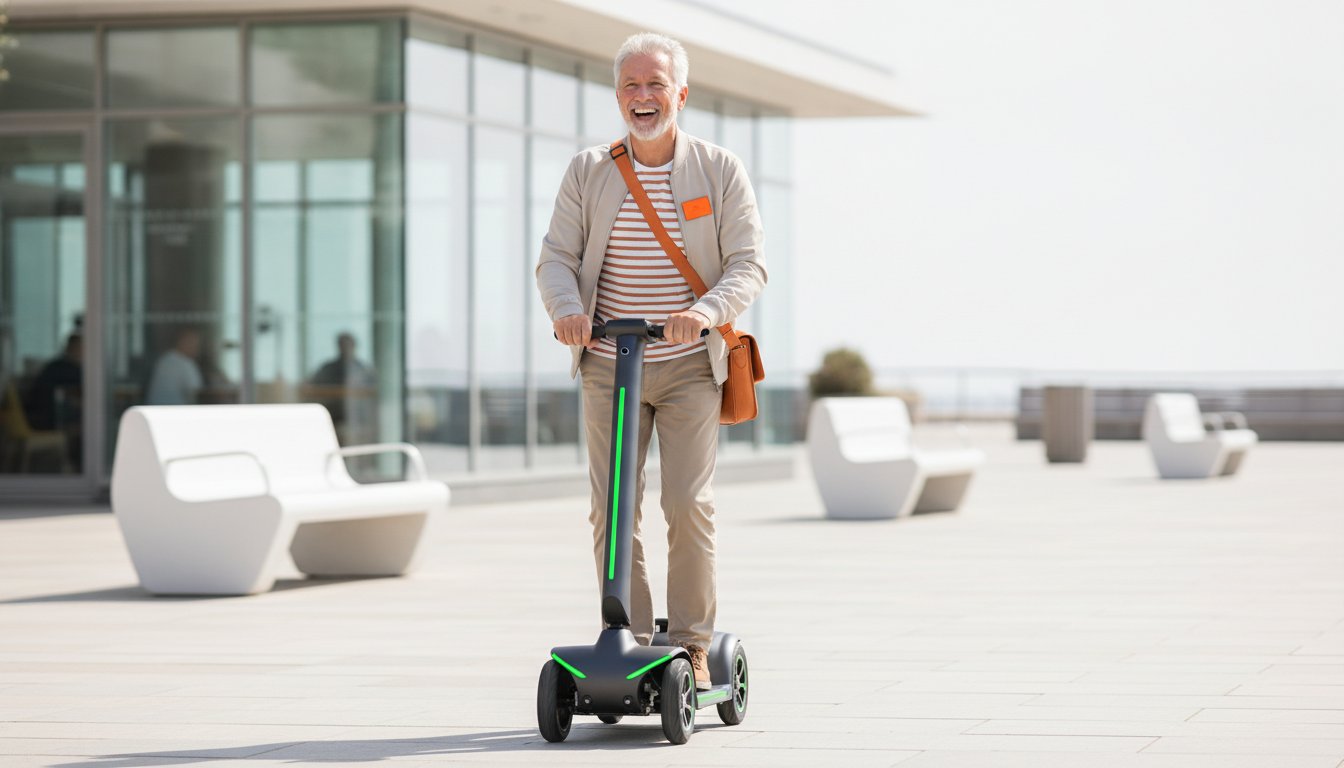
A Mobility Scooter offers a different kind of freedom. It uses a tiller (handlebar) steering system that feels familiar to anyone who has ridden a bicycle. These vehicles typically offer higher ground clearance, which is essential for tackling uneven pavements, dropped kerbs, or park paths. Most models come equipped with storage baskets, making them the ideal companion for a trip to the local high street or supermarket. They provide a stable, "car-like" feel that many seniors find reassuring during longer outdoor excursions where speed and range are the priorities.
Control Methods and Physical Requirements
While the environment dictates where you can go, your physical dexterity determines how comfortably you get there. The decision between an electric wheelchair vs mobility scooter for seniors often rests on your upper body strength and hand coordination. It's a common mistake to choose based on looks alone, but the steering mechanism is what you'll interact with every second you're in motion. Understanding these physical demands ensures you select a device that supports your independence rather than causing fatigue.
Most mobility scooters require a degree of core stability and arm endurance that power chairs do not. Because you must reach forward to grip the tiller, your shoulders and back are constantly engaged. If you find it difficult to hold your arms out for twenty minutes at a time, a scooter might become a chore rather than a help. In contrast, power chairs allow for a more relaxed, seated position where your arms rest naturally on the armrests. This difference in posture can be the deciding factor for those managing chronic back pain or respiratory issues.
Is a Scooter Tiller Right for You?
Scooters utilize a tiller system, which functions much like a bicycle's handlebars. To operate one safely, you generally need the use of both hands to make sharp turns and maintain balance on uneven ground. Speed is typically controlled by "wig-wag" levers. These are small paddles you pull with your fingers or push with your thumb. While this setup feels very secure and "car-like" for many users, it does require consistent grip strength. It's an excellent choice for seniors who still have good upper-body mobility and prefer a traditional driving experience. You can find a variety of ergonomic tiller designs at Etech Motion that cater to different comfort levels.
The Joystick Advantage for Power Wheelchairs
Power wheelchairs offer a "point-and-go" experience that is incredibly light on the body. The joystick can be operated with just a single finger, leaving your other hand completely free to carry a shopping bag or hold a loved one's hand. Modern systems also allow for programmable speed settings. You can set a lower maximum speed for navigating a crowded kitchen and a higher one for a trip to the park. As noted in Aging with Dignity's guide to mobility aids, these intuitive controls are often better for those with declining dexterity. Joystick sensitivity can be professionally adjusted to filter out tremors or compensate for muscle weakness, providing a smooth ride even if your movements aren't perfectly steady.
Cognitive ease is another factor to weigh. First-time users often gravitate toward scooters because the steering feels familiar. However, the tight turning circle of a power chair is often more forgiving in a panic. If you head toward an obstacle in a power chair, a simple release of the joystick brings you to an immediate, controlled stop. This makes it a very safe option for those who might worry about their reaction times during a busy outing.
Portability and Storage: Folding vs Fixed Models
For years, seniors were forced to choose between a device they could use at home and one they could take on holiday. That compromise is over. The portable mobility market has seen a 25% surge in 2026, driven by a new generation of users who refuse to be housebound. When comparing an electric wheelchair vs mobility scooter for seniors, the decision often hinges on how easily the device integrates with your car or public transport. Modern engineering has replaced heavy steel with aerospace-grade aluminum and carbon fiber, turning once-cumbersome equipment into travel-ready companions.
Weight is the primary barrier to independence. Older models often relied on heavy-duty steel frames that required a ramp or a hoist to lift. Today, lightweight alloys allow for frames that are significantly easier to manage. This shift isn't just about weight; it's about the storage footprint. In a typical UK home, space in the hallway or under the stairs is at a premium. A device that doesn't fold effectively becomes a permanent piece of furniture, which isn't ideal for everyone.
Folding Mobility Scooters for Seniors
Modern scooters have evolved beyond fixed, rigid frames. You can now choose between manual folding models or automatic versions that collapse at the touch of a button, removing the need to bend down or struggle with clips. Split-frame designs are another breakthrough, allowing you to disassemble the scooter into two or three lighter pieces. This makes it much simpler to fit a mobility scooter into a standard vehicle boot without needing a specialized van. These models are perfect for those who want outdoor stability but don't have the space for a full-sized vehicle.
Lightweight Electric Wheelchairs for Independence
If you prioritize speed and simplicity, the folding electric wheelchair has become the gold standard for 2026. These chairs often feature one-touch systems that collapse in seconds, much like a child's pushchair. They are particularly popular for air travel and public transport. When flying, you must consider FAA regulations, which currently limit installed lithium-ion batteries to 300Wh and spare batteries to 160Wh. Because these chairs are so compact, they glide onto buses and trains with ease, often fitting into spaces where a scooter would be blocked.
Choosing the right folding mechanism depends on your daily routine. If you frequently travel by taxi or have a small car boot, the ultra-compact nature of a folding power chair is hard to beat. However, if your storage area is a garage or a spacious porch, a folding scooter offers the outdoor performance you might prefer. Either way, the modern "Folding Revolution" means your mobility aid no longer dictates which car you drive or where you can travel.
Key Decision Factors: Which Should You Choose?
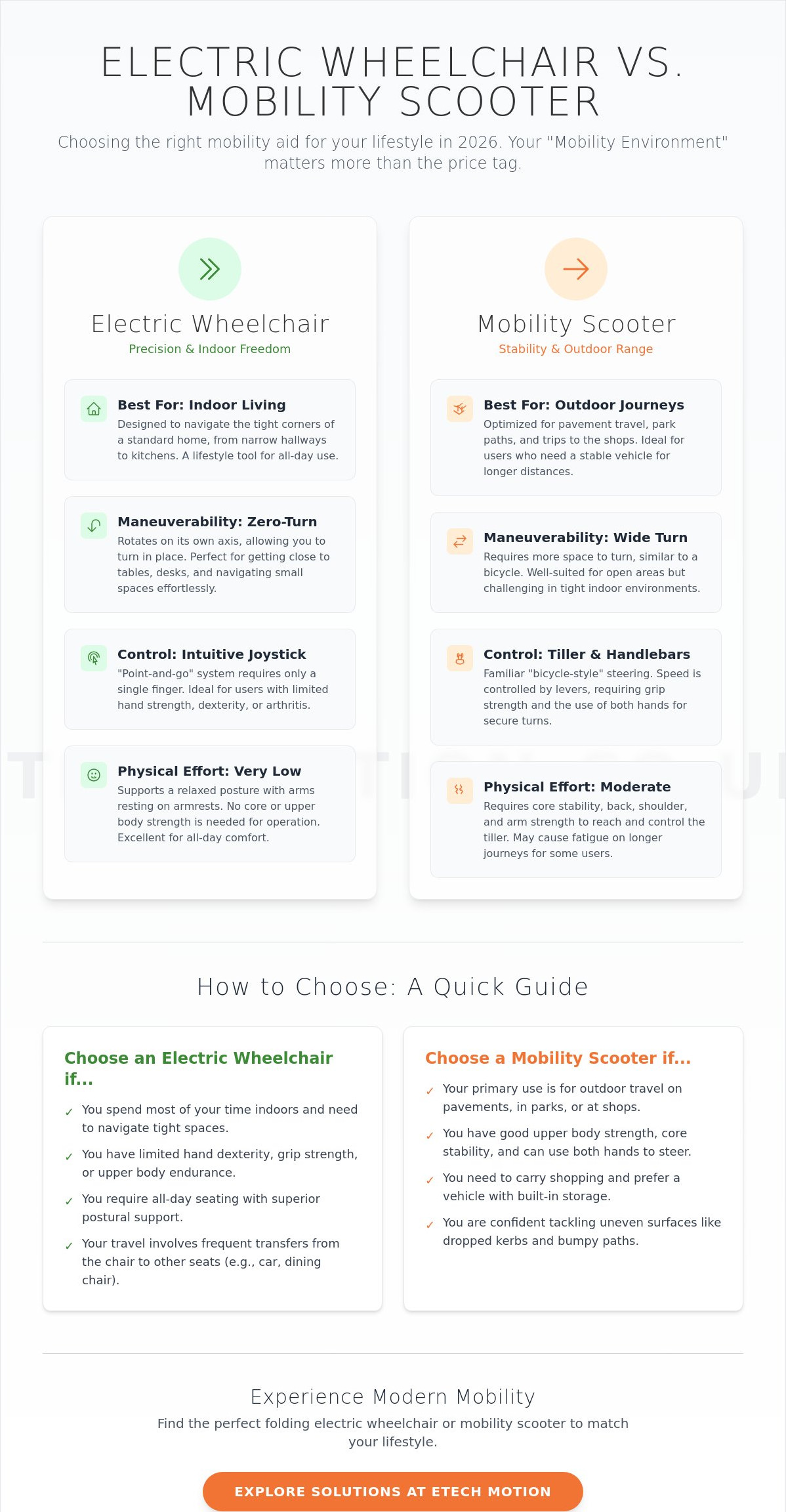
Choosing between an electric wheelchair vs mobility scooter for seniors isn't just about picking a product; it's about matching a tool to your specific environment. While previous sections explored how these devices work, your final decision should rest on a practical assessment of your daily life. British architecture poses unique challenges, particularly in older terraced houses or flats where doorways are often narrower than 30 inches. If you live in a home with tight turns and narrow hallways, the compact footprint of a power chair becomes a necessity rather than a luxury.
Comfort and dexterity also play a major role in long term satisfaction. You must consider whether you can sit upright for extended periods without the specialized back support often found in high end power chairs. Additionally, the "Car Boot Test" is a vital step. Before committing to a purchase, measure your vehicle's boot width, depth, and height. A folding model is only a solution if it actually fits your specific car without requiring you to struggle. You should also factor in the long term value of lithium ion batteries, which typically offer better longevity and faster charging than traditional lead acid alternatives.
When to Choose an Electric Wheelchair
- Indoor Agility: If you need to navigate around a dining table, use a small kitchen, or move between rooms with ease.
- Seamless Transition: If you prefer a single device that stays with you from the bedroom to the local shop without needing to transfer.
- Physical Support: If you have limited arm strength or require specialized pressure relief cushions for all day use.
If these points resonate with your lifestyle, you can view our full range of mobility solutions to find the right fit for your home.
When to Choose a Mobility Scooter
- Outdoor Excursions: If your primary goal is visiting local parks, travelling to the high street, or going on longer outdoor trips.
- Vehicle Aesthetic: If you enjoy the look and feel of a vehicle with a traditional tiller rather than a chair.
- Storage Capacity: If you have a garage or porch for storage and the upper body strength to manage handlebar steering on uneven pavements.
Ultimately, the best choice is the one that removes the most barriers from your day. If you find yourself staying home because your current equipment is too difficult to transport or too bulky for the shops, it's time to re-evaluate. By matching your device to your "Mobility Environment," you ensure that your investment leads to years of regained freedom and joy.
Experience Modern Mobility with Etech Motion
Navigating the final choice of an electric wheelchair vs mobility scooter for seniors shouldn't feel like a technical chore. At Etech Motion, we see ourselves as your expert partner in the sustainable transport revolution. We don't just supply equipment; we provide the keys to a more active and fulfilling lifestyle. Our Birmingham-based headquarters serves as a hub of excellence, where we rigorously test every model to ensure it meets the highest UK safety standards. This regional heritage is our signature of reliability, ensuring that every customer receives professional support backed by local accountability.
We understand that the transition to new technology can feel overwhelming. Whether you are considering a heavy duty electric wheelchair for robust support or a nimble folding model for travel, our team is here to guide you. We offer nationwide UK delivery, bringing modern mobility solutions directly to your doorstep. Our commitment to quality assurance means you can trust the durability of your device, allowing you to focus on the joy of visiting friends, exploring parks, or simply moving through your home with ease.
Specialised Support for Seniors
Our expert team takes pride in explaining complex technical specifications in plain English. We strip away the jargon surrounding battery types or motor systems, focusing instead on how a product improves your daily routine. Safety and quality aren't just buzzwords for us; they are the foundation of everything we do. By choosing Etech Motion, you are joining a community dedicated to cleaner, more efficient transit. We help you find the perfect balance between technical precision and emotive lifestyle benefits, ensuring your new mobility scooters or wheelchairs feel like a natural extension of your independence.
Take the Next Step Toward Independence
Regaining your freedom starts with a single conversation. Our curated range of lightweight and folding mobility aids is designed to tackle the frustrations of traditional transit. If you're unsure which model fits your "Mobility Environment," our specialists are ready to provide a personalised recommendation based on your unique needs. We invite you to explore our collection and discover how the right technology can transform your perspective on travel. Explore our full range of electric wheelchairs and scooters today.
Take Control of Your Mobility Future
Finding the right balance between indoor agility and outdoor range is the secret to lasting independence. Your choice between an electric wheelchair vs mobility scooter for seniors shouldn't be based on a medical label but on how you intend to live your life. Whether you need the precision of a joystick-controlled power chair for navigating a narrow UK kitchen or the stable, tiller-steered performance of a scooter for trips to the park, the modern mobility market in 2026 offers more freedom than ever before. Advanced lightweight alloys and folding technologies have finally removed the old barriers to travel and transport.
Etech Motion stands as a specialist UK retailer dedicated to this sustainable transport revolution. We provide nationwide delivery and expert technical support to ensure your transition to new technology is seamless and reliable. Our focus on high-performance folding designs means you don't have to compromise on your lifestyle or your storage space. If you're ready to regain your freedom with a solution tailored to your specific needs, find your perfect mobility match at Etech Motion. We are here to support your journey toward a more active and joyful future.
Frequently Asked Questions
Do I need a licence to drive a mobility scooter or electric wheelchair in the UK?
You don't need a driving licence to operate an electric wheelchair vs mobility scooter for seniors in the UK. While no test is required, you must register Class 3 vehicles with the DVLA. These road-legal models are exempt from vehicle tax, but they must follow specific safety regulations. It's also important to remember that you must be at least 14 years old to drive a Class 3 vehicle on public roads.
Can I take my folding electric wheelchair on a bus or train?
Most UK bus and train operators allow folding mobility devices, but specific rules vary by company. Many bus drivers require a "Scooter Permit" to ensure your device fits safely in the designated wheelchair space. Folding electric wheelchairs are often the easiest to transport because they can be stored in luggage racks like a standard suitcase. Always check with your local transport provider before you head out for the first time.
How often do I need to charge the battery on a senior mobility device?
It's best to charge your battery after every significant outing to ensure you're never caught short. Modern lithium-ion batteries thrive when they are kept topped up rather than being left to drain completely. A full charge usually takes between 6 and 10 hours, so many users prefer to plug their device in overnight. Consistent charging habits will significantly extend the overall lifespan of your power system and maintain your daily range.
Is a 3-wheel or 4-wheel mobility scooter safer for seniors?
A 4-wheel scooter is generally considered the safer and more stable option for seniors who plan to travel outdoors. The wider wheelbase provides better balance when you're navigating dropped kerbs or uneven pavement paths. 3-wheel models are fantastic for indoor use or narrow shop aisles because they have a much tighter turning circle. Your choice should depend on whether you value outdoor stability or indoor agility for your daily routine.
What is the difference between a Class 2 and Class 3 mobility vehicle?
Class 2 mobility vehicles are limited to 4 mph and are designed strictly for use on pavements and in pedestrian areas. Class 3 vehicles are more robust, reaching speeds of up to 8 mph, and are legal to drive on the road. Because they use the road, Class 3 models must have headlights, indicators, and a horn. You don't need to pay road tax for either class, but registration is mandatory for Class 3 models.
Can I use an electric wheelchair inside my home?
Yes, electric wheelchairs are specifically designed for indoor use and offer the best manoeuvrability for your home. Their joystick controls and zero-turn radius allow you to navigate tight kitchens and hallways that a scooter might struggle with. While some compact Class 2 scooters can work indoors, they often require more space to turn. If your goal is moving from the bedroom to the living room with ease, a power chair is the ideal solution.
How much does a good quality mobility scooter for seniors cost in 2026?
Pricing in 2026 is largely determined by the technology and materials used in the frame and battery system. Lightweight carbon-fibre models and those with high-capacity lithium-ion batteries often represent a higher initial investment compared to traditional lead-acid models. You should also factor in long-term value, as modern folding designs often reduce the need for expensive vehicle modifications like hoists or ramps. Choosing a model with a comprehensive warranty provides the best financial security.
What happens if my mobility aid breaks down?
Your first step during a breakdown should be to contact the specialist retailer where you purchased the device. Most reputable providers offer technical support and aftercare to help get you moving again quickly. Many seniors also choose to take out specific mobility insurance that includes a 24/7 recovery service. This ensures that if you have a mechanical issue while away from home, a professional will arrive to transport you and your device back safely.