
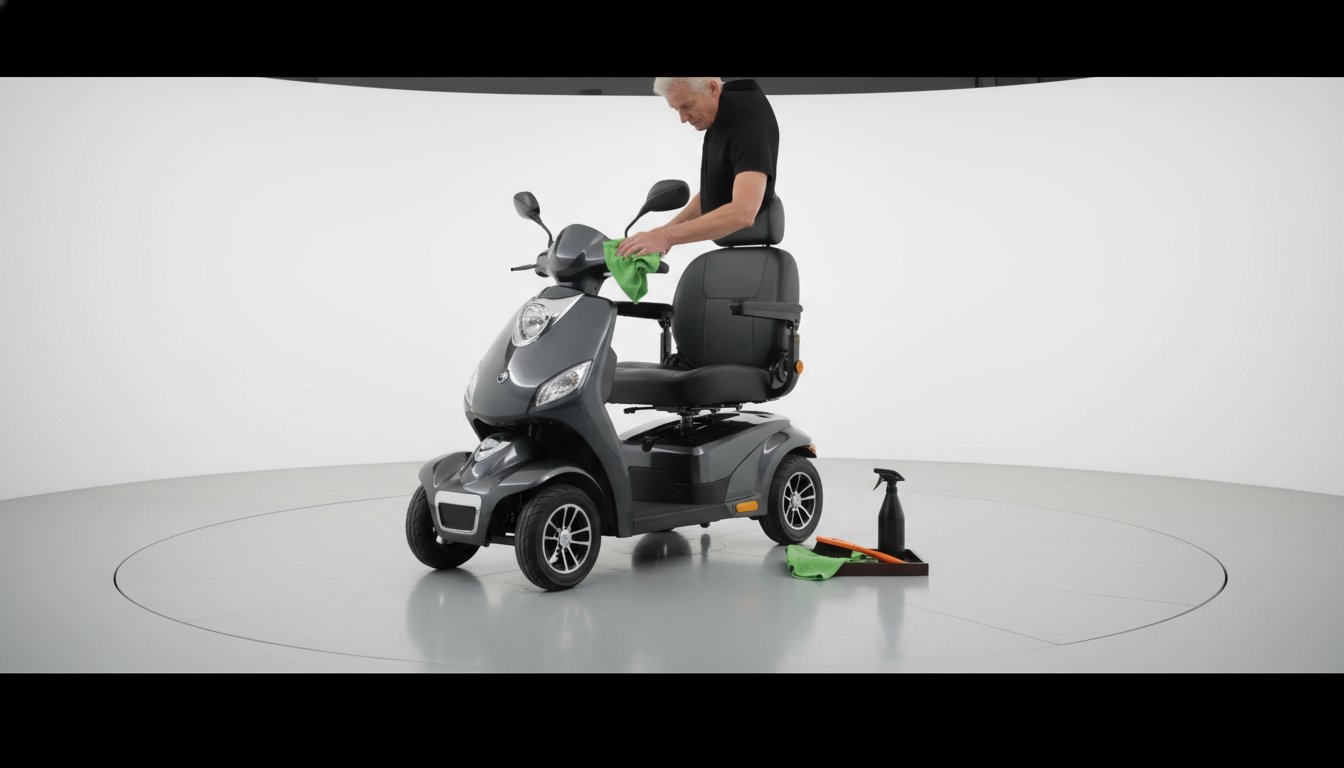
Did you know that 70% of mobility scooter users have experienced a malfunction or breakdown due to neglect of maintenance? It's a frustrating reality, especially when you're facing stubborn mud from UK pavements or worrying that a damp cloth might cause permanent water damage to your electronics. You want your device to stay reliable, but the confusion over safe cleaning agents often leads to doing nothing at all.
We're here to change that by helping you master the art of cleaning your electric mobility aid to ensure safety, longevity, and peak performance in any weather. By following this guide, you'll gain the confidence to handle technical maintenance and significantly extend the lifespan of your device, which typically lasts five to seven years with proper care. We'll walk you through a methodical process to achieve a sparkling clean result while keeping your motor and battery perfectly protected from the elements.
Key Takeaways
- Discover why a consistent cleaning routine is the secret to preventing mechanical failure and maintaining peak battery efficiency.
- Learn why pressure washers are strictly prohibited and which specific household tools are safest for your electronics.
- Master the step-by-step process of cleaning your electric mobility aid by starting with essential dry-brushing techniques to remove stubborn UK mud.
- Protect your metal frame from the corrosive effects of winter road salt and learn the post-rain protocol to prevent rust.
- Identify the clear signs that indicate when your device needs a professional technician rather than a standard weekly wipe-down.
The Importance of a Clean Mobility Aid for Longevity and Safety
Maintaining a pristine device is about much more than just a polished finish. While a sparkling frame looks impressive on the high street, the real value of cleaning your electric mobility aid lies beneath the surface. Dirt is an abrasive force that acts like sandpaper on delicate engineering. When left to accumulate, grime creates unnecessary friction, forcing your motor to work harder and prematurely draining your battery. By keeping your device clean, you aren't just improving its appearance; you're actively preserving the mechanical integrity of a sophisticated piece of technology.
Mechanical Benefits: Preventing Grime-Induced Friction
The intricate motorized wheelchair components that power your daily freedom require a smooth environment to function at peak efficiency. Grit and microscopic debris often find their way into wheel bearings and motor housings. This creates "drag," which puts immense strain on the power system. If you use a folding electric wheelchair or an electric folding mobility scooter, dust is particularly dangerous for the hinges and locking mechanisms. Over time, caked-on mud can make these joints stiff or cause them to seize entirely. Similarly, the joystick controller is a sensitive electronic input. Even a small amount of dust or sticky residue can lead to reduced responsiveness, which compromises your control while out and about.
Safety and Hygiene: Protecting the User
A clean device is a safe device. When your frame is covered in a layer of dried UK mud, it's impossible to spot hairline cracks or loose bolts that might be developing. Regular cleaning sessions serve as a vital visual inspection, allowing you to catch small issues before they become dangerous mechanical failures. During your routine, always check for:
- Fraying wires or loose electrical connections near the battery.
- Small cracks in the frame or welds.
- Uneven wear on tyre treads.
- Debris caught in the brake assembly.
Beyond the structural aspects, hygiene is a major factor for your personal comfort. Armrests and seat upholstery on a lightweight electric wheelchair or mobility scooter can become breeding grounds for bacteria if sweat and spills aren't addressed. This often leads to skin irritation or unpleasant odours. Additionally, don't forget your visibility. Ensuring that lights and reflectors are free from road film is essential for staying safe during evening trips or in overcast British weather.
Finally, consider the long-term investment. Whether you own a heavy duty electric wheelchair or a compact scooter, regular care protects the resale value of your premium Etech Motion equipment. A well-maintained aid suggests a well-cared-for motor and battery, making it a far more attractive prospect if you ever decide to upgrade to a newer model. Consistent care isn't just a habit; it's a commitment to your own mobility and independence.
Essential Supplies and Preparing Your Electric Wheelchair or Scooter
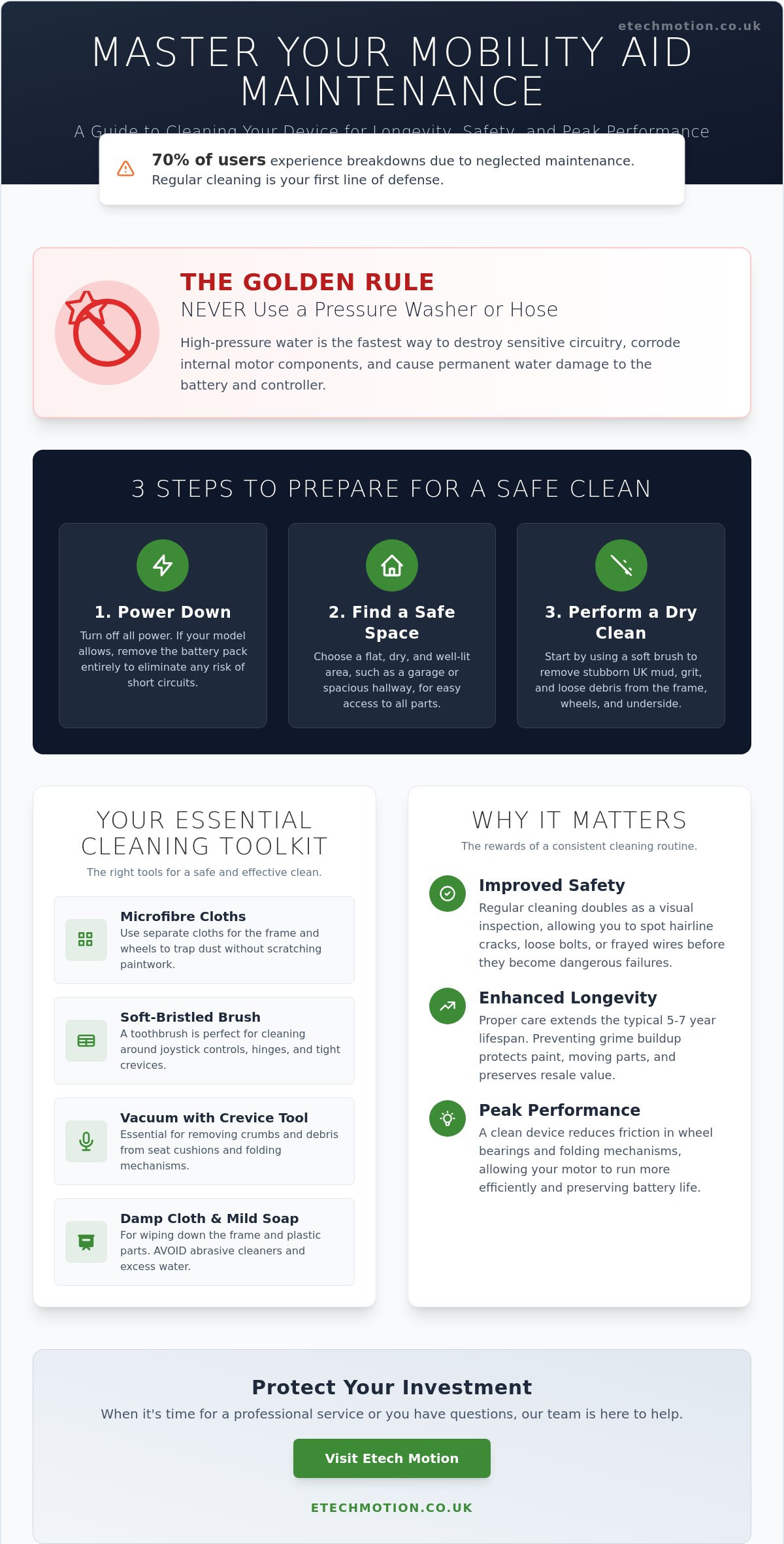
Before you begin the process of cleaning your electric mobility aid, you must establish the golden rule of maintenance: never use a hose or pressure washer. High-pressure water is the fastest way to destroy sensitive circuitry and corrode internal motor components. Instead, think of this task as a detailed "valeting" process rather than a wash. You'll need a controlled environment to work in. Choose a flat, dry, and well-lit area, such as a garage or a spacious hallway, where you can easily reach every angle of your device without straining.
Preparation also involves powering down the system completely. If your model allows for it, removing the battery pack provides better access to the frame and ensures there is no risk of a short circuit while you work. Having your supplies organised before you start prevents you from having to leave a half-cleaned device unattended.
The Essential Mobility Cleaning Kit
Your toolkit should focus on precision and surface protection. Microfibre cloths are indispensable because they trap dust rather than just moving it around. Use a high-gsm plush microfibre for the main frame to avoid scratching the paintwork, and a separate, more rugged cloth for the tyres and underside where UK mud tends to cake. For the intricate areas around the joystick and control panel, a soft-bristled toothbrush is your best friend. It reaches into crevices that a cloth simply cannot touch. A vacuum cleaner with a narrow crevice attachment is also vital for sucking out crumbs and debris from the folding mechanisms of a folding electric wheelchair or the gaps in seat cushions.
Avoid using abrasive scourers or steel wool at all costs. These will strip the protective coating from your frame, leading to rust. You should also stay away from silicone-based furniture sprays. While they provide a temporary shine, they leave a slippery residue that can be dangerous on handgrips or footplates.
Eco-Friendly Cleaning Solutions
Many users have sensitivities to harsh industrial scents, making eco-friendly alternatives a superior choice. A simple mixture of warm water and a few drops of mild, biodegradable dish soap is usually all you need for a thorough clean. This approach is gentle on the planet and safe for the various plastics and alloys found on a lightweight electric wheelchair. For stubborn grease on the frame, a 50/50 solution of water and white vinegar acts as a natural degreaser without the need for toxic fumes.
Always perform a spot test on a small, inconspicuous area of the upholstery before applying any solution to the entire seat. This prevents accidental discolouration or damage to the fabric. By choosing sustainable, non-toxic agents, you ensure that your mobility scooter remains a healthy environment for daily use while extending the life of its materials.
Step-by-Step Guide: Cleaning Different Components Safely
Execution is everything. When you begin cleaning your electric mobility aid, following a logical sequence prevents you from spreading grime back onto areas you've already tidied. This methodical approach ensures that sensitive electronics remain dry while the rugged frame gets the attention it deserves. Before you touch a single cloth, ensure the power is off. If your model features a removable power pack, take it out. This simple step eliminates the risk of accidental activation or electrical shorts during the process.
Start with a thorough dry-brushing. Use a soft-bristled brush to flick away loose UK mud and grit from the frame and wheel arches. This is much safer than wiping immediately, which can grind dirt into the paintwork. Once the loose debris is gone, use a slightly damp microfibre cloth to wipe down the chassis. Work from the top down, finishing with the lower frame and battery housing. For the final step, use a dedicated upholstery cleaner or a vacuum to refresh the seat cushions and armrests, ensuring your daily environment remains hygienic.
Protecting the "Brain": The Joystick and Battery
The controller is the most vulnerable part of any electric wheelchair or mobility scooter. Moisture ingress here can lead to costly repairs. Never spray cleaning solutions directly onto the joystick. Instead, apply a small amount of sanitiser to a cloth first. Pay close attention to the rubber gaiter at the base of the joystick; use a dry toothbrush to clear dust from the folds without pushing moisture inside. While the battery is removed, wipe the terminals with a dry, anti-static cloth. If you spot any white or greenish powdery residue, this indicates corrosion or a potential leak. This is a signal to stop and consult a technician rather than continuing with a standard clean.
Chassis and Tyres: Dealing with Road Grime
Maintenance requirements vary depending on your specific model. For folding electric wheelchairs, you must be careful not to let debris or excess moisture settle into the folding joints or locking pins. Grime in these areas can cause the mechanism to stick or wear down prematurely. Conversely, a heavy duty electric wheelchair often has larger fenders and deeper tyre treads that trap significant amounts of mud. Use a vacuum attachment to clear out the "nooks and crannies" where the frame meets the motor housing.
Don't forget the axles. Hair, lint, and pet fur frequently wrap around the wheel shafts, creating friction that strains the motor. Use a pair of tweezers or a small pick to clear these obstructions. Finally, wipe the tyres with a dedicated cloth and check the tread depth. Maintaining clean tyres isn't just about aesthetics; it ensures you have maximum grip on wet or uneven pavements.
Navigating the British Elements: Seasonal Cleaning and Storage Tips
The UK weather presents specific challenges for cleaning your electric mobility aid. From the driving rain of April to the icy grit of January, your device faces environmental stressors that can degrade its components faster than usual. Ignoring these seasonal factors often leads to rust and electrical failure. Establish a "post-outing" protocol. If you've been caught in a downpour, dry the frame immediately with a soft towel. Pay close attention to the underside and the battery compartment, where water tends to pool and cause hidden damage.
Autumn brings its own set of risks that many users overlook. Wet leaves aren't just a slip hazard for your tyres; they are naturally acidic. When they stick to your chassis or get caught in the folding mechanism of a lightweight electric wheelchair, they can eat away at the paintwork over time. Always brush away organic debris before it has a chance to dry and harden. This simple habit prevents the build-up of corrosive mulch that can seize up moving parts.
Winter Maintenance: Counteracting Salt and Grit
Winter is arguably the most dangerous season for your device's longevity. Local councils across the UK spread tonnes of rock salt and grit to keep pavements safe, but this mixture is incredibly corrosive to metal frames and electrical connectors. Cleaning after every winter outing is non-negotiable. Use a damp cloth to neutralise salt residue on the undercarriage and wheel arches. Once dry, applying a manufacturer-approved wax or polish creates a protective barrier against the elements. This extra layer of defence is vital for maintaining the structural integrity of your heavy duty electric wheelchair or scooter throughout the freezing months.
Damp and Condensation: The Silent Killers
Bringing a cold mobility aid into a warm home creates immediate condensation. This moisture settles on internal circuits and can cause intermittent faults that are difficult to diagnose. To manage this, store your device in a dry, temperate environment whenever possible. If you use a storage bag for folding models, place several moisture-absorbing silica packs inside to soak up excess humidity. Proper storage is especially important for mobility scooters that might not be used daily during the coldest months. Keeping the battery in a room-temperature setting helps maintain its capacity and overall health.
If you're looking to upgrade to a device built for year-round reliability and easy maintenance, explore our latest range of electric wheelchairs and scooters designed to handle the demands of the British climate.
Professional Maintenance and Protecting Your Investment with Etech Motion
While the act of cleaning your electric mobility aid is a simple yet effective way to preserve its condition, it's only one part of a complete maintenance strategy. A weekly wipe-down keeps the high street grime at bay, but it cannot replace the technical precision of a professional service. Think of your cleaning routine as daily hygiene and an annual service as a full medical check-up for your device. Expert technicians have the tools to inspect internal motor brushes, test battery capacity under load, and ensure that electronic braking systems are responsive and within safety tolerances.
Your commitment to regular care makes these professional visits much more effective. By removing corrosive salt and grit yourself, you prevent minor surface issues from developing into deep structural damage that requires expensive repairs. This partnership between user care and professional expertise is what truly extends the life of your investment, ensuring your device remains a reliable companion for its full projected lifespan.
Signs You Need a Professional Service
Sometimes, a thorough clean reveals issues that a cloth and mild detergent cannot fix. If you notice any of the following symptoms during or after your maintenance routine, it's time to consult a specialist technician:
- Unusual grinding, clicking, or whining noises from the motor that persist even after you've cleared the wheel axles of debris.
- The joystick feels "spongy" or exhibits erratic behaviour, such as delayed responses or intermittent power loss.
- The battery takes significantly longer to charge or loses its range much faster than it did in previous months.
- You discover deep-seated rust on the frame or signs of fluid leakage near the motor housing.
Don't ignore these small signals. Catching a mechanical fault early often prevents a total breakdown while you're out and about, saving you from the stress of an unexpected malfunction.
Your Partner in Mobility
Etech Motion is dedicated to the long-term satisfaction of our community. We understand the intricate mechanics of your device and are here to help you navigate the transition to modern, sustainable transport with confidence. Whether you need advice on the best care practices or help sourcing specific replacement parts for heavy duty electric wheelchairs, choosing a UK-based specialist provides the peace of mind that comes with local accountability and expertise.
Before you finish your maintenance session, run through this final checklist for a perfectly maintained mobility aid: ensure the battery is securely seated, check that all lights are visible, and confirm that the folding mechanisms move freely. By following the steps in this guide and knowing when to call in the experts, you're not just maintaining a machine; you're protecting your freedom and independence for the years ahead.
Empower Your Journey with Lasting Reliability
Mastering the routine of cleaning your electric mobility aid is the most effective way to protect your long-term independence. Throughout this guide, we've explored the critical "no-water" rule and the importance of staying vigilant against the corrosive effects of British road salt. These simple habits don't just keep your frame sparkling. They actively prevent the mechanical neglect that leads to the majority of mobility device malfunctions. Consistency is your greatest tool for ensuring safety and peak performance in every season.
If you're looking for a high-performance model designed specifically for the unique demands of our climate, we're here to help. Explore our range of easy-to-maintain electric wheelchairs and scooters at Etech Motion. We offer national delivery on all mobility aids and provide dedicated UK-based specialist support to ensure your transition to modern mobility is seamless. Your freedom is a journey worth protecting. With the right maintenance routine and a reliable partner, you can embrace every adventure with total confidence.
Frequently Asked Questions
Can I use a pressure washer to clean my electric wheelchair?
No, you must never use a pressure washer or a garden hose on any electric mobility aid. High-pressure water penetrates the seals of the motor and joystick, leading to immediate electrical failure and internal corrosion. Stick to a damp microfibre cloth for the chassis and a dry, soft-bristled brush for the wheel arches to protect the sensitive components of your device.
How often should I clean my mobility scooter?
You should perform a basic wipe-down of your device at least once a week. If you're navigating wet UK pavements or muddy paths, check the tyres and undercarriage daily to prevent build-up. A more thorough session for cleaning your electric mobility aid, including upholstery and deep-crevice vacuuming, is recommended once a month to ensure peak performance and hygiene.
What is the best way to clean the joystick and electronics?
The best way to clean electronics is using a slightly damp, anti-static cloth or a cloth pre-treated with a small amount of sanitiser. Never spray any liquid directly onto the control panel or joystick gaiter. For the tiny gaps around buttons, a dry, soft-bristled toothbrush effectively removes dust without the risk of moisture ingress into the "brain" of your wheelchair or scooter.
Can I use baby wipes to clean the upholstery on my mobility aid?
Yes, you can use alcohol-free baby wipes for quick spills, but they aren't the best long-term solution. Some wipes contain oils or fragrances that can leave a residue on synthetic fabrics or leatherette. For a proper clean, a mixture of warm water and mild, biodegradable dish soap is safer for the upholstery on your folding electric wheelchair, as it prevents material degradation over time.
How do I remove stubborn mud from the wheels without a hose?
Allow the mud to dry completely before attempting to remove it. Once hardened, use a stiff-bristled brush to flick the dirt away from the tyres and wheel arches. A vacuum with a crevice tool can then suck up the debris. This "dry" method is much safer than using a hose, as it prevents water from reaching the wheel bearings and motor housing.
Is it safe to clean my electric mobility aid while the battery is charging?
No, it is not safe to clean your device while it is connected to a power source. Always unplug the charger and power down the system before you begin cleaning your electric mobility aid. This eliminates the risk of electrical shocks and prevents any moisture from accidentally coming into contact with live charging ports, ensuring both your safety and the longevity of the battery.
What should I do if water accidentally gets into the motor?
If water enters the motor, stop using the device immediately and turn off the power. Use a dry towel to soak up any visible moisture on the exterior and move the aid to a warm, dry room to air out. Do not attempt to restart the motor yourself. Contact a professional technician to inspect the internal components for damage before you try to operate it again.
Do I need to lubricate the moving parts after cleaning?
You generally don't need to lubricate parts yourself unless the manufacturer's manual specifically instructs you to do so. Most modern wheel bearings are sealed and don't require external grease. In fact, applying too much lubricant can actually attract more grit and dust, which creates a grinding paste that wears down the mechanical joints of your mobility scooter or wheelchair faster.