Imagine standing at a busy Birmingham bus stop, watching the doors open while wondering if the driver will let you board or leave you on the pavement. For many of the 1.2 million people in the UK who rely on mobility aids, the question can I take a folding mobility scooter on a bus is often met with conflicting advice and unnecessary stress. You shouldn't have to feel anxious about moving through the vehicle or worry about being stranded because of a misunderstood permit scheme.
At E-Tech Motion, we believe your independence shouldn't depend on a driver's discretion. This complete 2026 guide empowers you to master the latest UK transport regulations and practical boarding techniques. We'll show you how to leverage the compact nature of folding models to bypass common permit hurdles and travel solo with total confidence. From understanding the Confederation of Passenger Transport (CPT) code to mastering the tightest turns, you're about to gain everything you need for a smooth, stress-free journey across the country.
Key Takeaways
- Understand the CPT Code and why Class 2 scooters are the gold standard for legal, safe travel on UK bus networks.
- Navigate the "Permit to Travel" scheme and learn what to expect during a driver assessment to secure your right to board.
- Discover how to treat your device as luggage to simplify your journey and find out: can I take a folding mobility scooter on a bus without a permit?
- Master the practical boarding process, from signalling the driver correctly to safely positioning yourself on the dedicated ramp.
- Learn which ultra-lightweight materials and folding mechanisms offer the best balance of portability and durability for daily UK commuting.
Understanding UK Bus Regulations for Mobility Scooters
Public transport offers a vital sense of freedom, but knowing exactly how to board a bus with your equipment is essential for a stress-free journey. If you're asking, "can I take a folding mobility scooter on a bus?" the answer depends on specific UK regulations designed to ensure safety and accessibility for everyone. These rules aren't just arbitrary hurdles; they're in place to ensure that ramps can handle the weight and that the vehicle's interior remains clear for emergency evacuations.
What is the CPT Mobility Scooter Code?
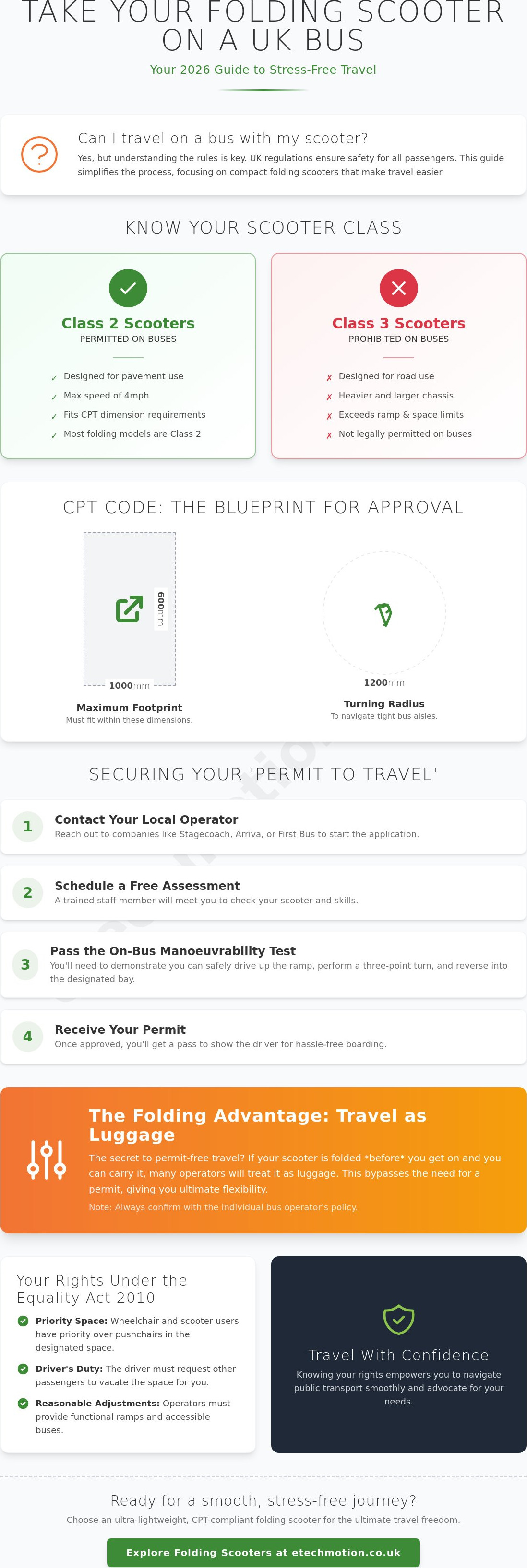
The Confederation of Passenger Transport (CPT) established a voluntary code of practice that most major UK operators adopted to standardise travel for scooter users. This framework ensures that your scooter meets specific safety standards before you attempt to board. According to the code, your scooter must fit within a "footprint" of 600mm wide by 1000mm long, with a maximum turning radius of 1200mm. These dimensions are critical because they match the physical constraints of the designated wheelchair space on standard low-floor buses.
A vital part of these regulations involves UK mobility scooter classifications. Only Class 2 vehicles are permitted on buses. These models are designed for pavement use and have a restricted top speed of 4mph. Class 3 road-legal scooters are strictly prohibited from bus travel because their larger chassis and heavier weight exceed the structural limits of boarding ramps and floor loading capacities. Most modern folding models are Class 2, making them the ideal choice for commuters and day-trippers.
Your Rights Under the Equality Act 2010
The Equality Act 2010 requires bus operators to make "reasonable adjustments" to accommodate disabled passengers. In 2026, this legal standard ensures that newer buses are equipped with functional ramps and clear signage for priority areas. While the space is often shared with pushchairs, a landmark 2017 Supreme Court ruling clarified that wheelchair and scooter users have priority. This ruling means that drivers must take an active role in managing the space rather than leaving it to passengers to negotiate amongst themselves.
Bus drivers have a legal obligation to request that non-wheelchair users, including those with pushchairs, vacate the space if it's required by a mobility scooter or wheelchair user.
Operator Variations: Arriva, Stagecoach, and First Bus
While the CPT code provides a baseline, individual companies like Stagecoach, First Bus, and Arriva maintain their own specific permit schemes. For example, Stagecoach typically requires users to apply for a "Buses and Scooters" permit in advance. This often involves a quick assessment by a staff member to ensure your specific folding model is safe to transport and that you can manoeuvre it confidently. Arriva and First Bus follow similar protocols, often issuing a pass that you show the driver upon boarding. Understanding these local variations is the second half of answering can I take a folding mobility scooter on a bus with total confidence. Always check your local provider's website, as some rural operators may have different ramp weight limits or older vehicle configurations.
The "Permit to Travel" Scheme: Requirements and Assessment
If you're wondering can I take a folding mobility scooter on a bus, the short answer is yes, but you'll usually need a formal permit first. Most UK bus operators, including Stagecoach, Arriva, and First Bus, follow a specific code of practice to ensure everyone stays safe on the road. This system isn't meant to be a hurdle; it's a safety measure that confirms your scooter is compatible with the vehicle's layout and that you can control it effectively in a tight space.
The Confederation of Passenger Transport (CPT) established these guidelines to create consistency across different regions. You can find the full details in the CPT Guide to Mobility Scooters, which outlines the responsibilities of both the passenger and the driver. To apply for a permit, you should contact your local bus operator's customer service team. They'll book a free assessment where a trained staff member meets you to verify your equipment and driving skills. Once you pass, you'll receive a physical or digital pass to show the driver every time you board.
Passing the On-Bus Manoeuvrability Test
During the assessment session, you'll need to prove you can handle your scooter with precision. The assessor will ask you to drive up the bus ramp and enter the designated wheelchair space. You must demonstrate a clean three-point turn within the width of the bus aisle without hitting seats or handrails. Reversing into the wheelchair bay is also a mandatory part of the test. Safety is the priority here. If you can't position the scooter against the backrest or side rail in one smooth motion, the operator won't issue the permit. Securing this permit is the most critical step in answering can I take a folding mobility scooter on a bus with confidence.
Weight and Dimension Constraints
Strict physical limits apply to all scooters used on public transport. Your scooter must be a Class 2 vehicle, as Class 3 road-going models are generally too large. The standard maximum length is 1000mm, with a width limit of 600mm. These dimensions ensure you can clear the entrance and fit into the bay without blocking the gangway for other passengers. If you're looking for a ride that fits these criteria, explore the range of folding mobility scooters at E-Tech Motion.
Weight limits are equally vital for the safe operation of the bus ramp. The combined weight of the user and the scooter must not exceed 300kg. Additionally, your scooter needs a tight turning radius. The industry standard is a 1200mm turning circle. If your device meets all these specs, the assessor will often apply a "Permit Approved" sticker directly to your scooter. This visible marker tells drivers at a glance that your equipment is safe for travel, making your daily commute much faster and easier.
Folding Scooters: The Secret to Stress-Free Bus Travel
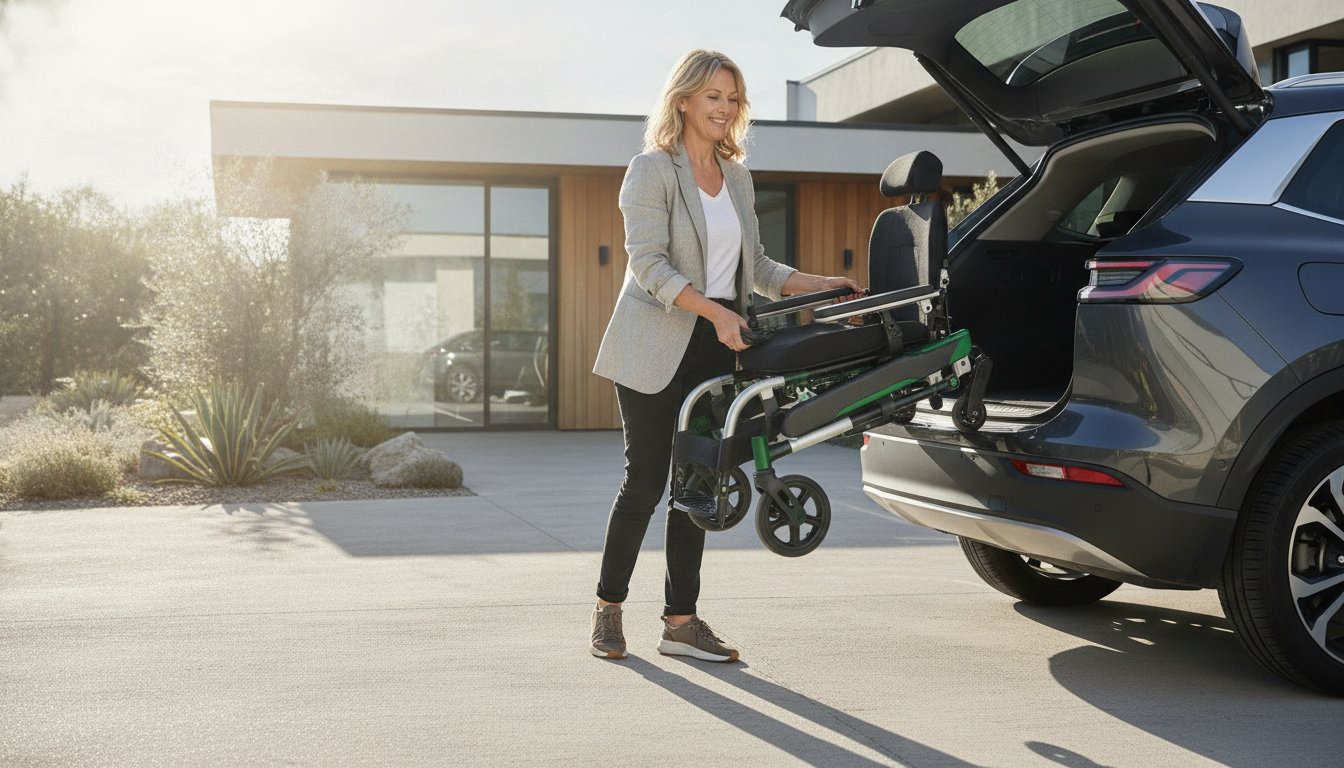
Transitioning between your scooter and a bus often feels like a logistical puzzle. However, folding models simplify the process by shifting the legal category of your device. When you're asking, can I take a folding mobility scooter on a bus, the answer depends largely on its state. Once folded, most UK operators treat your device as personal luggage rather than a mobility aid. This distinction is vital because it often bypasses the strict CPT Permit to Travel scheme required for larger, fixed-frame Class 2 units.
Modern engineering makes this transition possible through lightweight lithium-ion batteries. These advanced power cells reduce the overall machine weight while allowing for a quick, effortless fold at the bus stop. You can store these compact units in several areas:
- Dedicated luggage racks near the front of the bus.
- Under-seat storage spaces on newer fleet models.
- Tucked securely between seating rows if the aisle remains clear.
This flexibility means you aren't reliant on the single designated wheelchair space being empty to board the vehicle. It provides a level of independence that fixed models simply can't match in a crowded urban environment.
When to Fold and When to Ride
Safety should always dictate your choice at the bus stop. If the bus is relatively empty and the driver can lower the ramp, staying seated on your scooter is often the safest way to board, especially on steep kerbs. If you see the wheelchair space is already occupied by a pram or another passenger, folding your scooter ensures you aren't left behind. Signal the driver clearly as they approach. A quick shout of "I'm folding this down" tells the driver you won't need the ramp, speeding up the boarding process for everyone.
Comparing Folding Models to Standard Scooters
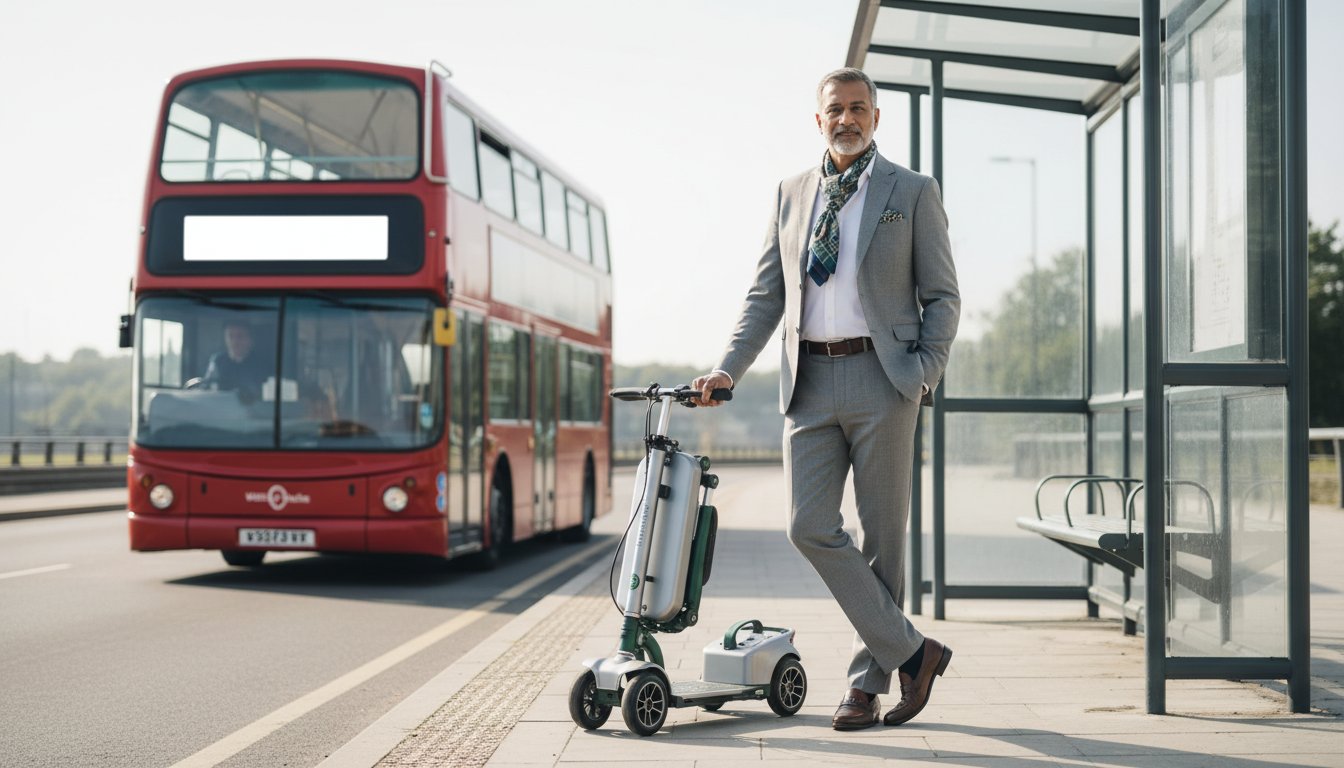
The technical specifications highlight why folding models are the superior choice for frequent commuters. A standard Class 2 unit typically weighs around 60kg, making it impossible to lift or store in a rack. In contrast, high-performance folding models often weigh just 20kg. This weight reduction is a game-changer for accessibility. These models easily fit within the standard 600mm x 1000mm footprint required by UK transport regulations, ensuring you never face a rejection based on size. Legally, a folded scooter is viewed as luggage, similar to a pushchair, which grants you more freedom during peak travel hours. At E-Tech Motion, we focus on these compact dimensions to ensure your 2026 travel plans remain unrestricted and your can I take a folding mobility scooter on a bus queries always end with a yes.
Step-by-Step Guide: How to Board a Bus with Your Scooter
Mastering the transition from the pavement to the bus deck is the final step in reclaiming your local travel independence. When you wonder, can I take a folding mobility scooter on a bus, the answer depends largely on your preparation at the bus stop. Arrive at the stop at least five minutes early and position yourself where the driver can clearly see you. As the bus approaches, give a firm, clear signal. You should stand or sit approximately two metres back from the kerb to give the driver enough space to deploy the ramp without hitting your front wheels.
Once the doors open and the ramp is fully extended, board at a steady, slow pace. Most UK bus operators, including Stagecoach and Arriva, require you to reverse into the designated wheelchair and scooter bay. This ensures your backrest is flush against the padded safety partition. After you're positioned, pay your fare using a contactless card or your concessionary pass to keep the boarding process efficient for other passengers. When it's time to leave, press the bell well in advance of your stop. Wait for the bus to reach a complete standstill and for the ramp to deploy before reversing out carefully.
Communication with the Bus Driver
Clear communication removes the stress from your journey. When the doors open, a simple phrase like, "Hello, I have a CPT permit for this folding scooter, may I use the ramp?" is often all that's needed. Don't feel like a burden; the ramp is a standard accessibility feature designed for your use. If a driver wrongly refuses entry despite you having a valid permit and space being available, stay calm. Note the bus fleet number, the time, and the route. You can later reference the Public Service Vehicles Accessibility Regulations 2000 when contacting the operator's customer service team to resolve the issue.
Battery and Technical Safety
Safety is a non-negotiable part of the green transport revolution. Your scooter must be fitted with a lithium-ion battery that meets UN38.3 safety standards, often referred to as "Flight and Bus Safe" by manufacturers. Once you're parked in the bay, you must turn the power off completely. This prevents accidental acceleration if the tiller is bumped during transit. Ensure your "Free-wheel" lever is in the locked position. A scooter left in free-wheel mode can become a heavy projectile during sudden braking, whereas a locked motor acts as a secondary brake to keep you secure.
Ready to upgrade your commute with a bus-ready solution? Explore our range of lightweight folding mobility scooters designed for UK public transport.
Choosing the Right Folding Scooter for Public Transport
Selecting the perfect model transforms your travel experience from a logistical challenge into a seamless journey. If you've been wondering, "can I take a folding mobility scooter on a bus," the specific technical features of your device provide the definitive answer. You need to prioritise portability without sacrificing the durability required for UK pavements and high-frequency use.
Auto-folding mechanisms use internal motors to collapse the unit at the touch of a button. This is ideal if you have limited hand strength or need to fold the unit quickly as the bus approaches. Manual folding models often save 1kg to 2kg in total weight because they lack those extra motors and wiring. For the easiest transition onto a vehicle, look for ultra-lightweight magnesium or high-grade aluminium frames. These materials keep the total weight manageable while supporting user capacities up to 120kg, ensuring the frame remains rigid and safe over time.
Battery range is another critical factor to weigh up. While a 20-mile range sounds appealing, larger batteries add significant bulk. Most bus users find a 10 to 12-mile range provides the perfect balance. This capacity gives you enough power to reach the stop, navigate your destination, and return home without making the scooter too heavy to lift into a luggage rack.
Top Features for Frequent Bus Users
Bus travel requires specific design choices that go beyond basic mobility. A "Trolley Mode" feature is a game-changer for navigating terminals. It allows you to pull the folded scooter behind you like a flight bag, which is much safer than carrying a 20kg unit through a crowded station. You should also ensure your chosen model uses puncture-proof tyres. Sharp debris at bus stops won't ruin your trip if you have solid, honeycombed rubber wheels that require zero maintenance.
- Compact Dimensions: Ensure the folded footprint fits within the standard 1000mm x 600mm CPT guidelines.
- Lithium-Ion Technology: Provides faster charging times and lighter weight compared to traditional lead-acid batteries.
- Clear Interface: Simple LED displays help you monitor battery life accurately during your commute.
Why UK Support Matters for Your Mobility
Investing in mobility equipment requires long-term peace of mind and local accountability. Etech Motion focuses on providing UK-based expert support to ensure your journey never stops. Every model we stock undergoes rigorous testing to meet UK safety standards and CPT size recommendations. Having a local team for maintenance and warranty claims means you won't wait weeks for overseas parts or technical advice. We design our solutions to bridge the gap between your front door and the bus deck, making "can I take a folding mobility scooter on a bus" a question you can answer with total confidence every morning.
Reclaim Your Independence on Every Journey
Mastering the UK's public transport network is straightforward when you follow the Confederation of Passenger Transport (CPT) Code of Practice. While many regional operators require a formal Permit to Travel assessment, choosing a compact, foldable design often bypasses the most common obstacles faced by larger Class 3 vehicles. You now know that the answer to can I take a folding mobility scooter on a bus is a definite yes, as long as your scooter fits within the standard 600mm by 1000mm floor space allocation. It's about combining the right knowledge with the right equipment to ensure a seamless transition from pavement to platform.
E-Tech Motion is here to support your transition to smarter, electric-powered travel. Our range features safety-tested lithium-ion batteries and ultra-lightweight frames built for the 2026 urban environment. We provide dedicated UK-based expert support to help you choose the perfect model and offer free nationwide delivery on all orders over £500. It's time to stop worrying about logistics and start enjoying the destination. You deserve a commute that's as efficient as it is liberating.
Browse our collection of folding mobility scooters for easy travel and take the first step toward a more accessible future today.
Frequently Asked Questions
Do I need a permit for a folding mobility scooter on a bus?
You generally need a permit card to take a mobility scooter on a bus in the UK. When investigating can I take a folding mobility scooter on a bus, most passengers discover that major operators like Stagecoach and Arriva follow the CPT Code of Practice. This scheme requires a free assessment of your scooter's dimensions and your ability to manoeuvre it safely before you're issued a permit.
What is the maximum size for a mobility scooter on a bus?
The maximum dimensions for a mobility scooter on a UK bus are 1000mm in length and 600mm in width. These measurements align with the standard Reference Wheelchair footprint defined in the Public Service Vehicles Accessibility Regulations 2000. Your scooter must also have a turning radius of no more than 1200mm to navigate the internal layout. Check your E-Tech Motion manual to confirm your folding scooter fits these exact specifications.
Can a bus driver refuse a mobility scooter?
A bus driver can refuse entry if your scooter exceeds the 1000mm by 600mm size limit or if the designated wheelchair space is already occupied. Under the CPT Code of Practice, drivers may also deny access if you don't have a valid permit or if the scooter appears unsafe for travel. Safety remains the priority, so drivers must ensure the gangway stays clear for other passengers during the journey.
Are Class 3 mobility scooters allowed on buses?
Class 3 mobility scooters are typically not allowed on UK buses because they exceed the weight and size limits for public transport. These models are designed for road use, often weighing over 150kg and measuring more than 1200mm long. Most bus operators only permit Class 2 scooters that fit the standard wheelchair footprint. If you're asking can I take a folding mobility scooter on a bus, ensure it's a Class 2 model for guaranteed access.
Is there a weight limit for mobility scooters on public transport?
The combined weight of the passenger and the mobility scooter must not exceed 300kg on most UK bus ramps. This limit is set by the safe working load of the boarding ramp, as specified in the 2017 Supreme Court ruling on transport accessibility. Modern folding scooters from E-Tech Motion are designed to be lightweight, often weighing under 25kg, which helps you stay well within these safety margins while travelling.
Do I have priority over a pushchair in the wheelchair space?
You have legal priority over pushchairs in the designated wheelchair space following the 2017 Supreme Court ruling in FirstGroup PLC v Paulley. This judgment requires bus drivers to take active steps to pressure non-wheelchair users to move if the space is needed. While drivers can't forcibly remove someone, they must make a clear request. Most UK buses now display signs stating that pushchairs must be folded if a scooter user boards.
Can I take my mobility scooter on a coach or long-distance bus?
You can take a folding mobility scooter on a coach if it's stored in the luggage compartment or if the vehicle is specifically adapted for wheelchair use. National Express allows scooters weighing up to 20kg to be carried for free, provided they are folded and dismantled. For use in the cabin, you must book at least 36 hours in advance to ensure the vehicle has a functioning lift and a compatible wheelchair space.