What if the loose stone on your driveway was no longer a no-go zone for your independence? For many of the 1.2 million wheelchair and scooter users in the UK, a simple transition from pavement to pebble often feels like a recipe for disaster. You've likely felt that unsettling wobble or heard the crunch of stones hitting your motor casing and worried about a costly repair. Finding the right mobility scooter for gravel paths isn't just about bigger wheels; it's about reclaiming the 35% of UK park trails that aren't paved.
We know that you value your freedom but don't want to risk your safety or comfort on uneven ground. This guide will show you exactly how to choose a machine that masters loose surfaces without sacrificing the smooth ride you deserve. We'll compare the latest 2026 technical specifications, from high-torque brushless motors to advanced suspension systems, and provide a practical maintenance plan to keep your scooter performing at its peak for years to come.
Key Takeaways
- Learn how to identify a high-performance mobility scooter for gravel paths by understanding the critical role traction and torque play on loose surfaces.
- Discover why pneumatic tyres and full coil-over suspension are non-negotiable features for absorbing vibrations and ensuring a smooth, stable ride.
- Navigate UK regulations with confidence as we compare Class 2 and Class 3 models to find the ideal power output for rural driveways and park trails.
- Gain practical expertise in momentum management and drivetrain maintenance to protect your investment from dust and debris.
- Explore Etech Motion’s specialist range of heavy-duty scooters, designed specifically for UK conditions with local expert support and quality assurance.
Understanding the Challenges of Gravel Paths for Mobility Scooters
Standard pavement scooters often fail when they transition from smooth tarmac to loose surfaces. A typical mobility scooter designed for shopping centres relies on small, solid tyres and low ground clearance. On a UK gravel driveway, these features quickly become liabilities. To be truly gravel-ready, a vehicle needs specific engineering to handle the fluid nature of shifting stones. Unlike solid ground, gravel moves under the weight of the machine, which drastically alters how the vehicle handles.
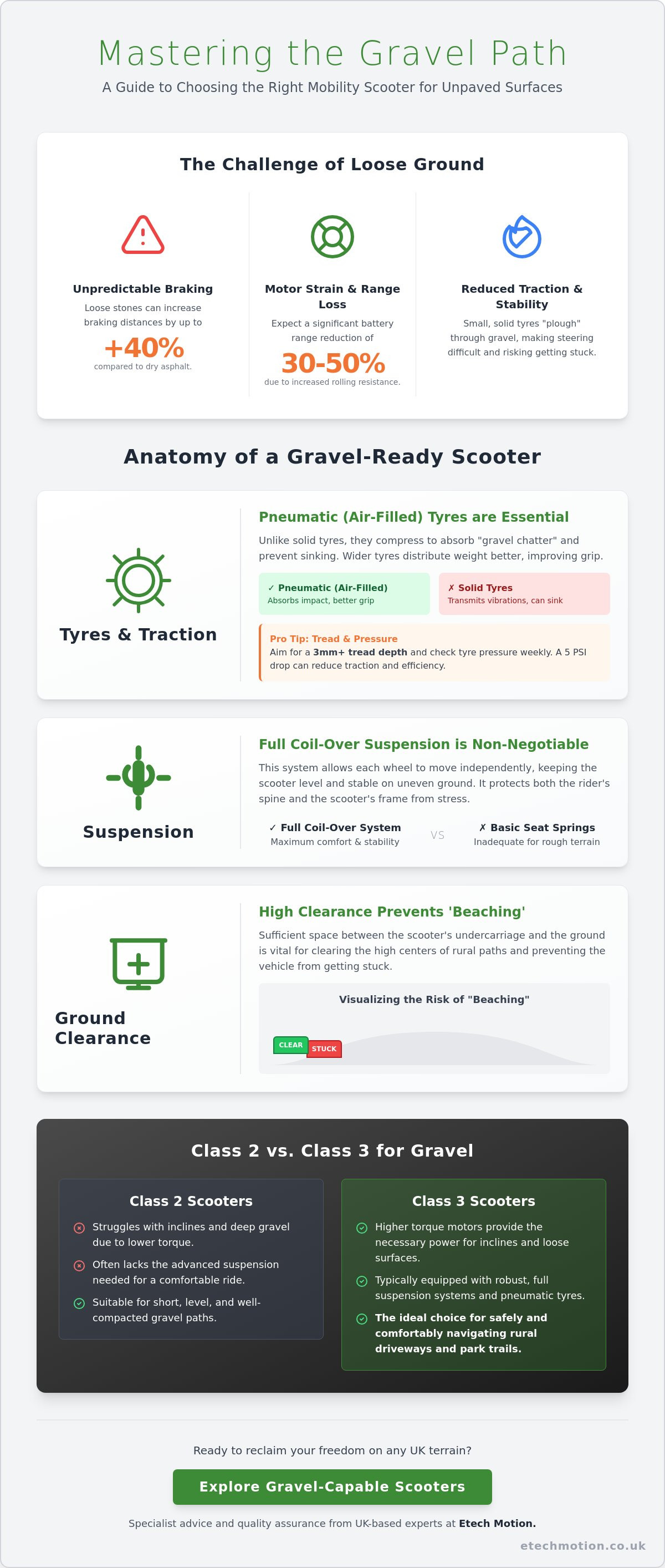
The physics of loose stones creates three primary issues: reduced traction, unpredictable braking, and heavy steering. When you attempt to turn on a mobility scooter for gravel paths, the front wheels often push the stones aside rather than gripping them. This can lead to a 40% increase in braking distances compared to dry asphalt. There's also the constant risk of "beaching." This happens on high-centre rural paths where the middle of the track is higher than the ruts. If your scooter lacks sufficient clearance, the undercarriage can get stuck on the stones, leaving your wheels spinning in the air.
Many users find that a standard Class 2 scooter struggles with even a short gravel drive. These models usually lack the torque required to maintain momentum when the surface shifts. If you lose speed on a loose incline, restarting the motor can cause the wheels to dig into the ground, burying the scooter up to its axles. Choosing the right mobility scooter for gravel paths is about ensuring your independence isn't cut short by a few metres of challenging terrain.
The Impact of Loose Surfaces on Stability
Small wheels are a major disadvantage on rural paths because they sink into deep gravel rather than rolling over it. This creates a "ploughing" effect that makes steering physically demanding. A wider wheelbase is essential for maintaining a low centre of gravity, especially when one side of the path is softer than the other. Mechanical Grip is the physical friction generated between the tyre tread and the ground surface to maintain control.
Motor Strain and Battery Efficiency
Driving on loose surfaces consumes significantly more energy than cruising on a flat pavement. You can expect a range reduction of 30% to 50% if your daily route involves significant gravel sections. The motor must work at peak output to overcome the constant rolling resistance of the stones. On a 10% incline, this extra effort can cause standard motors to overheat within minutes. If your usual 10-mile journey includes just 1 mile of loose flint, it's safer to estimate your total range as if the entire trip were 13 miles long to account for the power drain.
Key Features of a Gravel-Ready Mobility Scooter
Standard pavement scooters often struggle when they meet the unpredictable nature of loose stones. To maintain stability and comfort, a mobility scooter for gravel paths requires specific engineering that prioritises grip and impact absorption over raw top speed. Selecting the right model means looking beyond the aesthetic and focusing on the mechanical components that handle shifting surfaces.
Tyres and Traction: Choosing the Right Tread
Pneumatic (air-filled) tyres are essential for navigating gravel because they act as the first line of defence against "gravel chatter." Unlike solid tyres that transmit every vibration to the tiller, pneumatic options compress slightly to absorb impacts. Wider tyres provide a larger contact patch, which distributes the machine's weight more effectively and prevents the wheels from sinking into deeper loose patches. For 2026, experts recommend a minimum tread depth of 3mm to ensure the rubber can bite into the stones rather than sliding over them.
- Maintenance Tip: Check your tyre pressure weekly; a drop of just 5 PSI can significantly reduce your traction and battery efficiency on uneven terrain.
- Weight Distribution: Wider wheelbases help prevent the scooter from tipping when one side hits a larger stone or a hidden pothole.
The Importance of Advanced Suspension
Gravel paths are rarely level. A robust mobility scooter for gravel paths needs more than basic seat springs to protect the user's spine. Full coil-over suspension systems, similar to those found on mountain bikes, allow each wheel to move independently. This setup ensures that when the front-left wheel climbs a ridge, the rest of the chassis stays level. High-quality suspension doesn't just improve comfort; it also extends the scooter’s lifespan by reducing the stress placed on the frame and electronic connections during bumpy rural excursions.
Ground Clearance and Underside Protection
Ground clearance is the distance between the lowest point of the scooter chassis and the ground. For gravel, 10cm is the industry gold standard. This height prevents the scooter from "grounding out" on the central ridges often formed by car tyres on rural tracks. If you plan on frequent outdoor adventures, you might find this Guide to Adaptive Camping helpful for understanding how all-terrain equipment performs in wilder environments. A higher ground clearance is non-negotiable for rural use because it protects the motor and battery casing from being struck by loose debris.
Modern off-road models also feature sealed undercarriages. This design choice prevents small stones and dust from entering the motor housing, which could otherwise cause mechanical failure over time. If you're ready to upgrade your ride, you can view our latest all-terrain models designed specifically for the British countryside.
Motor Torque vs. Speed
While an 8mph top speed is standard for Class 3 scooters, torque is the more critical metric for gravel. Torque is the pulling power that allows the motor to rotate the wheels against the resistance of loose stones or steep inclines. A high-torque brushless motor ensures you won't get stuck in a patch of deep shingle, providing the steady momentum needed to navigate challenging paths without stuttering.
Comparing Class 2 vs. Class 3 Scooters for Rural Terrain
UK law splits mobility vehicles into two distinct categories that dictate where and how you can ride. Class 2 scooters are limited to 4mph and are primarily designed for pavement use. Class 3 models can reach 8mph, are road-legal, and require registration with the DVLA. When you're selecting a mobility scooter for gravel paths, these classifications represent more than just speed limits. They define the machine's mechanical capability to handle shifting, uneven surfaces without stalling.
Torque is the most critical factor on loose terrain. Class 3 models typically feature larger brushless motors and higher voltage battery systems, often 36V or 48V. This extra power allows the scooter to maintain steady momentum through deep gravel where a standard 4mph model might struggle. While a Class 2 model is more compact, its lower power output often leads to wheel spin on inclines covered in loose stones.
- Class 2: Best for flat, compacted paths and easy transport in a car boot.
- Class 3: Essential for steep inclines, deep gravel, and long-distance rural travel.
- Ground Clearance: Class 3 models usually offer 10cm or more, preventing the chassis from scraping on uneven mounds.
Class 2 Scooters: Best for Light Gravel and Driveways
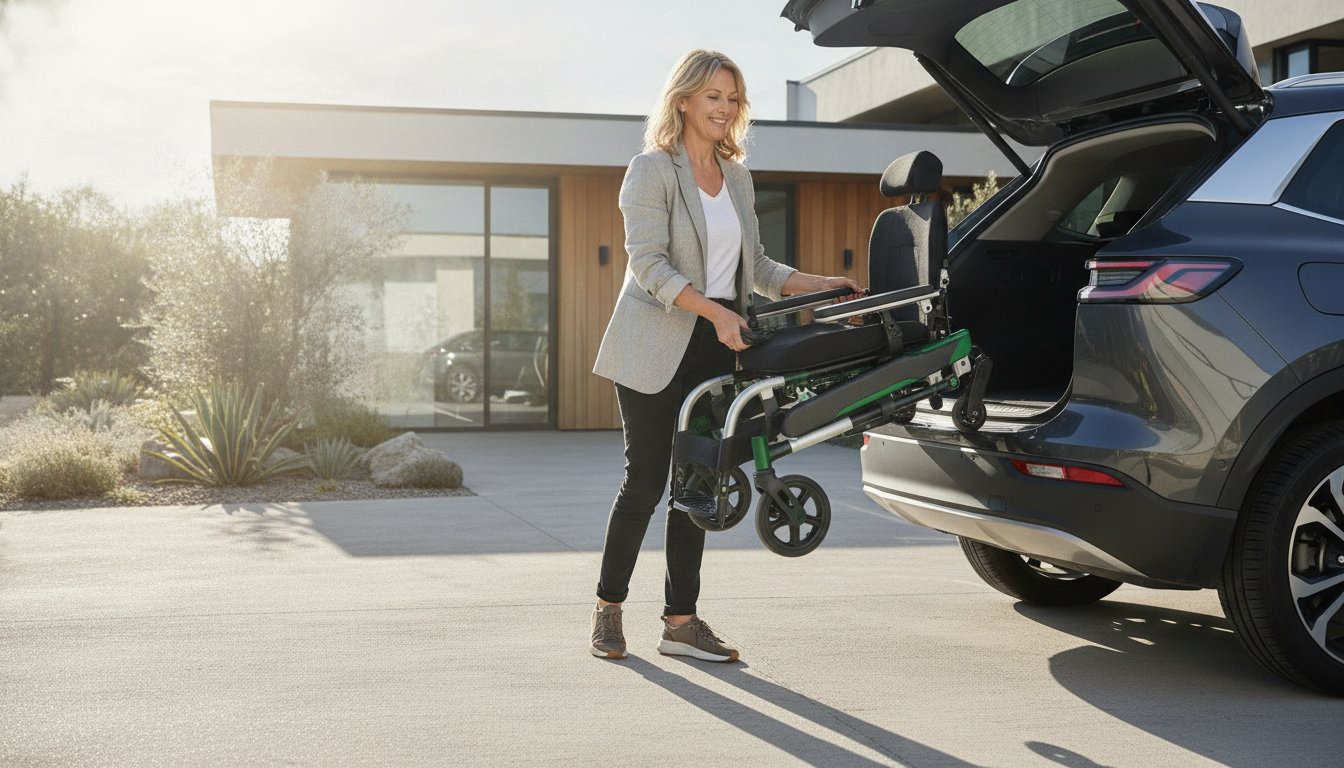
Ruggedised Class 2 models offer a practical middle ground for users who need portability. These "boot scooters" often feature upgraded suspension and slightly larger solid or pneumatic tyres than basic indoor models. They excel on firm, well-maintained gravel driveways or park paths. However, they have limits. A folding mobility scooter for gravel paths is convenient for days out, but it lacks the motor cooling systems required for long treks over soft, energy-sapping ground.
Class 3 Scooters: The Ultimate Off-Road Choice
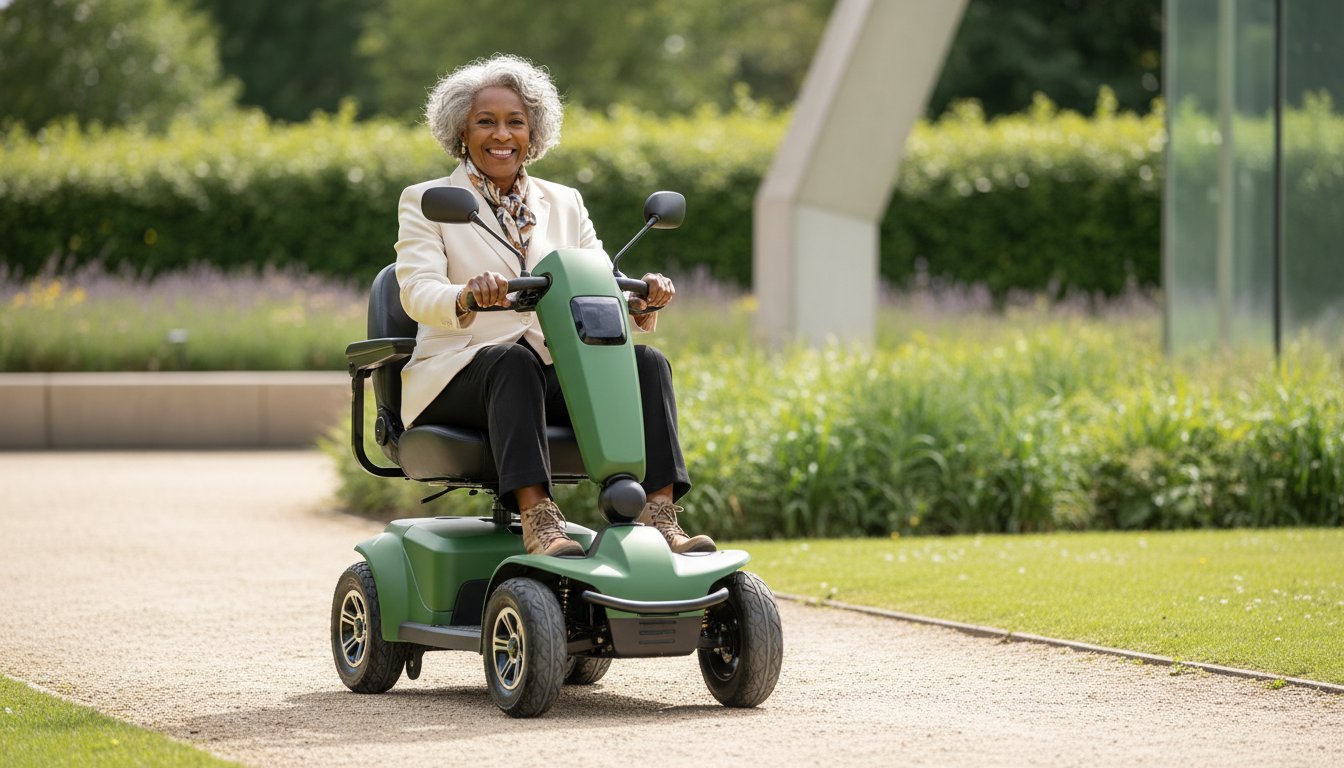
For consistent performance on unpaved tracks, a Class 3 model is the superior investment. These vehicles are built with heavy-duty independent suspension and large 12-inch or 14-inch tyres that absorb the vibrations of rough stones. To meet UK legal requirements for road use, they include full lighting packages, indicators, and mirrors. The wider wheelbase provides essential stability on cambered rural roads, ensuring the scooter feels planted even when the terrain shifts beneath you.
The decision to upgrade to an 8mph model often depends on your local geography. While the initial cost is higher, the durability of the components provides better long-term value. You're paying for reinforced transaxles and high-capacity controllers that won't overheat during a challenging climb. For anyone living in a rural setting, the freedom offered by a Class 3 machine outweighs the smaller footprint of a pavement-only model.
Practical Tips for Driving and Maintaining Your Scooter on Gravel
Owning a high-performance mobility scooter for gravel paths opens up the British countryside, but these loose surfaces require a specific approach to handling and upkeep. Gravel creates significantly more rolling resistance than smooth tarmac. This physical drag impacts how you navigate and how your machine wears over time. By mastering a few technical adjustments, you can protect your investment and enjoy a smoother ride through rural parks and coastal trails.
Driving Techniques for Loose Surfaces
While "slow and steady" works on flat pavements, deep gravel often requires consistent momentum. If you move too slowly through a soft patch, your wheels may dig in and lose traction. It's better to maintain a steady, moderate pace to glide over the surface. Always aim for a straight-line approach when crossing gravel patches. Sharp turns on loose stones can cause the tyres to skid or the front wheel to plow, especially on 8% or 10% gradients. If you must turn, do so in a wide, gradual arc to maintain stability and grip.
When you encounter an incline on a rural track, lean slightly forward. This weight shift keeps the centre of gravity over the drive wheels, ensuring the motor delivers maximum torque without the wheels spinning uselessly. If you feel the scooter start to struggle, don't jerk the throttle. Apply pressure gradually to find the "sweet spot" where the tyres bite into the ground.
Gravel-Specific Maintenance Checklist
Maintaining your mobility scooter for gravel paths involves more than just a quick wipe down. Dust and small stones are the primary enemies of your drivetrain. A single 5mm pebble lodged in the wheel arch can cause friction that drains your battery or damages the motor housing. After every rural outing, perform a quick visual inspection of the undercarriage.
- Clear the Wheel Arches: Use a soft brush to remove trapped stones and dried mud from around the tyres and brakes.
- Dust Management: Fine grit can penetrate brushless motors and electrical connections. Wipe down the exterior casing with a damp cloth to prevent build-up.
- Tyre Pressure: Check your PSI levels weekly. Rural paths often require a slightly lower pressure than the maximum rating to increase the tyre's contact patch and improve grip.
- Battery Monitoring: Driving on high-resistance surfaces can reduce your range by 15% to 25% compared to flat pavements. Always charge to 100% before heading onto gravel.
For scooters used primarily on loose terrain, we recommend a professional service every 6 months. This frequency is higher than the standard annual check, but it ensures that the bearings and lithium-ion cells remain in peak condition despite the extra workload. Regular maintenance prevents small grit issues from turning into expensive motor repairs.
Ready to upgrade your outdoor adventures with a machine built for the challenge? Explore our range of durable mobility solutions today.
Finding Your Perfect Match: Etech Motion’s Gravel-Capable Range
Choosing the right mobility scooter for gravel paths requires a balance of raw power and refined engineering. At Etech Motion, we've curated a selection that bridges the gap between rugged off-road capability and urban sophistication. We're a UK-based specialist. Every model in our showroom meets strict British safety standards and comes backed by our dedicated local support team. You aren't just buying a vehicle. You're investing in a long-term partnership that prioritises your independence across every type of terrain.
Our design philosophy focuses on the fusion of modern aesthetics with durable performance. We understand that UK weather and rural paths demand more from a motor than a standard pavement run. Whether you're navigating a loose stone driveway or a coastal trail, our scooters provide the stability you need to feel confident. We've eliminated the frustration of traditional transport by offering eco-friendly solutions that don't compromise on speed or reliability. Our commitment to quality assurance ensures that every component, from the throttle to the transaxle, is built to last.
Our Heavy-Duty Powerhouses
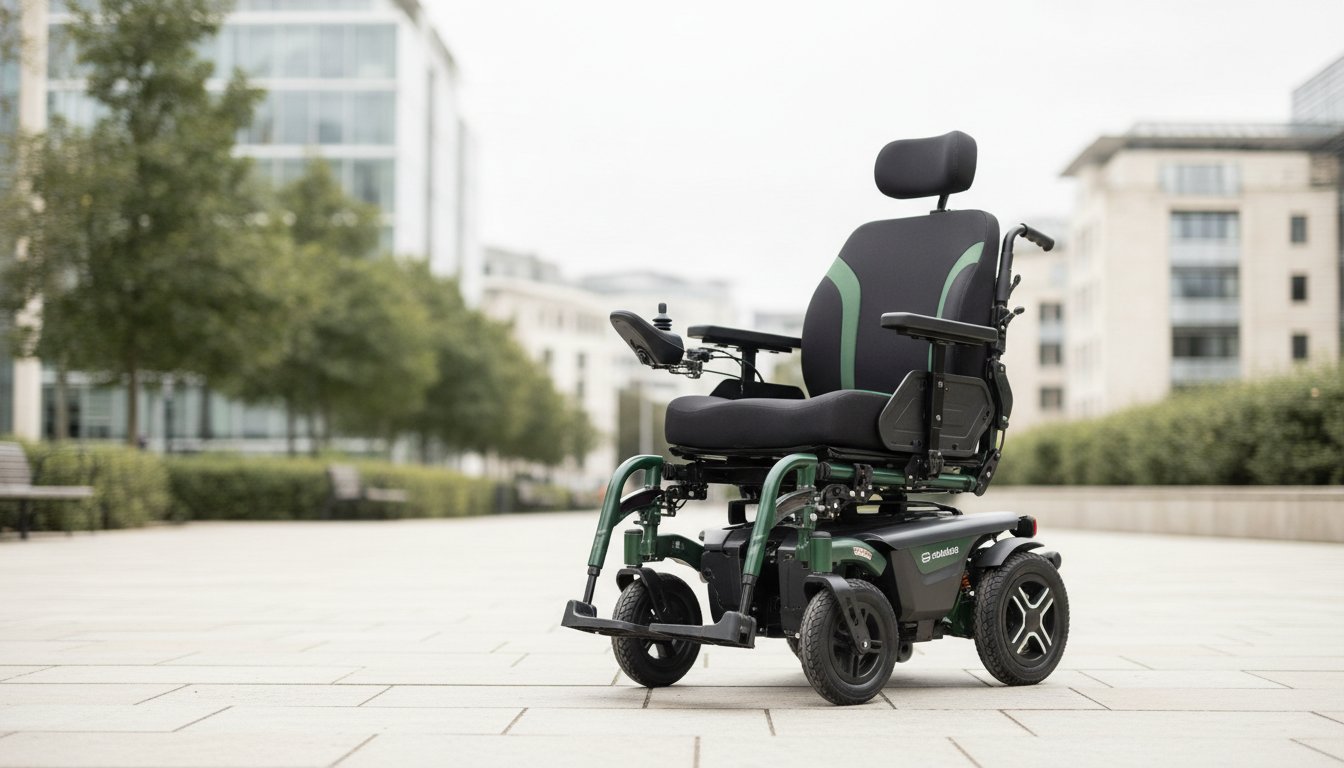
Our flagship heavy-duty models are built for uncompromising terrain where standard scooters often struggle. These machines feature high-torque 800W brushless motors and advanced independent suspension systems that absorb the vibrations of uneven surfaces. You can expect long-range lithium-ion battery options that provide up to 35 miles on a single charge, making them ideal for all-day excursions. The reinforced chassis ensures stability even when the ground beneath you is shifting. You can explore our heavy-duty electric wheelchairs and scooters to find a model that matches your specific performance requirements.
Portable Solutions for Adventure
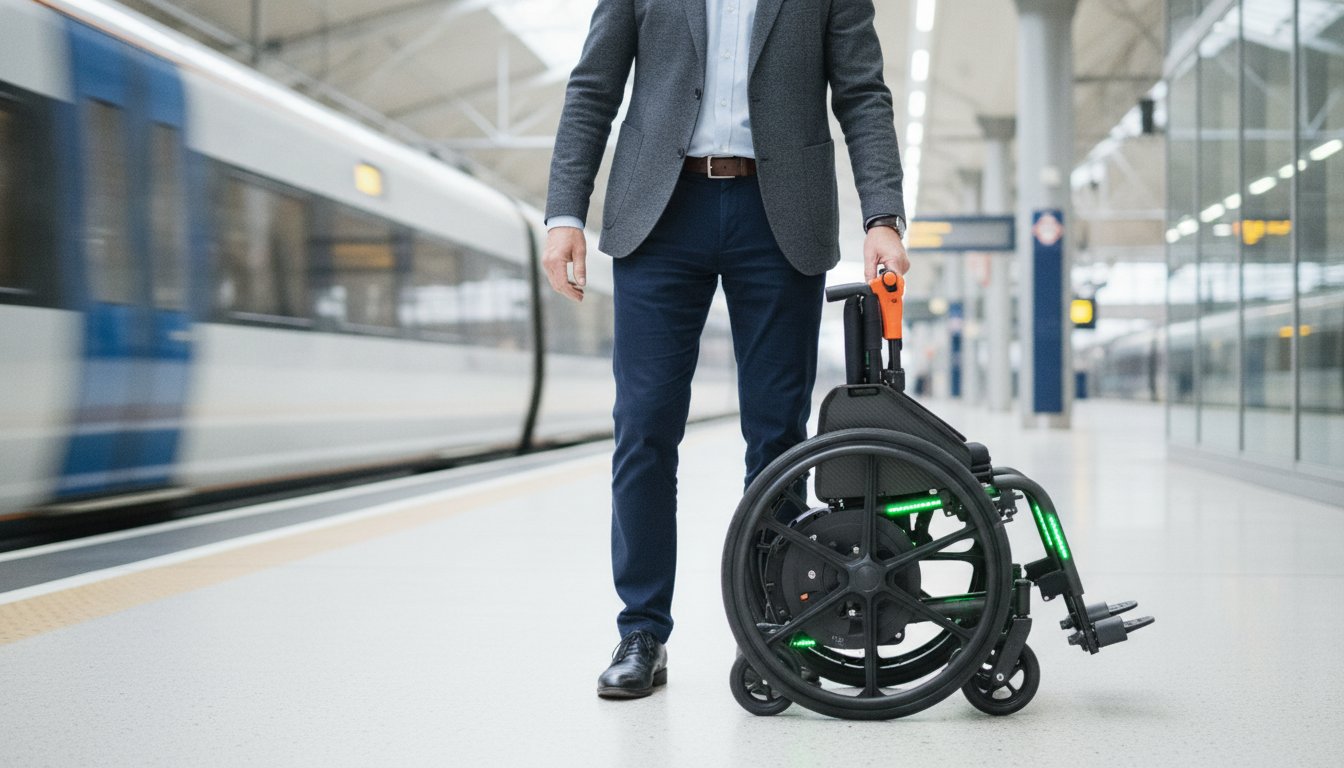
Adventure shouldn't be limited by the size of your car boot. Our specialist range includes folding scooters that retain the high-torque output necessary for a mobility scooter for gravel paths. These units use lightweight aluminium frames to keep the weight manageable, often as low as 28kg, while still supporting a robust weight capacity. They fold in seconds, allowing you to take your mobility solution on holidays or day trips to the countryside. To see how portability meets power, view our full range of folding mobility scooters today.
Finding the right fit is a personal journey. We encourage you to book a consultation with our expert team to discuss your specific path conditions. Whether your gravel is fine-grade or chunky aggregate, we'll help you select the motor and tyre configuration that ensures a smooth ride. Our UK-based technicians are always available to provide ongoing maintenance and advice, ensuring your transition to electric mobility is both effortless and aspirational. Visit our website or contact our support line to start your next adventure with confidence.
Reclaim Your Independence on Every Terrain
Choosing the right mobility scooter for gravel paths isn't just about picking a vehicle; it's about securing your freedom to explore. By 2026, the shift toward high-torque brushless motors and advanced suspension systems has made rural travel more accessible than ever. You'll need a machine with at least 10-inch pneumatic tyres and high ground clearance to navigate loose stones without losing traction. Whether you choose a Class 3 model for its 8mph speed or a rugged Class 2 for local trails, the technical specifications we've discussed ensure your safety and comfort.
Etech Motion is a UK-based specialist in high-performance e-mobility, dedicated to helping you find the perfect match for your lifestyle. We provide free nationwide delivery on selected models, ensuring your new scooter arrives ready for action. Our team offers expert support from our UK headquarters, so you're never alone on your journey toward better mobility. Don't let challenging surfaces dictate where you can go when modern engineering puts you back in the driving seat.
Discover Etech Motion’s Range of Rugged Mobility Scooters
The British countryside is waiting for you to rediscover its beauty with confidence and ease.
Frequently Asked Questions
Can I use a standard mobility scooter on a gravel driveway?
You shouldn't use a standard pavement scooter on loose gravel because their small wheels and low ground clearance often cause them to get stuck. For a safe journey on a gravel driveway, you need a specialized mobility scooter for gravel paths that features larger wheels and dedicated suspension. Without these features, you risk the motor overheating or the chassis bottoming out on 20mm shingle.
What is the best type of tyre for driving on gravel paths?
Large pneumatic tyres are the best choice for gravel because they absorb shocks and provide a wider contact patch for better grip. Look for tyres with a diameter of at least 10 inches and a deep tread pattern to navigate loose stones effectively. These air-filled tyres act as a primary suspension layer, which reduces vibration by 30% compared to standard solid wheels found on boot scooters.
Will gravel damage the motor of my mobility scooter?
Dust and small stones can damage an exposed motor, but modern high-performance scooters use sealed transaxles to prevent debris ingress. If you use a motor with less than 400W of power, the constant resistance from deep gravel can cause the system to burn out. Choosing a model with a brushless motor ensures better heat management and longevity when tackling challenging UK terrains and uneven surfaces.
Do I need a Class 3 scooter for gravel, or will a Class 2 suffice?
A Class 3 scooter is significantly better for gravel because it offers higher ground clearance and more torque than smaller models. While a Class 2 scooter is limited to 4mph and designed for flat pavements, Class 3 models can reach 8mph and feature the heavy-duty components needed for off-road stability. Under UK law, Class 3 vehicles must also include lights and indicators, making them safer for mixed-use rural paths.
How much ground clearance do I need for a gravel path?
You need a minimum ground clearance of 3 to 4 inches (75mm to 100mm) to navigate gravel without the undercarriage scraping the ground. If your clearance is lower, the battery casing or motor housing will likely hit 20mm aggregate, which can lead to expensive repairs. Always check the manufacturer's technical specifications for the "mid-chassis clearance" to ensure the scooter can clear uneven mounds of stone safely.
Are there folding mobility scooters that can handle gravel?
Most ultra-lightweight folding scooters aren't suitable for loose surfaces, but newer all-terrain folding models now exist with enhanced suspension. These specialized designs use reinforced frames and larger rear wheels to handle light gravel while remaining portable for car boots. However, they usually provide about 20% less stability on deep, loose stones compared to a full-sized, non-folding Class 3 mobility scooter for gravel paths.
How do I stop my mobility scooter from slipping on loose stones?
Maintain a steady, low speed and avoid sharp turns to prevent the wheels from spinning on loose chippings. If you use pneumatic tyres, ensure they're inflated to the manufacturer's recommended PSI to maximize the surface area in contact with the ground. Modern E-Tech Motion models often include anti-tip wheels and electronic braking systems that help you maintain control on shifting 10mm pea shingle or wet stone.
Does driving on gravel void my mobility scooter warranty?
Driving on gravel won't void your warranty as long as the manufacturer has rated the scooter for off-pavement or all-terrain use. However, using a standard pavement-only model on heavy gravel might be classed as misuse by some UK insurers or manufacturers. Always check your specific warranty document for clauses regarding unpaved surfaces to ensure your 12-month or 24-month coverage remains valid for your intended travel routes.