
What if the mobility aid meant to support you is actually the biggest obstacle to your daily freedom? For many of the 6.7 million people in the UK living with mobility limitations, a clunky or unstable frame makes a simple walk to the local chemist feel like a daunting expedition. You've likely felt that flash of anxiety when navigating a cracked pavement or a steep kerb, worrying that your equipment might fail when you need it most. Selecting a premium 4 wheeled walker shouldn't be a confusing chore. It's about finding a reliable partner that offers the perfect blend of lightweight agility and rock-solid stability for your lifestyle.
We know you value your independence and want to move through your community without the fear of falling or the struggle of lifting heavy gear. This guide will show you exactly how to choose the perfect 4 wheeled walker by comparing outdoor performance, frame weight, and brake responsiveness to help you regain your confidence. We'll provide a clear breakdown of the best 2026 models to ensure you get exceptional value for money while staying active and secure.
Key Takeaways
- Understand why the superior stability and wider support base of a 4 wheeled walker offers greater reliability than 3-wheeled alternatives for daily use.
- Compare essential braking systems and wheel specifications to ensure your mobility aid handles everything from smooth hallways to uneven British pavements.
- Learn how to master local terrain by selecting puncture-proof tyres and larger wheels designed to tackle kerbs and tactile paving with ease.
- Discover why investing in high-quality engineering and UK-based support ensures long-term reliability and effortless access to spare parts.
- Identify the critical features that transform a simple walking frame into a lifestyle-enhancing tool for regained independence and outdoor confidence.
Defining the 4-Wheeled Walker: More Than Just a Walking Frame
A 4 wheeled walker, frequently called a rollator, represents a significant leap in mobility technology. Unlike the static frames of the past, these devices feature four wheels, hand-operated brakes, and a built-in seat. This design provides continuous support. You don't have to lift the frame with every step. This fluid motion is vital for users who experience fatigue or breathlessness. The evolution from the original 1940s Walker (mobility) to modern aluminium designs has transformed daily life. Today's models often weigh under 8kg, making them easy to transport while remaining sturdy enough for outdoor use.
The integrated seat offers a massive psychological boost. Knowing you can rest at any moment reduces the anxiety associated with longer trips. It's a "seat anywhere" solution that encourages users to stay active for longer. This confidence is essential for maintaining an independent lifestyle in busy urban environments.
How Rollators Differ from Standard Walking Frames
Standard frames require a "stop-start" movement. You lift, move, and then lean. This pattern often disrupts a natural gait and can cause poor posture. A rollator allows for a smooth, walking pace. It's the preferred choice for the 1.2 million people in the UK living with COPD who need to maintain momentum without overexertion. The 4-wheel configuration offers the highest level of stability for those with significant balance issues, providing a consistent base of support that moves with the user.
The Anatomy of a Modern Mobility Walker
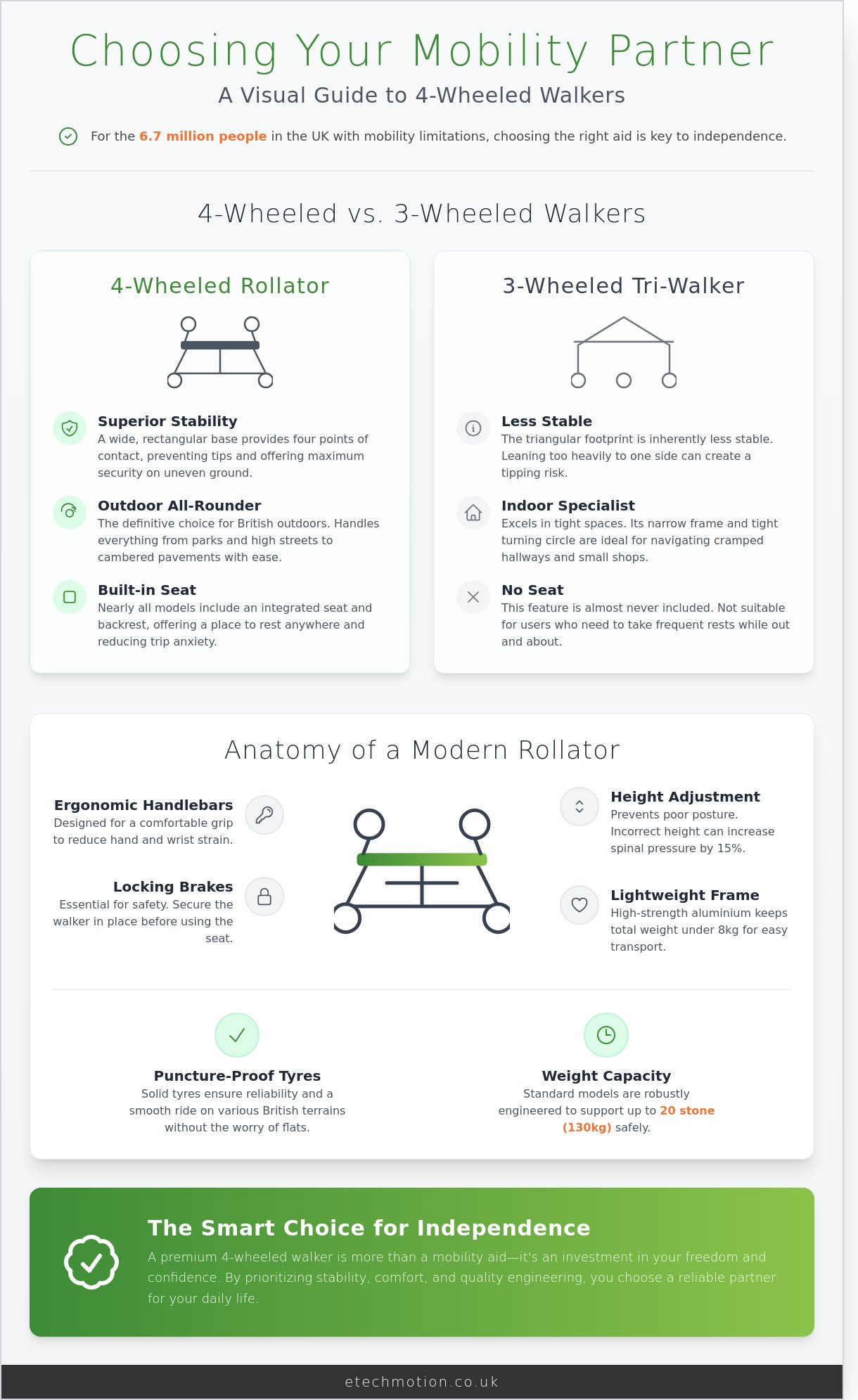
Every 4 wheeled walker consists of a lightweight frame, puncture-proof wheels, ergonomic handlebars, and a locking brake system. Spinal health depends on adjustable handle height. Setting the handles too low can increase spinal pressure by up to 15%. Most modern units support a weight capacity of 130kg, ensuring safety for a wide range of body types. These components work together to provide a reliable, controlled experience on various surfaces. Key features include:
- Aluminium Frame: High-strength material that keeps the device under 8kg for easy lifting.
- Locking Brakes: Essential for safety when using the device as a seat.
- Height Adjustment: Ensures the user maintains an upright posture to prevent back pain.
- Weight Capacity: Standard models typically support up to 20 stone (130kg) to accommodate most users safely.
4-Wheeled vs 3-Wheeled Walkers: Which Suits Your Lifestyle?
Selecting the right mobility aid depends on where you intend to travel and how much support your body requires. A 3-wheeled walker, often called a tri-walker, features a single front wheel that pivots easily. This design creates a narrow frame, perfect for navigating the tight 75cm doorways found in many traditional UK terrace houses. However, the triangular footprint is inherently less stable than a rectangular one. A 4 wheeled walker provides four distinct points of contact with the ground, creating a much larger support base that prevents the device from tipping if you lean too heavily to one side.
Manoeuvrability is the primary strength of the 3-wheeler. It boasts a tighter turning circle, making it ideal for cramped Victorian hallways or busy cafes. In contrast, 4-wheeled models offer a more reliable, "planted" feel. They don't veer as easily on cambered pavements, which is essential for maintaining a straight line on sloped urban streets. Following Official walker safety tips ensures you maintain the correct posture regardless of which model you choose.
Comfort is another deciding factor. Most 4-wheeled rollators include a built-in seat and backrest, allowing you to take a break whenever fatigue sets in. 3-wheelers almost never include this feature. If you're planning a trip to a busy shopping centre or a long walk through a local park, having a guaranteed place to sit is a game-changer for your independence.
When to Choose a 3-Wheeled Walker
These models excel in indoor environments. Because they often weigh between 5kg and 7kg, they're easy to lift into a car boot or pull onto a bus. They typically fold into a compact "bolt" shape, taking up minimal space in a small hallway. With prices often starting around £60, they represent an affordable option for those who only need a light touch of balance support while moving between rooms.
Why the 4-Wheeled Rollator Wins for Outdoor Independence
The 4 wheeled walker is the definitive all-rounder for the British outdoors. Its superior balance handles uneven surfaces, such as cracked paving slabs or gravel paths, with far more grace than a 3-wheeler. Safety is significantly higher when you need to lean on the handles for a rest, as the four wheels distribute your weight evenly. If you want to view our range of mobility aids, you'll see how modern engineering has made these robust units surprisingly agile. They provide the confidence needed to tackle 2-mile walks without the fear of losing balance on a kerb.
Essential Features to Compare Before You Buy
Selecting a 4 wheeled walker involves more than just picking a colour. It's about matching technical specifications to your daily Birmingham routes. A reliable Mayo Clinic's guide to choosing a walker suggests that fit and function are paramount for long-term safety and independence. You need a device that handles the transition from smooth shopping centre floors to the textured pavements of the city centre without compromising your stability.
Braking systems are your primary safety tool. Most models use loop-lock brakes, which you squeeze like a bicycle brake to slow down. For those with limited hand strength, push-down weight-activated brakes are an alternative. These engage automatically when you apply downward pressure on the frame. Wheel size also dictates your comfort. While 6-inch wheels work well indoors, 8-inch (20cm) puncture-proof wheels are far superior for outdoor terrain. They glide over pavement cracks and small stones that might stop smaller wheels in their tracks.
Frame material impacts both durability and ease of use. Aluminium is the gold standard for modern mobility aids because it offers a high strength-to-weight ratio. While steel frames are often cheaper, they can be 3kg to 5kg heavier, making them harder to manoeuvre up kerbs. Don't overlook the seat. A padded seat with a sturdy backrest turns your 4 wheeled walker into a mobile rest station, which is a non-negotiable feature for anyone managing fatigue during longer walks.
Brake Safety and Hand Strength
Test the brake levers before you commit. You should be able to squeeze them fully without pain or excessive strain. The parking brake function is vital; you click the levers downward until they lock, ensuring the walker won't roll away when you sit down. Check your brake cable tension every 12 weeks. If the walker moves even slightly while the parking brake is engaged, the cables require a quick adjustment to maintain safety.
Weight and Portability Considerations
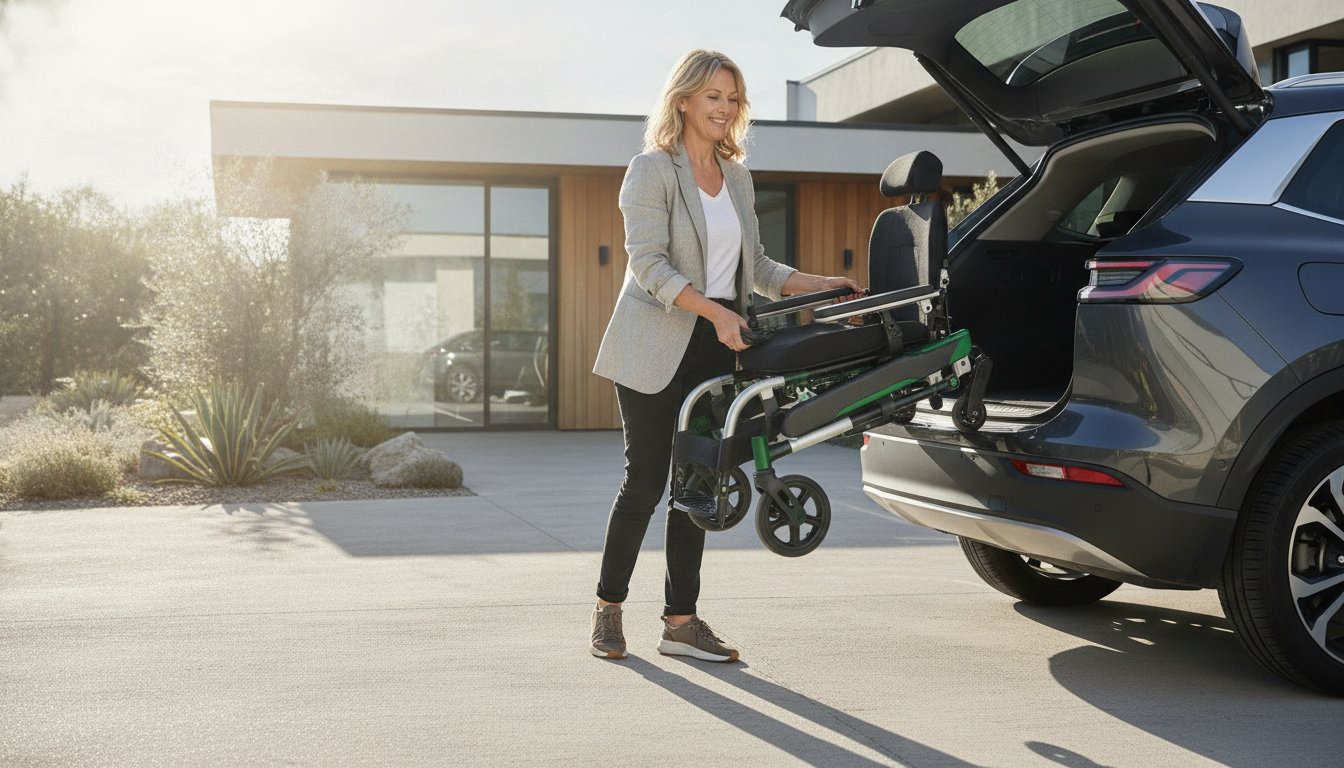
A truly lightweight rollator typically weighs between 6kg and 8kg. This weight range makes it easier to lift the frame over door thresholds or into a car. Side-folding mechanisms are increasingly popular because the walker stays upright when folded, making it easier to store in narrow hallways. Front-to-back folding models are often more compact but may require you to lean them against a wall. Always measure your car boot before buying. A standard hatchback boot is approximately 100cm wide, so ensure your chosen model leaves room for the weekly shop.
Indoor vs Outdoor Use: Matching Your Walker to British Terrain
Choosing a 4 wheeled walker requires balancing the rugged demands of Birmingham’s Victorian-era pavements with the tight corners of a traditional British semi-detached home. UK streets present unique obstacles; tactile paving at crossings can create significant vibration, while kerbs often reach heights of 150mm. To handle these surfaces without constant jarring, look for models featuring puncture-proof polyurethane (PU) tyres. These wheels won't go flat on gravel and provide better shock absorption than hard plastic alternatives found on budget models.
Many modern walkers now include 'kerb climbers' as standard. These are small step-pedals located near the rear wheels. By pressing down with your foot, you can tilt the front of the frame upward, making it easier to clear uneven pavement slabs or small door thresholds without lifting the entire unit. Indoors, the priorities shift toward agility. You'll need non-marking tyres to protect wooden floors and a frame width that comfortably fits standard 762mm UK internal doorways.
Navigating the Great Outdoors Safely
Rough terrain causes hand fatigue over time. Soft-grip ergonomic handles can reduce the vibration felt by the user by approximately 25%, which is vital for longer walks through places like Cannon Hill Park. Visibility is equally critical for safety. Since the UK experiences sunset as early as 3:51 PM in December, ensure your walker has integrated reflectors or high-visibility accents. A weatherproof, 20-litre storage bag is also essential for keeping shopping dry during sudden West Midlands rain showers.
Adapting Your Home for a 4-Wheeled Walker
Safety starts with the floor. Remove loose rugs or secure them with non-slip tape to prevent the wheels from catching. You should identify 'turning zones' in high-traffic areas like the kitchen; a 4 wheeled walker typically needs a 1.2-metre clear radius to turn 180 degrees comfortably. For transporting meals, many users attach a clip-on tray. This converts the walker into a stable trolley, allowing you to move tea or dinner from the kitchen to the lounge without the risk of spills or trips.
Why Quality Engineering is the Best Investment for Mobility
Choosing a mobility aid is often a choice between a short-term fix and a long-term solution. While a budget model might save you £40 at the point of purchase, the hidden costs of poor engineering quickly surface on Birmingham's uneven pavements. A high-quality 4 wheeled walker offers a robust frame and superior bearings that withstand the daily vibrations of urban life. Etech Motion applies the same rigorous safety standards to our manual aids as we do to our advanced electric wheelchairs; ensuring every weld and bolt meets strict UK durability requirements.
Reliability means more than just a sturdy frame. It's about knowing that if a brake cable snaps or a wheel wears down after years of use, you won't have to scrap the entire unit. We maintain a full inventory of spare parts at our UK warehouse. This local accountability ensures your investment remains functional for years rather than months. We view these tools as essential instruments for active ageing. They provide the stability needed to visit the Bullring or meet friends at Cannon Hill Park, turning a walk into a social opportunity rather than a physical challenge.
Etech Motion’s Commitment to UK Mobility
We've designed our product range to bridge the gap between simple mechanical aids and high-tech electric transport. Our team provides expert advice to help you decide if a lightweight 4 wheeled walker or a power-assisted model best fits your specific gait and strength levels. Every design undergoes user testing to ensure it handles 20mm pavement lips and gravel paths without compromising your balance. We categorise our equipment by clear specifications, such as a 136kg weight capacity or 20cm puncture-proof tyres, so you can find a match for your physical needs without the guesswork.
Taking the Next Step Toward Freedom
Reclaiming your independence starts with having the right equipment by your side. You can browse our full range of walking aids online to find a model that fits your lifestyle. Don't forget that if you have a chronic condition or a registered disability, you're likely eligible for VAT relief. This 20% saving makes premium engineering even more accessible for those who need it most. Investing in a reliable walker isn't just about moving from A to B; it's about the confidence to explore your community on your own terms. Take that first step today and rediscover the joy of effortless movement.
Step Into a More Mobile Future
Choosing the right mobility aid is a decision that impacts every aspect of your daily life. A premium 4 wheeled walker offers approximately 30% more stability than a 3-wheeled alternative, making it the superior choice for navigating the diverse British landscape. By prioritising advanced engineering and ergonomic design, you're not just buying a tool; you're investing in a lifestyle that values 100% independence and safety. Whether you're traversing local parks or navigating tight indoor spaces, the right rollator ensures you don't have to compromise on your activity levels.
At E-Tech Motion, we're specialists in advanced mobility engineering, dedicated to providing equipment that meets rigorous safety standards. Our team provides expert UK-based support to guide your purchase; we also offer nationwide delivery on all walking aids to simplify your journey. It's time to stop letting mobility challenges dictate your schedule and start exploring the world on your own terms. Explore our range of high-quality mobility walkers and reclaim your independence today. Your next adventure is waiting, and we're here to help you reach it with confidence.
Frequently Asked Questions
Can I get VAT relief on a 4 wheeled walker in the UK?
Yes, you can claim VAT relief on a 4 wheeled walker if you live with a chronic illness or a disabling condition. This exemption reduces your total cost by 20% at the point of purchase under HMRC Notice 701/7. You don't need to be registered disabled to qualify; you simply complete a self-declaration form during the checkout process to confirm your eligibility for the discount.
How do I know what handle height is right for me?
You find your ideal handle height by measuring the distance from the floor to your wrist crease while standing upright in your usual outdoor shoes. Your arms should hang naturally at your sides during this measurement. When you grip the handles, your elbows should maintain a slight bend of roughly 20 to 30 degrees. This specific alignment prevents back strain and ensures you walk with a healthy, upright posture.
Are 4 wheeled walkers heavy to lift into a car?
Most modern 4 wheeled walkers weigh between 6kg and 9kg, which makes them manageable for many users to lift into a car boot. Many models use lightweight aluminium frames and feature a cross-folding mechanism that narrows the device to approximately 25cm. If you find an 8kg weight challenging, carbon fibre models are an excellent alternative as they often weigh as little as 5kg for easier transport.
What is the weight limit for a standard rollator seat?
A standard rollator seat typically supports a weight limit between 115kg and 135kg, which is approximately 18 to 21 stone. It's essential to verify the specific manufacturer's rating on the product frame before you use the seat for resting. For users who require more robust support, bariatric models feature reinforced frames that safely accommodate weights up to 225kg or 35 stone without compromising structural integrity.
Can a 4 wheeled walker be used as a wheelchair if I get tired?
No, you cannot use a standard 4 wheeled walker as a wheelchair because the frame and wheels aren't designed to support a seated passenger in motion. Attempting to be pushed while sitting can cause the front castors to buckle or the entire frame to tip forward. If you need both functions, you should purchase a hybrid transition chair specifically engineered with footrests and a reinforced chassis for safe transport.
How often should I check the brakes on my rollator?
You should perform a basic brake safety check every 7 days to ensure the cables haven't stretched or loosened through regular use. Test the loop brakes for slowing down and the parking brake for complete stability when you intend to sit. If the brake pads don't grip the tyre firmly within a 2cm pull of the lever, they require immediate adjustment to keep you safe on sloped pavements.
Is a 4 wheeled walker suitable for someone with Parkinson's?
A 4 wheeled walker is often highly suitable for individuals with Parkinson's because it provides a wide base of support and constant ground contact. This stability helps manage the balance issues and gait freezing that 60% of Parkinson's patients experience. Some specialised models also include laser line cues or rhythmic auditory signals to help users maintain a steady walking pace and overcome temporary freezing episodes during transit.
What is the difference between a walker and a rollator?
The primary difference is that a traditional walker has four legs with rubber tips or two small front wheels, whereas a rollator features three or four large wheels and a hand-operated braking system. Walkers require the user to lift the frame with every step or push it slowly across smooth surfaces. Rollators allow for a more fluid, continuous walking motion, making them the superior choice for outdoor use and longer distances.