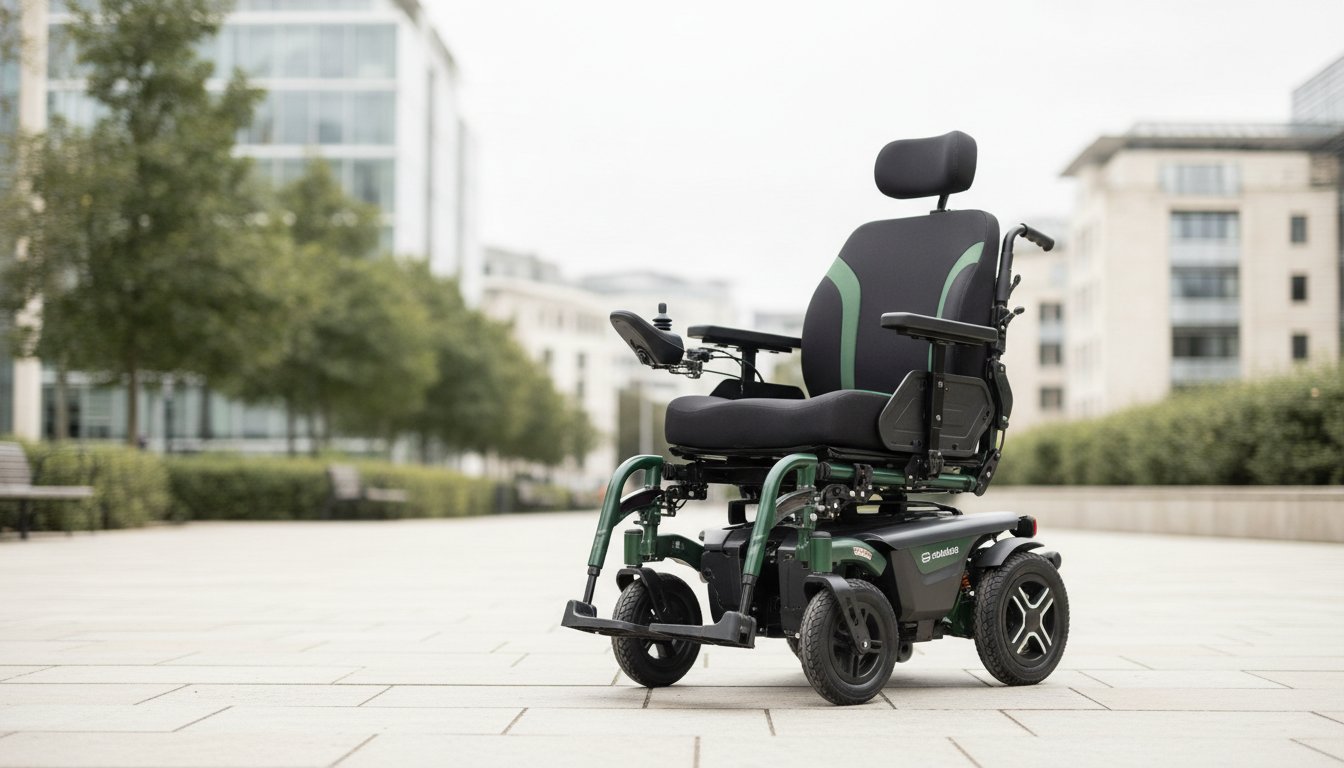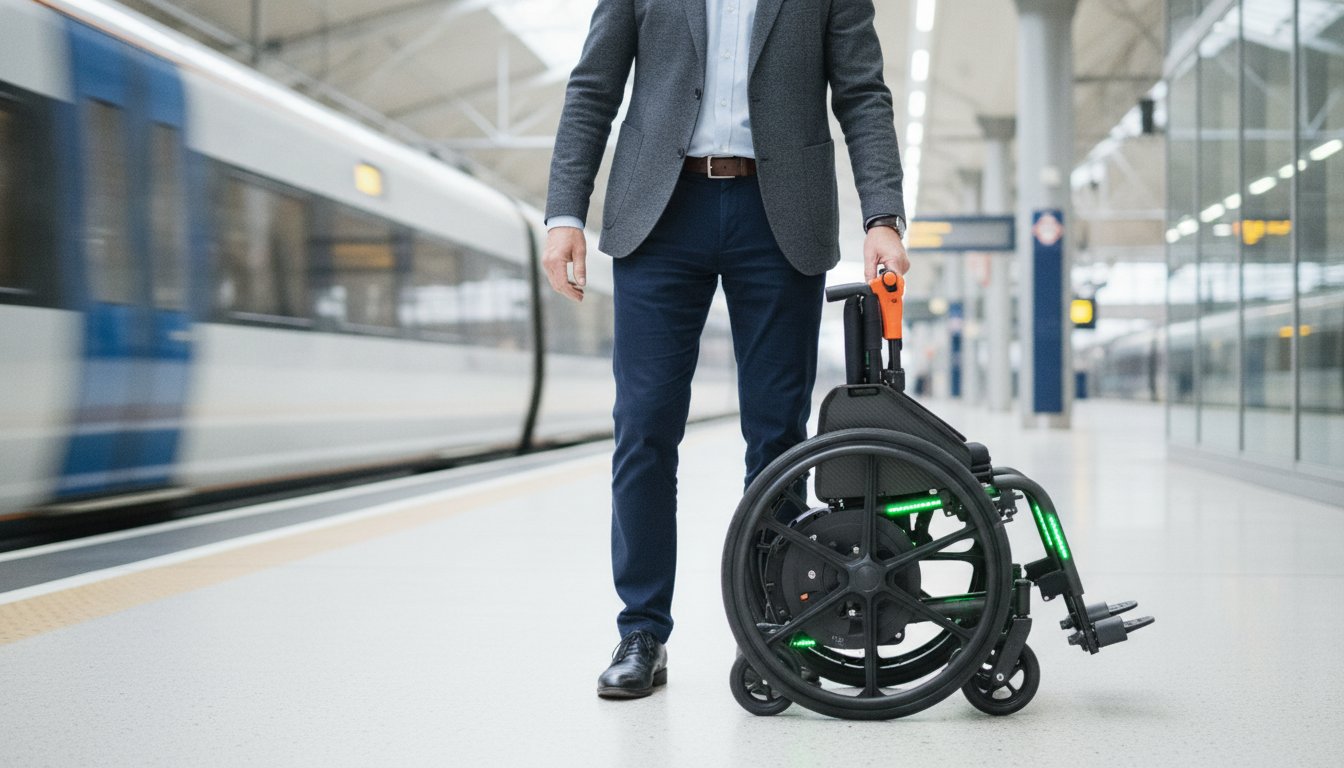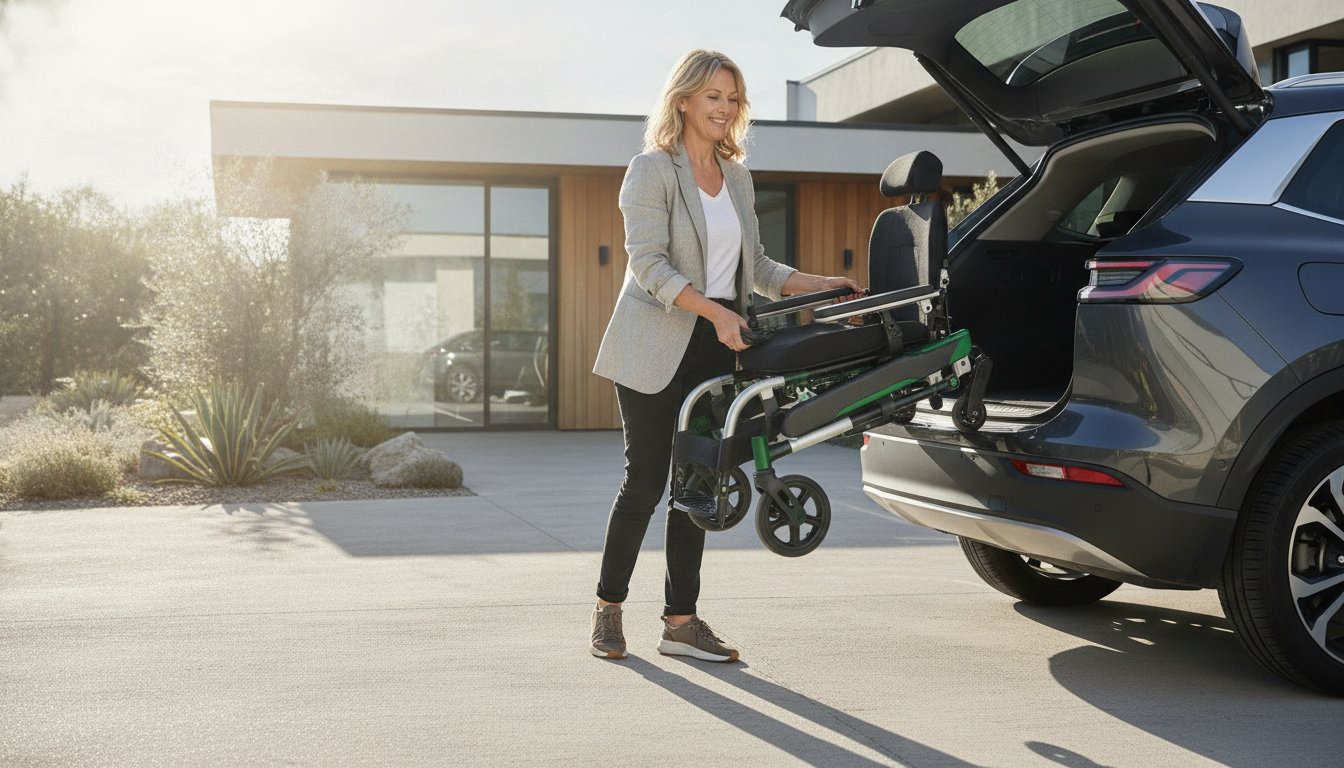

Last Saturday, an E-Tech Motion customer named Arthur shared that he nearly cancelled a family trip to the Cotswolds because his old 45kg scooter felt like lifting a lead weight into his car boot. You shouldn't have to choose between a day of freedom and a week of back pain. If you are currently asking what is the lightest weight mobility scooter on the market, you likely want a device that feels effortless to transport without feeling flimsy or unstable on the pavement. We agree that true independence means your equipment should never become a physical burden or a source of frustration.
In this 2026 buyer's guide, we'll reveal the world's lightest mobility scooters and show you how to choose a model that balances ultra-portable weight with high-performance safety standards. You'll learn the difference between total weight and "heaviest part" weight to ensure your new ride fits perfectly into a standard hatchback. We are going to break down how modern magnesium alloys and lithium-ion battery technology allow a 15kg frame to remain robust enough for daily use, giving you total confidence in your next adventure.
Key Takeaways
- Learn how the UK market defines what is the lightest weight mobility scooter, specifically focusing on models under 20kg and the crucial difference between total weight and the heaviest part.
- Discover how advanced materials like carbon fibre and magnesium alloys are making premium mobility solutions more portable without compromising on durability.
- Compare folding and modular designs to identify which ultra-portable configuration best suits your travel habits and storage requirements.
- Understand the "Stability Gap" and how to balance ultra-lightweight portability with safe handling on inclines and varying user weight capacities.
- Benefit from expert guidance on selecting a scooter that meets rigorous UK safety standards while ensuring long-term reliability with local aftercare.
Defining the Lightest Mobility Scooter in the UK Market
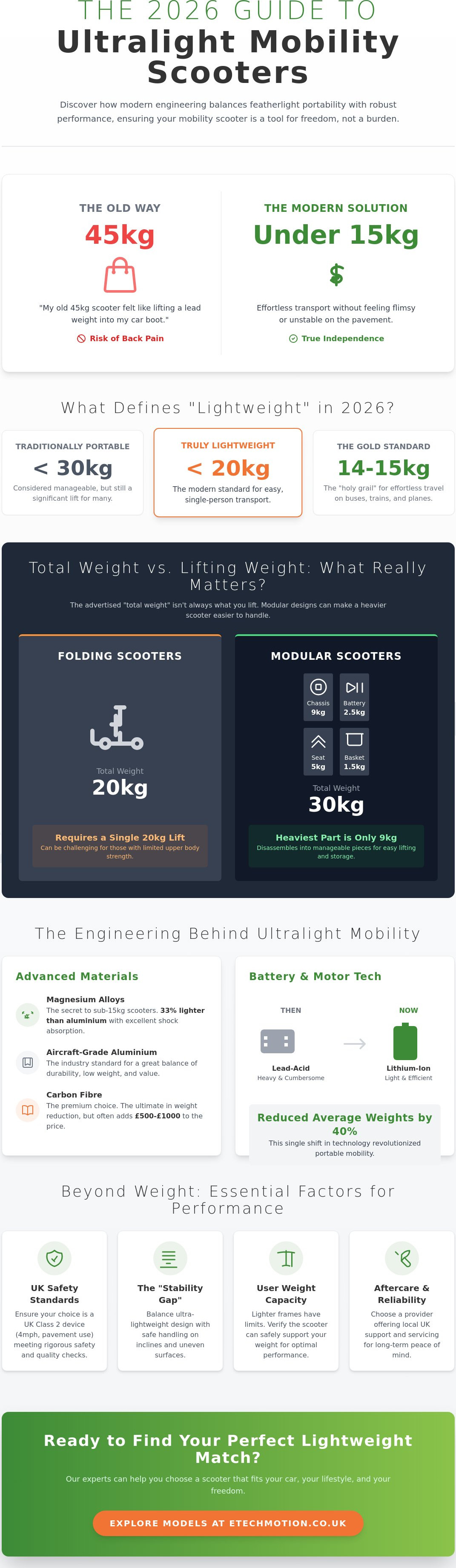
In the current UK landscape, discovering what is the lightest weight mobility scooter involves more than just checking a single number on a spec sheet. Engineering standards in 2026 have redefined our expectations of portability. Traditionally, any model under 30kg was considered portable, but modern users now look for a total weight under 20kg to classify a device as truly lightweight. This threshold is the tipping point where a scooter transitions from being a vehicle to a manageable piece of travel luggage.
Most ultra-portable designs are built to meet the UK Class 2 designation. These scooters are restricted to 4mph and intended for pavement use, which allows manufacturers to skip the heavy suspension and large tyres required for road-legal Class 3 vehicles. By focusing on the essentials of pavement travel, designers can strip away unnecessary mass. A Mobility scooter in this category prioritises a tight turning circle and a chassis that fits into the smallest of British car boots or narrow hallways.
The "holy grail" for ultra-lightweight engineering currently sits between 14kg and 15kg. Reaching this weight range requires a balance of advanced metallurgy and battery efficiency. It is the specific weight where most adults can safely lift the unit without risking strain, making it the gold standard for independent travel on buses, trains, and planes.
Total Weight vs. Lifting Weight: What Matters Most?
Understanding industry terminology is vital when you're comparing specifications. Most manufacturers report the "dry weight," which is the mass of the scooter without the battery pack installed. Because a high-capacity lithium-ion battery typically weighs between 1.8kg and 3.5kg, the weight you actually lift might be higher than the advertised headline. Shipping weight is another metric to watch, as it includes the charger and heavy protective packaging, often adding 4kg to 6kg to the total.
The physical impact of lifting 15kg versus 25kg into a standard car boot is substantial for someone with limited upper body strength. However, total weight isn't the only factor. Modular designs can make a 30kg scooter feel much lighter than a 20kg folding model. If a scooter disassembles into five sections where the heaviest part is only 9kg, it becomes more accessible than a single-piece folding unit that requires a full 20kg lift.
The Evolution of Portable Mobility
The industry has moved rapidly from heavy, cumbersome lead-acid batteries to modern lithium-ion technology. This shift alone reduced average weights by 40% over the last decade. In 2026, engineering has pushed the boundaries of frame durability by using magnesium alloys and honeycomb structures that provide 25% more rigidity than older aluminium frames. The Monarch Air stands as a current weight benchmark in the UK, showcasing how minimal mass can still support a full-sized adult. These innovations ensure that when you ask what is the lightest weight mobility scooter, you are looking at a machine that is as robust as it is easy to carry.
The Engineering Behind Ultralight Mobility Solutions
The quest to find what is the lightest weight mobility scooter has led to a massive shift in manufacturing techniques over the last five years. Traditionally, manufacturers relied on heavy steel frames that made lifting a scooter into a car boot a difficult, two-person job. Today, the industry uses aircraft-grade aluminium and magnesium alloys to slash mass without compromising the chassis. These materials provide the high strength-to-weight ratio needed for daily use on British pavements while keeping the device portable enough for solo lifting.
Modern Materials: Aluminium vs. Magnesium vs. Carbon Fibre
Aluminium frames remain the industry standard for durability and value. They offer a reliable balance of cost and longevity, resisting corrosion even in the damp UK climate. Magnesium is the secret behind the sub-15kg scooter category, as it is roughly 33% lighter than aluminium while maintaining excellent shock absorption properties. Carbon fibre represents the pinnacle of the premium market. While it significantly reduces weight, the manufacturing cost is higher, often adding £500 to £1,000 to the retail price. For users prioritising effortless lifting and a sleek aesthetic, this investment is often justified by the long-term convenience.
When investigating what is the lightest weight mobility scooter, the impact of brushless motors on reducing overall device mass is a key factor. These motors use magnets instead of heavy copper brushes, making them lighter, quieter, and more energy-efficient. Regarding safety, UK government regulations ensure that even the lightest devices meet strict stability and speed standards. A scooter cannot just be light; it must remain grounded during turns and emergency stops. Manufacturers now use geometric frame designs and wider wheelbases to maintain structural integrity while keeping the total weight at a minimum.
Lithium-Ion Technology: The Lightweight Powerhouse
The transition from Sealed Lead Acid (SLA) batteries to lithium-ion is the most significant weight-saving breakthrough in recent years. A standard lithium battery weighs roughly 2-3kg compared to 10kg+ for lead-acid alternatives. This 70% reduction in battery mass allows for more compact, folding designs without sacrificing the driving range. If you plan to travel abroad, remember that international regulations usually limit lithium batteries to a 300Wh capacity for air travel. Ensuring your scooter meets these specific limits is essential for stress-free holidays. You can explore our range of travel-ready mobility solutions to find a model that fits your lifestyle and travel goals perfectly.
Comparing Weight Categories: Folding vs. Modular Scooters
When you ask what is the lightest weight mobility scooter, the answer depends entirely on how you intend to transport it. We categorise lightweight options into three distinct groups: manual folding, automatic folding, and modular boot scooters. Each design offers a different solution to the challenge of portability, balancing the total chassis weight against the ease of storage.
Folding Scooters: One-Piece Portability
Manual folding models represent the most direct path to effortless travel. These scooters are built for users who frequently use trains, planes, or taxis. Because they fold into a single compact unit, there's no risk of losing parts during transit. You'll find that the best models for 2026 typically sit in the 17kg to 22kg range, making them manageable for many users to lift into a car boot.
There's a specific trade-off to consider here. Folding mechanisms, while convenient, require extra hinges and locking pins that typically add 2kg to 4kg to the frame weight compared to a fixed alternative. Automatic folding models add even more mass because they house internal motors and actuators. If your priority is finding what is the lightest weight mobility scooter, a manual folder is almost always lighter than its electric-folding counterpart. Most of these ultra-light models fall under Class 2 regulations, so ensure you follow the official UK government rules regarding pavement speeds and safety equipment.
Modular Scooters: The "Heaviest Part" Advantage
Modular scooters, often called boot scooters, take a different approach to weight management. Instead of folding, they're designed to be disassembled into four or five lightweight components. This is often the superior choice for users with limited upper body strength or those who struggle to lift a 20kg folding unit in one go.
- Individual Lift Weight: While the total weight might be 35kg, the heaviest individual section is often as light as 9kg or 11kg.
- Compact Storage: Individual parts can be tucked into the corners of a small car boot, fitting into vehicles where a one-piece folding scooter might not.
- Assembly Speed: Modern wireless connections mean you can click the sections together in roughly 45 to 60 seconds without handling messy cables.
Choosing modularity means you're prioritising the weight of the "heaviest part" over the total weight of the machine. It's a practical solution for daily independence, especially if you drive a compact hatchback. While assembly takes a moment longer than unfolding a scooter, the reduced strain on your back makes it a favourite for many UK drivers.
Beyond the Number: Essential Factors for Lightweight Performance
Chasing the lowest possible kilogram count is a logical starting point when you're asking what is the lightest weight mobility scooter, but weight reduction always involves engineering trade-offs. An ultra-light frame typically requires a compromise in battery density, motor torque, or structural reinforcement. You need to ensure the scooter remains practical for your specific UK environment, whether that involves navigating a local supermarket or boarding a bus in Birmingham. Performance isn't just about the scale; it's about how that weight is distributed for daily use.
Stability and Ground Clearance
Ultra-light scooters often feature a narrower wheelbase to keep the weight down. While this makes them agile in tight hallways, it creates a stability gap on uneven surfaces or 10 percent inclines. You should always look for models equipped with rear anti-tip wheels. These small safety components prevent the scooter from flipping backward during sudden starts or uphill climbs. UK pavements are notoriously uneven, and many lightweight models offer a ground clearance of just 40mm to 50mm. This low profile means you'll need to be cautious when crossing dropped kerbs or navigating gravel paths to avoid bottoming out the chassis. Choosing a 4-wheel configuration over a 3-wheel version adds a small amount of weight but significantly reduces the risk of tipping during sharp turns.
User Comfort and Ergonomics
Weight savings often come at the expense of padding. A luxury captain's seat can weigh over 5kg on its own, so most light models use mesh or slim-profile foam. If you plan to use your scooter for more than 45 minutes at a time, check if the seat provides enough lumbar support. Adjustability is another factor for taller UK users. Ensure the tiller can be moved to prevent knee fatigue during longer trips. You must check the maximum weight capacity before buying, as ultra-light models often cap their payload at 100kg to 115kg to maintain structural integrity.
- The Battery Trade-off: Saving 5kg on the frame often means using a smaller 10Ah lithium battery. This might reduce your total travel range from 15 miles down to just 7 or 8 miles per charge.
- Wheel Size: Smaller 6-inch wheels are lighter but transmit more vibration from the road. Larger 8-inch or 10-inch wheels add weight but provide a much smoother ride over tactile paving and cracked asphalt.
- Payload vs. Frame: There's an inverse relationship here. The lighter the scooter, the less weight it can safely carry without risking frame flex.
- The 3-Wheel Advantage: Opting for three wheels instead of four can save roughly 2kg, though it requires more careful handling on sloped driveways.
Finding the right balance between portability and performance ensures your investment provides lasting independence. If you're ready to find a model that balances a featherweight frame with robust UK safety standards, explore our range of lightweight mobility scooters today.
Finding Your Perfect Lightweight Match with Etech Motion
Deciding what is the lightest weight mobility scooter for your specific needs involves more than just comparing numbers on a specification sheet. At Etech Motion, we curate our 2026 range by balancing physical portability with the structural integrity required by UK safety standards. Every model in our inventory undergoes rigorous assessment to ensure it handles the varied terrain of British pavements while remaining easy to lift into a car boot or take on a bus.
Our selection process focuses on high-grade materials like aerospace-quality aluminium and magnesium alloys. These materials allow us to offer scooters that are significantly easier to manage without compromising the 115kg to 135kg weight capacities our customers often require. We don't just sell products; we provide a gateway to renewed independence backed by a team of UK-based specialists.
Why Quality Assurance Matters
The market is often flooded with unbranded "ultra-light" imports that bypass essential safety checks. These machines frequently lack the necessary certifications for battery stability and frame durability. Etech Motion prioritises your safety by ensuring all our scooters utilise advanced brushless motors. These components offer superior energy efficiency and torque while weighing up to 20% less than traditional brushed alternatives.
Technical reliability is the cornerstone of our brand. Every lithium-ion battery we provide meets stringent UK fire safety regulations and UN38.3 air travel standards. You won't be left stranded if a part needs replacing. Our Birmingham-based technical hub stocks genuine spares and provides expert support, ensuring your investment stays on the road for years to come. We back this commitment with comprehensive warranties that give you total peace of mind from the moment you leave our shop or click buy online.
Choosing the Right Model for Your Lifestyle
Selecting the ideal scooter requires a practical look at your daily routine. Use this quick checklist to narrow down your options:
- Storage Space: Measure your car boot dimensions to ensure a seamless fit when the scooter is folded.
- Weight Limits: Check that the maximum user weight accommodates your needs plus any shopping bags you might carry.
- Terrain: If you live in a hilly area, look for models with higher motor wattage and puncture-proof tyres.
UK residents living with chronic illnesses or physical disabilities are often eligible for VAT relief under HMRC Notice 701/7. This regulation allows you to purchase your mobility aid without the 20% VAT charge, making premium technology more accessible. You can apply for this relief instantly at the Etech Motion checkout by simply completing a digital self-declaration form. It's a straightforward process designed to support your transition to easier mobility.
If you're still questioning what is the lightest weight mobility scooter for your unique circumstances, our consultants are ready to help. You can book a personal demonstration at our showroom or speak with a specialist to discuss your requirements in detail. Taking the next step towards freedom shouldn't feel overwhelming.
Take the first step today: Explore our range of lightweight folding mobility scooters and find the model that fits your life perfectly.
Reclaim Your Freedom with Ultralight Engineering
Choosing the right equipment transforms your daily routine from a struggle into a seamless experience. When researching what is the lightest weight mobility scooter, it's vital to look at 2026's latest engineering breakthroughs. Modern modular designs now feature individual sections weighing as little as 9.5kg, while lithium-ion batteries offer a 40% weight reduction compared to traditional lead-acid units. These advancements mean you don't have to compromise on power or range to get a portable solution that fits into a standard car boot.
Etech Motion stands as a leading UK specialist in brushless motor technology and high-performance electric mobility. Our team provides UK-based expert support to guide you through every technical specification, ensuring your choice matches your lifestyle perfectly. We offer free nationwide delivery on orders over £500, bringing the latest in green transport directly to your doorstep. You're not just buying a product; you're partnering with specialists dedicated to quality assurance and your long-term independence.
Browse the Lightest Mobility Scooters at Etech Motion
Start your journey toward effortless travel today and enjoy the move to a lighter, more adventurous lifestyle.
Frequently Asked Questions
What is the absolute lightest mobility scooter available in the UK?
The absolute lightest mobility scooters available in the UK typically weigh between 14kg and 15kg when the battery is removed. Models such as the e-Foldi Lite or specialized carbon fibre designs currently lead the market for portability. These machines use aerospace-grade aluminium or magnesium alloys to keep weight down while maintaining a rigid frame that's easy to lift into a car boot.
Can I take a lightweight mobility scooter on an aeroplane?
You can take most lightweight mobility scooters on an aeroplane if they're equipped with IATA-approved lithium batteries. Most airlines require the battery capacity to be under 300Wh for a single battery or 160Wh each for a pair. It's essential to notify your airline 48 hours before your flight to confirm they can accommodate your specific model in the cargo hold.
Does a lighter mobility scooter mean it's less stable?
A lighter mobility scooter doesn't automatically mean it's less stable, as modern engineering focuses on a low centre of gravity. When you're researching what is the lightest weight mobility scooter, look for models with a wide wheelbase and anti-tip wheels. These safety features ensure the scooter remains balanced even on 10-degree inclines or when navigating standard UK pavement kerbs.
How much weight can the lightest mobility scooters carry?
Most ultra-lightweight mobility scooters support a maximum user weight between 115kg and 135kg, which is roughly 18 to 21 stone. Despite their slim profiles, the high-tensile materials used in the frame are tested to rigorous safety standards. Always check the manufacturer's specifications, as exceeding these limits can reduce your braking efficiency and battery range by over 15 percent.
What is the difference between "net weight" and "gross weight"?
Net weight refers to the weight of the scooter frame alone, while gross weight includes the battery, seat, and any attached accessories. When you ask what is the lightest weight mobility scooter, manufacturers often quote the net weight to highlight portability. Since a lithium battery typically adds 2kg to 4kg, you should always check the total weight you'll actually be lifting.
Are lightweight mobility scooters eligible for VAT relief?
Lightweight mobility scooters are eligible for VAT relief, which saves you 20 percent on the purchase price if you have a qualifying disability or chronic condition. You don't need to be registered disabled to qualify; you simply fill out a self-declaration form during checkout. This UK government scheme applies to any scooter designed solely for the use of a person with a disability.
How long does the battery last on an ultra-lightweight scooter?
The battery on an ultra-lightweight scooter typically provides a range of 6 to 10 miles per full charge. These scooters use compact lithium-ion packs that charge faster than traditional lead-acid versions, often reaching 100 percent capacity in 3 to 5 hours. Your actual distance will vary based on factors like hilly terrain or carrying a heavy shopping bag, which can reduce range by 2 miles.
Which is better for lifting: a folding scooter or a modular one?
A modular scooter is usually better for lifting because it disassembles into several parts, with the heaviest section often weighing less than 10kg. Folding scooters offer more convenience as they transition in under 20 seconds, but you must lift the entire unit's weight at once. If you can't comfortably lift 20kg, a modular design that splits into four manageable pieces is the safer choice.