Imagine standing on a crowded platform at London Euston, watching your train arrive, and realising your mobility equipment is simply too heavy to lift onto the carriage. For many of the 1.2 million wheelchair users in the UK, the dream of spontaneous travel often clashes with the reality of cumbersome, 100kg traditional frames. You likely believe that true independence shouldn't feel like a workout, which is why finding the right collapsible power chair is a game-changer. We agree that your equipment should adapt to your lifestyle, and not the other way around.
This guide ensures you select a model that strikes the perfect balance between lightweight portability and the durable performance needed for British pavements. We'll demystify technical specifications like brushless motor torque and lithium-ion safety regulations, giving you the confidence to choose a chair that's easy to store and reliable on long outings. You deserve total reliability. From understanding the mechanical integrity of folding joints to mastering car boot storage, you'll discover exactly how to reclaim your freedom of movement across the country.
Key Takeaways
- Understand how a collapsible power chair bridges the gap between lightweight manual frames and heavy-duty performance for total independence.
- Compare manual and automatic folding mechanisms to identify which engineering style offers the best balance of simplicity and reliability for your needs.
- Learn why brushless motors are the gold standard for achieving robust torque and power without sacrificing a portable, lightweight frame.
- Master the practicalities of UK travel with expert guidance on measuring car boots and navigating the national rail network with ease.
- Discover why choosing a UK-based specialist ensures you receive the quality assurance and technical support necessary for your electric mobility journey.
What is a Collapsible Power Chair and Why is it a Game-Changer?
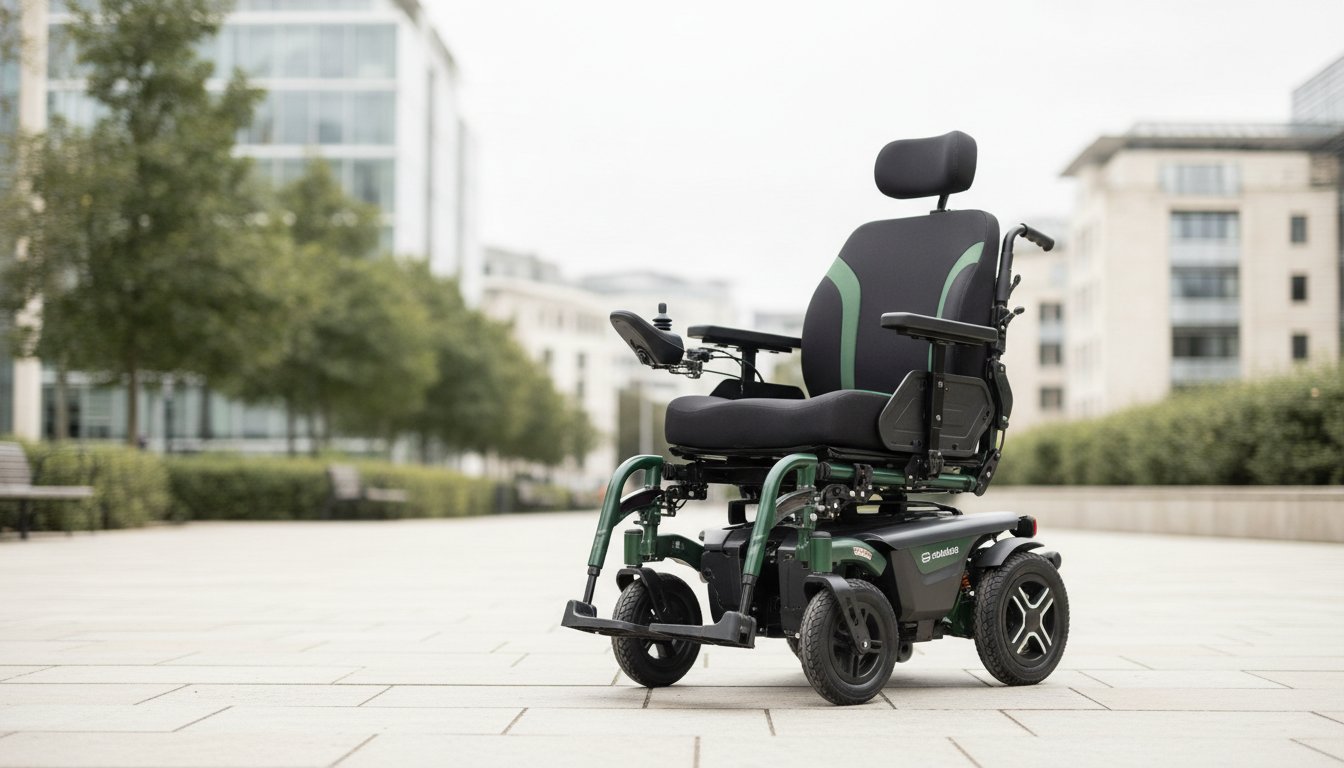
A collapsible power chair represents the next generation of personal mobility. These devices are electrically propelled mobility aids specifically engineered to fold or dismantle into compact components within seconds. They effectively bridge the gap between heavy-duty, fixed-frame power chairs and manual transit chairs. While a traditional Motorized wheelchair often requires a dedicated, ramp-equipped vehicle for transport, a collapsible model provides the same motorised assistance in a package that fits inside a standard UK car boot.
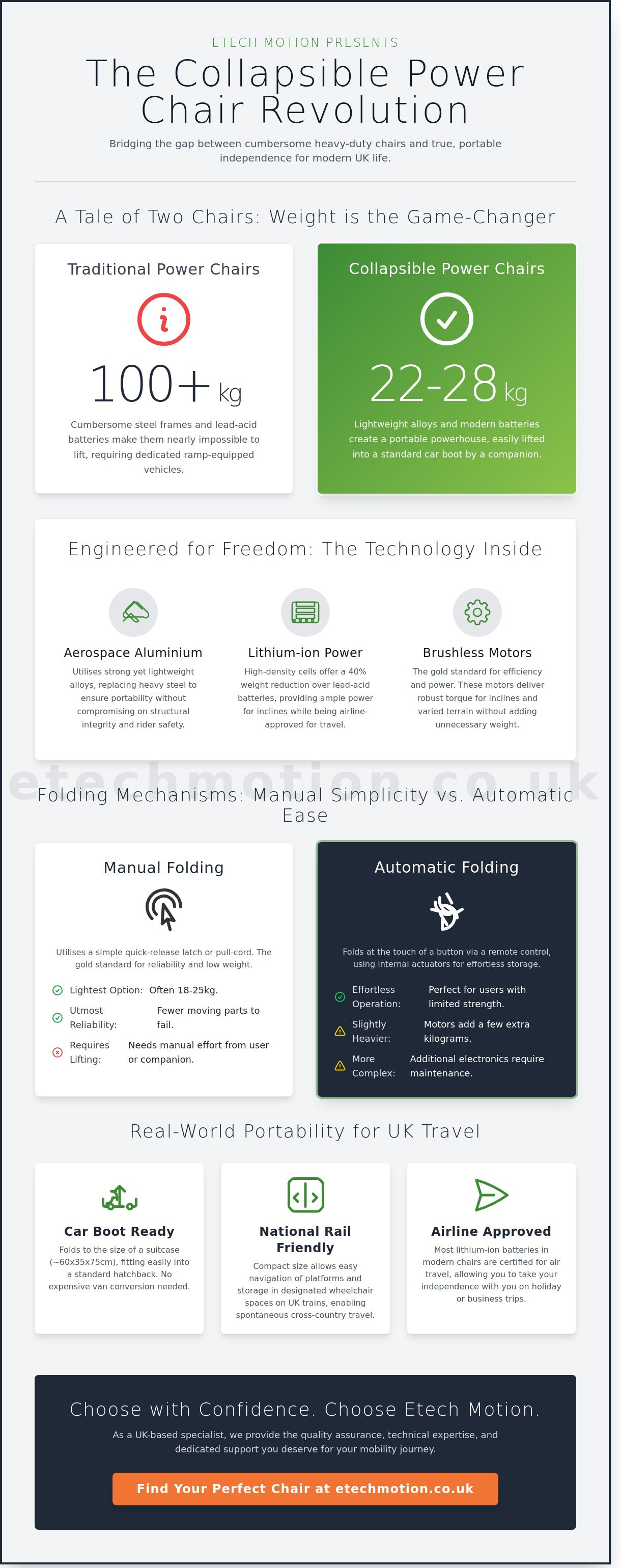
This shift in mobility technology is driven by the adoption of aerospace-grade aluminium alloys and high-energy-density lithium-ion batteries. These materials have replaced the heavy steel frames and bulky lead-acid batteries of the past. Modern lithium cells offer a 40% reduction in weight while providing enough torque to handle 6-degree inclines. For active users, frequent travellers, and those living in homes with limited storage space, these advancements have turned mobility from a logistical challenge into a seamless part of daily life.
Collapsible vs. Standard Power Chairs: Key Differences
Weight is the most critical differentiator for UK users. A standard power chair can weigh over 100kg, making it impossible to lift without mechanical assistance. In contrast, a collapsible power chair typically weighs between 22kg and 28kg. This weight range is manageable for many companions to lift, significantly increasing the vehicle options available to the user. You aren't restricted to expensive van conversions; a standard hatchback becomes perfectly viable.
The storage footprint is another area where these chairs excel. When folded, many models occupy a space no larger than a medium-sized suitcase, roughly 60cm by 35cm by 75cm. This allows the chair to be tucked away in a hallway cupboard or under a stairs nook, keeping living spaces clear. Despite the moving parts required for folding, modern frame geometry ensures the chair remains rigid and stable during operation, providing a secure ride that rivals fixed-frame alternatives.
The Freedom Factor: Lifestyle Benefits
Spontaneous travel becomes a reality rather than a chore. Because these chairs are designed for portability, they're compatible with standard taxis and public transport across the UK. You can call a local minicab without worrying if the vehicle is a specialized wheelchair accessible model. This flexibility extends to air travel, as many lithium-ion batteries used in these chairs are now airline-approved for easy transport in the hold.
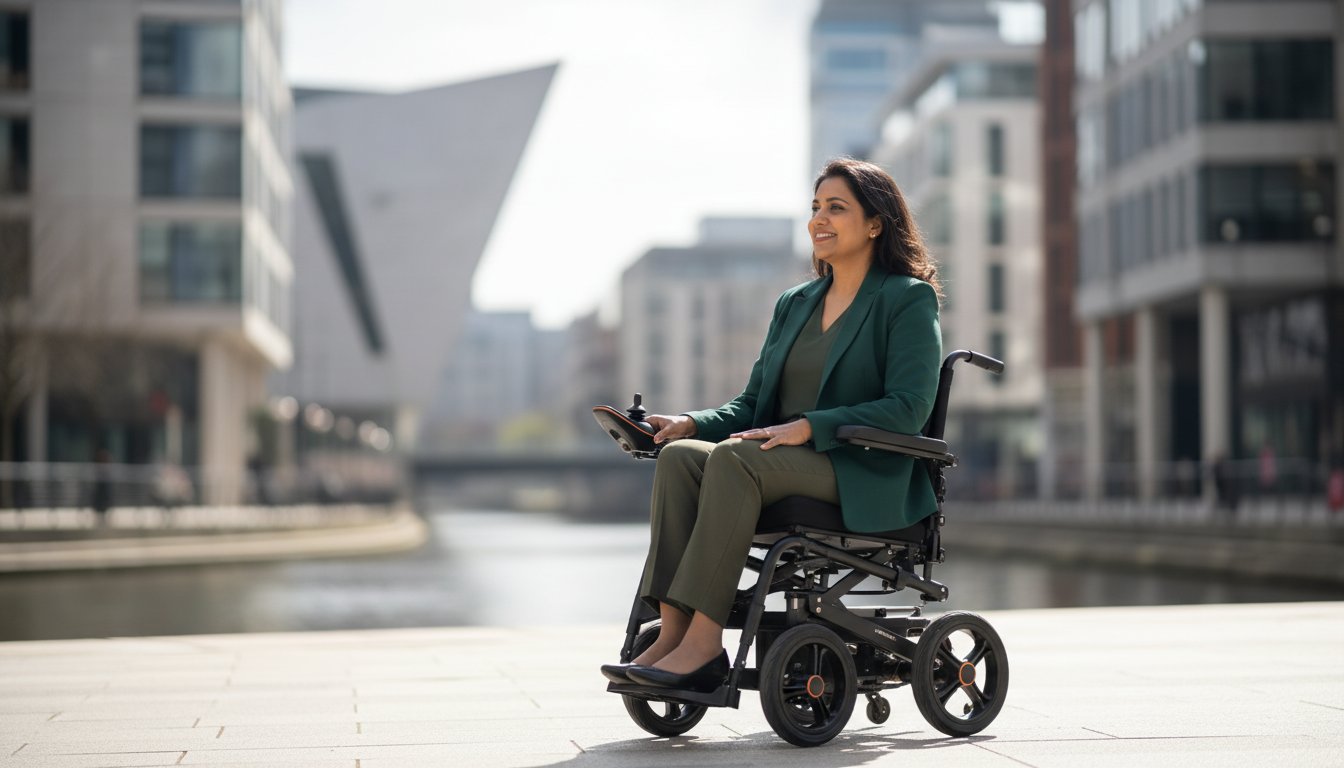
Social inclusion is the most profound psychological benefit. Users can visit friends and family whose homes haven't been fully adapted with wide doorways or permanent ramps. The ability to fold the chair and bring it inside removes the "access anxiety" often felt when visiting new locations. It fosters a sense of confidence, knowing that your mobility aid adapts to the world around you, rather than requiring the world to adapt to it. This independence is essential for maintaining an active, engaged lifestyle in a modern environment.
Comparing Folding Mechanisms: Manual vs. Automatic
Engineering a high-quality collapsible power chair requires a precise balance between structural rigidity and fluid movement. Most modern frames utilise either a scissor mechanism or a central pivot point. Scissor mechanisms allow the chair to fold inwards from the sides, much like a traditional manual wheelchair. Central pivot designs allow the backrest to fold down toward the seat base, often resulting in a more compact, cube-like shape. This geometry dictates how easily the device fits into a standard UK car boot or a narrow storage cupboard under the stairs.
Durability hinges on the quality of these joints. Premium models often feature aircraft-grade aluminium or magnesium alloy frames to ensure the pivot points remain tight after years of use. You should look for reinforced bolts and nylon washers that minimise friction and prevent the "frame wobble" common in lower-end alternatives. Weather-sealed hinges are also vital for the British climate, protecting the folding hardware from road salt and rain.
Manual Folding Power Chairs
Manual folding systems are the gold standard for simplicity. These chairs usually employ a quick-release latch or a pull-cord system that unlocks the frame. Because they don't require heavy internal actuators or secondary motors, manual chairs are typically the lightest on the UK market. Many models weigh between 18kg and 25kg, making them significantly easier for a companion to lift. Reliability is a major draw here; fewer electronic parts mean there's less risk of a mechanical failure during a trip away from home.
- Weight efficiency: Eliminating motors can save up to 5kg in total mass.
- Speed: A practised user can often fold a manual chair in under 5 seconds.
- Maintenance: Mechanical latches require only occasional lubrication to stay functional for years.
The Rise of the Auto-Folding Power Chair
Auto-folding technology provides a touch of luxury and essential assistance for users with limited upper-body strength. These chairs use a dedicated electric motor to collapse or expand the frame at the touch of a button. You can usually trigger the mechanism via a remote-control fob or a switch located on the joystick. This eliminates the need for any bending or pulling, which is a significant benefit for those managing arthritis or chronic fatigue.
Safety is integrated into the circuitry. Modern auto-folding chairs include pressure-sensitive sensors that stop the motor immediately if they detect an obstruction, such as a stray garment or a hand. While the folding motor draws energy from the main lithium-ion battery, the impact is minimal. A single folding cycle typically consumes less than 0.5% of a standard 12Ah battery charge, so you won't sacrifice your driving range for convenience. If you want to see these mechanisms in action, you can explore the latest electric mobility solutions designed for the modern commuter.
- Remote operation: Fold your chair from a distance while you sit comfortably in a car seat.
- Steady pace: Most electric mechanisms complete a full cycle in 10 to 15 seconds.
- Locking security: Electronic actuators provide a firm lock that prevents the chair from shifting during transit.
Performance vs. Portability: Navigating the Trade-offs
Choosing a collapsible power chair involves a delicate engineering balance. You need a frame light enough to lift into a car boot, yet robust enough to support a user weight of up to 120kg or 150kg safely. This "weight dilemma" is often the first hurdle for buyers. Modern designs solve this by utilizing high-torque brushless motors. These motors lack the internal friction of traditional brushed versions, providing 85% to 90% efficiency. This allows for a smaller, lighter motor that still delivers the power required to climb 6-degree inclines without stalling.
Battery range is another critical factor. While a heavy stationary chair might travel 30 miles, a portable model typically covers between 10 and 15 miles on a single charge. This distance is more than sufficient for a full day of shopping or a trip to a local park. Wheel size also dictates your freedom. Compact 7-inch front casters are perfect for tight turns in UK supermarkets, but you will need 12-inch rear tyres if you plan to navigate gravel paths or uneven British pavements. Smaller wheels often struggle with gaps larger than 20mm, so consider your primary environment before deciding.
Understanding Materials: Carbon Fibre vs. Aluminium
Aluminium alloys, specifically 6061 aircraft-grade aluminium, serve as the durable standard for most frames. It's a cost-effective material that withstands daily wear while keeping the chair's weight around 25kg. If you require the ultimate lightweight experience, carbon fibre is the premium choice. A carbon fibre collapsible power chair can weigh as little as 14kg without the battery. Beyond the weight savings, carbon fibre has superior vibration-dampening properties, which means you feel fewer jolts when travelling over tactile paving or cracked tarmac.
Battery Technology and Charging
Lithium-ion technology has revolutionised electric mobility by offering three times the energy density of lead-acid batteries. This allows manufacturers to create slim battery packs that slide easily into the frame. Most modern chairs feature off-board charging, letting you leave the chair in a hallway or car boot while you charge the battery at any standard 230V UK wall socket. This flexibility is vital for active users who don't want their mobility aid taking up living space while it refuels.
Safety is paramount when taking your chair abroad. For airline travel, Watt-hours are the measure of a battery's energy capacity calculated by multiplying the voltage by the Amp-hour rating to ensure it meets Civil Aviation Authority limits. Most travel-ready chairs use 144Wh or 240Wh packs to remain compliant with international flight regulations.
Practical UK Travel: Car Boots, Trains, and Flights
Owning a collapsible power chair transforms how you engage with the UK transport network. Freedom shouldn't stop at your front door. Modern designs prioritise portability, but successful travel requires a bit of forward planning and the right measurements.
Before you commit to a journey, follow these steps to ensure your chair fits your vehicle:
- Clear your boot of all loose items to get an accurate reading.
- Measure the narrowest width between the wheel arches. Most UK hatchbacks provide between 90cm and 100cm.
- Check the depth from the back seats to the boot sill.
- Measure the vertical clearance from the boot floor to the parcel shelf.
Comparing these figures against the folded dimensions of your chair prevents frustration at the start of your trip. If the chair is a tight fit, removing the footrests or the battery can often save those vital few centimetres.
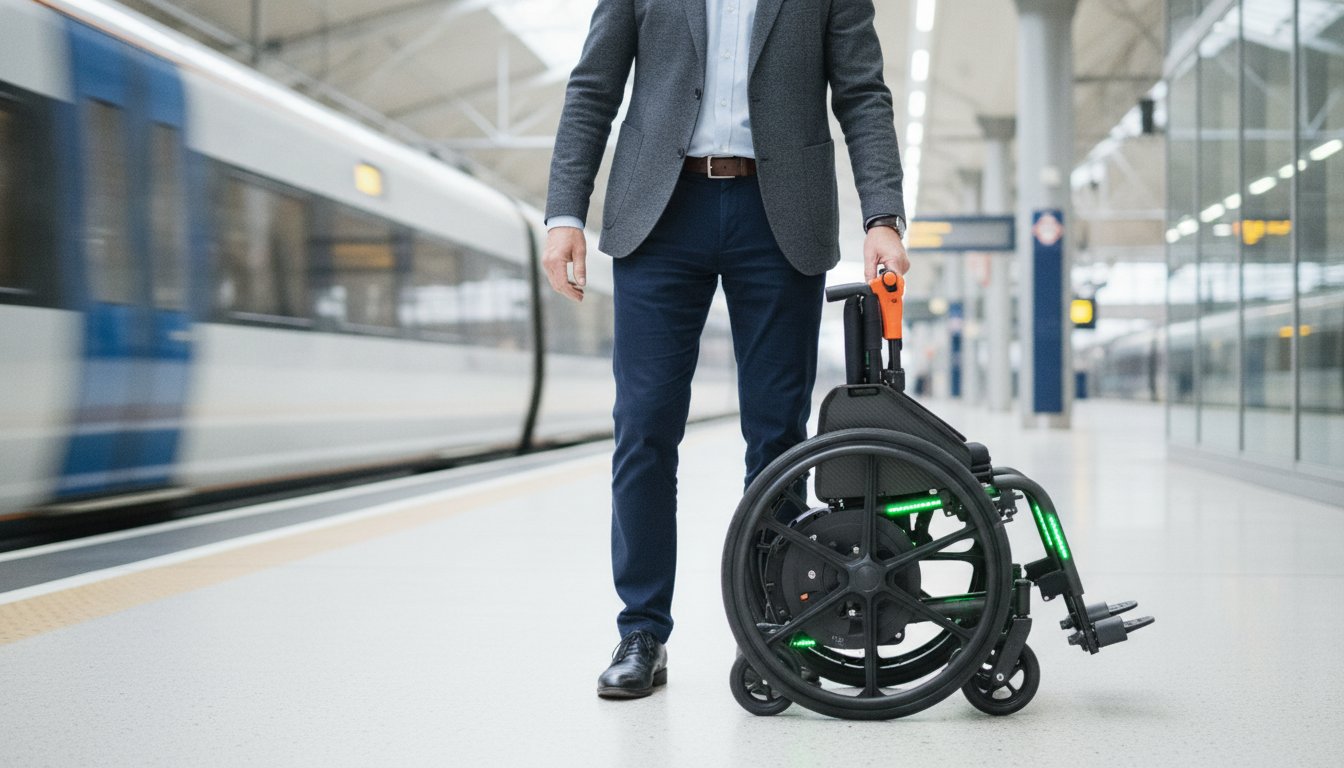
UK rail travel has become significantly more accessible. National Rail standard wheelchair spaces are 1200mm long by 700mm wide. While you can turn up and go, using the Passenger Assist app to book a ramp just 2 hours before travel ensures staff are ready to help you board. When using buses or trams, UK law requires drivers to provide ramp access. Always enter the bus backwards. This allows you to position the chair firmly against the padded backrest, which is the safest position during transit.
Storing Your Chair in a Vehicle
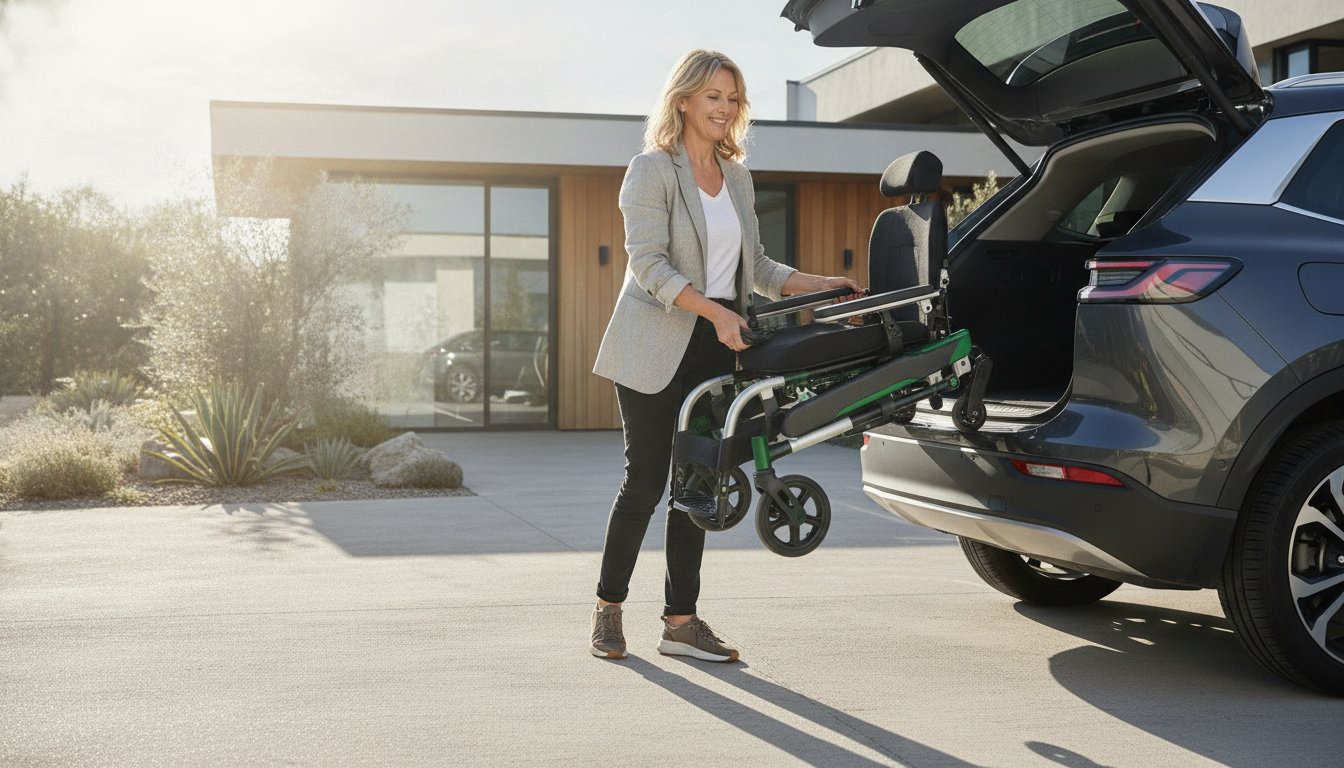
When lifting your chair, keep your back straight and the unit close to your centre of gravity. Don't overreach. If the chair weighs more than 25kg, consider installing a boot hoist. These powered arms do the heavy lifting for you, swinging the folded chair into the boot with minimal effort. To maintain your car's condition, use a 3mm thick rubber boot liner and a fold-out bumper protector. These simple additions prevent the frame of your collapsible power chair from scratching the paintwork during loading.
International Travel with a Collapsible Chair
Air travel requires specific preparation regarding lithium batteries. IATA regulations generally permit batteries up to 300Wh for mobility aids, but you must notify your airline at least 48 hours before departure. Always request a "gate-check" tag at the check-in desk. This allows you to stay in your chair until you reach the aircraft door. Keep an "Airline Safe" certificate with your travel documents to speed up security checks. A padded travel bag is a wise investment. It protects the joystick and upholstery from scuffs while the chair is in the aircraft hold.
Ready to reclaim your mobility on the go? Explore our range of travel-ready power chairs today.
Choosing Your Collapsible Power Chair with Etech Motion
Selecting a collapsible power chair isn't just a technical purchase; it's a vital lifestyle decision. At Etech Motion, our philosophy centres on matching precision engineering with your specific daily requirements. Technical specifications like motor wattage or battery chemistry only provide value when they align with your routine. Whether you're moving through narrow supermarket aisles in Birmingham or boarding a flight at Heathrow, your equipment must perform without hesitation. We focus on the synergy between the machine's capabilities and your personal goals for freedom.
Our UK-based support team provides a level of local accountability that international retailers simply cannot offer. Every folding mechanism undergoes rigorous quality assurance at our facility to ensure it handles the repetitive stress of daily transitions. Reliability is paramount because a failure in a folding joint isn't just a mechanical issue; it's a barrier to your independence. We provide expert guidance to ensure you understand every lever and latch before your first trip.
Maintaining your investment ensures years of reliable service. You should keep the folding joints lubricated with a silicone-based spray every 90 days to prevent stiffness or squeaking. Additionally, use a soft, dry brush to clear grit and dust from the motor housing after outdoor excursions. These simple habits prevent debris from entering sensitive components and keep the transition from drive-mode to storage-mode effortless.
Our Selection Framework
We evaluate every model in our range against three critical pillars: user weight capacity, primary terrain, and frequency of travel. We curate our selection specifically for UK users, ensuring frames are robust enough for uneven British pavements yet compact enough for standard car boots. The Etech Motion promise includes nationwide delivery and access to specialists who understand the mechanics of every collapsible power chair we stock. We don't just ship boxes; we deliver mobility solutions backed by technical expertise.
Taking the Next Step
Booking a consultation with our team allows you to review detailed product specifications that match your body type and mobility goals. It's also essential to understand VAT relief. Most users with a chronic illness or disability qualify for 0% VAT on mobility equipment, representing a 20% saving on the total cost. Before you make your investment, run through this final checklist:
- Does the total folded weight sit within your or your carer's lifting limit?
- Is the lithium-ion battery capacity compliant with current airline safety regulations?
- Have you measured your narrowest home doorway against the chair's total width?
- Do the joystick controls feel intuitive for your hand strength?
Your journey toward enhanced independence starts with the right partner. Etech Motion is committed to providing the tools and support you need to move forward with confidence.
Redefine Your Independence with Smarter Mobility
Finding the right balance between a lightweight frame and reliable motor performance transforms how you navigate the world. You've seen how automatic folding mechanisms save physical effort while manual options offer dependable simplicity. Whether you're boarding a train or fitting your equipment into a compact car boot, the modern collapsible power chair ensures your travel remains entirely seamless. We've rigorously tested every model through extensive safety protocols and quality assurance checks, so you can move with complete confidence.
At Etech Motion, we back our electric mobility technology with specialist UK-based support and efficient nationwide delivery across the United Kingdom. Our engineers ensure every product meets high performance standards before it leaves our facility. You'll find that regaining your autonomy is simpler than ever when you have the right partner. Don't let mobility challenges dictate your boundaries; it's time to reclaim your freedom with a solution designed for the modern British lifestyle. We're here to help you move forward.
Explore our range of high-performance collapsible power chairs
Frequently Asked Questions
Is a collapsible power chair safe to use on uneven UK pavements?
Yes, a high-quality collapsible power chair is safe for UK pavements when it's equipped with front-suspension and solid tyres. Most models handle gradients up to 6 degrees and 12mm kerb heights without losing stability. You should look for chairs with a wider wheelbase to navigate uneven Victorian paving or cracked surfaces. E-Tech Motion ensures all models meet strict UK safety standards, providing a smooth ride through high-torque brushless motors.
Can I take my collapsible power chair on a plane?
You can take your chair on a plane if the lithium-ion battery is airline friendly. IATA regulations generally require batteries to be under 300Wh for a single battery or 160Wh each for a pair. It's vital to notify your airline 48 hours before departure to confirm their specific carriage rules. Most folding models feature a quick-release battery mechanism, allowing you to carry the power pack into the cabin while the frame stays in the hold.
How much does a typical collapsible power chair weigh?
A typical collapsible power chair weighs between 22kg and 28kg excluding the battery. Lightweight models use aerospace-grade aluminium alloys to keep the frame weight around 23.5kg, making them roughly 60% lighter than traditional non-folding electric wheelchairs. Removing the 3kg lithium battery before lifting makes the chair even more manageable for daily transport. This weight range allows most adults to lift the chair into a vehicle without physical strain.
Will a folding power chair fit in a small car boot?
Most folding models fit comfortably in the boot of a standard hatchback like a Ford Fiesta or Volkswagen Golf. When folded, these chairs typically measure around 60cm x 35cm x 75cm, which is a compact footprint for any modern vehicle. You should measure your specific boot space before purchase to ensure a perfect fit. This portability eliminates the need for a dedicated mobility van, helping you maintain your independence during family visits across the UK.
How long does the battery last on a folding electric wheelchair?
You can expect a range of 12 to 15 miles on a single charge with a standard 12Ah lithium-ion battery. Total travel distance depends on the user's weight and the steepness of the terrain you're covering. Charging usually takes 5 to 8 hours to reach 100% capacity from empty. Many users choose to carry a spare battery to double their range for full days out, ensuring they don't run out of power during an adventure.
What is the maximum weight capacity for a lightweight folding chair?
Most lightweight folding models support a maximum user weight of 120kg, which is approximately 18.8 stone. Heavy-duty versions are engineered to carry up to 150kg by using reinforced frames and more powerful 250W motors. It's vital to check the specific manufacturer's rating before buying. Exceeding the limit by even 5kg can affect the braking distance and the motor's long-term durability, so always choose a model that accommodates your specific requirements.
Do I need a special hoist to lift a collapsible chair into my car?
You don't necessarily need a hoist because these chairs are designed for manual lifting. Since the frame weight is often under 25kg, many users or carers find them easy to handle without mechanical help. However, if you have limited upper body strength or a back injury, a portable boot hoist can assist. These mechanical aids can lift up to 30kg, taking the strain off your body while you guide the chair into position.
How do I maintain the folding mechanism to prevent it from seizing?
You should clean the folding joints with a damp cloth every 30 days to remove grit, dust, and road salt. Applying a small amount of silicone-based lubricant to the pivot points every 6 months keeps the folding action smooth and effortless. Check the locking pins for any signs of wear or debris that might hinder the latch. Regular maintenance ensures your collapsible power chair remains reliable and prevents the frame from becoming stiff over time.