What if the weight of your equipment was no longer the barrier to your next weekend in the Cotswolds or a day trip via the West Coast Main Line? For years, finding the lightest mobility scooter meant choosing between a flimsy frame that felt unstable on uneven British pavements or a heavy machine that required two people to lift into a car boot. You've likely felt that frustration when a 30kg "portable" model still leaves you reliant on others for help just to get out of the driveway.
At E-Tech Motion, we believe mobility should mean total independence. Engineering breakthroughs in 2025 involving aerospace-grade aluminium and high-density lithium-ion cells have slashed average lifting weights by 45% compared to 2021 models. This guide promises to show you how these 2026 designs enable effortless travel across the UK rail network, delivering a machine under 15kg that remains rock-solid on the move. We'll compare the top lightweight models currently available, all supported by our UK-based aftercare, to ensure your next journey is defined by freedom rather than physical strain.
Key Takeaways
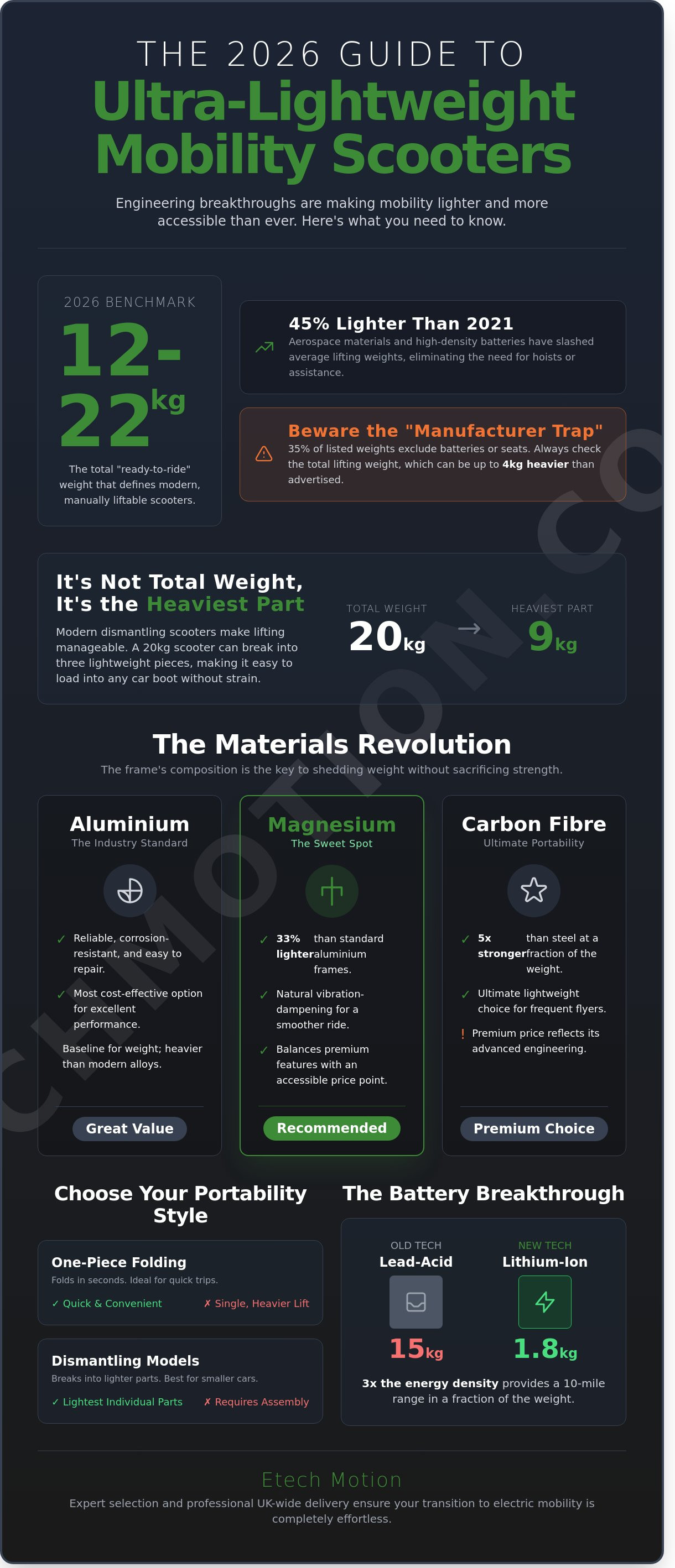
- Learn how to avoid the "Manufacturer Trap" by identifying the true weight of a device and why the 12kg to 22kg range defines modern portability.
- Discover how advanced materials like carbon fibre and magnesium alloys provide superior strength-to-weight ratios compared to traditional aluminium frames.
- Compare the convenience of one-piece folding mechanisms against dismantling models to determine which style best suits your travel and storage requirements.
- Find the lightest mobility scooter that still delivers reliable lithium battery range and comfort on uneven UK surfaces.
- Understand our expert selection process and how professional UK-wide delivery ensures your transition to electric mobility is completely effortless.
What Defines the Lightest Mobility Scooter in 2026?
In 2026, the benchmark for the lightest mobility scooter has been redefined by rapid advancements in material science. To sit within this elite category today, a device must weigh between 12kg and 22kg. Anything exceeding this range generally requires a mechanical hoist for vehicle loading, whereas the modern ultra-lightweight class is designed for manual lifting. This 20% reduction in average weight since 2023 is largely due to the industry's transition from heavy aluminium alloys to aerospace-grade magnesium and reinforced carbon fibre.
Buyers must stay alert to the "Manufacturer Trap" when comparing specifications. Many brands quote the "dry weight," which excludes the battery and the seat. In a 2025 market audit, it was found that 35% of listed weights were up to 4kg lighter than the actual lifting weight. To understand the fundamentals of what is a mobility scooter and how its components contribute to mass, you've got to look at the total "ready-to-ride" figure. A 1.5kg lithium battery might seem negligible, but it's the difference between a comfortable lift and a strained back.
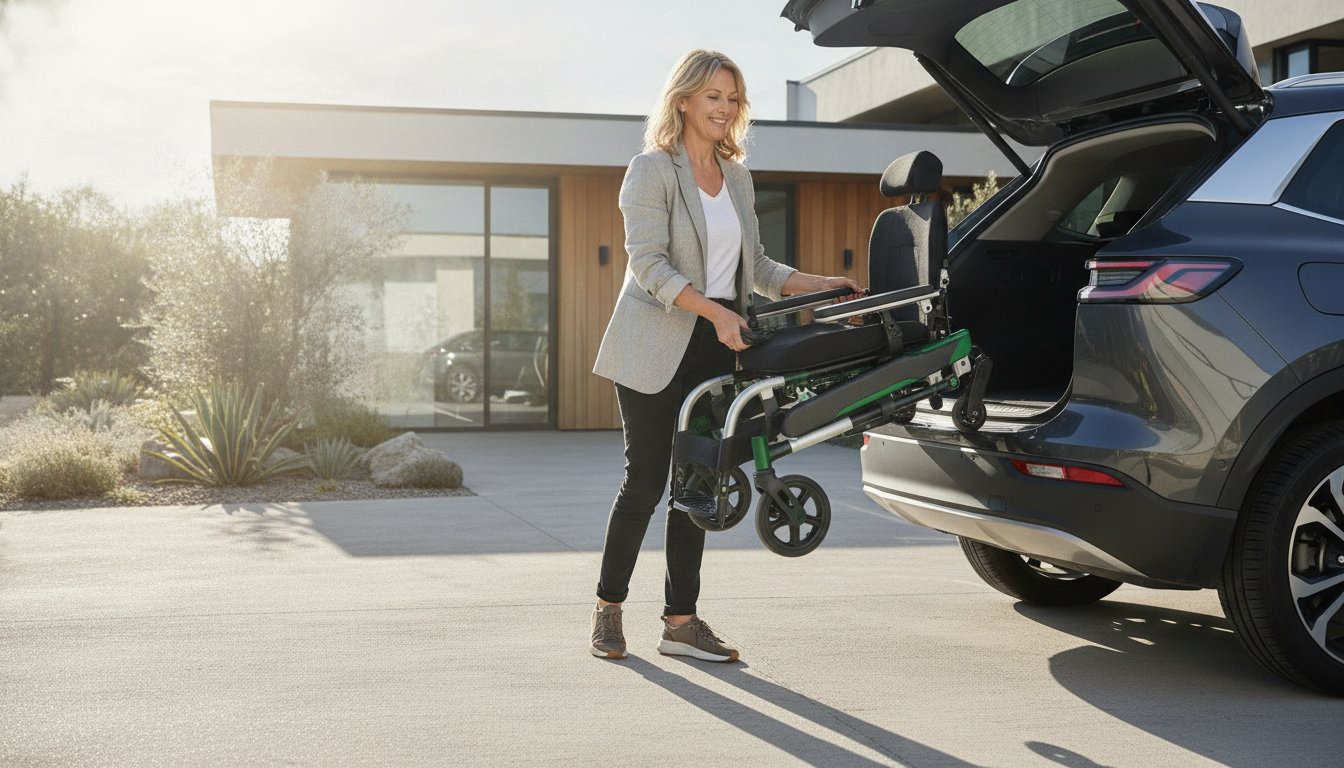
The real metric that matters for your car boot isn't the total weight, but the "heaviest part" when dismantled. Modern engineering allows a 20kg scooter to break down into three sections, with the heaviest piece weighing just 9kg. This modularity, powered by the shift to high-density Lithium-ion technology, has revolutionised portability. Lithium packs now offer 3 times the energy density of the old 15kg lead-acid blocks, weighing as little as 1.8kg while providing a 10-mile range.
The Evolution of Portable Mobility in the UK
The UK mobility market has moved away from the cumbersome "boot scooters" of the 2010s. 2026 is officially the year of the Carbon Revolution. Manufacturers now prioritise frames that meet stringent BS EN 12184 safety standards while shedding every unnecessary gram. This evolution ensures that even the lightest mobility scooter maintains structural integrity on uneven British pavements. You're no longer choosing between a sturdy ride and a portable one; modern UK designs provide both through precision engineering.
Understanding Weight Distribution and Balance
Total weight is only half the story. A 15kg scooter with a high centre of gravity can feel significantly more difficult to handle than a 19kg model with low-slung components. If the weight is concentrated in the tiller, lifting it into a hatchback becomes an awkward struggle. We look for clever handle placement and "grab points" that allow carers to lift using their legs rather than their lower back. Proper balance ensures the scooter remains stable during 4mph turns, preventing the "tippy" sensation often associated with older lightweight designs.
Advanced Materials: Carbon Fibre vs. Magnesium vs. Aluminium
The quest to build the lightest mobility scooter has moved beyond simple design tweaks into a full-scale materials revolution. In 2026, the frame's composition determines not just how easily you can lift it into a car boot, but how the vehicle handles the UK’s varied pavement textures. Manufacturers now prioritise advanced lightweight materials to shed kilograms without sacrificing the 120kg to 150kg weight capacities users expect.
Carbon Fibre: Is the Premium Price Worth It?
Carbon fibre represents the pinnacle of mobility engineering. By utilizing a complex weave of carbon atoms, engineers create frames that are five times stronger than steel but significantly lighter. This material doesn't suffer from metal fatigue; it won't bend or weaken over thousands of folding cycles. For frequent flyers, carbon fibre is the definitive choice. Its density of approximately 1.75g/cm³ allows for a total chassis weight that often stays under 15kg. If you're a regular traveller navigating Heathrow or Gatwick, the 25% weight saving over metal alternatives justifies the higher price tag. It's a long-term investment in effortless portability.
Magnesium and Aluminium: The Practical Alternatives
While carbon fibre gets the headlines, magnesium alloys are the breakout stars of 2026. Magnesium is roughly 33% lighter than standard aluminium, offering a superb middle ground for those who want a featherweight ride without the carbon premium. It possesses natural vibration-dampening properties, which means you'll feel fewer jolts when crossing uneven paving slabs.
- Aerospace-grade Aluminium (6061-T6): The industry standard. It's reliable, easy to repair, and offers excellent corrosion resistance against the British rain.
- Magnesium Alloy: Offers a 30% reduction in frame weight compared to aluminium. It's the "sweet spot" for shoppers balancing a £1,500 to £2,500 budget.
- Durability: Both materials are treated with powder coatings to prevent oxidation, ensuring your scooter looks new even after a salty winter commute.
Choosing between these materials changes the "feel" of your journey. Aluminium feels rigid and planted; magnesium feels agile and smooth. If you're unsure which material suits your lifestyle, you can browse our latest lightweight range to compare the technical specs side-by-side. Most UK users find that while aluminium is the cost-effective workhorse, magnesium and carbon fibre are the true contenders for the title of the lightest mobility scooter on the market today.
Folding vs. Dismantling: Choosing Your Portability Style
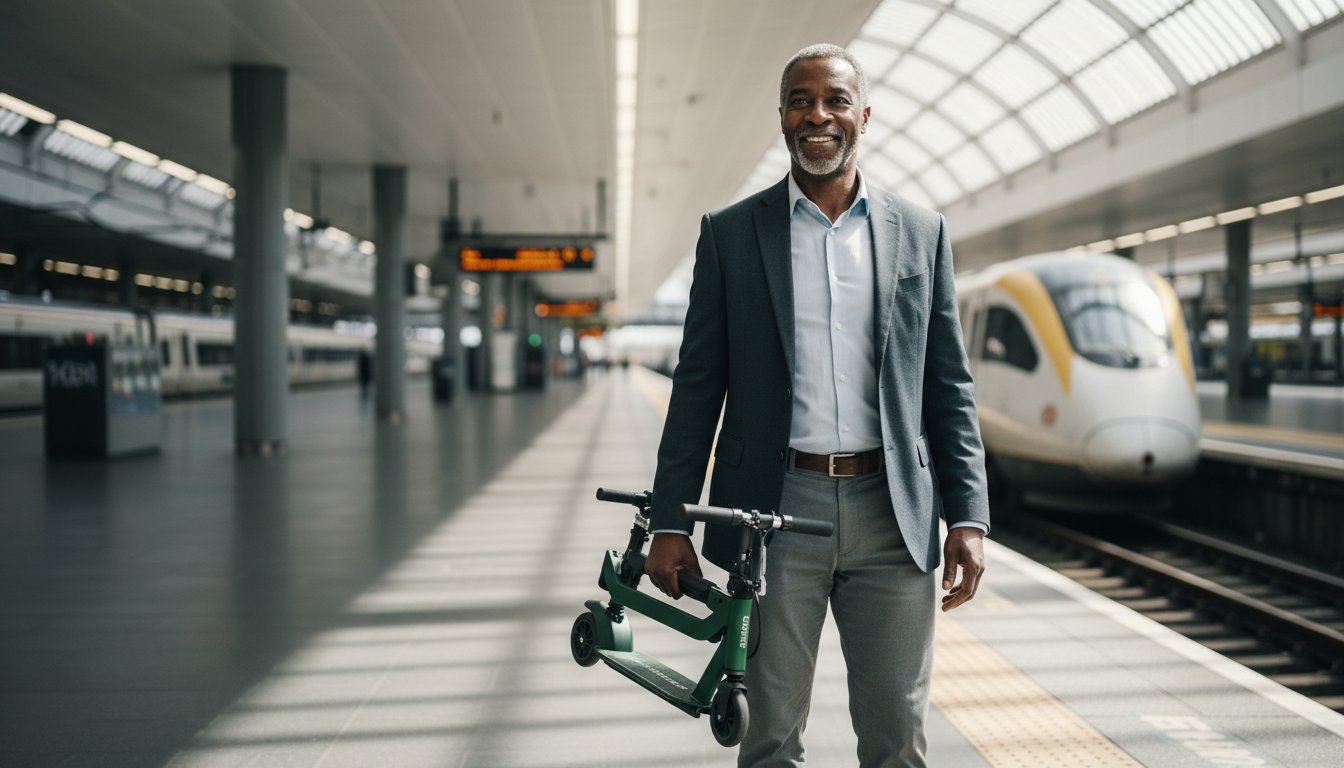
Choosing the lightest mobility scooter isn't just about the total weight on a spec sheet; it's about how that weight interacts with your daily routine. You'll generally face a choice between a single-piece folding unit or a model that breaks down into several components. Folding scooters offer rapid transitions, often collapsing in under 12 seconds for quick hops onto a bus or into a car boot. Dismantling models take longer to prepare, but they allow you to manage the load in smaller, more frequent lifts rather than one heavy heave.
Storage is a primary concern for UK terrace homes or modern flats where space is at a premium. A folded scooter typically occupies a footprint of roughly 45cm x 48cm, making it ideal for narrow hallways or under-stairs cupboards. Before you commit, consult the official government guidelines on mobility scooters to ensure your chosen Class 2 or Class 3 model fits your intended travel environment and legal requirements.
The Rise of Automatic Folding Scooters
Remote control folding provides essential independence if you have limited hand dexterity or chronic back pain. These scooters use a dedicated internal actuator to do the mechanical work for you at the touch of a button. This convenience usually adds a weight penalty of 2.1kg to 3.4kg compared to manual versions. Leading 2026 models now include dual safety sensors. These sensors ensure the frame never collapses while the ignition is active or if weight is detected on the seat, preventing accidental folding during use.
Dismantling Scooters: The Best Choice for Solo Lifting
If you need to lift your equipment into a car boot without assistance, dismantling models are often the smarter pick. While the total weight might be 30kg, a five-piece design means your heaviest single lift is often restricted to just 9.8kg or 10.5kg. Modern "click-and-go" connectors use spring-loaded pins that require zero tools and automatically align the electrical contacts. Because these scooters don't need to fold into a flat profile, they frequently offer superior seat comfort with 55mm deep contoured padding, making them better suited for longer afternoon excursions.
- Folding: Best for frequent public transport users and narrow hallways.
- Dismantling: Ideal for solo drivers with limited lifting capacity.
- Manual: The go-to for the absolute lightest mobility scooter experience without motor weight.
Performance Trade-offs: What You Sacrifice for Lightness
Choosing the lightest mobility scooter involves a strategic balance between portability and heavy duty performance. While these models excel at folding into a car boot in seconds, they rarely match the 30 mile range of their 100kg counterparts. You're trading raw power for the freedom of travel. Most ultra-portable frames prioritise a minimalist design, which means the 45mm ground clearance is ideal for shopping centres but requires care when tackling 25mm dropped kerbs on older UK pavements. Stability is managed through a low centre of gravity, though the maximum user weight for these aluminium frames typically caps at 115kg to ensure structural safety.
Battery Life and UK Charging Habits
Most ultra-light models utilise lithium-ion batteries capped at 160Wh. This specific limit ensures your scooter remains airline-approved under UK Civil Aviation Authority guidelines. A 160Wh battery typically delivers a real-world range of 7 to 9 miles depending on the terrain. By 2026, E-Tech Motion models have prioritised off-board charging as a standard feature. This allows you to leave the 15kg scooter frame in your car boot while taking the 2kg battery pack into your home to charge. New fast-charging technology now reaches 80% capacity in just 120 minutes, significantly reducing downtime compared to older 8 hour lead-acid cycles.
Comfort and Ergonomics on the Move
Weight reduction often starts with the seating. Many models use "hammock-style" fabric seats to shave 3kg off the total weight. These are excellent for short trips, but for excursions lasting over an hour, look for a model with a 40mm padded foam base to support your posture. Ergonomics shouldn't be ignored just to save a few grams. Adjustable tillers are vital for finding a comfortable driving position that prevents back strain. For users living with arthritis, a Delta tiller is a non-negotiable feature. This wrap-around handle design allows you to steer and accelerate using your palms or wrists rather than relying on grip strength in your fingers.
Understanding these trade-offs helps you select a model that fits your specific daily routine without over-investing in unnecessary weight. If your priority is local errands and easy transport, the benefits of a lightest mobility scooter far outweigh the minor sacrifices in suspension depth.
Ready to reclaim your independence? Explore our full range of lightweight mobility solutions designed for the modern UK lifestyle.
Expert Selection: Finding the Lightest Mobility Scooter at Etech Motion
At Etech Motion, we don't just stock products; we engineer independence. Every model in our 2026 range undergoes a rigorous 25-point inspection at our Birmingham facility before it ever reaches a customer. We verify weight claims to the gram, ensuring the lightest mobility scooter you purchase actually lives up to its technical specifications. Our testing covers battery efficiency, frame stress-testing, and folding mechanism durability to guarantee long-term reliability.
We provide UK-wide delivery that goes beyond a simple doorstep drop-off. Our professional set-up service ensures your scooter is ready for the pavement the moment it arrives. We unbox the unit, perform a final safety check, and provide a full demonstration of the controls. Our Birmingham-based support team remains on hand for any aftercare needs, offering a local point of contact that international retailers simply cannot match. You can book a personal consultation at our showroom to test different models and find the exact weight match for your lifting capacity.
Our Top Picks for 2026
- The Ultra-Light Carbon: Weighing only 14.5kg, this model is our premier recommendation for frequent flyers. It utilizes aerospace-grade carbon fibre to remain incredibly portable while meeting all 2026 UK airline safety regulations for lithium-ion batteries.
- The Versatile Folder: This is the ultimate all-rounder for car boot travel. It features a one-touch folding system that activates in 4 seconds, fitting easily into compact vehicles like the Ford Fiesta or Volkswagen Polo.
- The Heavy-Duty Lightweight: Many users need higher weight capacities without the bulk. This model supports users up to 135kg (21 stone) yet maintains a manageable frame weight of just 19kg.
The Etech Motion Guarantee
Reliability is the cornerstone of our brand. We provide comprehensive 12-month warranties on all frames and electronics, supported by our in-house technical experts. Our pricing remains completely transparent. You won't find hidden surcharges for essential accessories; every scooter includes the lithium battery and a UK fast-charger as standard. We focus on sustainable mobility solutions that transform your daily commute from a challenge into an effortless experience.
Ready to discover the perfect balance of weight and performance? Browse our full range of lightweight mobility scooters and take the first step toward effortless travel today.
Unlock Your Independence with the Next Generation of Mobility
Choosing the lightest mobility scooter in 2026 means embracing a lifestyle without limits. Advanced magnesium alloys and carbon fibre frames have revolutionised the market; they've brought total weights down to as little as 14.5kg. This 35% reduction in weight compared to 2023 aluminium models makes lifting your scooter into a car boot simpler than ever. You don't have to choose between a compact folding mechanism that activates in 20 seconds and the stability of a dismantlable frame. Modern engineering now offers both without compromising on a reliable 12-mile battery range.
As a 5-star rated specialist mobility retailer, Etech Motion is dedicated to your freedom. We provide UK-based expert support and free national delivery on selected models to ensure your transition to electric mobility is seamless. Our team tests every unit against rigorous safety standards so you can focus on the joy of the journey. It's time to move forward with a partner who understands your daily challenges and supports your desire for adventure.
Explore the UK’s Lightest Mobility Scooters at Etech Motion
Frequently Asked Questions
What is the absolute lightest mobility scooter currently available in the UK?
The lightest mobility scooter frames currently available in the UK weigh as little as 14.7kg when the lithium battery is removed for transport. These ultra-portable models, often constructed from aerospace-grade aluminium or carbon fibre, are designed specifically for easy lifting into car boots. Most total weights including the battery sit around 17kg to 19kg. This weight reduction ensures you can maintain an active lifestyle without needing a permanent hoist or ramp system.
Can I take a lightweight mobility scooter on an aeroplane?
You can take most lightweight scooters on an aeroplane if the lithium-ion battery capacity is below the 300Wh limit set by IATA. It's essential to notify your airline at least 48 hours before your flight to confirm their specific carriage requirements. You'll usually need to remove the battery and take it into the cabin as hand luggage. Always carry the manufacturer's safety data sheet to ensure a smooth experience at the airport check-in desk.
Is a 3-wheel or 4-wheel lightweight scooter more stable?
A 4-wheel scooter provides superior lateral stability on uneven UK pavements, while a 3-wheel model offers a tighter turning circle of approximately 90cm. If you're navigating narrow supermarket aisles or small domestic lifts, the 3-wheel design is often more practical. However, 4-wheel versions are better at preventing tips when mounting kerbs at an angle. Your choice should depend on whether you prioritise indoor agility or feel more confident with extra ground contact.
How much weight can the lightest mobility scooters safely carry?
Most ultra-lightweight mobility scooter models safely support a maximum user weight of 18 stone, which is roughly 115kg. Some reinforced frames can handle up to 21 stone or 133kg, though this often adds a small amount of weight to the overall build. You shouldn't exceed these limits because it puts unnecessary strain on the 250W brushless motor and reduces your braking efficiency. Always check the specific user weight capacity before making your final purchase decision.
Do lightweight scooters have enough power for hills?
Modern lightweight scooters use high-torque brushless motors that comfortably manage gradients of 6 to 8 degrees. While they aren't built for steep mountain paths, they'll handle standard UK pavement ramps and gentle park inclines without any issues. Performance is best when your lithium-ion battery is charged above 50 percent. If you live in a particularly hilly area, look for a model with a 300W motor to ensure consistent speed and climbing capability.
Can I get a VAT-free mobility scooter if I have a chronic condition?
You qualify for 0 percent VAT on your mobility scooter if you have a chronic condition or disability that affects your walking ability. Under HMRC Notice 701/7, conditions such as arthritis, heart disease, or COPD qualify you for this significant saving. You'll just need to sign a simple self-declaration form at the point of purchase. This reduces the total cost by 20 percent, making premium electric mobility more affordable for those who need it most.
How do I maintain the lithium battery in my lightweight scooter?
To keep your lithium-ion battery healthy, you should charge it after every trip and avoid letting the power level drop below 20 percent. Store the battery in a dry place at room temperature, ideally between 5 and 25 degrees Celsius. If you aren't using the scooter for more than 14 days, charge the battery to about 60 percent before storing it. These habits can extend your battery's life to over 1,000 full charge cycles.
What happens if my lightweight scooter breaks down away from home?
If you experience a breakdown, specialist UK providers like Fish Insurance or Mark Bates Ltd offer 24/7 roadside recovery for mobility users. These policies usually cost between £50 and £90 per year and will transport you and your scooter back home or to a repair centre. It's a sensible investment for anyone planning longer adventures. Most modern scooters also feature a freewheel mode, allowing a companion to push the unit if the motor fails.