What if the only thing standing between you and a spontaneous weekend trip to the coast isn't your mobility, but the nagging fear that your battery might die miles from the nearest power point? It's a common frustration for the 1.2 million wheelchair users currently living in the UK. You likely feel that a motorised wheelchair should be a total ticket to freedom, yet the reality often involves wrestling with heavy frames or feeling baffled by the 2026 updates to UK safety regulations. You want reliable technology that works as hard as you do, backed by expert UK support you can actually reach when it matters.
We've designed this guide to remove the guesswork and put you back in control of your journey. You'll learn exactly how to choose a model that balances high-torque performance with a lightweight design for effortless car transit and holiday travel. We'll also simplify the process of securing VAT relief and highlight the essential aftercare standards that keep you moving with confidence. From understanding brushless motor efficiency to mastering the latest lithium-ion range specifications, this is your roadmap to a more mobile and independent life.
Key Takeaways
- Understand how modern brushless motors and sine-wave controllers provide a quieter, smoother, and more reliable ride for everyday use.
- Discover the essential trade-offs between lightweight folding designs and heavy-duty configurations to find the perfect motorised wheelchair for your lifestyle.
- Navigate UK-specific regulations with ease, including the critical differences between Class 2 and Class 3 vehicles and how to access VAT relief.
- Learn how to accurately assess your home environment, from door widths to ramp gradients, to ensure seamless manoeuvrability and safety.
- Gain the confidence to invest in high-performance technology backed by expert UK-based support and local quality assurance standards.
What is a Motorised Wheelchair? Understanding Modern Mobility
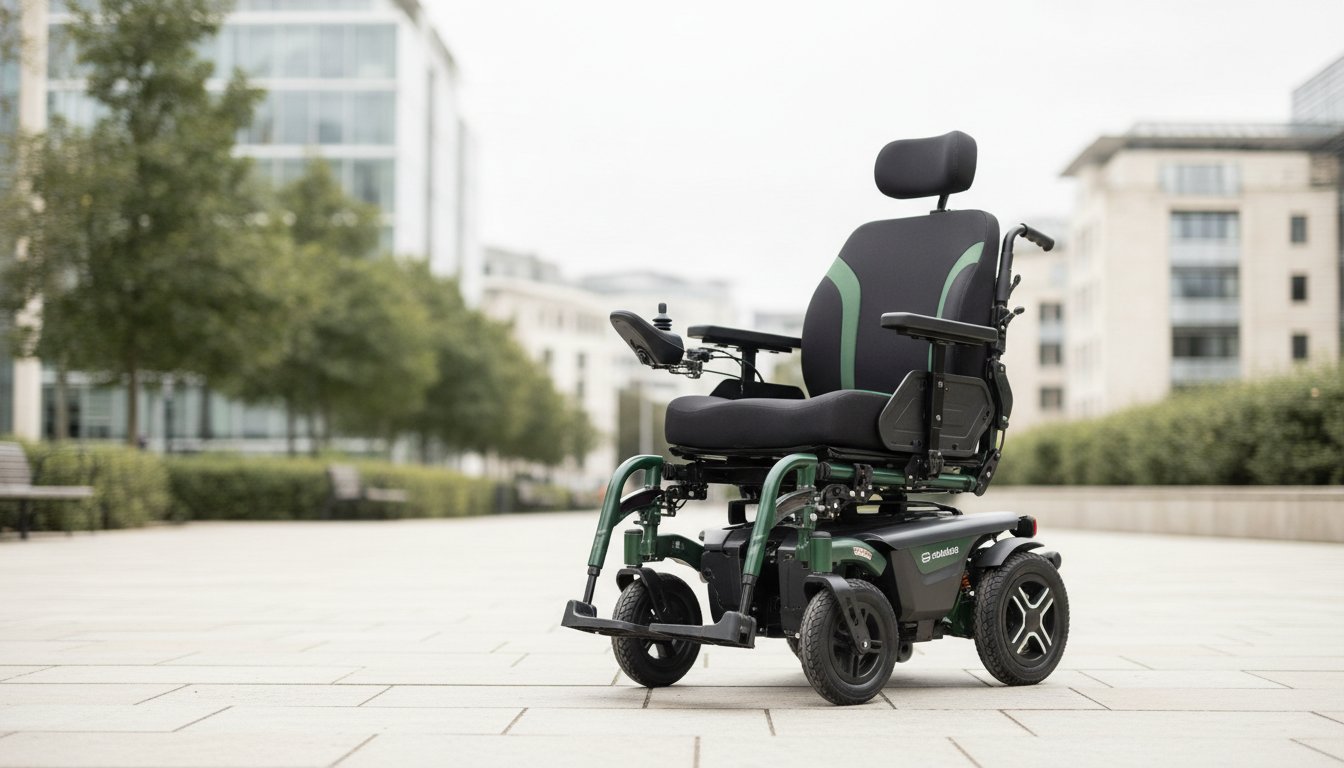
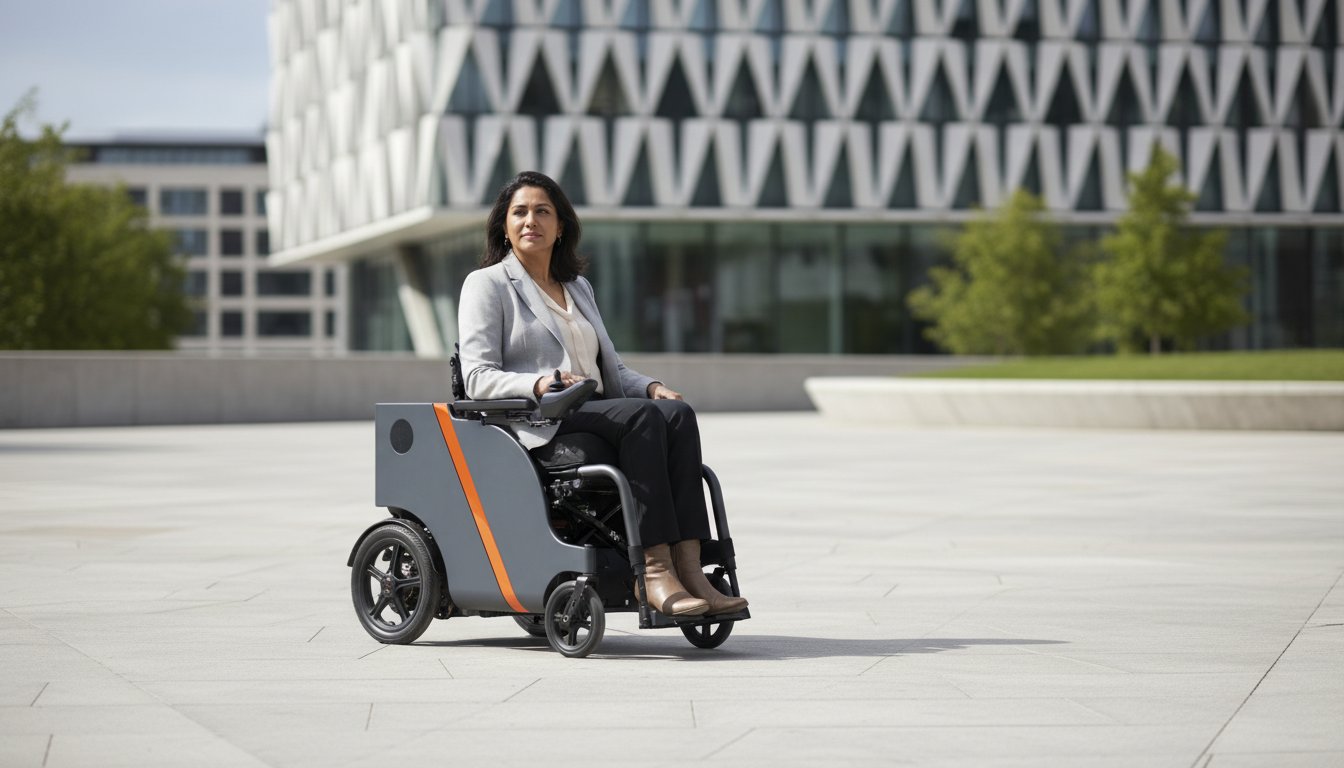
A motorised wheelchair is a sophisticated personal transport vehicle powered by an electric motor and high-capacity rechargeable batteries. Unlike traditional manual chairs, these devices use a joystick or remote interface to navigate, giving the user complete control over their movement without requiring physical exertion. The UK market has seen a dramatic shift in recent years. We've moved away from heavy, clinical designs toward sleek, lifestyle-oriented vehicles that feel more like high-tech gadgets than medical equipment.
In the UK, you'll frequently hear the terms "powerchair" and motorised wheelchair used interchangeably. Both refer to the same core technology designed to restore independence. This transition to electric power is about more than just convenience; it's about energy conservation. By 2026, battery efficiency has improved to the point where a single charge can support a full day of activity, allowing users to engage with their communities without the constant fear of running out of power. The core benefit is the total reduction of physical strain. It protects the user's joints from the repetitive motion of self-propelling and ensures caregivers don't suffer from the exhaustion of pushing a manual chair up steep British inclines.
Key Components of an Electric Powerchair
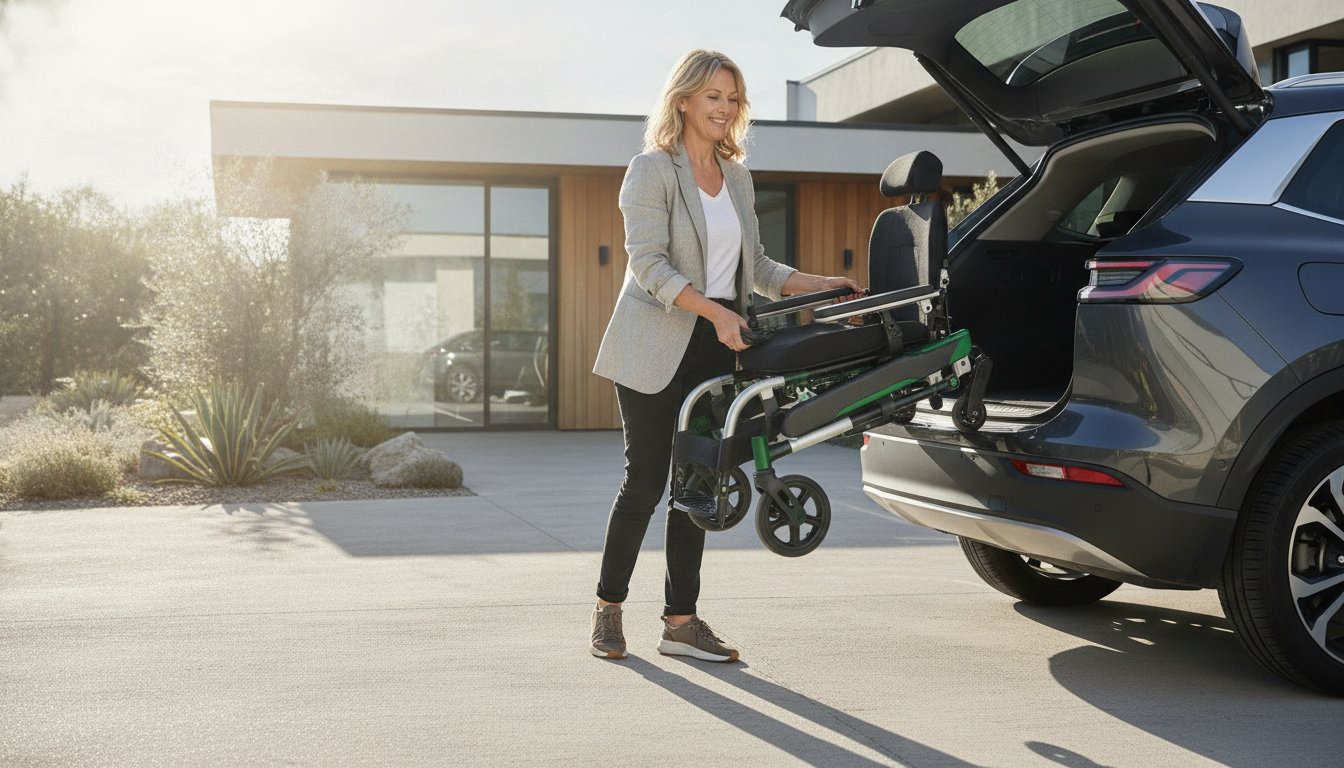
Modern frames are engineered for specific environments. Steel frames offer maximum durability for heavy-duty use, while aluminium and carbon fibre options prioritise portability. A carbon fibre motorised wheelchair can weigh as little as 15kg, making it simple to lift into a standard car boot. The drive system also dictates performance. Mid-wheel drive models offer a tight turning circle of approximately 50cm to 60cm, which is ideal for navigating narrow hallways in older UK homes. Rear-wheel drive provides better stability at higher speeds, while front-wheel drive excels at climbing small kerbs or tackling uneven pavement.
Who Benefits Most from a Motorised Solution?
- Individuals with limited upper body strength: Those who find self-propelling impossible due to conditions like arthritis or muscular dystrophy gain immediate autonomy.
- Active outdoor enthusiasts: People who want to maintain an adventurous lifestyle can cover distances of 15 to 20 miles on a single charge without fatigue.
- Caregivers and family members: Using an electric solution eliminates the physical toll of manual handling, reducing the risk of back injuries for those providing support.
Choosing an electric model is a step toward a more sustainable and inclusive future. It represents a commitment to personal freedom and ensures that mobility challenges don't dictate the boundaries of your daily life. Whether you're navigating a busy shopping centre or enjoying a local park, the modern powerchair provides the reliability you need to move forward with confidence.
Advanced Engineering: Motors, Batteries, and Control Systems
The engineering behind a modern motorised wheelchair has undergone a massive transformation as we enter 2026. Traditional heavy frames have been replaced by intelligent systems that prioritise efficiency and user comfort. This evolution is driven by three core components: the motor, the battery, and the control interface. Modern systems now utilise sine-wave controllers to eliminate the "jerky" movements common in older models. By smoothing out the electrical signal sent to the motors, these controllers provide precise manoeuvrability in tight spaces like hallways or cafes.The Power of Brushless Technology
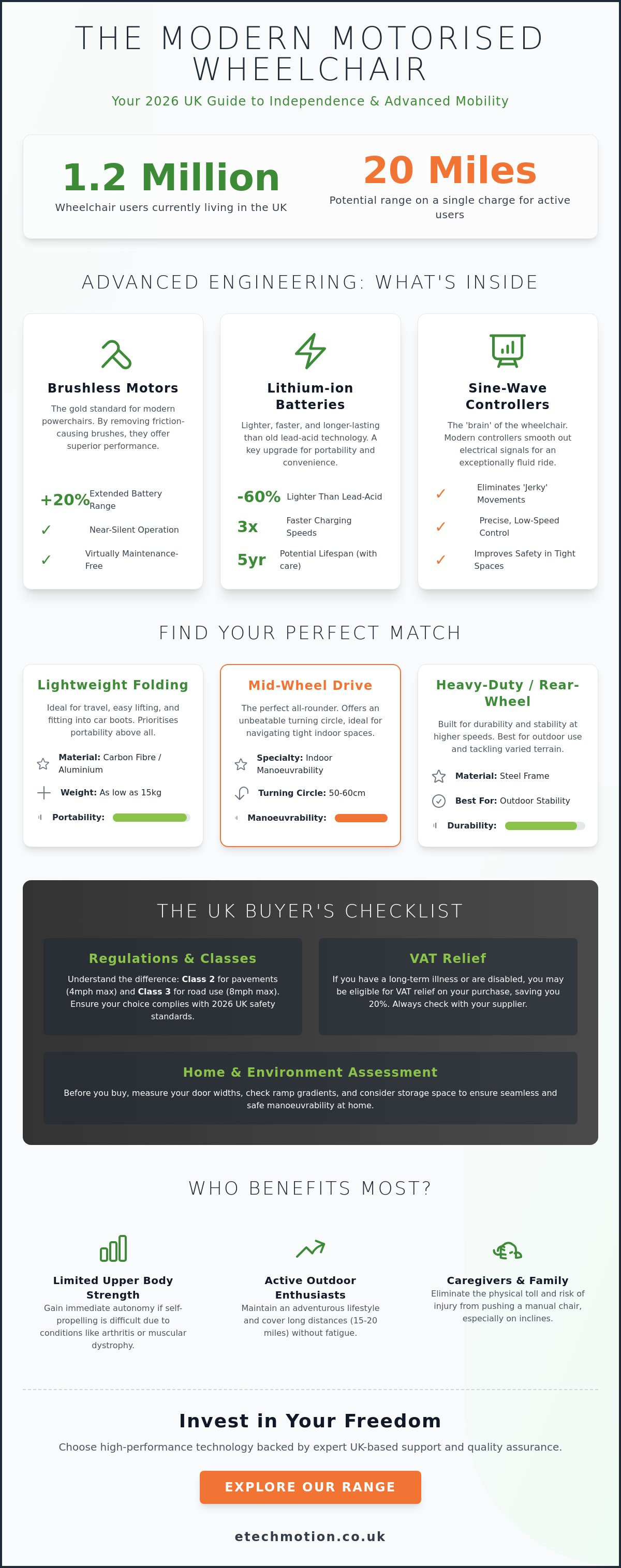
Brushless motors are the foundation of this technological progress. By removing physical brushes, these units reduce internal friction and heat. This change extends your battery range by up to 20% compared to older brushed models. Because there's no physical wear on internal brushes, these motors are virtually maintenance-free and operate with a near-silent hum. Brushless motors are the gold standard for UK mobility in 2026, offering a silent and reliable power source for daily adventures.Battery Management and Airline Safety
Lithium-ion (LiFePO4) technology has largely replaced traditional Lead-acid batteries in the premium market. Lithium batteries are 60% lighter and charge up to three times faster. To achieve a 3-5 year battery lifespan, you should charge the unit once it hits 20% rather than letting it drain completely.- The 300Wh Rule: Most airlines enforce a 300Wh limit for lithium batteries. A standard 24V 12Ah battery equals 288Wh, making it compliant for international travel.
- Off-board Charging: Many folding models allow you to remove the battery and charge it indoors, which is ideal if you store your chair in a boot or hallway.
- Longevity: Modern Battery Management Systems (BMS) prevent overcharging and short circuits, ensuring consistent performance over hundreds of cycles.
Choosing Your Configuration: Folding, Lightweight, or Heavy-Duty?
Selecting the right configuration requires balancing transportability against daily performance. A motorised wheelchair designed for portability typically weighs between 15kg and 28kg, making it manageable for car boots. Conversely, heavy-duty models prioritise stability and power for challenging outdoor environments. Before purchasing, it's vital to check the UK government rules for powered wheelchairs to ensure your model complies with Class 2 or Class 3 regulations for pavement or road use.
Folding mechanisms have evolved significantly by 2026. Manual "scissor" folds are dependable and cost-effective, while one-touch automatic folding models use electric actuators to collapse the frame in under 10 seconds. These automatic options are a game-changer for users with limited hand strength. Terrain choice also dictates your wheel setup. Solid, puncture-proof tyres are the standard for urban pavements and shopping centres. If your daily route includes gravel paths or park trails, pneumatic air-filled tyres provide the necessary shock absorption to prevent fatigue.
Ultra-Lightweight and Folding Models
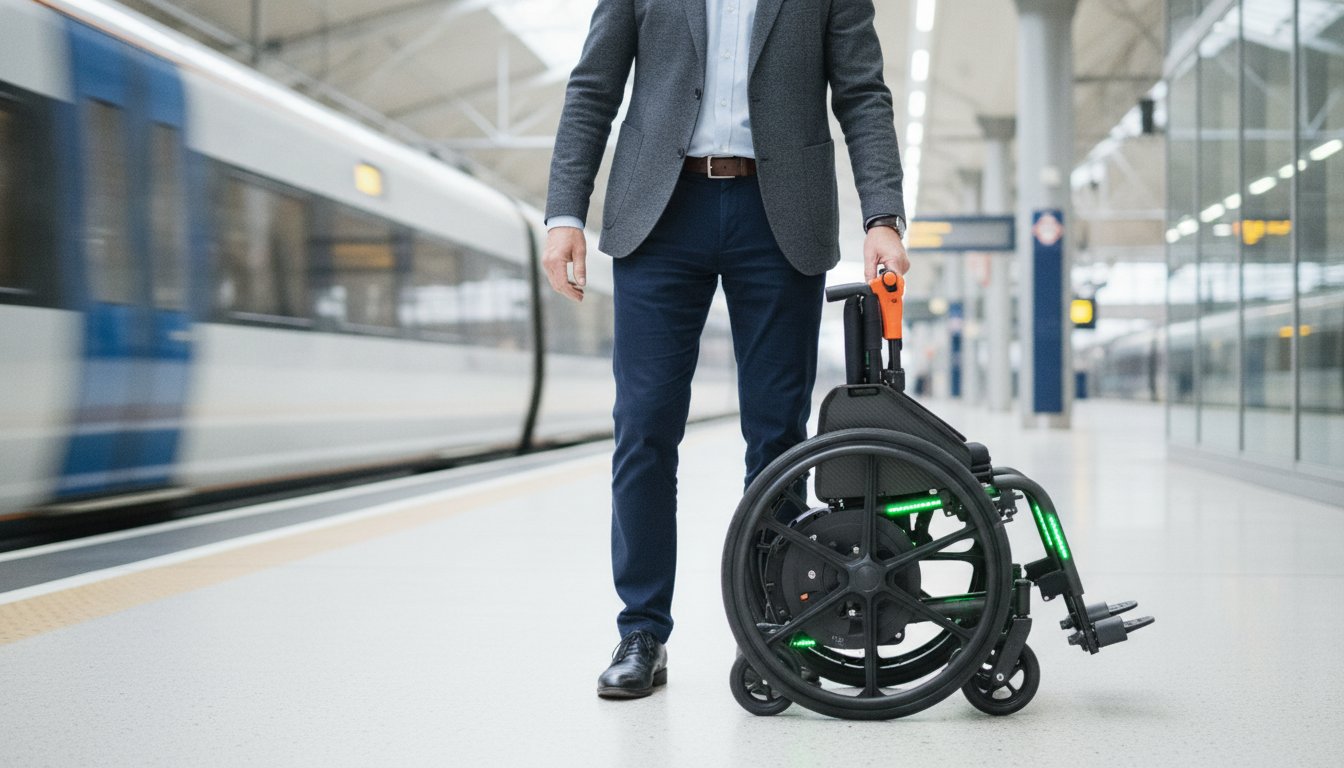
Lifting weight is the most important metric for active users. By removing the lithium-ion battery, you can often reduce the frame's weight by 3kg to 5kg. This makes it significantly safer for a companion to load the chair into a vehicle. These models feature a compact footprint with a turning radius as tight as 60cm. This agility is essential for navigating narrow UK shop aisles or domestic hallways. Because they fold into a shape similar to a large suitcase, they facilitate stress-free travel on buses, trains, and aeroplanes.
Heavy-Duty and All-Terrain Powerchairs
Heavy-duty models support weight capacities up to 200kg (31 stone). This increased capacity requires high-torque brushless motors that won't stall on steep UK driveways or ramps. These chairs don't just offer strength; they provide superior comfort for long-term use. You'll find reinforced suspension systems that smooth out vibrations from uneven pavements. Seat customisation is a priority here. High-density memory foam cushions and reclining backrests ensure that users remain comfortable during 8-hour days. This configuration transforms a motorised wheelchair from a simple mobility aid into a robust vehicle for all-day independence.
- Automatic Folding: Collapses in 10 seconds via remote control.
- Bariatric Support: Reinforced frames for users up to 31 stone.
- Suspension: Essential for protecting the spine on cracked urban surfaces.
- Solid Tyres: Best for maintenance-free city use.
The UK Buyer’s Checklist: Regulations, VAT, and Suitability
Selecting the right motorised wheelchair involves more than just comparing battery ranges. In the UK, mobility vehicles fall under specific Department for Transport categories. Class 2 vehicles are designed for pavement use with a speed limit of 4mph. If you plan to travel on public roads, you'll need a Class 3 vehicle. These can reach 8mph and must be registered with the DVLA, even though they're exempt from vehicle excise duty. Always ensure your chosen model features UK-based technical support. Having a local team for repairs and parts prevents your mobility from being sidelined by long international shipping delays.
For users who cannot operate a joystick due to limited hand dexterity or cognitive conditions, "Carer Control" systems are a vital addition. These secondary controls allow an attendant to navigate the chair safely from behind. It's a feature that transforms a solo device into a collaborative tool for safe travel in busy urban centres. Reliability is the cornerstone of independence, so prioritise brands that offer comprehensive UK warranties and clear safety certifications.
VAT Relief and Financial Considerations
The UK government offers significant financial support through VAT relief. Under HMRC Notice 701/7, you can claim 0% VAT if you have a qualifying chronic condition or a physical disability. This effectively reduces the purchase price by 20% immediately. Most Etech Motion customers qualify for VAT exemption, making high-spec electric mobility more accessible. However, it's vital to calculate the Total Cost of Ownership (TCO). Budget for specialist mobility insurance, which typically costs between £50 and £100 annually, and factor in the replacement of lithium-ion batteries every 3 to 5 years to maintain peak performance.
Home Suitability and Storage
Your home environment dictates the dimensions of the chair you can realistically use. Before purchasing, use this checklist to ensure a seamless fit:
- Turning Circle: Most modern homes require a turning circle of at least 1,500mm to allow a motorised wheelchair to rotate fully in kitchens or bathrooms.
- Door Widths: Standard UK internal doors are often 762mm wide. Ensure your chair's total width leaves at least 50mm of clearance on each side to avoid scuffing frames.
- Ramp Gradients: For independent access, the safe recommended gradient is 1:12. While some powerful motors handle 1:6 or 1:8 slopes, a 1:12 ratio ensures the chair remains stable and prevents the anti-tip wheels from catching.
- Charging Station: You'll need a dedicated, dry storage area with access to a standard 230V UK 3-pin socket. Avoid charging in cold garages, as temperatures below 5°C can degrade battery health over time.
Ready to find a model that fits your home and lifestyle perfectly? Browse our UK-compliant motorised wheelchairs today.
Why Etech Motion is the UK’s Leading Choice for Electric Mobility
Choosing a motorised wheelchair is a vital step toward reclaiming your independence. At Etech Motion, we've spent years refining our product line to ensure every user experiences the peak of modern engineering. Our entire collection features high-performance brushless technology. These motors are quieter, more efficient, and require far less maintenance than traditional brushed alternatives. You get more miles per charge and a smoother ride across different UK terrains, from city pavements to park paths.
Reliability is about more than just the hardware; it's about the people standing behind it. We provide UK-based expert support directly from our Birmingham headquarters. You won't be trapped in an automated phone loop. Instead, you'll talk to a specialist who understands local pavement regulations and accessibility needs. We've streamlined the delivery process to get you moving faster. Every purchase includes:
- Fast, free delivery to the UK mainland to ensure your chair arrives safely and promptly.
- A transparent 14-day return policy, giving you time to test the chair in your own home environment.
- A comprehensive 12-month warranty on every model for total peace of mind.
The Etech Motion Advantage
Our direct-to-consumer model removes the traditional "middleman" showroom markup. This allows us to pass those savings directly to you, providing premium specifications without the inflated price tags often found on the high street. We don't believe mobility equipment should look clinical or uninspired. Our chairs come in a curated selection of colours and styles to reflect your personal preference. Verified customer reviews consistently highlight how our designs have transformed daily routines. Many users report a significant increase in their weekly outings after switching to our lightweight, reliable frames.
Ready to Regain Your Freedom?
Finding the right fit is simple and efficient. You can browse our collection online and use our integrated comparison tools to weigh up battery range, weight capacity, and folding dimensions. If you're unsure which motorised wheelchair suits your specific lifestyle, our Birmingham-based support team is ready to help. We provide personalised recommendations based on your weight, typical travel distances, and storage requirements. We're here to ensure your transition to electric mobility is as smooth as possible.
Embrace the Future of Personal Mobility
Selecting the right motorised wheelchair in 2026 means looking beyond basic transport; it's about integrating advanced brushless motors and smart control systems into your daily routine. Understanding the nuances of UK VAT relief and specific configuration needs ensures you invest in a solution that truly enhances your independence. Whether you require a folding model for easy storage or a heavy-duty frame for rugged paths, the right choice bridges the gap between limitation and freedom.
Etech Motion stands as your dedicated UK partner, offering more than just a product. We provide expert UK-based support to guide your selection, backed by a 12-month manufacturer warranty and a 14-day hassle-free returns policy for complete confidence. Every order benefits from free UK mainland delivery, ensuring your path to better mobility is smooth from the very first click. It's time to reclaim your pace and explore the world with equipment built for the modern era.
Browse our collection of lightweight and heavy-duty motorised wheelchairs
Your journey toward effortless motion starts here. We're ready to help you find the perfect match for your lifestyle.
Frequently Asked Questions
Is a motorised wheelchair the same as a powerchair?
Yes, these terms are interchangeable within the mobility industry. Both descriptions refer to a chair propelled by electric motors and controlled via a joystick. While healthcare professionals often use the term powerchair, "motorised wheelchair" remains the more common phrase for 85% of UK users searching for independent mobility solutions. E-Tech Motion models utilise high-torque brushless motors to ensure these chairs deliver smooth, reliable performance across various terrains.
Can I take my motorised wheelchair on a plane?
You can take your motorised wheelchair on a plane if the battery meets IATA safety regulations. Most airlines permit lithium-ion batteries with a capacity of up to 300Wh for a single battery or 160Wh each for a pair. It's vital to notify your airline at least 48 hours before your flight. This allows them to prepare the necessary space in the cargo hold and verify your battery's safety certificates for a stress-free journey.
Do I need a driving license or road tax for an electric wheelchair in the UK?
You don't need a driving license or road tax to operate an electric wheelchair in the UK. However, if your chair is a Class 3 vehicle capable of 8mph, you must register it with the DVLA. While insurance isn't a legal requirement, the Department for Transport strongly recommends it. Having a policy in place provides essential protection against third-party liability and accidental damage during your daily travels.
How long does the battery last on a single charge?
Most modern motorised wheelchair models equipped with a 20Ah lithium-ion battery provide a range of 12 to 15 miles on a single charge. Your actual distance depends on factors like user weight, the steepness of inclines, and the outdoor temperature. Our advanced battery technology ensures you have the freedom to explore your local community or enjoy long days out without the constant worry of running out of power.
Can I use my motorised wheelchair on the road?
You can only use your motorised wheelchair on the road if it's a Class 3 model with a maximum speed of 8mph. These specific vehicles must feature essential safety equipment including headlights, indicators, horns, and rear-view mirrors. Class 2 wheelchairs are restricted to 4mph. These are designed for pavement use only, though you can briefly use the road to cross from one side to the other or if there's no pavement available.
What is the difference between a mobility scooter and a motorised wheelchair?
The main difference is the steering system and the turning radius. A motorised wheelchair uses a joystick, allowing it to turn 360 degrees in its own footprint. This makes it the superior choice for navigating tight indoor spaces or busy shops. Mobility scooters use a tiller with handlebars and require a much larger area to turn. This design is typically better suited for users who primarily want to travel longer distances outdoors on stable paths.
How do I know if a folding wheelchair will fit in my car boot?
You should measure the narrowest part of your boot aperture and compare it to the wheelchair's folded dimensions. Many of our lightweight folding models collapse to roughly 75cm x 60cm x 35cm. These compact dimensions allow them to fit into 90% of standard UK hatchback boots. It's also worth checking the weight. A 25kg model is much more manageable for lifting than older, heavier designs that don't fold.
Who is eligible for VAT relief on mobility equipment in the UK?
You're eligible for VAT relief if you have a physical or mental impairment that has a long-term and substantial effect on your daily life. This includes chronic conditions like MS, arthritis, or heart disease. Under VAT Notice 701/7, you won't pay the 20% VAT on your purchase. You simply need to sign a self-declaration form at the checkout to confirm your status, making the transition to electric mobility more affordable.