Last Saturday, Sarah stood in her driveway in Birmingham, staring at her Vauxhall Corsa and her bulky powerchair, realizing they simply wouldn't fit together for her weekend trip. It's a common frustration for many of the 1.2 million wheelchair users across the UK who want to maintain their independence without needing a massive van. You shouldn't have to choose between a vehicle that's easy to park and a mobility aid that gives you freedom. It's natural to feel anxious about whether a new chair will actually fit your boot or if you'll struggle to lift a heavy frame and battery on your own.
This guide helps you find the ideal portable electric wheelchair for small car owners, focusing on lightweight models that fold in seconds without sacrificing motor performance or comfort. We'll show you how to select a chair that balances durability with a manageable lifting weight, often under 25kg. You'll also learn how to navigate 2024 UK airline regulations for lithium-ion batteries and see exactly how to measure your boot space for a guaranteed fit, ensuring your next adventure is completely stress-free.
Key Takeaways
- Learn how to accurately measure your boot’s depth and lip height to ensure your powerchair clears the wheel arch intrusions common in compact UK cars.
- Understand the critical distinction between lifting weight and total weight to select a model you can handle effortlessly without physical strain.
- Discover the specific folding dimensions required to fit a portable electric wheelchair for small car boots without compromising on motor performance or comfort.
- Navigate complex IATA lithium battery regulations and UK public transport standards to ensure your mobility device is fully flight-ready and rail-compliant.
- Explore how E-Tech Motion’s UK-based support and quality assurance provide the long-term reliability and expert guidance needed for your continued independence.
What Makes a Portable Electric Wheelchair Fit a Small Car?
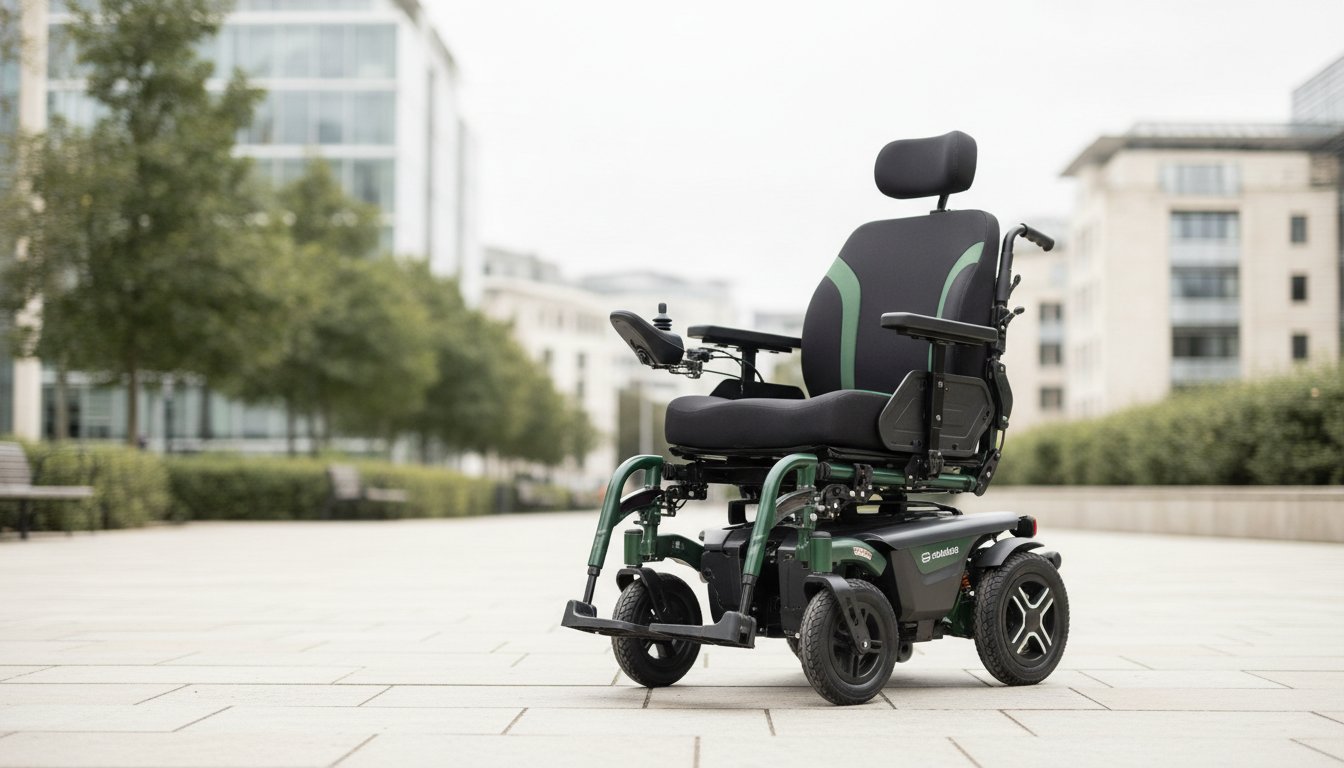
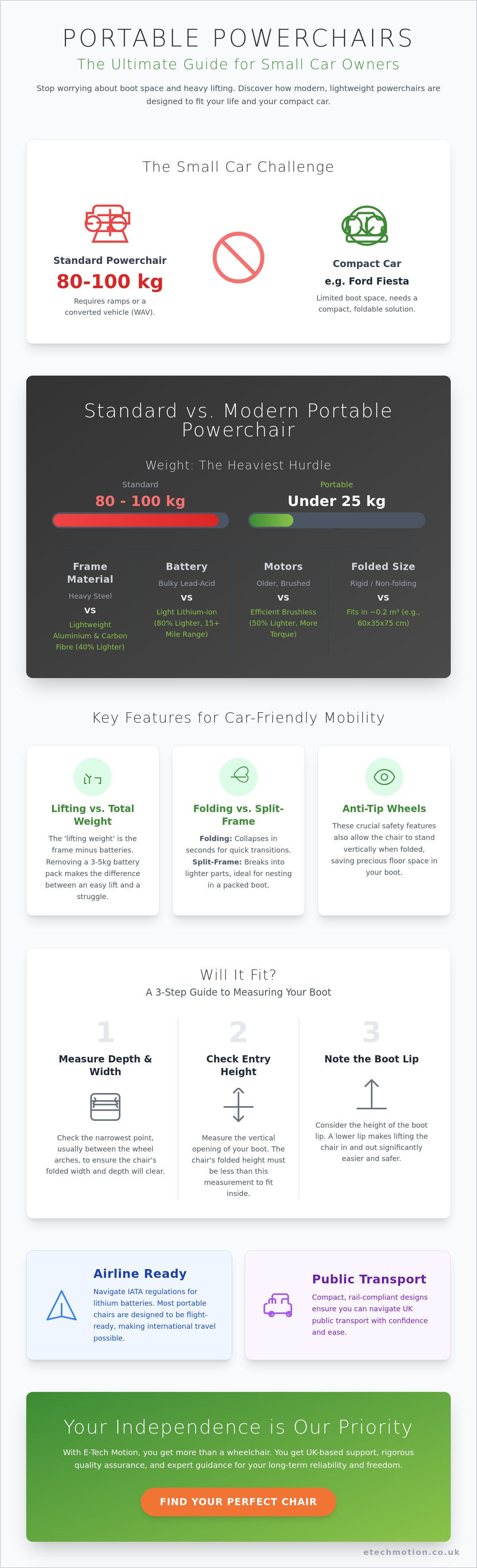
Finding a portable electric wheelchair for small car use used to be a compromise between range and weight. Today, UK mobility standards define portability through the lens of independence and ease of transport. A standard powerchair often tips the scales at 80kg to 100kg; these bulky units require expensive Wheelchair Accessible Vehicle (WAV) conversions or heavy-duty ramps. To understand the shift in technology, it helps to ask: What is a portable electric wheelchair? In the modern market, it's a device designed to condense into a footprint of roughly 0.2 to 0.3 cubic metres, allowing it to slide into the boot of a standard hatchback like a Ford Fiesta or Vauxhall Corsa.
The "small car test" is failed by standard chairs because of their rigid frames and heavy lead-acid batteries. True portability relies on three specific pillars:
- Weight: The total mass should ideally stay under 25kg. Many modern frames now weigh between 15kg and 22kg without batteries.
- Folded Volume: Dimensions must shrink to approximately 60cm x 35cm x 75cm to clear the boot lip of a compact car.
- Disassembly: The ability to remove components, such as the joystick or footrests, helps maximize tight storage spaces.
Lithium-ion technology has been the primary catalyst for this revolution. These batteries offer high energy density, providing up to 15 miles of range while weighing 80% less than traditional lead-acid counterparts. This reduction in bulk means you don't need a van to enjoy a day out.
The Evolution of Lightweight Powerchairs
The transition from heavy steel to carbon fibre and 6061 aircraft-grade aluminium has reduced frame weights by nearly 40% since 2015. These materials provide the structural integrity needed for UK pavements while remaining light enough for one person to lift. Modern brushless motors have also changed the game. They're roughly 50% lighter than older brushed versions and provide more torque. This efficiency ensures a portable electric wheelchair for small car owners doesn't struggle with 6-degree gradients or uneven terrain.
Folding vs. Split-Frame Designs
Folding chairs are the gold standard for speed. Most models collapse in under 5 seconds, making them perfect for quick transitions at a supermarket or GP surgery. They occupy a slim, vertical footprint in a boot. Split-frame models take a different approach by breaking the chair into two or three sections. This is ideal if you have a 300-litre boot, typical of a Toyota Yaris, where you might need to nestle components around other items. Splitting the weight also helps if you prefer lifting 10kg twice rather than 20kg once.
Key Specifications for Car-Friendly Mobility
Selecting a portable electric wheelchair for small car transport requires looking beyond the aesthetic. You must focus on the logistics of the lift. Many users confuse total weight with lifting weight. Total weight includes the batteries, joystick, and cushions, whereas lifting weight is what you actually handle when the chair is stripped down for transit. Removing the lithium-ion batteries often sheds 3kg to 5kg, making the difference between a manageable lift and a potential back strain.
Folded dimensions are the ultimate deal-breaker. A chair might look compact, but its depth often prevents a hatchback boot from closing. You should measure your boot space before buying, considering that height, width, and depth all change once the unit is collapsed. Anti-tip wheels play a vital role here. These small rear extensions provide a stable base, allowing the chair to stand vertically in storage. This vertical orientation saves floor space in a cramped boot, leaving room for shopping or luggage. Understanding UK regulations for powered wheelchairs is also essential, as these rules dictate where you can store and operate your device in public spaces.
Weight Matters: How Light is "Lightweight"?
In the UK market, lightweight models typically range from 15kg to 28kg. Net weight refers to the mass of the wheelchair frame alone, excluding the lithium-ion batteries and any detachable cushions. If you're lifting the chair solo, aim for a net weight under 22kg. Wheel size also dictates weight. While 8-inch rear wheels reduce the overall footprint, 12-inch pneumatic tyres provide superior shock absorption on uneven UK pavements, though they add approximately 2kg to the total mass. If you're unsure which model fits your specific vehicle, you can explore our range of lightweight folding wheelchairs designed for UK drivers.
Folding Mechanisms and Ease of Use
You can choose between manual folding and remote-controlled "Auto-Fold" technology. Manual systems use a single-pull lever, but these require a degree of grip strength. For users with arthritis or limited hand dexterity, an electronic folding mechanism is a game-changer. These systems collapse the chair in under 10 seconds at the touch of a button. Always check the latch system for a "positive lock" sound. This click ensures the frame is secure. Safety locks are non-negotiable, they prevent the chair from partially unfolding while you're lifting it into the boot, protecting both the user and the car's bodywork.
Measuring Your Small Car for a Powerchair
Selecting the right portable electric wheelchair for small car owners requires more than just checking a spec sheet. UK hatchbacks like the Ford Fiesta or Volkswagen Polo often feature narrow boot openings and significant wheel arch intrusions that can obstruct a folded frame. You need to measure the narrowest point between the wheel arches, as this is typically 10 to 15 centimetres less than the total boot width. Check the depth from the back seats to the boot lip, and don't forget to measure the "lip height." A high threshold requires a higher lift, which affects how you'll load the chair daily.
One of the most reliable ways to verify fitment is the cardboard template method. Cut a piece of cardboard to the exact folded dimensions of your chosen wheelchair. If this flat shape doesn't slide easily into your boot, the three dimensional chair won't either. For longer frames, test the "diagonal fit" by placing the template at an angle. This often gains you an extra 5 to 10 centimetres of clearance in compact UK cars, making the difference between a closed boot and a frustrated return journey.
Boot Space vs. Wheelchair Dimensions
Typical boot capacities for popular UK compacts vary significantly. A Ford Fiesta offers roughly 292 litres, while a Volkswagen Polo provides about 351 litres. However, these numbers include the space occupied by the rear parcel shelf. You should always measure with the parcel shelf removed to maximise vertical height. If your boot is deep but narrow, use the "vertical stack" method. This involves standing the folded wheelchair on its end rather than laying it flat, which often leaves room for extra shopping or luggage alongside the mobility aid.
Safe Lifting Techniques for Car Loading
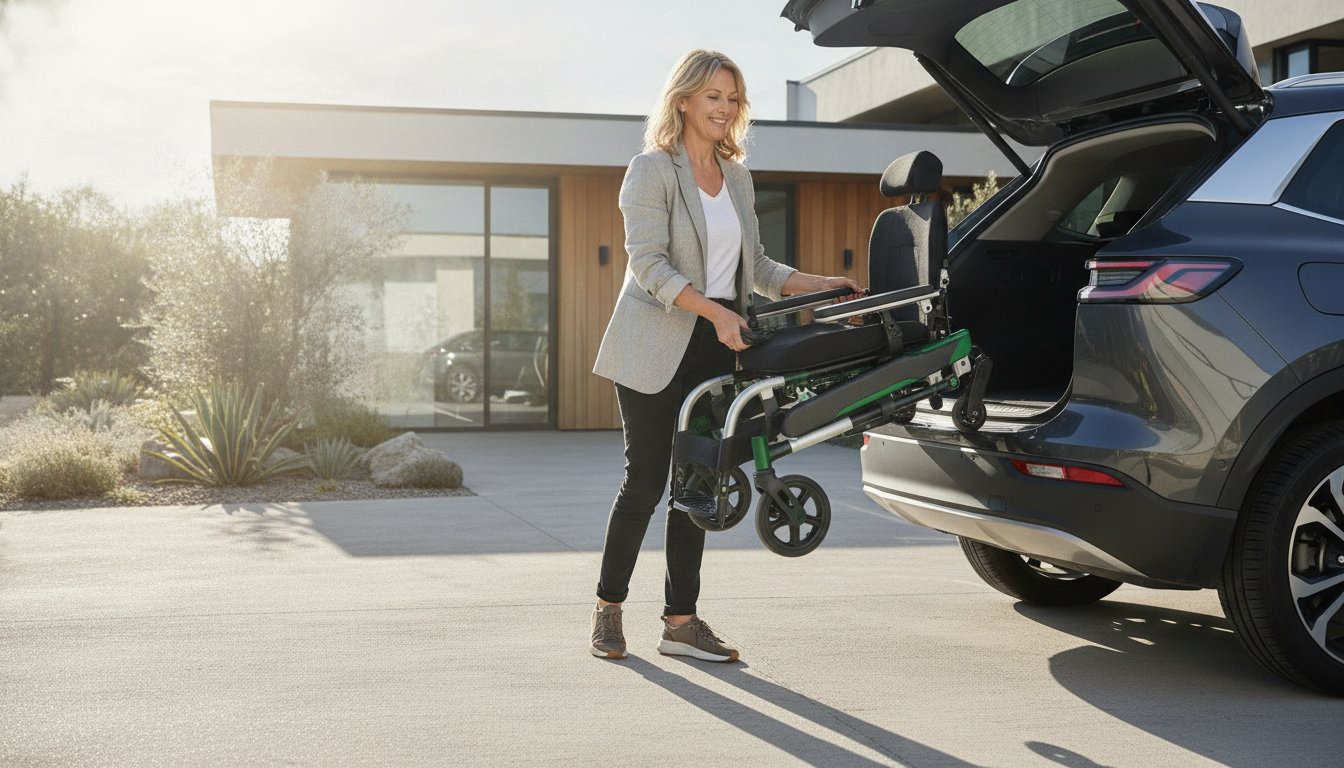
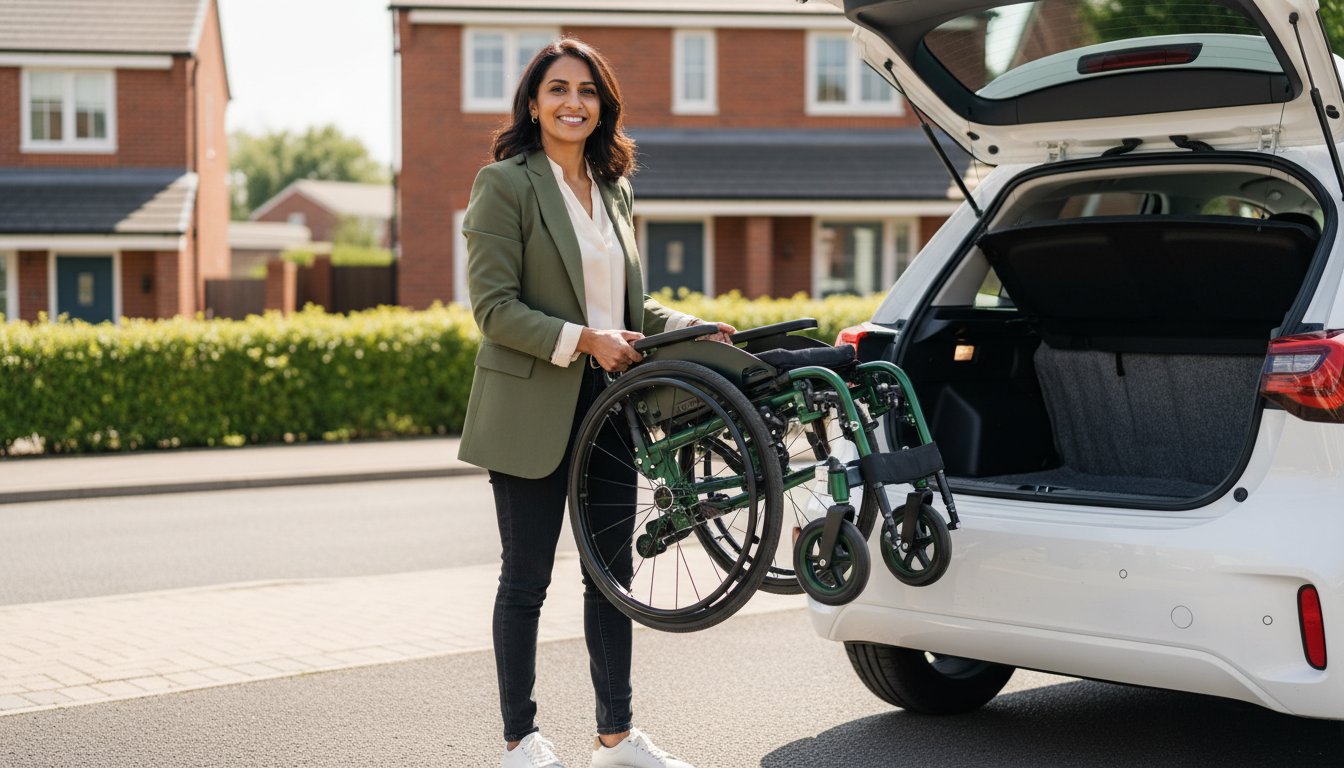
Manual lifting requires proper form to protect your health. Use the "pivot" method by resting one end of the chair on the boot lip and rotating the rest of the frame inside. This technique effectively halves the weight you're supporting at any one time. Learning how to safely transport your mobility aid is vital for preventing injury and protecting your vehicle's interior.
If the chair's weight exceeds 15kg and you have limited upper body strength, consider a boot hoist. These mechanical arms handle the heavy lifting for you, ensuring your portable electric wheelchair for small car travel remains a source of freedom rather than a physical strain. Always use a heavy duty protective mat to cover your bumper. This prevents the metal frame from scratching your paintwork and provides a smoother surface for sliding the chair into position.
Public Transport and Airline Considerations
Choosing a portable electric wheelchair for small car boots often provides an unexpected advantage beyond the car park. The same engineering that allows a chair to fold into a compact space makes it an ideal companion for the UK's rail and bus networks. British infrastructure, while improving, still presents challenges with narrow aisles and limited floor space. A chair designed with a small footprint ensures you don't struggle in the restricted "wheelchair space" on a busy Stagecoach bus or a cross-country train.
Long-distance coach travel, such as with National Express, typically requires your mobility aid to be stored in the luggage hold. Lightweight, folding models are preferred here because they fit within the standard 20kg to 25kg weight limits many operators suggest for manual handling. Always ensure your chair is switched off and the freewheel lever is engaged before the driver stows it. This prevents any accidental motor engagement during transit and makes it easier for staff to position the chair safely alongside other suitcases.
Taking Your Powerchair on a Plane
Flying with a mobility aid requires specific preparation to meet International Air Transport Association (IATA) safety standards. Most modern powerchairs use lithium-ion batteries, which are classified as dangerous goods. To fly, your battery must generally not exceed a 300Wh (Watt-hour) rating for a single battery, or 160Wh each if the chair uses two. You can calculate this by multiplying the Voltage (V) by the Amp-hours (Ah). For example, a 24V 10Ah battery is 240Wh, making it well within the legal limit for air travel.
You must contact your airline at least 48 hours before your flight to declare your mobility aid. They will ask for the dimensions, weight, and battery type. Always carry the "MSDS" (Material Safety Data Sheet) for your battery. This document proves to ground crew and security that the battery is safe for flight. Before handing your chair over at the gate, remove the joystick controller and carry it in your hand luggage. Joysticks are the most fragile component and are frequently damaged during baggage handling if left attached.
Navigating UK Trains and Buses
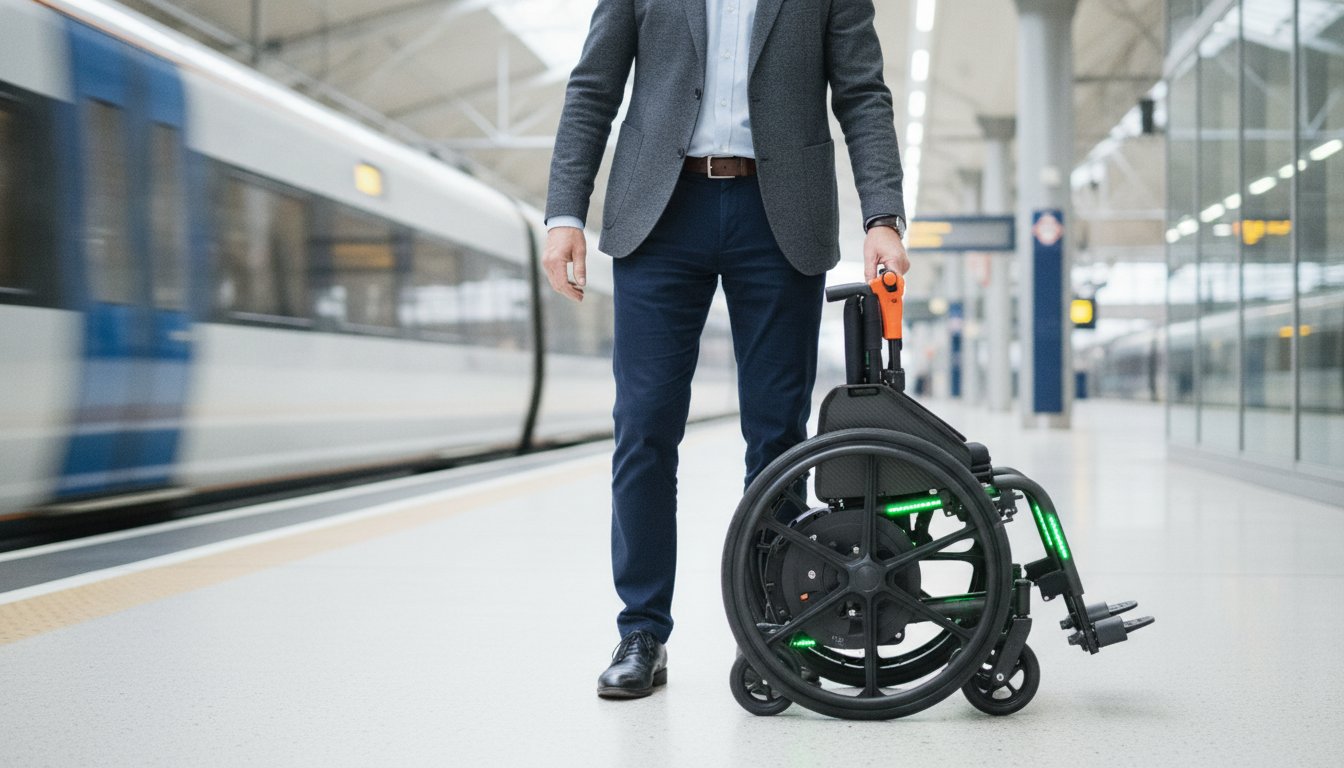
The UK "Reference Wheelchair" standard for public transport is 700mm wide and 1200mm long. Most models designed as a portable electric wheelchair for small car use fall well within these dimensions, giving you more room to manoeuvre. A tight turning circle is vital when boarding a train via a ramp, as you often need to make a sharp 90-degree turn immediately upon entering the vestibule. Compact chairs allow for these adjustments without multiple shunts.
Urban environments like London or Manchester often involve crowded platforms and buses. A chair with a slim profile ensures you don't block the aisle for other passengers. If you find yourself in a particularly cramped space, switching to freewheel mode allows a companion to manually nudge the chair into the perfect position. This flexibility is a key benefit of choosing a model that prioritises portability and a reduced physical footprint.
Ready to reclaim your independence on the road and in the air? Explore our range of airline-approved portable electric wheelchairs and start your next adventure today.
Choosing Your Etech Motion Portable Wheelchair
Selecting the right portable electric wheelchair for small car use involves more than just comparing dimensions on a screen. At Etech Motion, we've developed a specialist folding range that caters specifically to the requirements of UK drivers. Our Birmingham-based team ensures that every model undergoes rigorous quality assurance, focusing on the durability of folding mechanisms and the precision of brushless motors. We don't just sell equipment; we provide a gateway to renewed independence and local adventure.
Our expert team takes the guesswork out of your purchase. We maintain an extensive database of UK car boot capacities, covering everything from compact hatchbacks to the latest electric vehicles. For those also considering electric vehicle infrastructure in Spain, you can explore Sistemas de recarga para vehículo eléctrico through specialists like Plugmycar. When you speak with our specialists, we help you verify that your chosen model fits comfortably alongside your weekly shopping or luggage. This bespoke matching service ensures your transition to electric mobility is smooth and entirely stress-free.
We believe in a complete service that respects your time and safety. That's why we offer professional assembly and a reliable nationwide delivery network. Instead of struggling with heavy boxes and complex manuals, you can opt for a technician-led handover. We demonstrate the folding process and safety features right at your doorstep. This commitment to local accountability is why we're a leading name in the UK mobility sector.
Our Top Picks for Small Car Boots
The 2026 Etech Motion range focuses on balancing structural integrity with weight efficiency. We've categorised our top performers to help you decide based on your specific lifestyle needs:
- The Ultra-Lite Series: Weighing only 18kg without batteries, these models are the premier portable electric wheelchair for small car owners who need to lift their equipment frequently.
- Heavy-Duty Folding Models: Designed for users up to 150kg, these chairs use reinforced aerospace-grade aluminium while maintaining a compact folded profile of approximately 32cm in width.
- Customisable Battery Options: You can choose between 10Ah airline-approved lithium batteries for travel or 20Ah high-capacity cells that deliver a 25km range for all-day excursions.
The Etech Motion Advantage
Our relationship with you doesn't end at the point of sale. We provide dedicated UK-based support and aftercare, ensuring spare parts and technical advice are always accessible. We also simplify the financial aspect of your purchase. Most customers qualify for VAT relief on mobility products, which reduces the cost by 20%. Our team provides straightforward guidance on the eligibility process to ensure you aren't paying more than necessary for your freedom.
Explore our range of portable electric wheelchairs today and see how our modern engineering can transform your daily travel into an effortless journey.
Take the Next Step Toward Effortless Mobility
Choosing the right portable electric wheelchair for small car use doesn't mean you have to compromise on power or comfort. Success depends on three critical factors: taking accurate boot measurements, selecting lightweight materials like aerospace-grade aluminium, and ensuring your battery meets UK safety and airline regulations. These technical details provide the foundation for a lifestyle defined by freedom rather than logistics. At E-Tech Motion, we simplify this transition by providing UK-based expert support and free nationwide delivery on selected models to get you moving without delay.
Every model in our collection is strictly compliant with UK safety standards, giving you total peace of mind during every trip. Whether you're navigating a busy supermarket or packing for a weekend away, the right powerchair fits into your life as easily as it fits into your vehicle's boot. It's time to embrace a more active future with a mobility solution designed specifically for the modern UK driver. Explore our innovative designs today and experience the difference that expert engineering makes to your daily routine. We're here to help you move forward with confidence and joy.
Browse our range of ultra-lightweight folding electric wheelchairs
Frequently Asked Questions
Will an electric wheelchair fit in a Ford Fiesta or Vauxhall Corsa boot?
Yes, most modern folding models fit comfortably in these compact boots. A Ford Fiesta offers approximately 292 litres of space, while a Vauxhall Corsa provides around 309 litres. Since a folded powerchair typically measures roughly 60cm x 35cm x 75cm, you'll have enough room for the device without needing to fold the rear seats down. This makes the transition from driving to exploring completely seamless for UK motorists.
How much does the lightest portable electric wheelchair weigh?
The lightest models on the market currently weigh between 15kg and 18kg without the batteries. These frames use aircraft-grade aluminium or carbon fibre to maintain strength while reducing bulk. Choosing a lightweight portable electric wheelchair for small car use ensures that lifting the device into a boot remains a simple, one-person task that doesn't cause physical strain or require complex machinery.
Can I take a folding electric wheelchair on a plane in the UK?
You can take your wheelchair on UK flights, provided the battery meets IATA safety regulations. Most airlines, such as British Airways and EasyJet, require lithium-ion batteries to be under 300Wh for travel. It's vital to notify your airline at least 48 hours before departure. This preparation ensures your mobility remains uninterrupted whether you're travelling locally or heading abroad on a well-earned holiday.
Do I need a ramp to get a portable powerchair into my car?
You don't usually need a ramp if the chair frame weighs under 25kg. Most users find they can lift these compact units directly into the boot by hand. If you choose a model over 30kg or have limited lifting strength, a lightweight telescopic ramp or a boot hoist is a smart investment. These tools help maintain your independence and protect your vehicle's bodywork from accidental scuffs.
How long does it take to fold and unfold a portable wheelchair?
It takes between 3 and 10 seconds to fold or unfold a high-quality portable powerchair. Manual models use a simple pull-cord or quick-release catch that collapses the frame in one fluid motion. Some advanced versions feature an automatic folding button on a remote control. This rapid operation means you won't spend time struggling in a busy car park, allowing you to get moving immediately.
Are lightweight electric wheelchairs stable on uneven UK pavements?
Yes, these chairs are engineered with front-wheel suspension and anti-tip wheels to handle standard UK pavement conditions. They're designed to remain stable on gradients of up to 1:12, which is the standard for British accessibility ramps. Solid, puncture-proof tyres and electromagnetic braking systems provide the necessary grip and safety when navigating the cracked or sloped surfaces often found on older British high streets.
Can I remove the battery to make the wheelchair lighter for lifting?
Yes, removing the battery is a standard feature that reduces the lifting weight by 2kg to 4kg. Most lithium-ion packs use a simple slide-and-click mechanism for quick removal. By carrying the battery separately, your portable electric wheelchair for small car becomes much easier to handle. This modular approach also allows you to charge the battery indoors while leaving the chair frame in your vehicle or hallway.
Is there VAT relief available on portable electric wheelchairs?
UK residents with a qualifying chronic illness or disability are eligible for 0% VAT on mobility equipment. This relief saves you 20% on the total purchase price of your powerchair. You don't need to wait for a refund; you simply sign a self-declaration form at the point of purchase. This government scheme, detailed in HMRC Notice 701/7, makes high-quality mobility technology significantly more affordable for those who need it most.