
What if the only thing stopping you from booking a flight to the Mediterranean wasn't your mobility, but the fear of your battery dying miles from your hotel? It's a frustrating reality for many UK travellers who feel tethered to their chargers, worried that a long range electric wheelchair for travel will either be too heavy for the plane or leave them stranded in an unfamiliar city. You shouldn't have to choose between a chair that's easy to lift and one that actually goes the distance.
We're here to help you reclaim that sense of adventure with total confidence. You'll discover how to navigate complex IATA battery regulations and understand why a high-torque brushless motor is your best friend on uneven terrain. This guide provides a clear roadmap to selecting a high-performance powerchair that combines exceptional lithium-ion range with the portability needed for modern travel. We'll examine the technical specs that matter for 2026 and show you how our local UK-based support ensures your journey remains effortless from the departure lounge to the final destination.
Key Takeaways
- Learn how to identify a high-performance long range electric wheelchair for travel by targeting powerchairs capable of 15 to 25+ miles on a single charge.
- Understand the science of distance, including why LiFePO4 battery technology is the gold standard for efficiency and longevity in modern mobility.
- Gain clarity on IATA regulations and Watt-Hour (Wh) limits to ensure your powerchair meets all legal requirements for stress-free airline travel.
- Utilise our 5-point evaluation framework to realistically assess your holiday itinerary against essential factors like total lift weight and daily range needs.
- Discover the benefits of partnering with a UK-based specialist for expert technical support and quality-assured delivery tailored for British explorers.
What Defines a Long Range Electric Wheelchair for Travel?
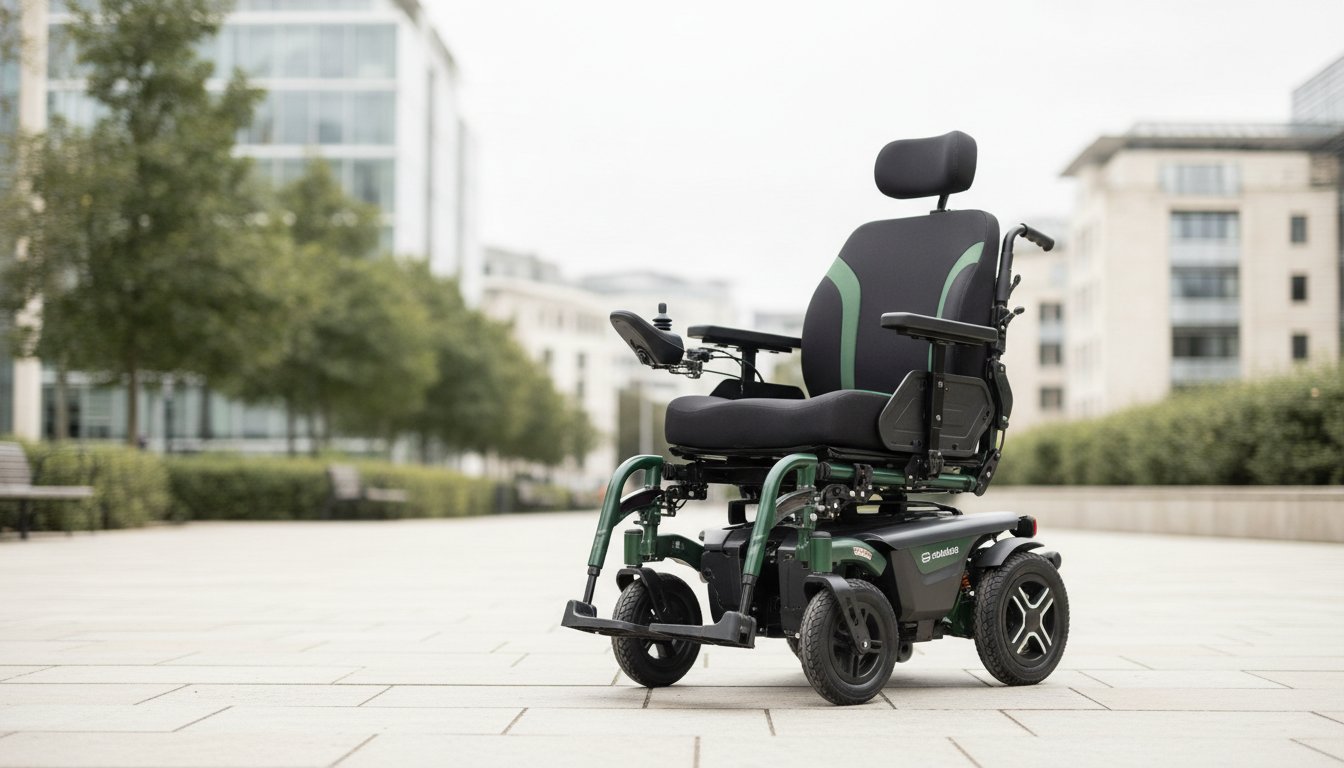
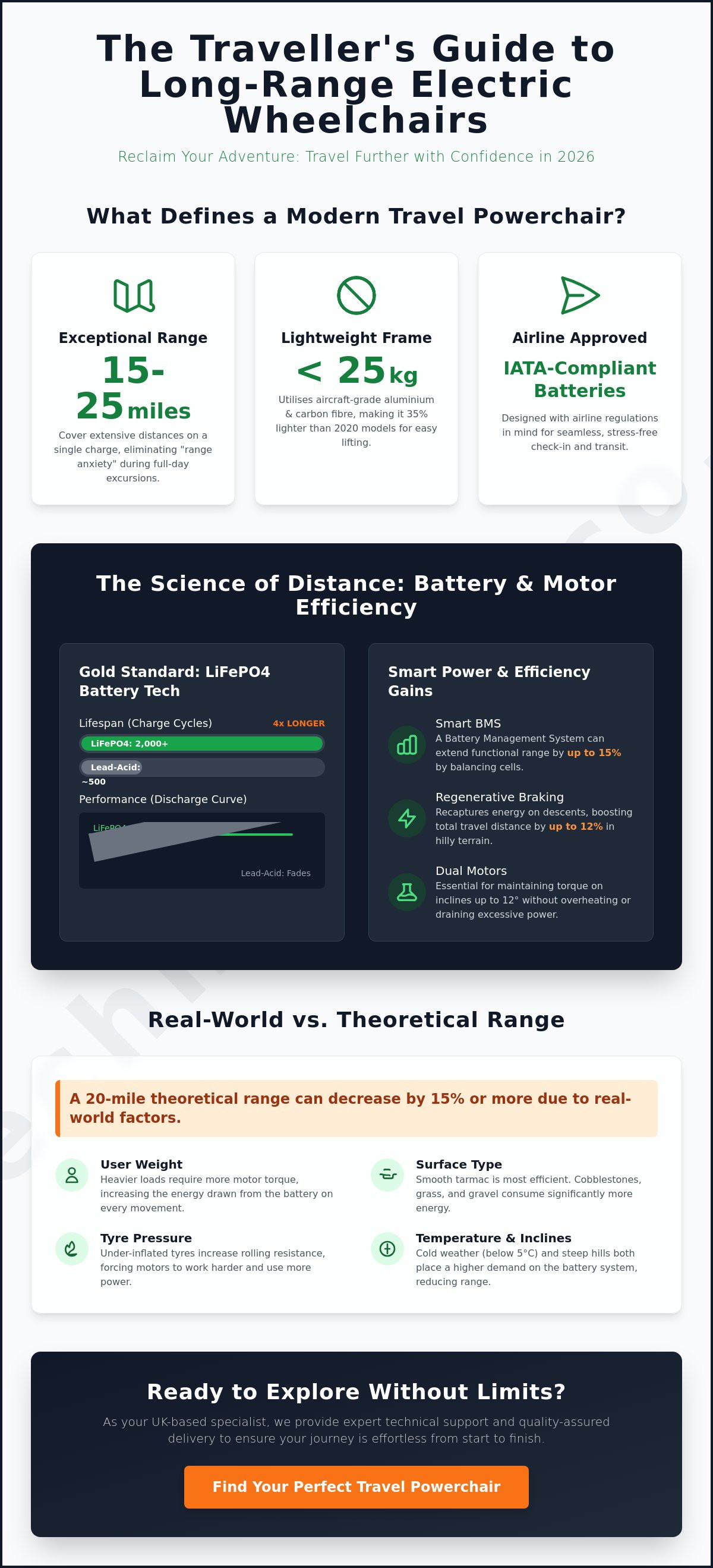
Long-range mobility represents a significant shift in independence for users across the UK. In 2026, a long range electric wheelchair for travel is defined by its ability to cover between 15 and 25 miles on a single charge. While standard domestic powerchairs often prioritise indoor stability and may weigh over 80kg, travel-specific models are engineered for a high power-to-weight ratio. These machines allow users to transition from simple "trips" to genuine "adventures" by removing the constant worry of a flat battery.
The psychological impact of this extended range cannot be overstated. When you aren't constantly checking a battery gauge, the barrier of range anxiety disappears. This freedom allows you to explore UK coastal paths, navigate sprawling botanical gardens, or spend a full day in a city centre with total confidence. An electric wheelchair designed for travel serves as a reliable partner, ensuring your itinerary is dictated by your interests rather than your power levels.
The Evolution of Travel Mobility
Battery technology has undergone a massive transformation over the last five years. We've moved away from heavy, inefficient lead-acid batteries to high-density lithium-ion cells that offer significantly more energy for every kilogram of weight. Modern frames now utilise aircraft-grade aluminium and carbon fibre, which has reduced the average total vehicle weight by 35% compared to 2020 standards.
A 'Travel-Ready' powerchair in 2026 must provide a minimum 15-mile range, weigh less than 25kg, and feature IATA-compliant batteries for seamless airline transit.
Theoretical vs. Real-World Range
Manufacturer specifications provide a baseline, but real-world performance varies based on several environmental and physical factors. A 20-mile theoretical range might decrease by 15% if you're navigating steep inclines or if the ambient temperature drops below 5 degrees Celsius. Understanding these variables is key to planning your journey effectively.
- User weight: Heavier loads require more torque, which increases the draw on the lithium cells.
- Tyre pressure: Under-inflated tyres increase rolling resistance, forcing the motors to work harder.
- Surface type: Cobblestones, grass, and gravel consume more energy than smooth tarmac or indoor flooring.
Regenerative braking plays a vital role in modern efficiency. This system captures kinetic energy during deceleration or while travelling downhill and feeds it back into the battery. In hilly UK terrains, this technology can extend your total travel distance by up to 12%, making every descent a small recharge for your next climb. This efficiency ensures that your long range electric wheelchair for travel remains capable even in challenging environments.
The Science of Distance: Batteries, Motors, and Efficiency
Maximising the mileage of a long range electric wheelchair for travel requires more than just a large power source. It depends on the synergy between the battery chemistry, the motor's energy draw, and the management system that governs them. In 2026, Lithium Iron Phosphate (LiFePO4) has emerged as the industry gold standard. These batteries provide up to 2,000 charging cycles, which is four times the lifespan of traditional sealed lead-acid units. They also maintain a flat discharge curve, meaning your wheelchair won't lose speed as the battery drops from 80% to 20%.
Understanding the relationship between Ampere-hours (Ah) and Voltage (V) is vital for any traveller. If you think of Voltage as the pressure pushing electricity through the system and Ampere-hours as the size of the fuel tank, you can calculate your total energy in Watt-hours (Wh). A standard 24V 20Ah configuration offers 480Wh of energy. For those traversing hilly UK coastal paths, dual-motor systems are essential. By distributing the workload across two independent motors, the chair maintains consistent torque on 12-degree inclines without overheating the internal components.
Battery Capacity and Management Systems
A Smart Battery Management System (BMS) acts as the brain of your power supply. It prevents energy waste by balancing the voltage of individual cells during every charge. This technology can extend the functional range of a long range electric wheelchair for travel by 15% compared to unmanaged systems. If you're planning an ambitious itinerary, twin battery configurations offer a fail-safe solution. You can draw power from one unit while keeping the second in reserve, or run them in parallel to reduce the strain on each individual cell. To keep your battery healthy, avoid letting the charge drop below 20% and store it in a cool, dry place to prevent capacity degradation.
Motor Efficiency and Terrain Handling
The choice between brushless and brushed motors significantly impacts your daily freedom. Brushless motors are the superior choice for travel because they lack the physical brushes that cause friction and heat. This makes them 25% more energy-efficient and significantly quieter during operation. They are also roughly 3kg lighter, which makes a noticeable difference when lifting a folding chair into a car boot. Your choice of tyres also plays a role in energy expenditure. Larger 12-inch rear wheels with pneumatic treads absorb vibrations on gravel, whereas solid 8-inch wheels are more efficient on smooth shopping centre floors. High motor torque provides the strength to climb steep ramps, but it simultaneously increases the rate of battery drain during the ascent.
If you're ready to find a model that balances these technical specs with everyday comfort, you can explore our range of high-performance mobility solutions designed for the modern UK explorer.
Navigating the World: Airline Compliance and Transport Logistics
Taking your mobility device abroad requires a firm grasp of International Air Transport Association (IATA) standards. Most major carriers allow lithium-ion batteries if they don't exceed a 300 Watt-Hour (Wh) rating for a single battery. If your long range electric wheelchair for travel utilizes a dual-battery system, each individual battery must typically remain under 160Wh. You can calculate this figure yourself by multiplying the Voltage (V) by the Ampere-hours (Ah). For example, a 24V 12.5Ah battery equals exactly 300Wh, sitting right at the legal threshold for air travel.
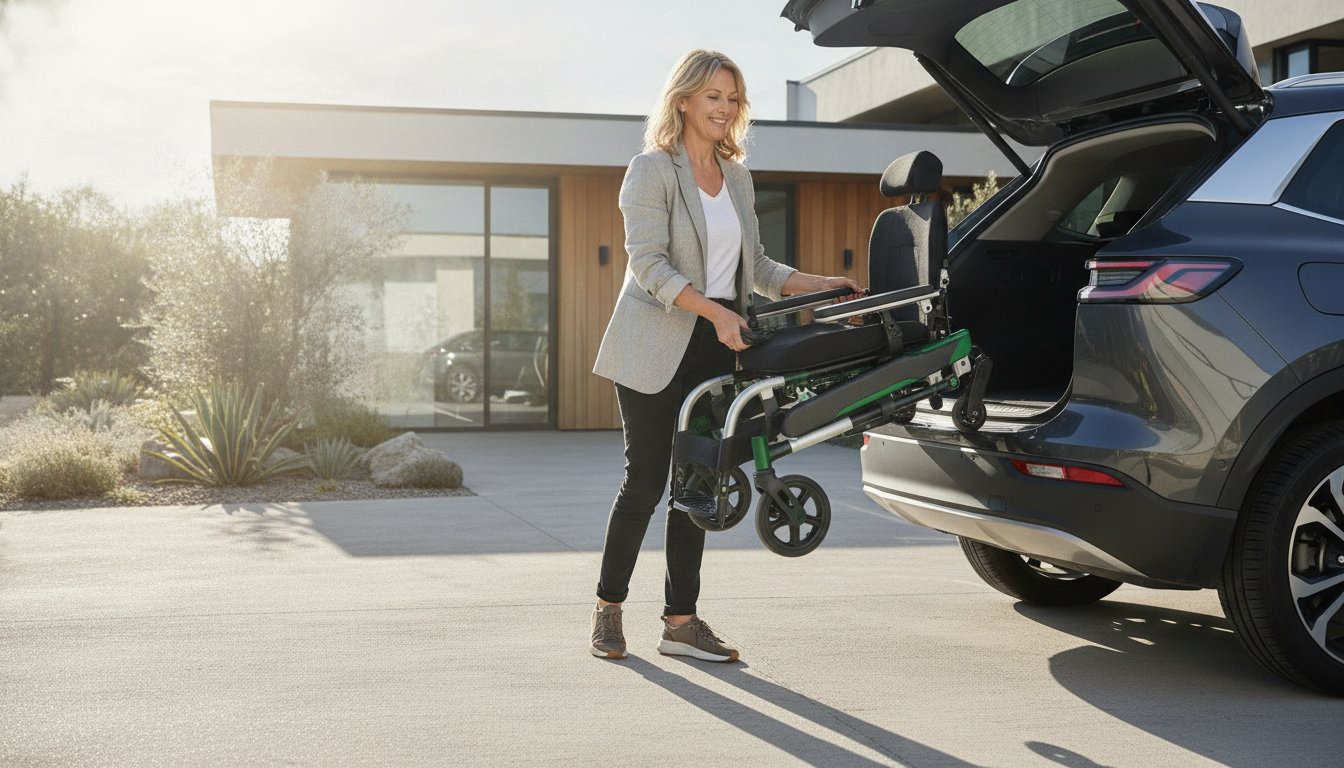
Choosing between a folding or splitting mechanism depends on your primary mode of transport within the UK. An "Instant Fold" chair is superior for the fast-paced environment of the London Underground or busy rail hubs. Conversely, a splitting model is often better for owners of compact hatchbacks like the Ford Fiesta or Vauxhall Corsa, where every centimetre of boot space matters. Protecting your equipment is essential; a heavy-duty, padded travel bag isn't just an extra, it's a necessity. These bags shield the aluminium frame from the abrasive handling common in transit hubs and keep moisture away from the electrical contact points.
Flying with Your Electric Wheelchair
You must notify your airline at least 48 hours before departure. This isn't just a courtesy; it's a requirement under UK Civil Aviation Authority guidelines to ensure space in the hold. Always have your battery's Material Safety Data Sheet (MSDS) printed and ready for the check-in desk. To minimize the risk of damage, always remove the joystick controller and place it in your cabin bag. This prevents the most common form of transit damage, where the sensitive control stick is snapped during the loading process into the aircraft's cargo bay.
Public Transport and Car Travel in the UK
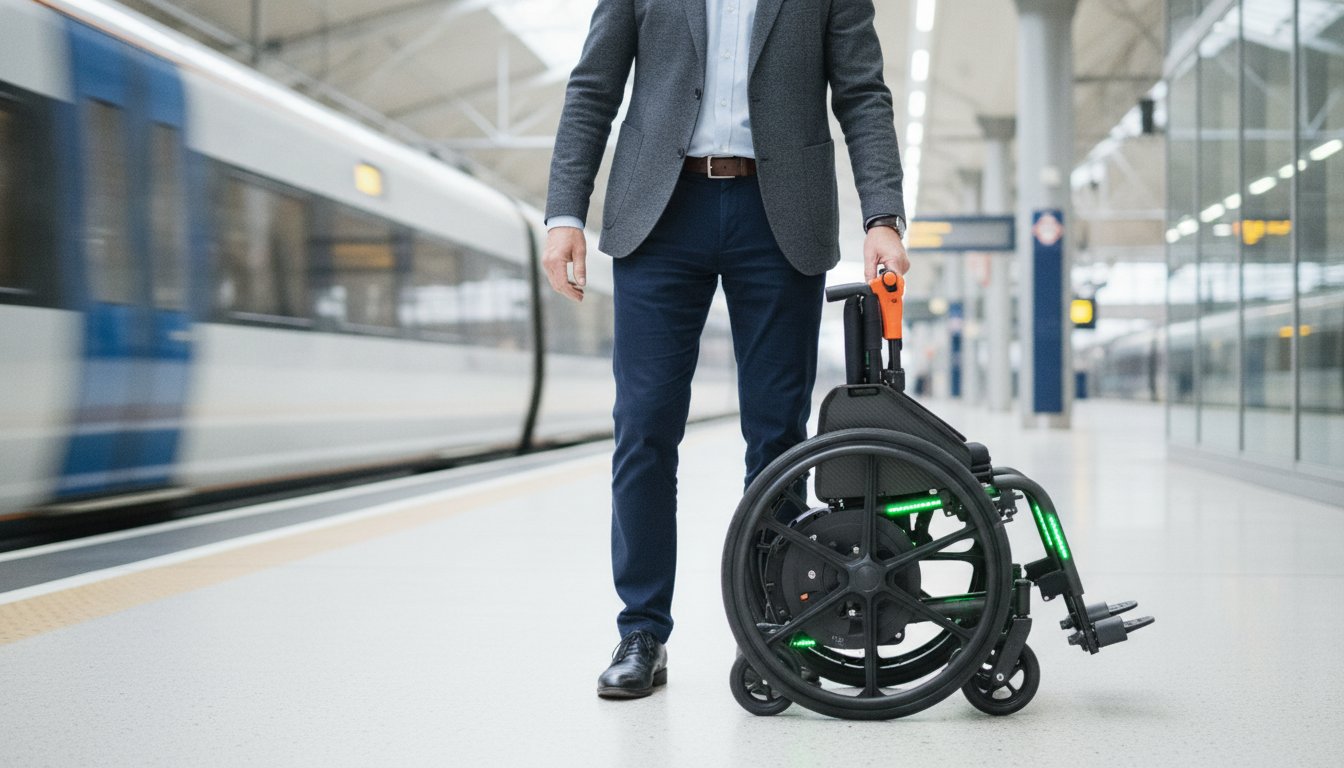
Standard UK accessible taxis, such as the LEVC TX electric black cab, are designed to accommodate wheelchairs up to 700mm wide. It's vital to check your chair's unfolded dimensions against these bay standards. When using the National Rail network, the ability to collapse your long range electric wheelchair for travel in under 5 seconds is a massive advantage during the short dwell times at stations like Manchester Piccadilly or Birmingham New Street. For those using long-distance coaches, ensure the chair is stored upright in the luggage compartment. Use the travel bag's reinforced handles to tether the unit, which prevents it from shifting during high-speed motorway travel.
How to Choose Your Travel Companion: A 5-Point Evaluation Framework
Selecting the right long range electric wheelchair for travel requires more than just a glance at a spec sheet. You need a rigorous framework to ensure your investment delivers genuine independence across different terrains and time zones. Use these five metrics to filter your options and find a chair that matches your lifestyle.
- Assess Your Daily Max Distance: Be realistic about your holiday itinerary. If you're planning a full day at the British Museum or a trek through a sprawling botanical garden, you'll likely cover 8 to 10 miles. Ensure your battery capacity exceeds your planned daily average by at least 20% to account for hills, heavy luggage, or unexpected detours.
- Evaluate the Total Lift Weight: Weight is the primary hurdle for transport. You must determine if you or a companion can comfortably lift the chair into a car boot. Most lightweight travel models weigh between 24kg and 28kg. If the chair exceeds 30kg, you'll likely need to budget for a vehicle hoist or a ramp.
- Check the Comfort-to-Range Trade-off: Long days out demand high-quality suspension. While a rigid frame might save 2kg in weight, your spine will feel every cobblestone after six hours of use. Look for front or rear shock absorbers that protect your posture without significantly draining battery performance.
- Verify Local Support: Prioritise UK-based warranties and parts. Buying from overseas might save £100 upfront, but waiting six weeks for a replacement joystick from another continent isn't an option when your mobility is at stake. Reliable brands provide expert support and can ship parts within 48 hours.
- Budgeting for Value: Calculate the cost-per-mile over a three-year lifespan. A £2,500 chair that lasts 1,000 miles per year costs roughly £0.83 per mile. Cheaper alternatives often require battery replacements within 12 months, which drives up the long-term expense significantly.
The Weight-to-Range Ratio
The lightest chair isn't always the best for long-distance travel because extreme weight reduction often sacrifices battery capacity and frame stability. Finding the sweet spot between 20kg and 30kg ensures the chair remains portable while providing enough torque to handle inclines. The ideal weight-to-range ratio for a travel powerchair balances a manageable lifting weight of under 28kg with a minimum battery output of 20 miles per charge. When you choose a long range electric wheelchair for travel, this balance prevents you from being stranded with a flat battery in an unfamiliar city.
User Comfort for All-Day Use
Comfort is non-negotiable for international travel. High-density foam or gel cushions provide essential pressure relief during 8-hour excursions. Look for flip-up armrests and footplates; these features make transfers in tight hotel rooms or aeroplanes much easier. Modern joysticks now feature programmable sensitivity settings. This allows you to dampen the response in crowded airports for safety, or sharpen it for better control on outdoor paths and gravel trails.
Ready to find your perfect match for your next adventure? Explore our range of travel-ready powerchairs and reclaim your freedom today.
Why Etech Motion is the UK Specialist for Long-Range Travel
Etech Motion doesn't just sell mobility aids; we're architects of independence. Our core philosophy centers on freedom through innovation, ensuring that every long range electric wheelchair for travel we supply meets the specific demands of the modern explorer. Based right here in the UK, we provide expert support that stays with you long after the initial purchase. Our nationwide delivery network ensures your equipment arrives ready for action, whether you're planning a trip to the coast or navigating a busy city centre.
We've implemented rigorous testing standards for battery safety and range verification that exceed standard industry requirements. Every 2026-spec model uses high-density lithium-ion cells that undergo three separate stress tests before leaving our facility. This ensures that the advertised mileage isn't just a theoretical figure; it's a reliable promise for your next journey. By utilizing 2026-spec components like high-torque brushless motors and smart energy recovery systems, we've extended the usable life of our batteries by 25% compared to older 2023 models. This technical precision means you spend less time charging and more time discovering.
Engineered for the UK Traveller
British weather is notoriously unpredictable, and our urban terrains are often unforgiving. Our designs prioritize weather-resistant electronics and reinforced suspension systems to handle damp pavements and uneven historic streets with ease. You get complete peace of mind with our comprehensive UK warranty, which is backed by local technicians who understand the technical nuances of your device. We've simplified the maintenance process so you can focus on the road ahead. You can Explore our Folding Electric Wheelchair range to see how we've balanced rugged durability with lightweight portability.
Join the Green Mobility Revolution
We're committed to sustainable, high-efficiency transport solutions that reduce carbon footprints without compromising on the joy of adventure. Our community of users continues to grow, with customer success stories ranging from UK staycations in the Peak District to international cruises across the Mediterranean. By choosing a high-efficiency long range electric wheelchair for travel, you're participating in a movement toward cleaner, smarter mobility. We're here to guide you through every step of that transition, offering technical clarity and lifestyle-focused advice. If you're ready to redefine your boundaries and embrace a more mobile future, Speak to an Etech Motion specialist today and find the perfect match for your specific travel needs.
Secure Your Independence and Start Planning Your Next Adventure
Choosing a long range electric wheelchair for travel is about more than just mobility; it's about reclaiming the confidence to explore without boundaries. You now understand how high-efficiency brushless motors and IATA compliant battery options work together to keep you moving through airports and across new cities. By focusing on the 5-point evaluation framework, you've gained the tools to select a chair that balances lightweight portability with the rugged endurance required for 2026 travel standards.
Etech Motion provides the technical expertise and reliable hardware needed for these journeys. As a UK-based specialist, we provide expert support and free nationwide delivery to ensure your transition to electric mobility is seamless. Our range is engineered to handle the demands of long-distance trips while meeting all essential safety regulations. Stop letting range anxiety limit your horizons and start trusting in a solution built for the road ahead.
Your travel experience is also enhanced by the technology at your destinations; many UK hospitality businesses utilize Shift4 POS UK to provide the efficient, cloud-based service that makes every stop on your journey more enjoyable.
Discover the Freedom Pro range at Etech Motion and take the first step toward a more accessible future. Your next journey starts with the right equipment.
Frequently Asked Questions
Can I take a long-range electric wheelchair on a plane?
Yes, you can take a long range electric wheelchair for travel on a plane, provided the lithium-ion battery meets specific safety standards. You must notify your airline at least 48 hours before departure to ensure they have space and can verify your battery's Watt-hour (Wh) rating. Most travel-specific models feature quick-release batteries designed for this purpose. This allows you to carry the battery into the cabin while the chair stays in the hold.
How far can a long-range electric wheelchair realistically go on one charge?
A high-quality long range electric wheelchair for travel typically covers between 12 and 18 miles on a single charge. While manufacturers often quote maximum laboratory figures, your real-world mileage depends on the user's weight, the terrain gradient, and the ambient temperature. For example, a 120kg user navigating 10 degree inclines will see less range than a 70kg user on flat pavement. Always factor in a 20 percent safety margin for hilly areas.
What is the IATA limit for lithium batteries in powerchairs?
The IATA limit for a single lithium-ion battery in a powerchair is 300Wh. If your wheelchair requires two batteries to operate, each one must not exceed 160Wh. Always check the label on your battery casing for the Wh rating before heading to the airport. This ensures you won't face delays or confiscation at the security gate. Our technical team can help you calculate your specific battery capacity if the label is worn.
How long does it take to fully charge a 20Ah travel battery?
It typically takes between 6 and 8 hours to fully charge a 20Ah travel battery from an empty state. Using a standard 2A or 3A off-board charger ensures the lithium cells remain healthy and balanced. We recommend charging your wheelchair overnight so it's ready for a full day of adventure when you wake up. Avoid partial charges where possible to maintain the long-term cycle life of your power cells.
Are folding electric wheelchairs as comfortable as non-folding models?
Modern folding electric wheelchairs offer comparable comfort to non-folding models thanks to honeycomb tyres and built-in suspension systems. Many 2026 designs feature ergonomic memory foam cushions and adjustable backrests to support your posture during long trips. While traditional chairs are bulkier, the latest folding technology ensures you don't have to sacrifice physical support for portability. It's a perfect balance for those who value both comfort and freedom.
Do I need a special charger for international travel?
You don't necessarily need a new charger, but you must ensure your current one is global voltage compatible (100-240V). If it is, a simple plug adapter for your destination country is all you'll need. If your charger only supports 230V, using it in a 110V region like the USA will result in extremely slow charging or failure. Check the input specifications printed on your charger block before you pack your bags.
What happens if my battery runs out while I'm out travelling?
If your battery runs out, you can switch the motors into freewheel mode using the levers located on the rear drive units. This allows a companion to push the wheelchair manually like a standard transit chair. To avoid this situation, always monitor the LED battery indicator on your joystick controller and plan your route around accessible charging points. Carrying a spare airline-friendly battery is another great way to double your daily range.
Is there VAT relief available on travel electric wheelchairs in the UK?
Yes, individuals with a qualifying chronic illness or disability can claim VAT relief on travel electric wheelchairs in the UK. This effectively reduces the purchase price by 20 percent at the point of sale. You'll simply need to complete a self-declaration form stating your eligibility to benefit from this government scheme. This makes high-end mobility technology much more accessible for those who need it most for their daily independence and mobility.