What if your next trip to the local park felt less like a logistical hurdle and more like a high-tech adventure? You likely agree that true independence shouldn't come with the constant fear of a battery failing mid-journey or the stress of navigating complex DVLA registration rules. It's exhausting when a device meant for freedom feels like a heavy, medical-grade burden rather than a modern transport solution. Department for Transport statistics indicate that over 1.2 million people in the UK now rely on mobility aids to stay connected, yet many still feel limited by clunky hardware and confusing technical jargon.
This 2026 guide helps you master the technical specifications and lifestyle factors required to choose the perfect electric mobility scooter for your specific needs. You'll learn how to identify reliable lithium-ion power systems and lightweight frames that won't strain your back or your patience. We're exploring the latest safety standards and UK-based support networks to ensure your transition to electric travel is effortless, stylish, and entirely secure. From brushless motor efficiency to portable folding mechanisms, we're breaking down everything you need to reclaim your movement with confidence.
Key Takeaways
- Decode the UK Department for Transport’s "Class" system to determine whether you need a portable, pavement, or road-legal model for your specific needs.
- Master the technical essentials of battery range and motor wattage to ensure your electric mobility scooter delivers consistent, reliable performance on every journey.
- Apply our strategic 5-step lifestyle framework to accurately measure your storage spaces and match a solution to your daily routine.
- Uncover the transformative physical and psychological benefits of reclaiming your independence with a modern, high-performance personal electric vehicle.
- Learn why UK-based expert support and nationwide delivery are essential components for a stress-free and reliable ownership experience.
Understanding Electric Mobility Scooters: More Than Just a Transport Aid
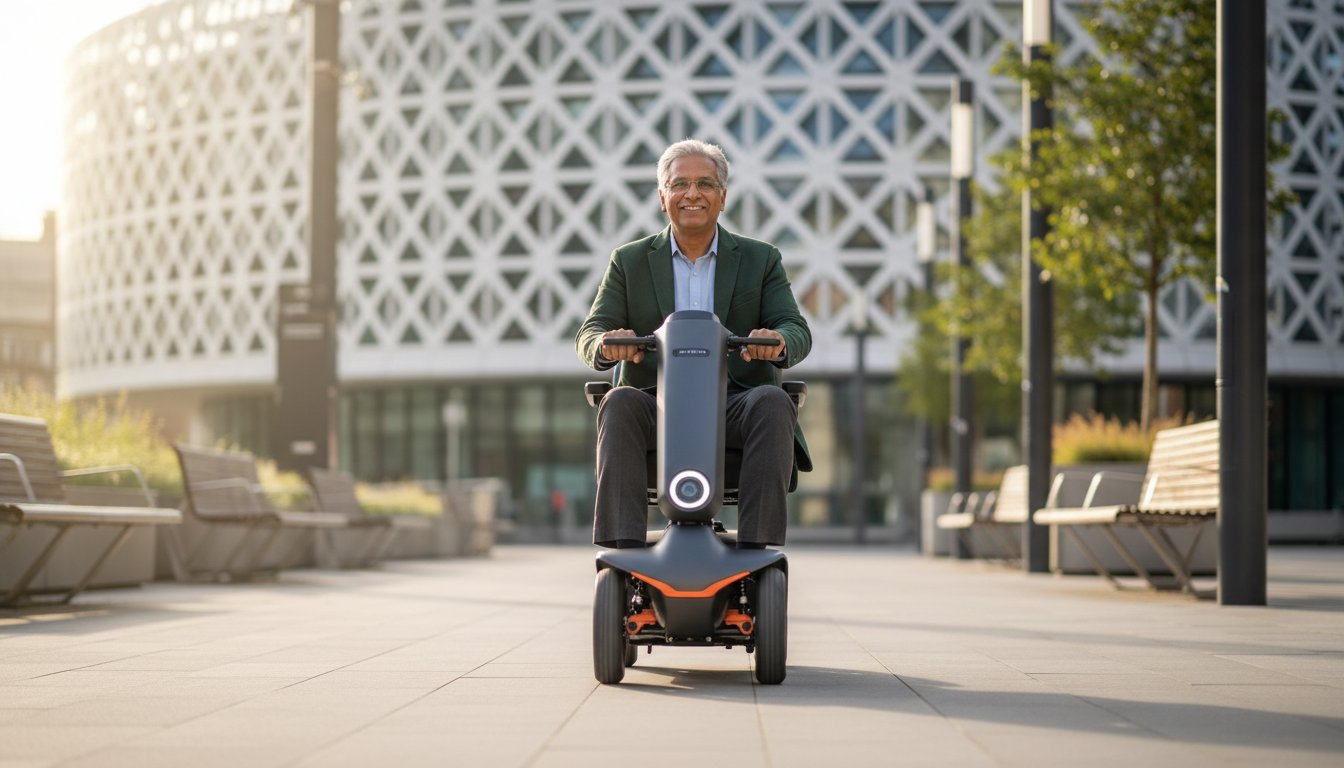
An electric mobility scooter is a gateway to independence. It's a sophisticated personal electric vehicle designed to restore freedom for UK seniors and those living with limited mobility. Recent studies from 2023 suggest that regaining the ability to travel independently can reduce feelings of social isolation by up to 60%. This isn't just about getting from point A to point B; it's about reclaiming the ability to visit a local cafe, attend community events, or join a family walk in the park without physical exhaustion. For a foundational Mobility scooter overview, one can see how these devices have transitioned from heavy industrial chairs to the sleek, high-performance machines we see today.
Technology has moved rapidly over the last decade. Older models relied on heavy, inefficient lead-acid batteries that required long charging hours and offered limited range. By 2024, the industry shifted toward lithium-ion power as the gold standard. These modern solutions offer 30% longer ranges and are significantly lighter, making them easier to handle. Choosing a UK-based specialist like E-Tech Motion ensures you get expert support and products that meet strict British safety standards, providing peace of mind for the long term.
The Shift Towards Modern Personal Mobility
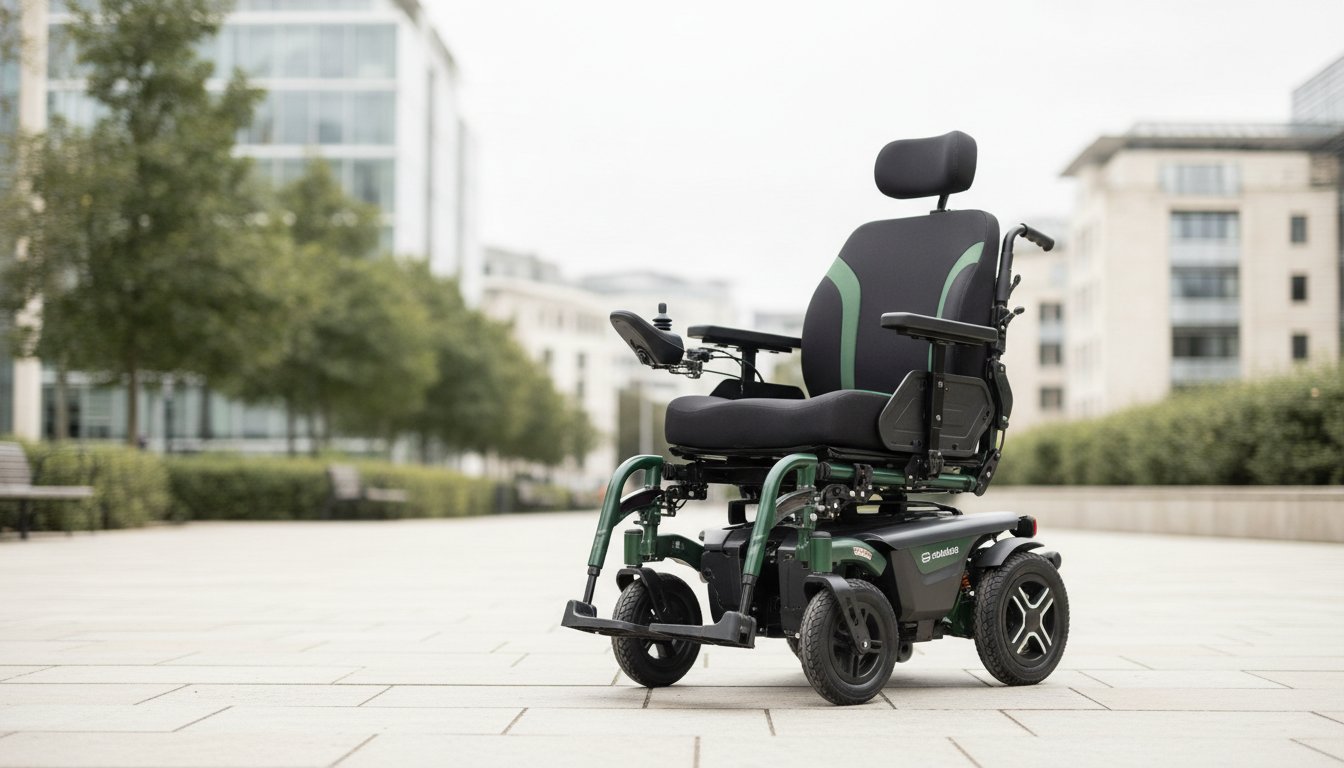
Design is changing the way we perceive mobility. The "medical" look is being replaced by sleek, automotive-inspired frames that remove the old stigma. Modern scooters are an essential part of the green transport revolution. They use zero-emission brushless motors and include smart features. You'll now find LED touchscreens, regenerative braking, and USB charging ports as standard on high-end models. These aren't just aids; they're high-tech commuters built for a sustainable future.
Who Can Benefit from an Electric Mobility Scooter?
You might notice a need when walking to the local shops becomes a source of anxiety rather than a routine. An electric mobility scooter complements walking aids by handling the longer distances that cause fatigue. Identifying the right model depends on your lifestyle needs:
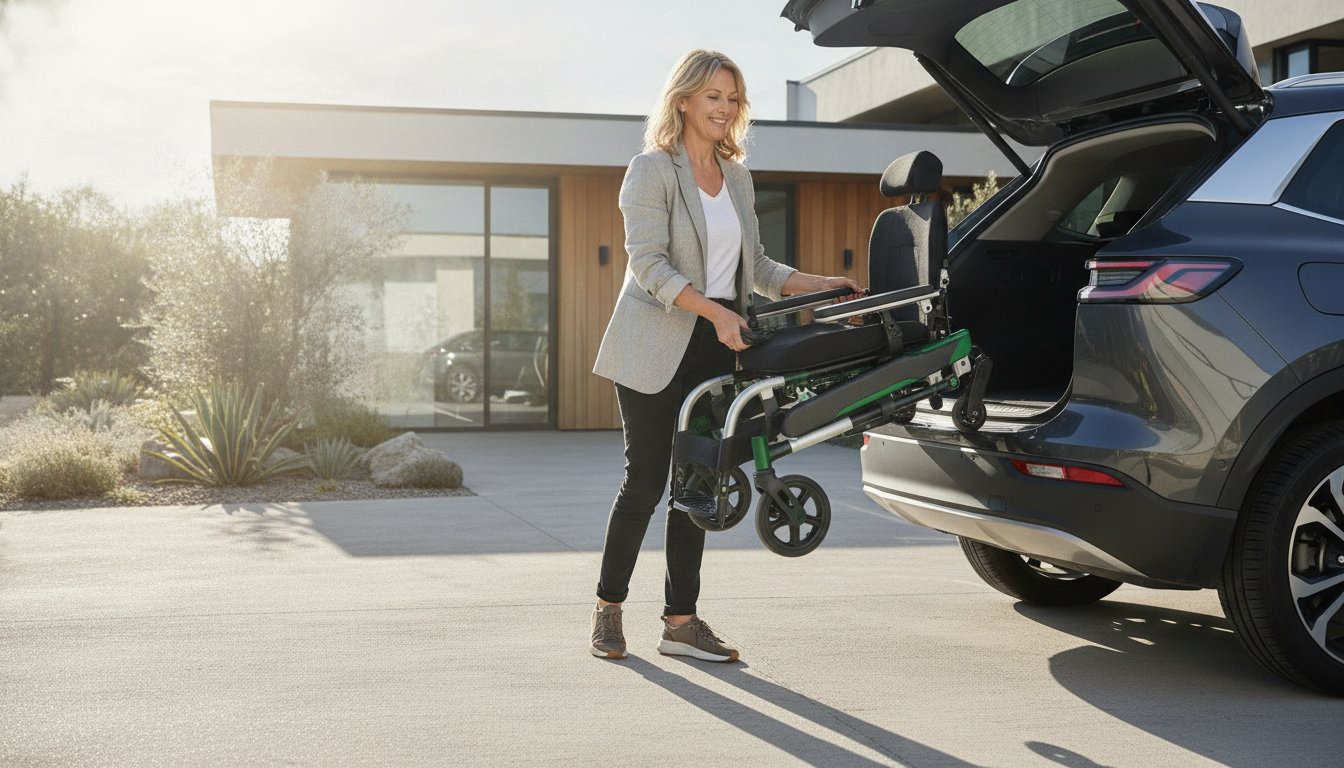
- Boot Scooters: These are lightweight and dismantle into smaller parts. They're perfect for occasional users who want to take their scooter in a car for day trips.
- Road Legal (Class 3): These are robust machines designed for daily use. They can reach speeds of 8mph, feature full suspension, and are equipped with lights and indicators for legal road use in the UK.
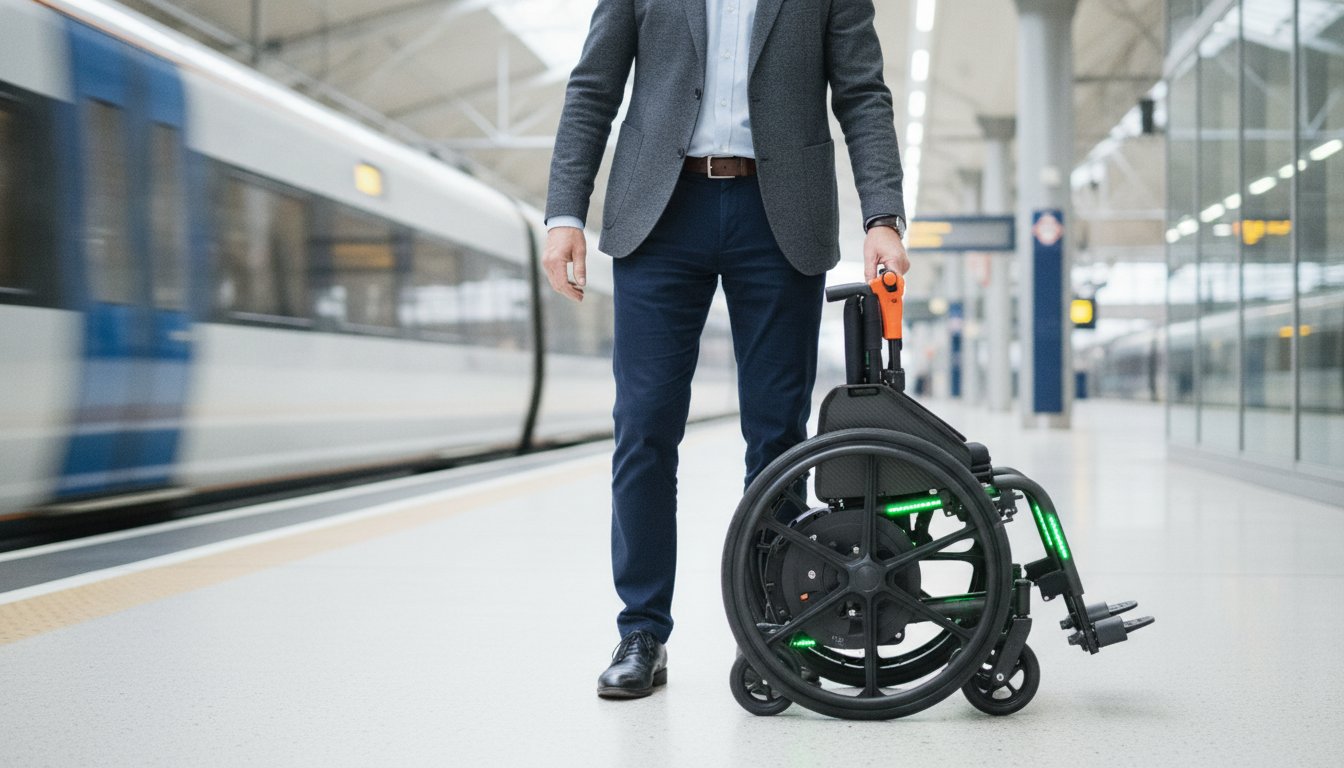
- Folding Models: Ideal for those with limited storage space or those who frequently use public transport.
The transition to electric power makes these vehicles incredibly accessible. With simple finger-tip controls and adjustable seating, they cater to a wide range of physical requirements. Whether you're looking to maintain your social life or simply need a reliable way to get the groceries, the modern scooter is a practical, eco-friendly solution for the 2026 landscape.
Comparing the Three Main Categories of Mobility Scooters
Selecting the right electric mobility scooter requires understanding how the UK classifies these vehicles. The Department for Transport (DfT) uses a specific system to ensure safety for both users and pedestrians. You must follow the UK government mobility scooter rules, which dictate where you can drive and whether your vehicle needs registration. Generally, your choice depends on whether you need a compact solution for the car or a robust machine for the open road.
The environment you inhabit is the primary factor. Indoor environments and flat shopping centres suit smaller Class 2 models. Conversely, rural areas with steep 10% inclines or uneven verges require the torque and stability found in Class 3 machines. By matching the category to your daily routine, you ensure your investment provides the freedom you expect without technical limitations.
Portable & Folding "Boot Scooters" (Class 2)
Designers prioritise transportability here. These scooters often feature lightweight lithium-ion batteries and frames that either fold or dismantle into five manageable pieces. They're perfect for trips to the supermarket or holiday travel; the heaviest part often weighs less than 15kg. However, they typically use 7-inch to 8-inch solid tyres, which means lower ground clearance. They perform best on flat, maintained surfaces and typically offer a range of 8 to 12 miles per charge.
Pavement Scooters: The All-Rounder
This category offers a significant jump in comfort. While still limited to 4mph, these scooters feature larger chassis and pneumatic tyres that absorb vibrations from cracked pavements. You'll find weight capacities often reaching 21 stone (133kg), providing a more stable ride for longer durations. With battery capacities supporting up to 25 miles of travel, they're the standard choice for local neighbourhood errands and visiting friends. If you need a reliable daily driver, you can view our latest range of versatile models designed for UK streets.
Road Legal Class 3 Scooters: Power and Range
Class 3 models are the heavyweights of the electric mobility scooter world. They reach speeds of 8mph and are legal for road use, provided they're equipped with headlights, rear lights, indicators, and mirrors. You don't need a driving licence, but you must register the vehicle with the DVLA. This involves filling out a V55/4 or V55/5 form; it's a simple, free process that grants the scooter a registration number.
- Speed: 8mph on roads, with a 4mph switch for pavement use.
- Capability: Advanced suspension systems and high-torque motors for 12-degree hills.
- Range: Large 75Ah to 100Ah batteries often provide over 30 miles of travel.
These machines provide the ultimate independence for users who don't want to rely on public transport or cars for longer journeys. Their larger 10-inch to 13-inch wheels handle rougher terrain and kerbs with much more efficiency than portable alternatives.
The Technical Essentials: Range, Reliability, and Battery Technology
Range anxiety is the top concern for 78% of potential buyers. You don't want to be miles from home when the power dips. Modern engineering ensures your electric mobility scooter remains a reliable partner for daily life. Reliability isn't just about the battery; it's about the harmony between the motor, the weight it carries, and the terrain it conquers. Most users find that a real-world range of 15 to 25 miles covers 95% of their weekly travel needs, providing peace of mind for both short trips to the shops and longer afternoon excursions.
Range figures are often calculated based on a 75kg rider on flat ground. If you're closer to the 120kg or 150kg user weight capacity, the motor works harder, which reduces the total distance per charge. It's vital to check the official UK government rules regarding vehicle classes, as Class 3 scooters designed for road use often feature larger batteries to handle these higher demands and steeper inclines. Choosing a model with a weight capacity that exceeds your actual weight by 15% to 20% ensures the motor operates at peak efficiency.
Comfort is a technical requirement, not a luxury. A full-independent suspension system can absorb 60% more vibration than rigid frames. This protects the internal electronics from jarring impacts and prevents user fatigue on long excursions. When you're navigating the UK's uneven pavements, a high-quality suspension system becomes the secret to maintaining mobility without physical strain.
The Lithium-ion vs. Lead Acid Debate
Lithium-ion batteries represent the future of mobility. They offer 3 times the energy density of traditional lead-acid units and can handle over 1,000 charge cycles before significant degradation. While lead-acid batteries remain a budget-friendly entry point, they're 40% heavier and take up to 12 hours to charge. Choosing lithium is a smart long-term investment that slashes your scooter's weight and speeds up your routine. It's the difference between a quick top-up and a planned overnight event.
Brushless Motors and Efficiency
The heart of a modern electric mobility scooter is the brushless DC motor. These units lack the internal brushes that cause friction, meaning they're 85% efficient compared to the 60% efficiency of older brushed designs. Torque is the specific metric you need for the UK's varied pavements. Higher torque allows you to maintain speed on 10-degree gradients without overheating the system. For safety, electromagnetic braking systems engage automatically when you release the throttle, providing a fail-safe stop even on steep hills.
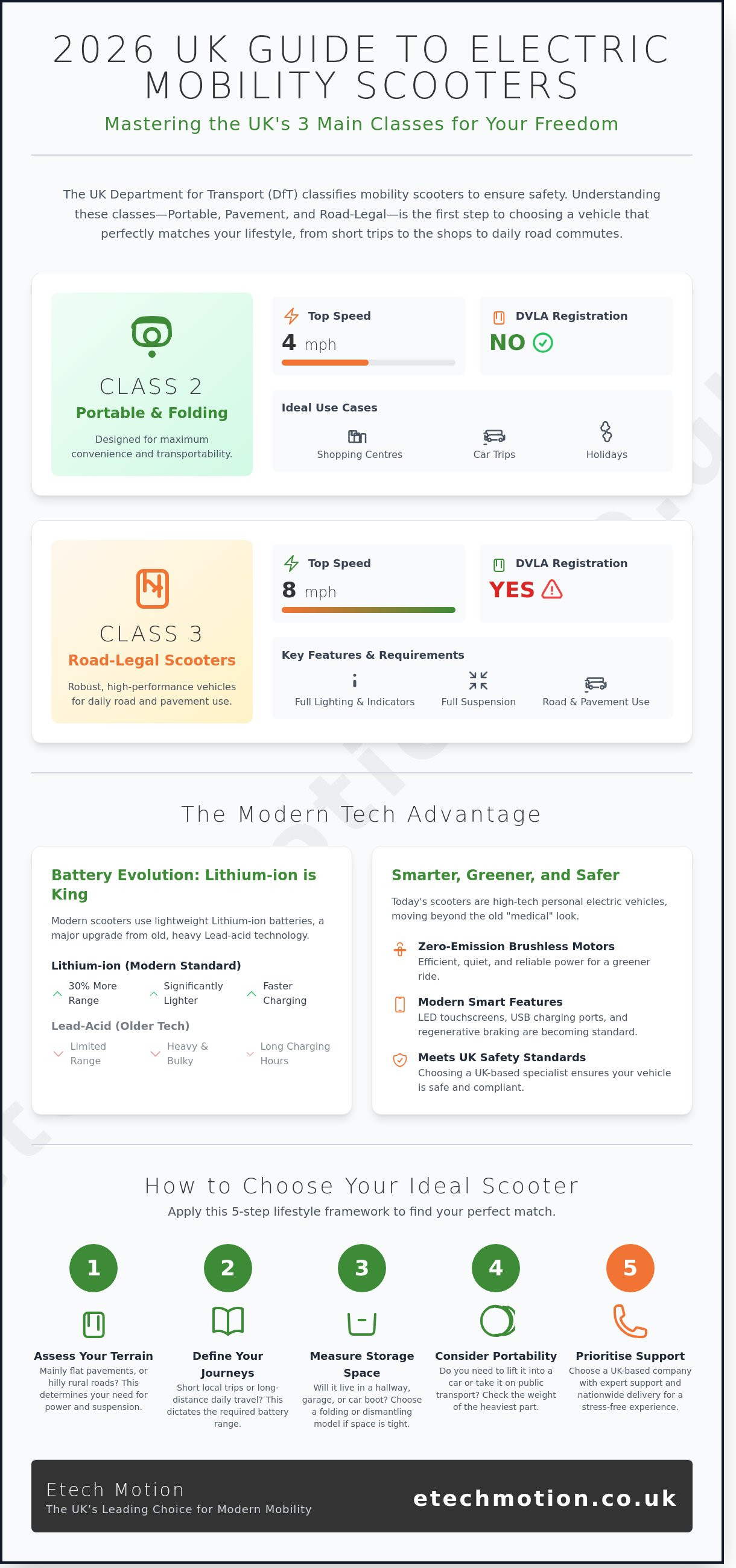
How to Choose Your Ideal Scooter: A Strategic 5-Step Framework
Selecting the right electric mobility scooter requires more than just looking at the top speed. You need a machine that integrates into your daily routine without friction. Follow this five-step framework to ensure your investment delivers the freedom you expect.- Step 1: Conduct a Lifestyle Audit. Map out your most frequent journeys. Will you spend 90% of your time in local supermarkets, or do you plan to tackle gravel paths in the countryside?
- Step 2: Measure your spaces. UK hallways often average 90cm in width. Check your door frames and car boot dimensions before browsing. A scooter that doesn't fit your home is a hurdle, not a help.
- Step 3: Calculate your range. Battery performance varies based on terrain and temperature. Always add a 20% safety margin to your required distance. If your round trip is 8 miles, choose a model rated for at least 10 miles.
- Step 4: Assess physical requirements. Evaluate your grip strength and core stability. Features like swivel seats or delta tillers aren't luxuries; they are essential for long-term independence.
- Step 5: Check VAT Relief eligibility. Most UK users with a chronic illness or disability qualify for 0% VAT. This saves you 20% on the total purchase price instantly.
Measuring for Success: Size and Weight
The turning circle is a critical metric for indoor use. A radius of 110cm or less allows you to navigate tight corners in shops without reversing. You must also consider weight limits. Ensure the electric mobility scooter can handle your weight plus at least 10kg for shopping bags. For outdoor safety, look for a ground clearance of at least 50mm. This prevents the underside of the chassis from scraping on uneven UK pavements or low kerbs.The Comfort and Accessibility Checklist
Comfort directly impacts how often you'll use your scooter. Delta tillers are the gold standard for users with limited hand dexterity. These wrap-around handles allow you to control the throttle using your fingers or thumbs, reducing strain during 30-minute journeys. Seating should be your next priority. Adjustable heights and padded armrests prevent back pain and fatigue. Finally, choose your tyres based on your environment. Solid tyres are puncture-proof and ideal for city pavements. Pneumatic, air-filled tyres provide superior shock absorption if you frequently travel on bumpy or unpaved paths.Why Etech Motion is the UK’s Leading Choice for Modern Mobility
Etech Motion stands at the forefront of the green transport revolution. We don't just supply vehicles; we provide the keys to a more active, unrestricted lifestyle. Our focus on high-performance, stylish mobility solutions ensures that every electric mobility scooter we sell meets the highest expectations for both aesthetics and durability. We understand that your scooter is an extension of your personality. That's why our 2026 collection features sleek lines and premium finishes that look as good as they perform on the pavement.
We've prioritised folding and lightweight technology to serve the modern traveller. Weight matters when you're on the go. Many of our flagship models utilise lightweight frames to reduce bulk without sacrificing structural integrity. This makes our scooters easy to lift into a car boot or store in a small hallway. Safety remains our primary benchmark. Every product in our inventory adheres to strict UK quality assurance protocols, featuring advanced braking systems and stable wheel configurations to keep you secure on every journey. We've engineered these solutions to handle the realities of British weather and terrain with ease.
Expert UK Support and Aftercare
Choosing a UK-based specialist like Etech Motion offers security that unverified third-party marketplaces simply can't match. When you buy from us, you aren't just a transaction; you're part of our community. We maintain a comprehensive stock of genuine spare parts right here in the UK. If you need technical advice, you'll speak to an expert who understands the intricate mechanics of your brushless motor or lithium-ion battery system. Our guarantee is built on local accountability and a genuine desire to keep you moving without interruption. We offer the reliability you need for your daily freedom, backed by people who actually know the products.
Take the Next Step Toward Independence
Reclaiming your independence has never been more straightforward. Our curated range includes everything from compact folding units for city shopping to heavy-duty models designed for longer excursions. We've refined our online ordering process to be fast, secure, and transparent. Once you've made your choice, our professional delivery service ensures your equipment arrives safely at your door, ready for your first adventure.
Don't let limited mobility dictate your schedule or stop you from visiting the places you love. Experience the joy of effortless travel with a brand that puts your freedom first. Our team is ready to help you find the perfect match for your specific needs and lifestyle goals. Explore our range of Electric Mobility Scooters and reclaim your freedom today.
Step Into a New Era of Personal Freedom
Selecting the right electric mobility scooter is about more than just transport; it’s about reclaiming your daily rhythm. Our 2026 guide highlights that matching your specific terrain needs with the latest lithium-ion battery technology ensures you never get left behind. It's vital to choose between Class 2 pavement models and Class 3 road-legal vehicles based on your typical journey requirements. Etech Motion specializes in lightweight and folding technology designed specifically for the modern UK user who values both storage and performance. We provide a dedicated UK-based expert support team and 100% nationwide delivery across the United Kingdom to ensure your peace of mind from day one. You're not just buying a product; you're joining a sustainable transport revolution that prioritizes your independence. We've helped thousands of users transition to electric mobility with our specialist advice and safety-first approach. Reclaim your independence with Etech Motion’s expert-approved mobility scooters. Your next adventure is waiting to begin.
Frequently Asked Questions
Do I need a driving licence to use an electric mobility scooter in the UK?
You don't need a driving licence to operate an electric mobility scooter in the UK. However, you must register a Class 3 model with the DVLA by completing forms V55/4 or V55/5. Drivers must be at least 14 years old to use these 8mph vehicles on public roads. It's important to follow the Highway Code at all times to ensure your safety and the safety of others.
How much does it cost to charge a mobility scooter battery?
Charging a standard battery typically costs between 15p and 30p per full cycle based on 2024 UK energy price caps. A full charge generally provides 10 to 30 miles of travel depending on the battery capacity and terrain. This makes it a highly cost-effective way to maintain your independence compared to petrol vehicles. It's an eco-friendly solution for your daily transport needs that fits a modest budget.
Can I take my folding mobility scooter on an aeroplane?
Yes, you can take most folding scooters on an aeroplane, provided the lithium-ion battery meets IATA safety regulations. Major carriers like British Airways and EasyJet require batteries to be under 300Wh for travel. You should notify your airline at least 48 hours before your flight to ensure they can accommodate your specific model. Always confirm the specific battery wattage with the manufacturer before you arrive at the airport.
Is insurance compulsory for a Class 3 mobility scooter?
Insurance isn't legally compulsory for a Class 3 electric mobility scooter in the UK, but the Department for Transport strongly recommends it. Since these 8mph vehicles travel on public roads, having third-party cover protects you against accidental damage or injury claims. It's a vital safety net for any regular road user. Many specialist policies also include 24/7 breakdown recovery for added peace of mind during your journeys.
How often should I have my mobility scooter serviced?
You should have your scooter professionally serviced once every 12 months. Regular maintenance ensures the motor, brakes, and battery remain in peak condition for reliable daily use. An annual check-up helps identify worn components before they lead to a breakdown, keeping your adventures smooth and safe. Our UK-based support team can help you find certified technicians who understand the technical intricacies of your specific electric mobility scooter model.
What is VAT relief, and do I qualify for it on a mobility scooter?
You qualify for 0% VAT if you have a long-term illness or a chronic disability. This relief saves you 20% on the purchase price of your mobility equipment. You simply need to sign a self-declaration form at the point of sale to confirm your eligibility under HMRC Notice 701/7. It's a straightforward process designed by the government to make high-quality mobility solutions more accessible for those who need them most.
Can mobility scooters be used in the rain?
Most models feature an IPX4 water-resistance rating, meaning they handle light splashes but shouldn't be used in heavy downpours. Water can damage the sensitive electronic controllers and battery terminals if it penetrates the protective casing. Using a waterproof cover or a specialized canopy provides extra protection during unpredictable British weather. It's best to store your vehicle in a dry, sheltered area to prevent any long-term corrosion or electrical issues.
What is the difference between a 3-wheel and 4-wheel mobility scooter?
The main difference lies in the turning circle and overall stability. A 3-wheel model offers a tighter turning radius which is ideal for indoor use in shops or narrow hallways. Conversely, a 4-wheel electric mobility scooter provides better balance and traction on uneven outdoor surfaces like gravel or grass. Choosing the right configuration depends on whether you'll spend more time navigating tight indoor spaces or exploring the great outdoors.