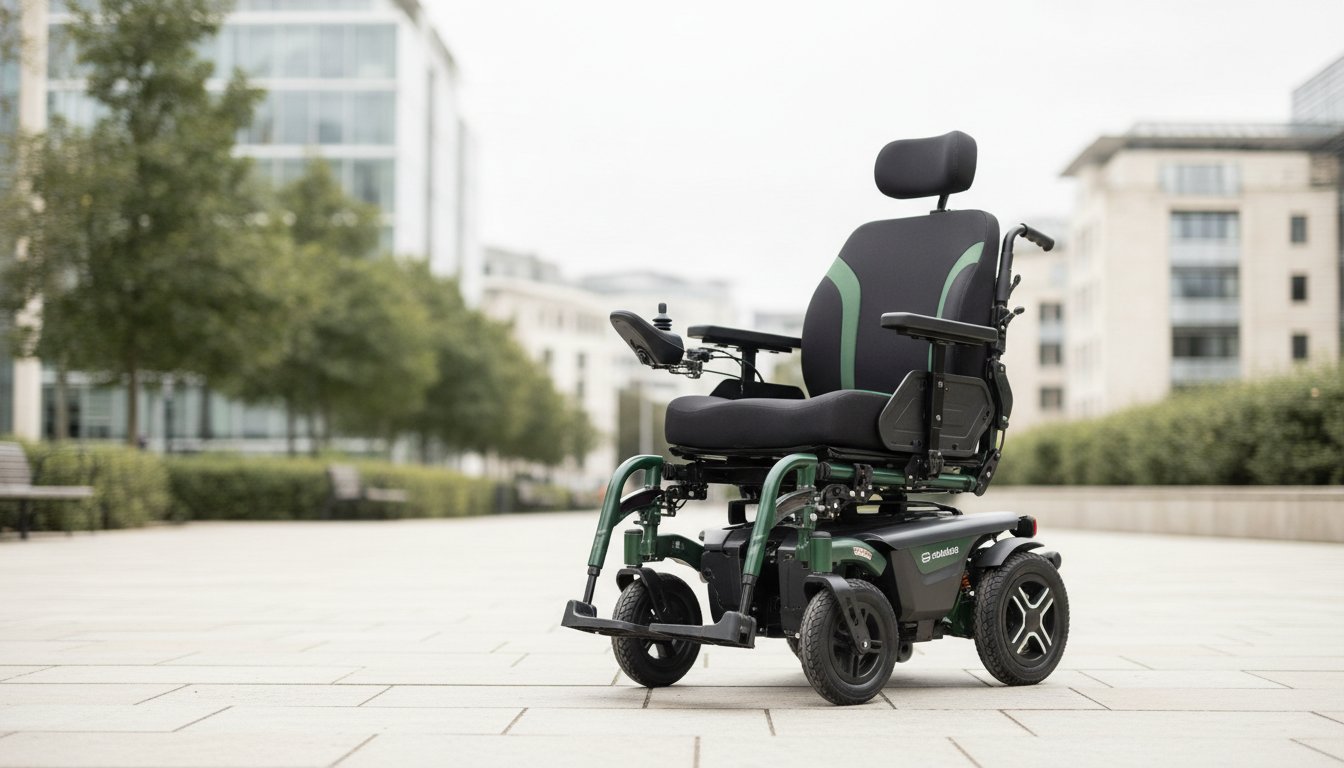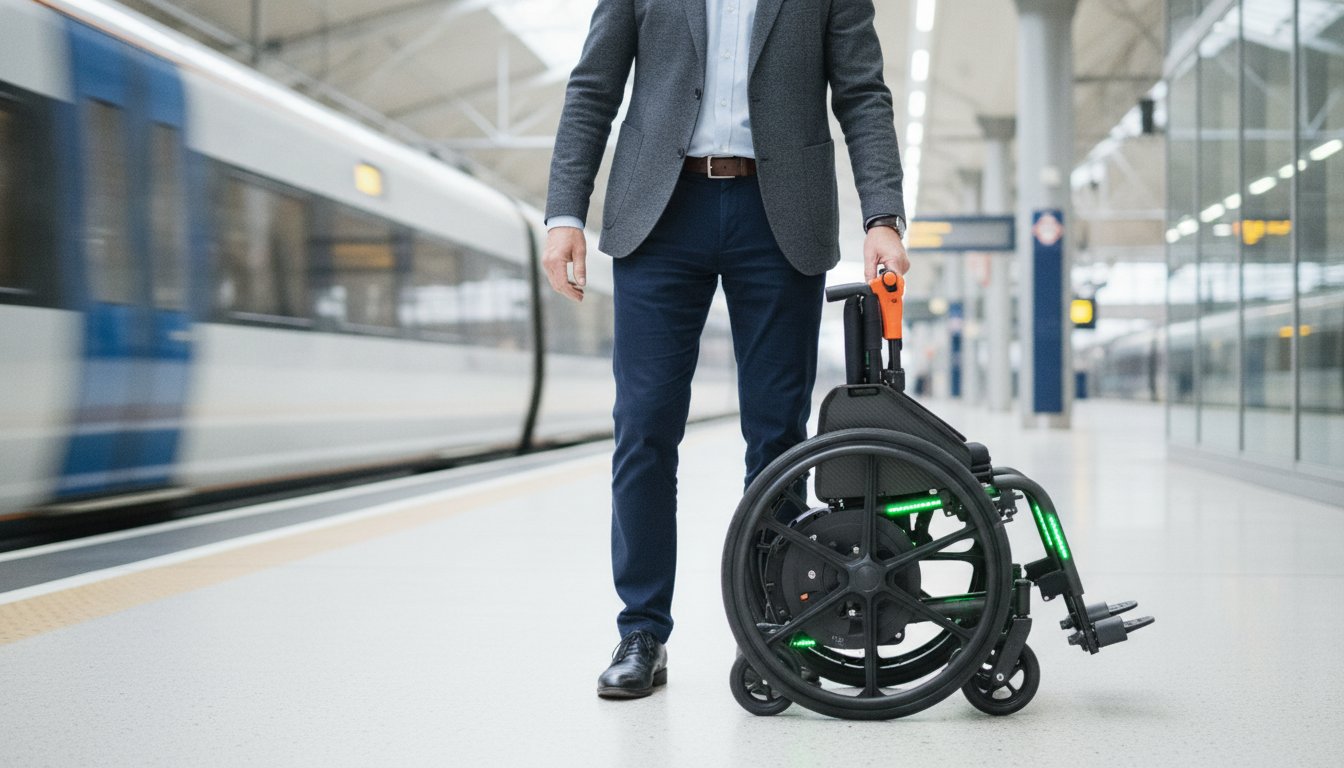
What if the very device meant to give you freedom actually became the biggest barrier to leaving your driveway? You likely know the frustration of looking at a sunny afternoon and deciding to stay home because the prospect of lifting a 30kg frame into your vehicle feels like a recipe for injury. It's a common hurdle for many of the 1.2 million people in the UK who rely on mobility aids but find their world shrinking to the reach of their local pavement. We believe that your independence shouldn't be limited by the weight of your equipment or the strength in your arms.
This guide helps you discover how to choose, install, and use a car boot mobility scooter hoist to regain your travel independence without the physical strain of heavy lifting. We'll show you how to navigate the latest 2026 UK safety standards and ensure a perfect fit for your specific vehicle model. You'll learn how to transform a difficult two-person job into a simple, automated process that takes less than 60 seconds. We've simplified the technical details of lifting capacities and mounting brackets so you can focus on your next adventure with total peace of mind.
Key Takeaways
- Learn how to eliminate physical back strain and reclaim your travel independence by integrating a motorised lifting solution into your vehicle.
- Identify the ideal mechanism for your needs by comparing 2-way, 4-way, and 6-way movements to find a car boot mobility scooter hoist that suits your range of motion.
- Master the critical compatibility checks required to ensure your chosen hoist safely fits your vehicle’s aperture and supports your scooter's specific weight.
- Understand what to expect during a professional installation, from initial workshop measurements to the secure attachment of brackets to your vehicle’s chassis.
- Discover why choosing UK-based specialists ensures your equipment meets rigorous British safety standards while providing local expert support for your mobility journey.
What is a Car Boot Mobility Scooter Hoist?
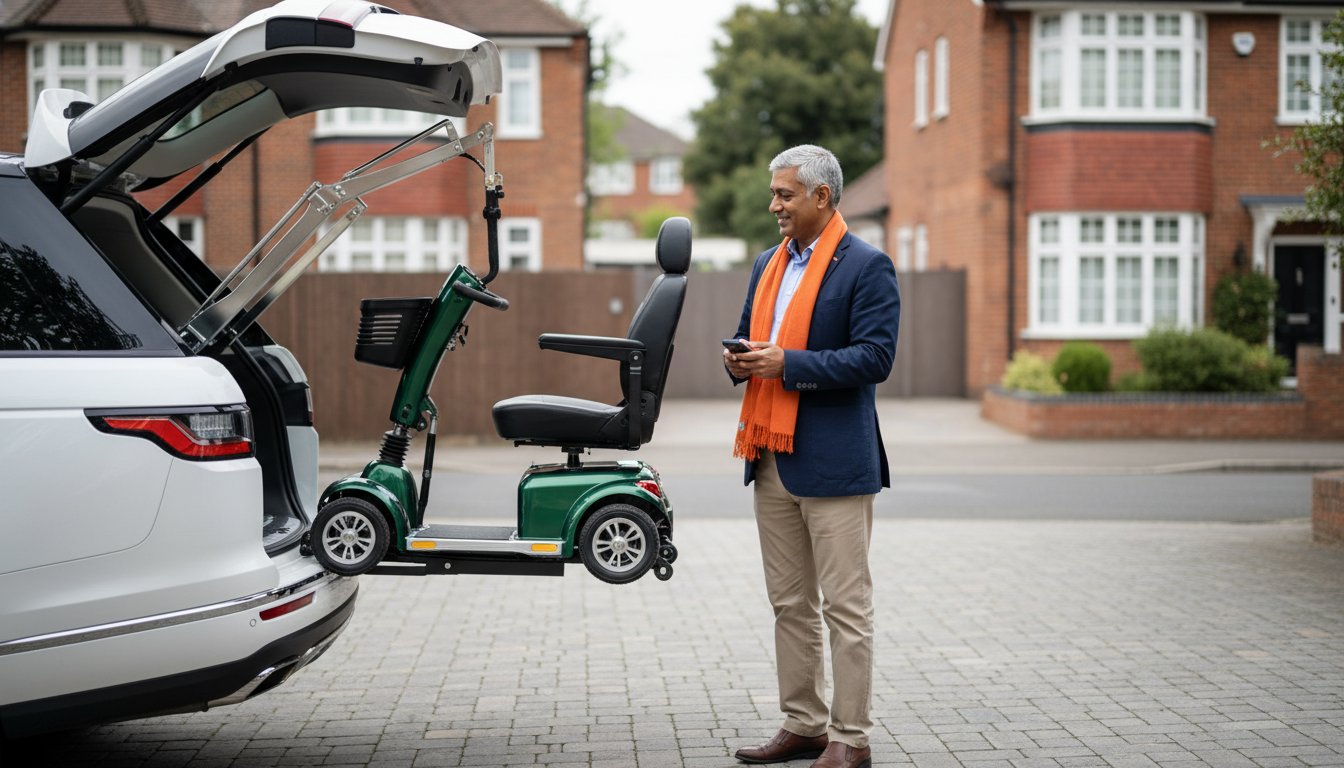
A car boot mobility scooter hoist is a motorised lifting system professionally installed into the rear of a vehicle. Its primary function is to handle the heavy lifting required to move a Mobility Scooter or powerchair into a car boot. By using a powered motor, the hoist eliminates the need for manual exertion, allowing users to transport their equipment without physical strain. This technology is essential for maintaining an active lifestyle, as it bridges the gap between home comfort and outdoor exploration.
The system consists of several precision-engineered parts designed for safety and ease of use. The boom serves as the main lifting arm, while the motor provides the torque necessary to lift weights often exceeding 150kg. A spreader bar attaches securely to the scooter, ensuring stability during the lift. Users manage the entire process through a handheld controller, which offers simple up-and-down or in-and-out functionality. This setup is particularly vital for individuals managing heavy-duty scooters or those who lack the upper-body strength to dismantle and lift equipment manually.
The Core Benefits of Installing a Boot Hoist
Physical safety remains the most compelling reason to install a car boot mobility scooter hoist. Many mid-range scooters feature individual components weighing over 20kg. Repeatedly lifting these parts can lead to long-term musculoskeletal injuries or acute back strain. A hoist removes this risk entirely, performing the mechanical work so you don't have to. Beyond safety, these devices offer unparalleled travel freedom. You can plan solo trips to UK coastal paths, local shopping centres, or holiday destinations without needing a companion to help with the car.
There's also a practical advantage for your vehicle's longevity. Manually dragging a scooter into a boot often results in scratched paintwork on the bumper or torn fabric in the boot lining. A hoist provides a controlled, vertical lift that keeps the equipment clear of the car's bodywork, preserving the resale value of your vehicle.
Hoist vs. Ramps: Which is Right for You?
Choosing between a hoist and a ramp depends on your vehicle size and physical capability. In the UK, many modern hatchbacks and compact SUVs have limited boot depth. A long ramp requires significant clearance space behind the car, which isn't always available in busy car parks. A hoist operates within a much tighter radius, making it a superior choice for urban environments.
- Effort Levels: Ramps require you to push the scooter up an incline, which demands physical force. A hoist requires only a button press.
- Space Efficiency: Hoists fold away neatly, whereas ramps can take up valuable floor space even when folded.
- Equipment Weight: For heavy-duty powerchairs that don't disassemble, a hoist is often the only viable and safe transport solution.
While ramps are a budget-friendly alternative, the car boot mobility scooter hoist represents the gold standard for independence and long-term joint health. It transforms your vehicle into a truly accessible transport hub, ensuring that your mobility aid is a tool for freedom rather than a logistical burden.
2-Way vs. 4-Way vs. 6-Way: Understanding Hoist Mechanisms
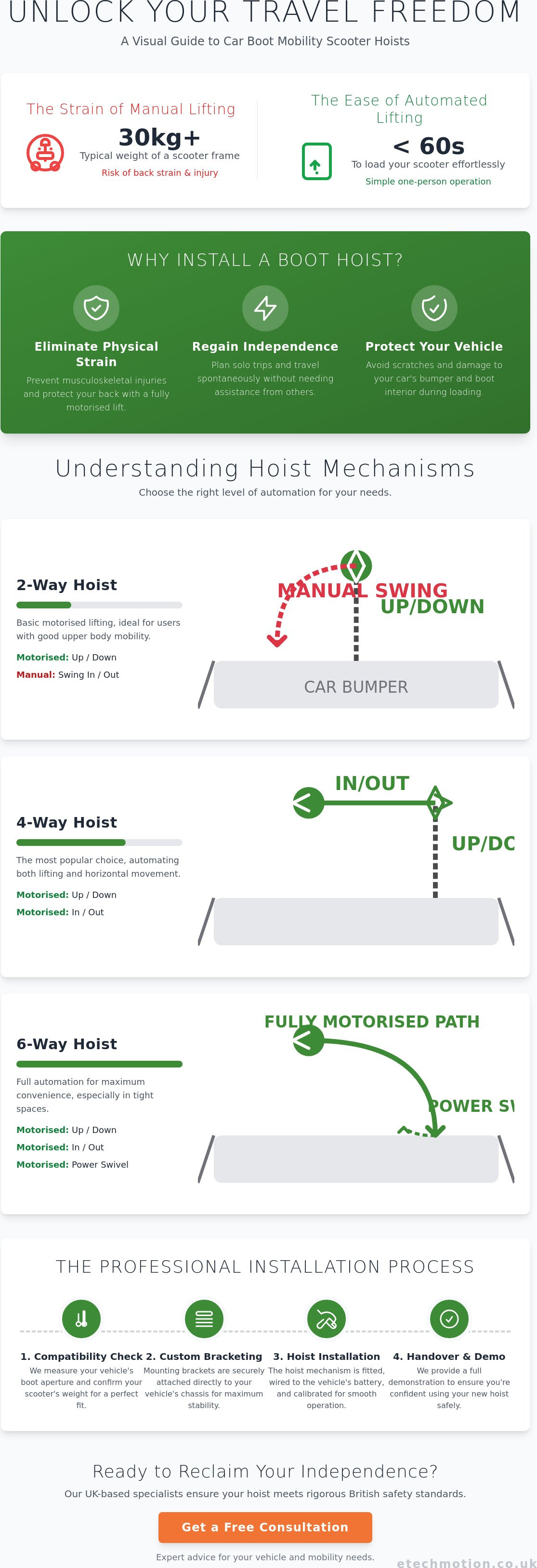
The "Way" system indicates the number of motorised directions a car boot mobility scooter hoist provides. Each "way" represents a specific axis of movement controlled by an electric actuator. Understanding these distinctions is vital because they determine how much physical strength you'll need during the loading process. A 2-way hoist handles the vertical lift, while 4-way and 6-way systems automate the horizontal and rotational movements. The swing radius plays a critical role for UK motorists. With standard UK parking bays measuring approximately 2.4 metres wide, a hoist with a wide manual swing can be difficult to operate in busy public car parks. Motorised systems offer tighter control, reducing the risk of bumping adjacent vehicles. Before choosing, check your boot depth. Deeper boots often require the extended reach of a 4-way or 6-way system to clear the bumper safely without manual tugging. Ensuring your equipment meets legal standards is just as important as the hoist itself. You should review the official UK government guidance to confirm your scooter's classification. This impacts the total weight your hoist must manage, especially if you're moving from a lightweight Class 2 boot scooter to a heavier Class 3 model.2-Way Hoists: The Simple Lift
A 2-way hoist provides motorised up-and-down movement. While the motor does the heavy lifting, you're responsible for manually swinging the scooter into the boot area. This is the most cost-effective solution for users who retain a degree of upper-body pivot strength. It's best suited for lighter folding scooters or those who have a companion to assist with the guiding motion. Most 2-way units are rated for weights up to 80kg.4-Way and 6-Way Hoists: Maximum Automation
A 4-way hoist adds motorised in-and-out movement to the standard vertical lift. This eliminates the need to push or pull the scooter into the vehicle. For those with significant mobility restrictions, a 6-way hoist offers the ultimate level of freedom by adding motorised rotation. These advanced systems are designed for heavy-duty performance:- Weight Capacity: Often rated for scooters up to 200kg, making them suitable for large road-legal models.
- Precision Control: Ideal for complex boot shapes with high lips or narrow openings where manual guiding is difficult.
- User Independence: Allows for loading without any manual lifting, pushing, or pulling.
Compatibility Check: Will a Hoist Fit Your Car and Scooter?
Successful installation begins with a technical assessment of your vehicle's architecture. A car boot mobility scooter hoist isn't a universal accessory; it requires a specific combination of space and structural strength. You must measure the boot aperture carefully. If the opening is too narrow or the rear sill is too high, the hoist arm won't have the necessary clearance to swing the scooter inside without hitting the bodywork.
Floor strength is equally critical. Installers typically mount the hoist base to the vehicle's structural frame or use spreader plates to distribute the load across the boot floor. You also need to consider the power source. Most UK installations involve hard-wiring the hoist directly to your car's 12V battery with a dedicated 30-amp fuse. This ensures the motor draws consistent power without compromising the vehicle's central electrical system.
Weight limits are the most common area for confusion. While you might only lift the "heaviest part" of a scooter when loading it by hand, a hoist carries the entire weight of the unit in one motion. If your scooter weighs 65kg, a 40kg hoist will fail or become a safety hazard. Always verify the total weight of your scooter with the battery included before choosing your model.
Don't guess when it comes to fitment. Professional UK installers use comprehensive compatibility databases that cross-reference over 12,000 vehicle models with thousands of scooters. This digital check confirms if a specific car boot mobility scooter hoist is physically compatible with your car's interior dimensions before you commit to a purchase.
Common Vehicle Types and Hoist Suitability
- Hatchbacks and Estates: These are the standard for e-mobility. They usually accommodate 40kg to 80kg hoists easily, provided the boot floor is deep enough to house the scooter once the arm is retracted.
- SUVs and MPVs: High bumpers and deep boots often require "XL" hoist variants. These models feature longer booms and increased vertical travel to clear the rear bumper safely during the lifting cycle.
- Compact Cars: Space is at a premium here. You'll likely need a folding hoist or a telescopic arm that can be tucked away when not in use to preserve what little storage remains in the boot.
Matching Your Scooter to the Lift
Folding mobility scooters are excellent candidates for lighter, 2-way hoists. Because they're compact, they often don't require the complex 4-way movement (up, down, in, and out) that larger units demand. Conversely, heavy-duty powerchairs often exceed 100kg. For these, you'll need a 150kg+ capacity hoist and reinforced mounting brackets to ensure the vehicle's floor doesn't flex under the weight.
The lifting bracket acts as the specific attachment point that secures your scooter to the hoist's arm, ensuring a stable and balanced lift every time.
The Installation Process: What to Expect
Installing a car boot mobility scooter hoist requires more than just a basic toolbox; it's a precision engineering task that transforms your vehicle into a high-functioning mobility hub. The process begins with a detailed assessment at a professional workshop. Technicians measure your boot's aperture and depth against the specific dimensions of your scooter to ensure a perfect synergy between the two. They check for tailgate clearance and internal obstructions, ensuring the 2026 model specifications of your car align perfectly with the hoist's lift capacity and swing radius.
The fitting journey itself is rigorous. Engineers don't simply bolt the hoist to the floor mats or plastic trim; they attach heavy-duty, bespoke brackets directly to the vehicle's chassis points. This provides the structural integrity needed to lift weights that often exceed 100kg. Once the frame is secure, the electrical team integrates the hoist into your car's 12V power supply. They install dedicated safety fuses to protect your car's electronic control unit (ECU) from power surges, ensuring the motorised lift operates without draining the battery or interfering with other onboard electronics.
The final stage is the handover. You'll receive hands-on training to master the handheld controller and the spreader bar. This ensures you can secure the scooter's attachment points confidently, making the transition from pavement to boot effortless every single time. It's about giving you the confidence to operate the machinery solo, ensuring your independence is backed by technical competence.
Professional Fitting vs. DIY
While DIY projects are popular, chassis-mounted mobility equipment isn't the place for experimentation. Certified UK technicians follow strict safety protocols to prevent structural damage to your vehicle. Professional installation is usually a requirement to maintain your car's manufacturer warranty and your insurance validity. If you're one of the 600,000 people currently using the Motability Scheme, you may be eligible for a subsidised or fully funded hoist adaptation. Choosing an authorised specialist ensures your car boot mobility scooter hoist meets the highest UK safety standards.
Maintenance and Aftercare
Your hoist works hard in the unpredictable UK weather, so regular maintenance is essential. We recommend an annual safety check to inspect the lift tape or arm for signs of fraying or fatigue. Keep the car battery in peak condition; a hoist performs best when the battery maintains a steady voltage above 12.4V. Simple cleaning and applying a high-quality lubricant to moving joints every six months will prevent the damp British climate from causing corrosion. This proactive approach keeps your mechanism smooth and silent for years of reliable service.
Choosing Etech Motion for Your Mobility Independence
Selecting the right car boot mobility scooter hoist involves more than just matching a weight capacity to a vehicle. It requires a partner who understands the intricate mechanics of 2026 vehicle models and the unique needs of British drivers. At Etech Motion, we specialise in bridging the gap between technical complexity and everyday freedom. Our UK-based specialists provide the authoritative guidance you need to ensure your equipment is safe, reliable, and perfectly suited to your lifestyle. We've spent years refining our inventory to include only the most dependable e-mobility solutions on the market.
Quality assurance sits at the heart of our operation. We don't just supply equipment; we curate a range that meets rigorous British safety standards. Whether you need a 40kg hoist for a lightweight folding scooter or a heavy-duty 150kg lift for a robust powerchair, every product undergoes strict evaluation. This dedication to excellence ensures that your car boot mobility scooter hoist performs consistently, rain or shine, giving you the confidence to travel further without physical strain. Our commitment to quality means your transition to an electric-powered lifestyle is both secure and aspirational.
- Expert UK Support: Access a team of specialists who understand the local mobility market and specific UK vehicle regulations.
- Comprehensive Range: We offer everything from compact folding lifts to fully automated 4-way powerchair hoists.
- Nationwide Delivery: Get professional advice and efficient shipping across the UK for a smooth transition to modern e-mobility.
- Safety First: Every hoist in our collection is tested against stringent British standards to ensure user protection and equipment longevity.
Our Commitment to Your Freedom
We help you navigate complex technical specifications without the confusing jargon. Our team assists with vehicle compatibility checks, ensuring your chosen hoist fits your specific boot dimensions and battery requirements. Beyond the initial purchase, our reliable support team remains available for troubleshooting and maintenance advice. We focus on sustainable, high-quality solutions that promote long-term mobility, reducing the need for frequent replacements and keeping you on the move. It's about providing a durable tool that fits into your life, not just a temporary fix.
Next Steps to Regain Your Mobility
Regaining your independence starts with a simple conversation. You can book a professional consultation to get an expert opinion on your scooter and vehicle compatibility. We'll help you verify lifting heights and clearance angles to prevent any installation issues before they occur. Once you're ready, you can explore our latest range of electric wheelchairs and scooters online to find the perfect match for your new hoist. It's time to experience the joy of effortless travel again.
Take the first step toward an active, unrestricted lifestyle. View our full range of mobility solutions today and discover how we can help you move forward into a smarter, electric-powered world.
Reclaim Your Travel Independence Today
Choosing the right car boot mobility scooter hoist transforms your vehicle from a simple car into a gateway for adventure. You've learned that selecting between 2-way, 4-way, and 6-way mechanisms depends entirely on your specific lifting requirements and boot space. Safety remains the priority. Professional installations ensure your equipment handles the weight of modern lithium-ion powered scooters securely, often completing in under four hours to get you back on the road. By matching your equipment to your car's dimensions, you eliminate the physical strain of manual lifting and protect your long-term health.
Etech Motion provides the technical expertise needed to navigate these choices with confidence. As specialists in folding and lightweight mobility solutions, we offer nationwide delivery across the United Kingdom and dedicated UK-based expert support to keep you moving. Our team ensures your transition to electric mobility is seamless and stress-free. Don't let heavy equipment limit your horizons when the right technology makes every journey effortless.
Ready to upgrade your lifestyle? Browse Etech Motion’s Professional Mobility Range and discover how our expert-led solutions bring freedom back to your daily commute. Your next journey starts with a single, smart investment in your mobility.
Frequently Asked Questions
Will a car boot hoist drain my car battery?
No, a car boot mobility scooter hoist won't drain your battery during normal daily use. These efficient systems only draw power while the motor is active, which typically lasts for 60 to 90 seconds per lift. Modern units include an isolation switch to prevent any power draw when the vehicle is parked. If you use the hoist 4 or 5 times a day, your car's alternator easily replenishes the charge during a standard 15 minute drive.
Can I still use my boot for shopping with a hoist installed?
Yes, you can still use your boot for shopping because most hoists feature a compact, foldable design. When the scooter isn't inside, the hoist arm tucks away against the side panel, often occupying less than 15% of the total boot volume. Many UK hatchback owners find they can still fit 3 or 4 standard supermarket bags alongside the folded mechanism. Some models even offer a quick-release boom that detaches in under 30 seconds for maximum space.
Is it possible to transfer a hoist to a new car later on?
You can definitely transfer a car boot mobility scooter hoist to a new vehicle if the new car is compatible with the lift's weight capacity. About 85% of modern hoists are designed for reinstallation, though you'll likely need a new vehicle-specific fitting kit and a professional engineer to perform the swap. This flexibility protects your investment, ensuring your mobility solution moves with you when you upgrade your car every 3 or 4 years.
How much weight can a standard car boot hoist lift?
Standard hoists typically lift between 40kg and 200kg depending on the specific model you choose for your vehicle. Entry-level 2-way hoists often handle lightweight folding scooters up to 80kg, while heavy-duty 4-way versions manage large Class 3 scooters weighing 150kg or more. It's vital to check your car's maximum nose weight and boot floor capacity, as these limits often dictate which car boot mobility scooter hoist is safe for your specific setup.
Do I need to inform my car insurance provider about a hoist installation?
Yes, you must inform your insurance provider about the installation as it's officially classified as a vehicle modification. While most UK insurers don't charge extra premiums for accessibility adaptations, failing to disclose it could void your policy in the event of a claim. Simply call your provider to update your records. They'll usually list it as a non-performance modification, ensuring your car remains fully covered for every journey you take.
Can a hoist be fitted to a leased car or a Motability vehicle?
You can fit a hoist to most leased or Motability vehicles, provided you have permission from the leasing company first. Motability actually facilitates these installations through their managed scheme, often covering the cost as part of your lease package. For private leases, professional installers use non-permanent mounting points that leave no lasting damage. This means you can return the car in its original condition once your 36-month contract concludes.
What happens if the hoist fails while the scooter is mid-air?
Modern hoists feature built-in safety mechanisms like self-locking gears and thermal fuses to prevent the scooter from falling. If the power cuts out, the mechanical worm drive holds the weight securely in place. Most UK-certified models also include a manual override or an emergency release valve. This allows you to lower the scooter safely to the ground by hand, ensuring you're never stranded due to a simple fuse blow or electrical glitch.
How long does the installation process usually take?
A professional installation typically takes between 2 and 4 hours to complete at a specialised workshop. The engineer spends the first 60 minutes securing the mounting brackets and wiring the unit directly to your car battery. The remaining time is used for fine-tuning the lift path and testing the safety sensors. You'll receive a full demonstration before you leave, ensuring you feel confident operating your new equipment independently.