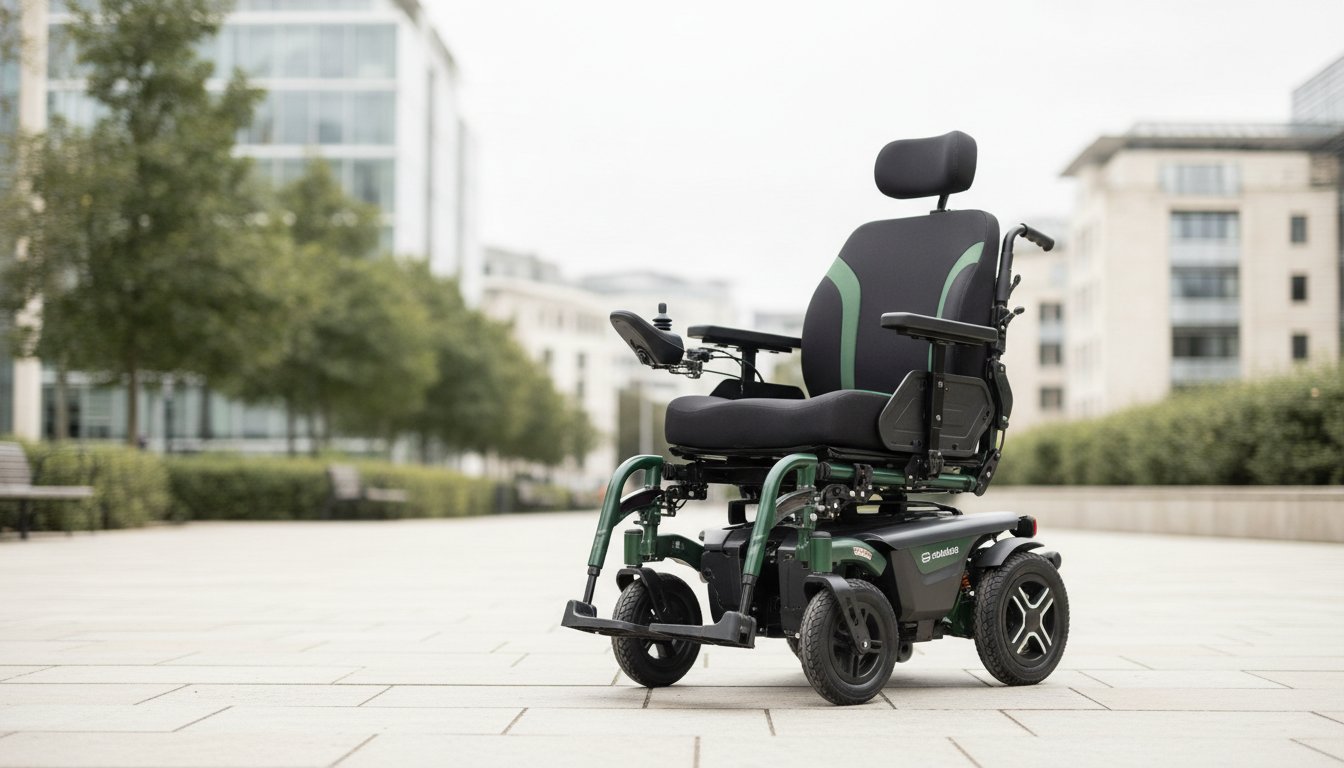
What if the heaviest part of your journey wasn't the 30kg mobility scooter, but the fear of lifting it into your boot? You likely agree that the physical strain of manual loading is the single biggest barrier to a spontaneous day out. It's frustrating when your independence is limited by the weight of your own equipment or the worry of damaging your vehicle's bodywork during the process. Choosing a modern automatic lift for car systems in 2026 changes that narrative by handling the heavy lifting with the simple touch of a button.
You'll discover how these advanced hoists can transform your vehicle into a stress-free transport hub for wheelchairs and powerchairs alike. We promise to guide you through the technical specifications and safety standards required for a reliable, long-term solution. This guide provides a clear breakdown of the latest hoist types and explains how to access expert UK-based support to ensure your transition to effortless mobility is both smooth and secure.
Key Takeaways
- Learn how an automatic lift for car can eliminate physical strain by automating the loading of wheelchairs and mobility scooters into your vehicle boot.
- Discover the essential differences between internal hoists and external platform lifts to identify which solution matches your specific lifting capacity and vehicle type.
- Evaluate the long-term health benefits and cost-effectiveness of permanent vehicle modifications compared to manual ramps and folding alternatives.
- Master the "Vehicle-Device-Lift" compatibility triangle to ensure your boot aperture measurements allow for a seamless and safe installation.
- Access expert UK-based guidance on pairing high-performance mobility devices with the right transport solutions to reclaim your independence on the road.
What is an Automatic Lift for a Car? (Mobility & Accessibility)
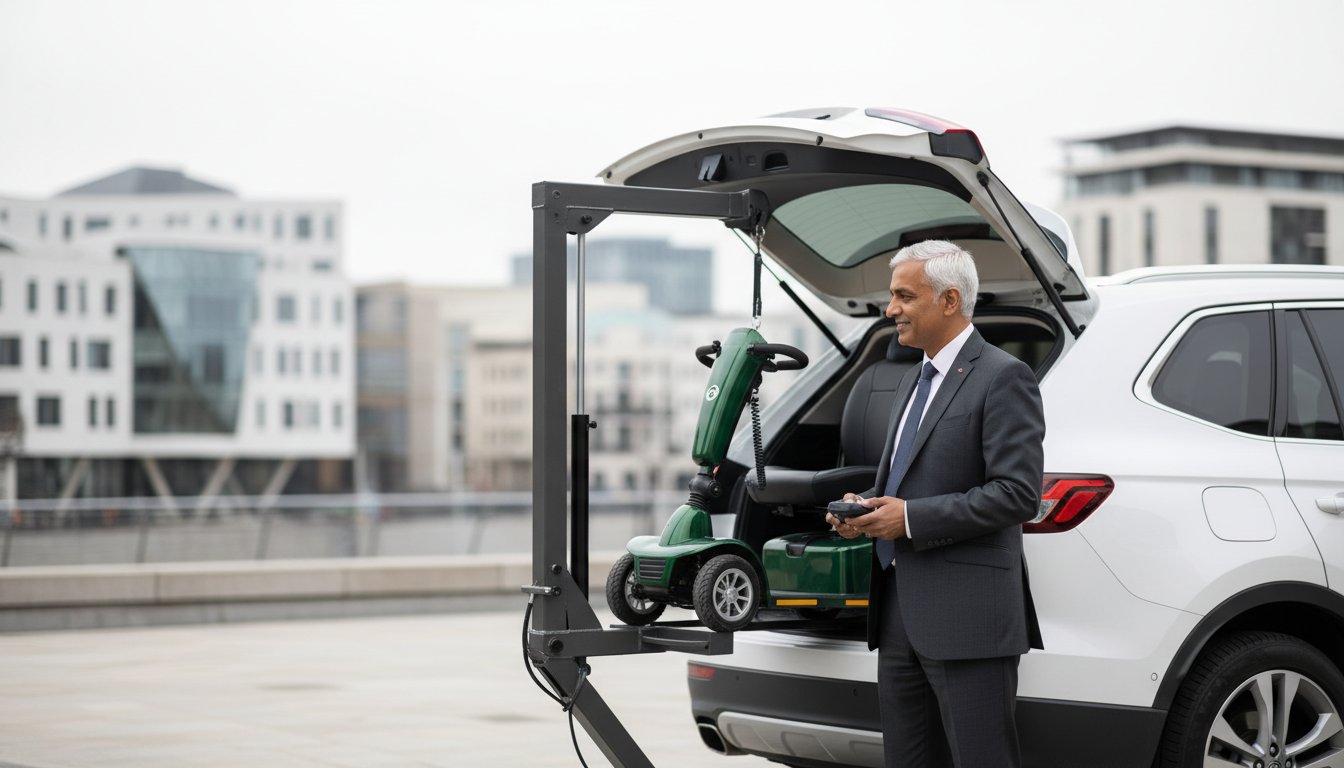
An automatic lift for car is a sophisticated mobility solution designed to bridge the gap between home and the open road. It is a mechanical device that handles the heavy lifting of wheelchairs and scooters, allowing users to maintain an active lifestyle without physical strain. Instead of struggling with awkward frames or heavy components, you use a motorised arm to guide your equipment into the boot. This technology is a cornerstone of modern accessibility in the UK. If you're looking for a deeper background on What is a Wheelchair Lift?, you'll see how these systems have evolved from bulky industrial units into sleek, vehicle-integrated tools that fit most standard hatchbacks and SUVs.
Manual lifting is a leading cause of injury for carers and mobility users alike. Lifting a scooter weighing 40kg or more puts immense pressure on the lower back and shoulders. It also risks damaging the vehicle's bodywork or the mobility device itself. An automatic lift for car eliminates these hazards by providing a stable, mechanical alternative. Modern hoists use 12V electric motors to provide smooth, controlled movement. You control the entire process through an ergonomic handheld pendant, which allows for millimetre-perfect positioning every time you load or unload your equipment.
Key Components of a Vehicle Mobility Hoist
The lifting arm serves as the primary structural element of the system. It pivots and rotates to swing the equipment from the pavement directly into the boot space. Power comes from a direct connection to the vehicle’s 12V battery, ensuring the lift is always ready for use without needing separate charging. A spreader bar acts as the vital interface between the hoist and the mobility device. It features specific, reinforced attachment points to ensure a secure, balanced lift that prevents the wheelchair or scooter from swaying or tipping during the transition.
The Importance of Independence in the UK
UK mobility users are increasingly moving toward sustainable travel as part of the wider "Green Transport" transition. Automatic lifts support this shift by making electric wheelchairs and scooters more portable and practical for daily use. Beyond the technical specifications, the psychological impact is profound. Being able to travel without a dedicated carer or family member fosters a renewed sense of freedom and self-reliance. It transforms a simple trip to the local shops or a visit to the countryside into an act of independence. A boot hoist is a permanent vehicle modification designed to enhance accessibility and simplify the transportation of mobility aids.
Types of Automatic Car Hoists for Mobility Scooters and Wheelchairs
Selecting the correct automatic lift for car depends on the weight of your mobility device and your vehicle's boot dimensions. The UK market provides a wide range of lifting capacities, starting at 40kg for lightweight folding scooters and reaching over 200kg for heavy-duty bariatric powerchairs. Most users opt for internal boot hoists because they keep expensive equipment dry and secure. External platform lifts are less common but serve as a practical alternative for smaller cars with restricted internal height.
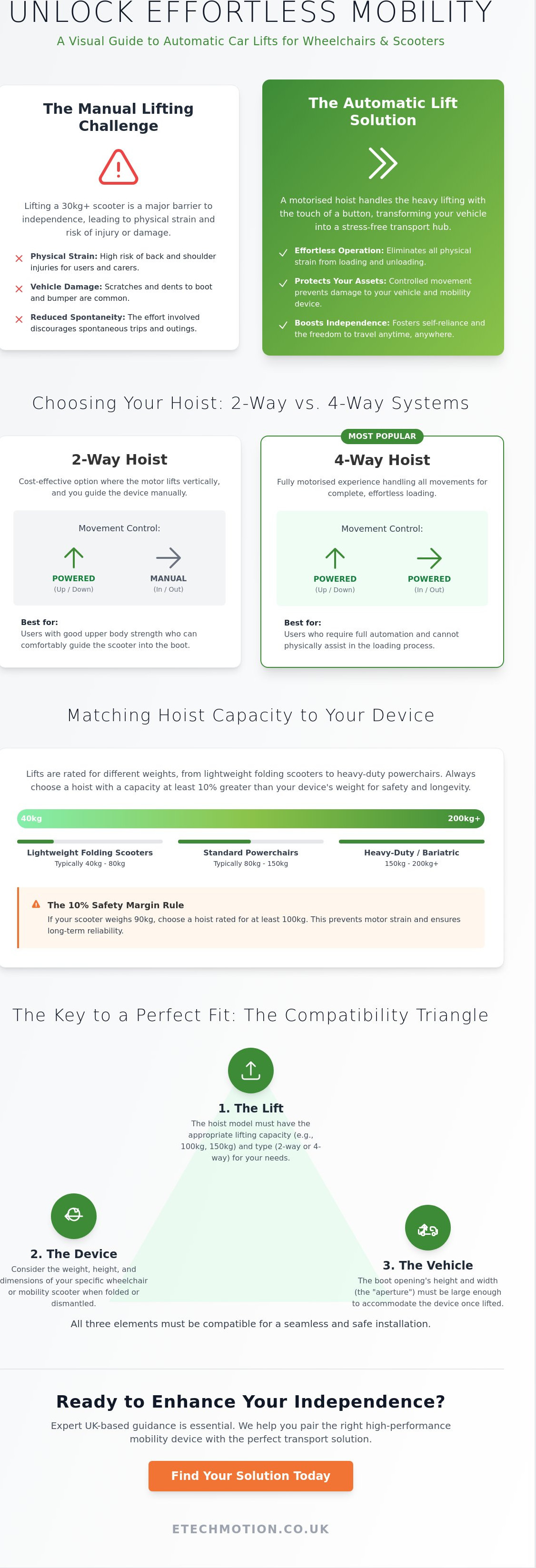
Durability is a critical factor for daily independence. High-quality hoists are tested for over 2,000 lifting cycles to ensure the motor survives years of frequent use. You should match the lift capacity to your device weight with a 10% safety margin. If your scooter weighs 90kg, a 100kg rated hoist provides the necessary buffer for long-term reliability. This prevents the motor from straining and extends the life of your vehicle's battery.
2-Way vs. 4-Way Automatic Hoists
2-Way hoists use electric power for the vertical lift but require you to manually guide the scooter into the boot. These are cost-effective options if you possess enough upper body strength to manage the radial movement. 4-Way hoists provide a fully motorised experience. They handle the up, down, in, and out movements at the touch of a button. This level of automation is essential for users who cannot physically assist the loading process. You'll find that 4-way systems significantly reduce the risk of accidental paintwork scratches on your bumper.
Specialised Lifts for Heavy-Duty Devices
Heavy-duty devices require more than just a stronger motor; they need a reinforced foundation. Lifts designed for 150kg to 200kg loads must be bolted to specific structural points within the vehicle. Professional installation ensures that the weight doesn't warp the floor pan or compromise the car's handling. While international standards like NHTSA safety regulations outline the mechanical requirements for these systems, UK installers ensure every fitment meets local MOT and insurance standards.
If you're planning to upgrade your equipment soon, exploring electric mobility solutions with integrated lifting compatibility can save you from expensive retrofitting later. Choosing an automatic lift for car with a brushless motor will also provide quieter operation and a longer lifespan for these high-capacity tasks. Always verify that your vehicle's rear suspension can handle the combined weight of the hoist and the mobility device before proceeding with a heavy-duty installation.
Comparing Automatic Lifts vs. Manual Ramps and Folding Solutions
Choosing between a permanent automatic lift for car and a portable ramp often comes down to the frequency of your travel and your physical capability. While a set of telescopic ramps might only cost between £150 and £300, the physical toll of pushing a heavy mobility device up a steep incline is significant. An automatic hoist represents a higher initial investment, often exceeding £1,000, but it protects your back and shoulders from long-term strain. It's a trade-off between a lower upfront cost and a long-term investment in your physical health.
Space is another vital consideration. A vehicle hoist typically consumes about 15% to 20% of your boot's lateral area even when it's not in use. However, this is often more efficient than carrying large ramps that must be stowed alongside your wheelchair. For many UK drivers, the convenience of a push-button system outweighs the loss of a small amount of storage space.
Automatic Hoists vs. Telescopic Ramps
Manual ramps require at least 2.5 metres of clear space behind the vehicle to achieve a safe gradient. In a standard UK supermarket parking bay, finding this much room is nearly impossible. If the ramp is too short, the angle becomes dangerously steep. An automatic lift for car solves this by lifting the device vertically, requiring zero extra floor space behind the bumper.
Safety remains the top priority. While many manufacturers design their systems to align with the Federal Motor Vehicle Safety Standard No. 403 to ensure platform stability and weight capacity, manual ramps carry a higher risk of the wheelchair tipping if the ascent isn't perfectly straight. Hoists use secure attachment points, such as spreader bars or C-hooks, which eliminate the risk of the chair sliding or rolling during the loading process.
The Etech Motion Perspective: Do You Actually Need a Lift?
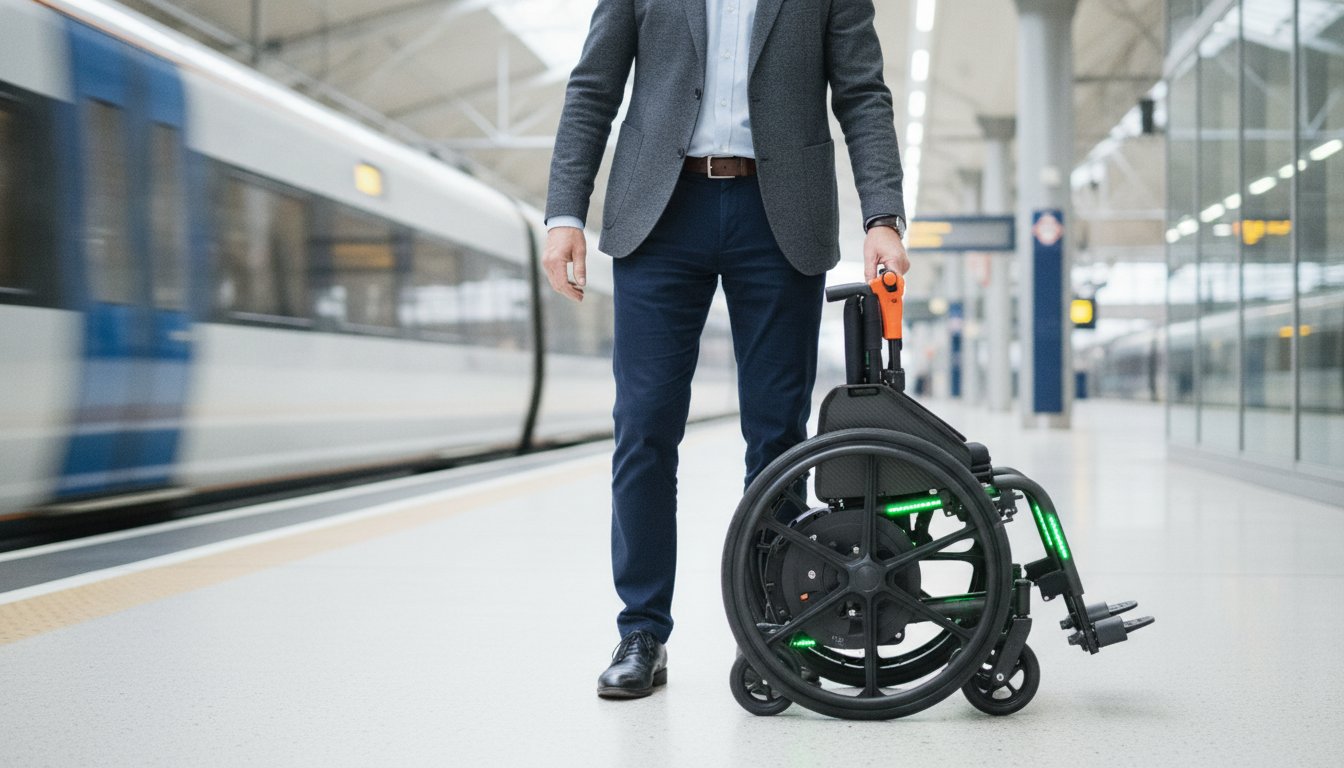
At E-Tech Motion, we believe in matching the solution to the specific lifestyle of the user. If you use a traditional power chair that weighs 80kg or more, a mechanical hoist is a non-negotiable safety requirement. However, modern engineering has changed the landscape. Many of our customers find that folding electric wheelchairs, which often weigh as little as 25kg, offer a more flexible alternative.
- The Solo Traveller: If you drive alone, an automatic hoist is the only way to maintain complete independence.
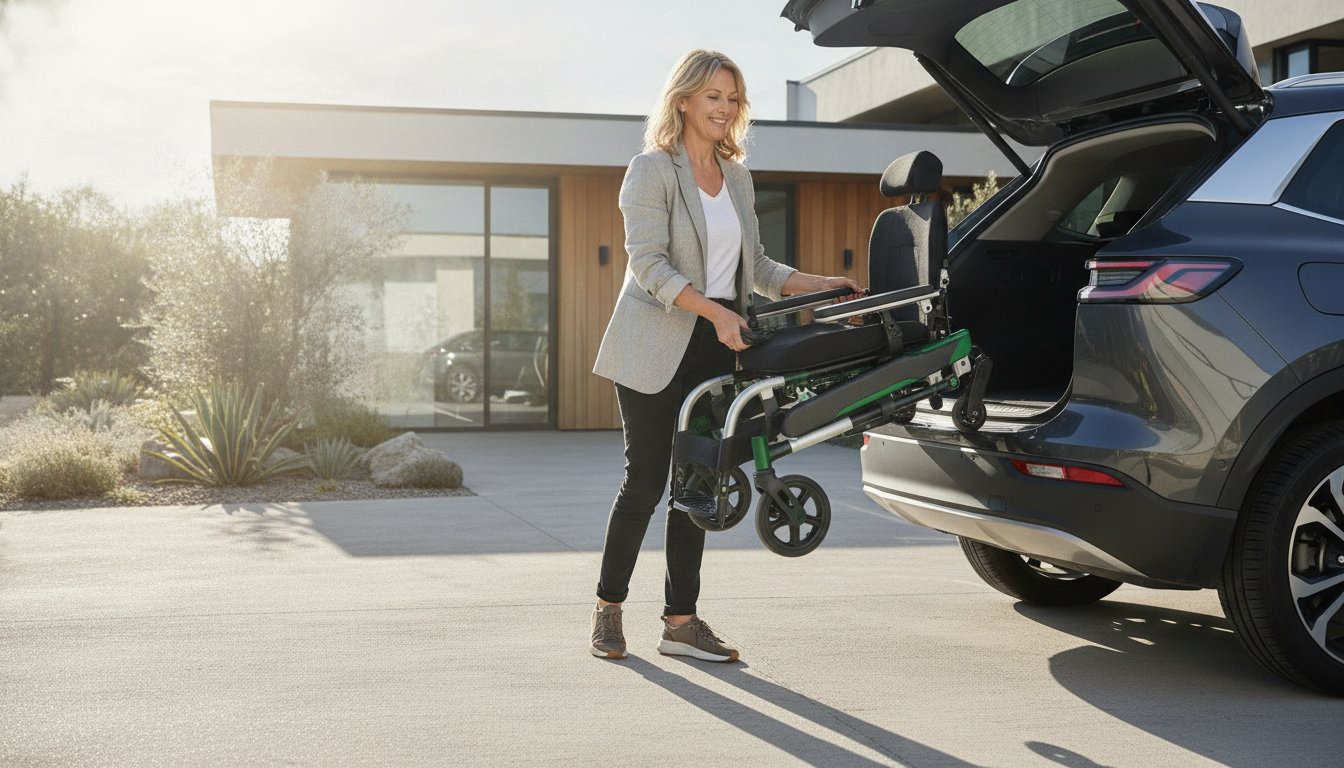
- The Accompanied Traveller: If you usually travel with a companion, a lightweight folding chair can often be lifted into the boot manually, saving you the cost of vehicle modifications.
- The Vehicle Type: Smaller hatchbacks may not have the structural integrity for a heavy-duty hoist, making a lightweight folding chair the only viable option.
The decision rests on your specific mobility equipment. If your chair is built for heavy-duty outdoor use and cannot be dismantled, a hoist is your best partner for the road. If you value agility and quick transitions, a folding model might make the lift entirely unnecessary.
Key Factors When Choosing and Choosing an Automatic Lift for Car
Selecting the right equipment requires a precise balance between three elements: your specific mobility device, your vehicle's dimensions, and the hoist's lifting capacity. This "Vehicle-Device-Lift" triangle is the foundation of a successful installation. In the UK, the Motability Scheme supports over 700,000 people with vehicle adaptations, ensuring that professional standards are met. You shouldn't attempt a DIY installation; expert UK installers ensure the hoist is bolted to the vehicle's chassis for maximum structural integrity.
Reliability depends on regular upkeep. You'll need to perform basic checks every 12 months to keep the system smooth. This includes inspecting the lifting tape for fraying, lubricating pivot points, and ensuring the electrical connections remain tight. A well-maintained automatic lift for car can easily last the lifetime of the vehicle, providing consistent freedom for your daily journeys.
Measuring Your Vehicle for a Hoist
Boot floor space is often misleading. The most critical measurement is the "boot aperture," or the actual opening of the hatch. If the opening is too narrow, your scooter or wheelchair won't pass through even if the interior is cavernous. You must also measure the "clearance height" to ensure the lift arm has enough vertical room to swing the device inward without hitting the roof lining.
- Flush vs. Recessed Lips: If your car has a high boot lip, you'll need a hoist with a specific "fold-over" arm or a higher lift stroke to clear the threshold.
- Compatibility Databases: Professional installers use detailed databases for popular UK models like the Nissan Qashqai or Volvo XC90 to determine exactly which hoist configurations fit.
- Arm Swing Path: Ensure there is 15-20cm of lateral clearance so the arm doesn't strike the side pillars during operation.
Power and Battery Management
Modern hoists are engineered to be energy-efficient, drawing power directly from the 12V car battery. To prevent draining your main battery, installers use heavy-duty wiring and dedicated fuse protection, typically rated between 10A and 20A. This ensures the hoist only operates when needed without compromising the vehicle's electronics.
Safety is built into the electrical design. Most systems include a safety cut-out feature that prevents the lift from moving if the boot is closed or if the engine isn't running in some configurations. This protects the motor from burnout and ensures the device is securely stowed before you pull away. If you're ready to upgrade your mobility, you can explore our range of folding electric wheelchairs that pair perfectly with these lifting systems.
Focusing on these technical details ensures your transition to electric mobility is seamless. By choosing a system that matches your vehicle's specific geometry and power capabilities, you secure a reliable solution for years of independent travel.
Enhancing Your Independence with Etech Motion Mobility Solutions
Etech Motion stands as a dedicated partner for the UK mobility community, providing more than just hardware. We offer the expert guidance necessary to navigate the technical complexities of vehicle adaptations. Choosing an automatic lift for car is a vital step toward total autonomy, but the device in your boot is only one part of the mobility equation. Success depends on the synergy between your vehicle and your mobility aid. Our team helps you bridge this gap by ensuring every component meets rigorous safety standards while delivering the effortless performance you expect from modern electric transport.
Pairing Mobility Scooters with Vehicle Lifts
Selecting a folding mobility scooter is the smartest way to create a travel setup that's both versatile and easy to manage. Our latest models utilize advanced brushless motor technology. This innovation reduces the overall weight of the device by up to 20% compared to traditional brushed alternatives, making it significantly easier for an automatic lift for car to handle. When transporting your device, remember to remove detachable accessories and secure the tiller. These small steps prevent unnecessary strain on the lift arm and protect your scooter from vibration damage during long journeys across the UK motorway network.
The Etech Motion Commitment to Quality
Quality assurance is the foundation of our UK-based support system. We understand that reliability is non-negotiable when you're miles from home. Every product we stock undergoes testing to ensure it meets British safety regulations, giving you peace of mind with every trip. Etech Motion provides the technical expertise and high-quality mobility hardware needed to reclaim your freedom on the road. By moving toward an electric-powered future, you're choosing a cleaner, more efficient way to travel that doesn't compromise on power or range.
Planning for a vehicle upgrade requires a methodical approach to ensure your equipment remains compatible as technology evolves. To begin your transition toward a more accessible lifestyle, start with a comprehensive audit of your current gear:
- Calculate total weight: Confirm the weight of your scooter or wheelchair, including the battery and any permanent modifications.
- Verify vehicle capacity: Check your car's boot dimensions and the maximum vertical load capacity specified by the manufacturer.
- Assess power requirements: Ensure your vehicle's electrical system can support the 12V or 24V requirements of a high-performance hoist.
- Consult a specialist: Speak with our team to match your specific device with a lifting solution that fits your physical needs and your vehicle's layout.
Taking these steps now ensures that your transition to a smarter mobility setup is smooth and cost-effective. Whether you're commuting to work or exploring the British countryside, the right combination of a lightweight scooter and a robust vehicle lift provides the ultimate platform for an active, independent life.
Take Control of Your Freedom on the Road
Choosing an automatic lift for car installations represents a significant step toward total independence. By 2026, smarter hoist designs will further simplify how we transport mobility devices, removing the physical strain that often comes with manual folding solutions. These systems are essential for users who require a reliable way to load heavy-duty electric wheelchairs or lightweight scooters without assistance. At Etech Motion, we combine our technical expertise with a commitment to eco-friendly, sustainable mobility solutions that respect the environment while enhancing your quality of life. Our UK-based expert support team provides direct quality assurance, ensuring every installation meets the 2026 safety benchmarks for your peace of mind. We focus on delivering durable, high-performance equipment that bridges the gap between your home and your destination. Don't let transport logistics limit your horizons or slow your pace. You deserve a setup that works as hard as you do, backed by a team that understands the nuances of British road requirements. It's time to move forward with a partner that prioritises your movement.
Explore Etech Motion’s range of foldable, lift-ready mobility solutions today and start your next adventure with complete confidence.
Frequently Asked Questions
Can an automatic lift be fitted to any car?
Most modern vehicles, including hatchbacks, estates, and SUVs, are compatible with an automatic lift for car installations. While 95% of mainstream car models can accommodate a hoist, compact city cars often lack the boot depth required for the mechanical arm to swing freely. Our UK engineers assess your vehicle's structural integrity and boot dimensions to ensure a safe, secure fitment before any work begins.
How much weight can a standard car boot hoist lift?
Standard car boot hoists typically offer lifting capacities ranging from 40kg to 200kg depending on the specific model you choose. Entry-level 2-way hoists handle lightweight folding wheelchairs, while heavy-duty 4-way versions easily manage 150kg powerchairs or large mobility scooters. You should always check your mobility device's total weight against the hoist's rated limit to ensure the lifting motor operates within its 100% safety threshold.
Will installing a car lift void my vehicle warranty?
Installing a mobility hoist won't void your entire vehicle warranty, as UK consumer laws protect owners who add specialist adaptations. Only the specific areas modified for the installation are affected, while the engine, electronics, and chassis remain covered by the manufacturer's original terms. We recommend using a professional installer to ensure the 12-volt electrical connection meets the high standards required by UK automotive safety regulations.
Does the Motability Scheme cover the cost of an automatic car lift?
The Motability Scheme frequently covers the cost of an automatic lift for car users through their managed lease packages. Over 600,000 people in the UK currently use the scheme, which often provides these adaptations at a subsidised rate or even a £0 upfront cost. If you receive the Higher Rate Mobility Component, you can apply for a grant to fund the installation through a Motability-accredited partner.
How long does it take to install an automatic car hoist?
A standard professional installation typically takes between 2 and 4 hours to complete at a UK workshop. This timeframe includes the physical mounting of the hoist frame, wiring it into the vehicle's electrical system, and conducting a full safety test. More complex 4-way hoists that require extensive boot modifications may take slightly longer, but most customers regain their vehicle mobility within a single morning appointment.
Can I move my automatic lift to a new car if I sell my current one?
You can definitely transfer your automatic hoist to a new vehicle, making it a sustainable long-term investment for your mobility. While the main lifting unit is transferable, you'll usually need a new vehicle-specific fitting kit to match the mounting points of your next car. This transfer process takes approximately 3 hours and ensures you don't have to purchase a brand-new system every time you upgrade your transport.
Do I need a special battery for an electric car lift?
You don't need a secondary or specialist battery because the lift connects directly to your car's existing 12-volt power supply. These systems are engineered for high efficiency, drawing minimal current that won't drain a healthy car battery during normal daily use. For electric vehicles, the hoist connects to the auxiliary 12V system, ensuring the main high-voltage drive battery remains dedicated to your driving range.
Are automatic car lifts difficult to operate for someone with limited hand dexterity?
Modern automatic lifts feature ergonomic hand controls designed specifically for users with limited hand dexterity or grip strength. Large, tactile buttons require less than 5 Newtons of pressure to activate, and many systems include a wireless remote for effortless operation from a seated position. This design eliminates the need for physical lifting, turning a difficult task into a simple 30-second automated process that restores your independence.